Good quality, great price, fast delivery. All online - no submitting forms and waiting for days for quotes. Getting mulch should be this easy from everyone. Only Mulch Mound is ACTUALLY this simple.
Tell us what you're looking for
Thanks! We received your request.
Something went wrong. Please try again.
How Much Material Do I Need?
For most Farmington planting beds, plan on 3 to 4 inches of mulch depth to adequately buffer against the low humidity and high evaporation rates at this elevation. Tree rings and shrub beds with established plants can often get by with 3 inches, while newly planted or sun exposed beds benefit most from the full 4 inch layer.
Use our free mulch calculator
What is a yard?
A yard is approximately 27 cubic feet. As a general guideline, one yard of material can cover an area of about 100-160 square feet at a 2-3 inch depth.
Good quality, great price, fast delivery. All online - no submitting forms and waiting for days for quotes. Getting mulch should be this easy from everyone. Only Mulch Mound is ACTUALLY this simple.
How Much Material Do I Need?
For most Farmington planting beds, plan on 3 to 4 inches of mulch depth to adequately buffer against the low humidity and high evaporation rates at this elevation. Tree rings and shrub beds with established plants can often get by with 3 inches, while newly planted or sun exposed beds benefit most from the full 4 inch layer.
Use our free mulch calculator
What is a yard?
A yard is approximately 27 cubic feet. As a general guideline, one yard of material can cover an area of about 100-160 square feet at a 2-3 inch depth.
Good quality, great price, fast delivery. All online - no submitting forms and waiting for days for quotes. Getting mulch should be this easy fr...
Read full review
Good quality, great price, fast delivery. All online - no submitting forms and waiting for days for quotes. Getting mulch should be this easy from everyone. Only Mulch Mound is ACTUALLY this simple.
I highly recommend Mulch Mound. The quality of the mulch is very good. The ordering system on their website makes it very easy. The delivery driver...
Read full review
I highly recommend Mulch Mound. The quality of the mulch is very good. The ordering system on their website makes it very easy. The delivery driver did a great job placing the mulch on the driveway. To finish off, the pricing was very reasonable as well.
They offered a quick turnaround and delivered high quality mulch at a reasonable price. They also dropped it off exactly where I told them to put i...
Read full review
They offered a quick turnaround and delivered high quality mulch at a reasonable price. They also dropped it off exactly where I told them to put it. Good service!
Measure the length and width of each planting bed in feet and multiply them together to get square footage. Then divide that number by 81 to find the cubic yards needed for a 4 inch depth, which is the recommended layer for Farmington's dry climate. If you have multiple beds, add all the square footage together before dividing so you can order in a single efficient delivery.
Mulch vs. No Mulch: The Difference
Farmington's position in the high desert of northwestern New Mexico means mulch faces conditions that are harder on organic materials than most climates. The combination of intense UV radiation at 5,473 feet, very low humidity, and wide daily temperature swings causes surface mulch layers to fade and break apart faster than in wetter regions. Understanding how your local conditions accelerate mulch breakdown helps you plan realistic top dressing schedules and choose the right product from the start.
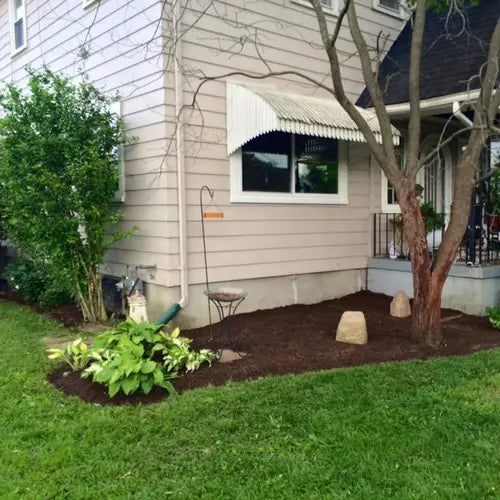
Before
After
Best Mulch Choice for Farmington Lawns
Most yards in the Farmington area sit on type of soil. Farmington's sandy loam soil has low organic content and a loose, porous structure that allows water to drain away from plant roots quickly. Planting beds built on this native soil need both the moisture retention and the slow organic enrichment that a quality wood mulch provides.
Hardwood Mulch
Hardwood mulch breaks down more slowly than softwood alternatives, giving Farmington's sandy loam soil a longer window to absorb the humus and organic acids released during decomposition. Over one to two growing seasons, this gradual breakdown adds structure to the soil, helping it hold both moisture and nutrients more effectively than untreated native ground.
Complete Your Outdoor Mulch Project
Pairing mulch with a quality amended garden soil in your planting beds gives roots the organic matter and moisture retention that Farmington's native sandy loam cannot provide on its own. Consider adding a border of decorative stone to keep mulch contained and create a finished, low maintenance edge around your beds.
Farmington's freeze and thaw cycles between October and April can shift your mulch layer and expose bare soil near plant crowns. Before the first hard frost around October 7th, do a walkthrough of all your beds and push any displaced mulch back into place. Adding a light top dressing in late September each year keeps the insulating layer consistent going into winter, which protects shallow roots from the repeated soil heaving that cold nights bring at this elevation.
Mulch Mound Pro Tip
Sandy loam soil in the Farmington area has very low organic matter content, which means it benefits enormously from the slow decomposition of wood based mulch over time. Rather than removing old mulch before adding new material, simply top dress over the existing layer. The decomposing bottom layer feeds soil microbes and gradually improves soil structure, giving you better moisture retention season after season without buying soil amendments separately.
Mulch Mound Pro Tip
With Farmington averaging only 8 inches of rain per year, timing your mulch application around your irrigation schedule makes a real difference. Lay fresh mulch immediately after a deep watering or after a rare rainstorm so the soil underneath is moist before it gets covered. This locks in existing moisture rather than trapping dry soil under an insulating layer, giving your plants a head start before the next irrigation cycle.
Frequently Asked Questions
Click a question to see the answer
Answer
How thick should I apply mulch in Farmington given how fast the sandy loam dries out?
In Farmington, a 3 to 4 inch layer is the right target for most planting beds. Sandy loam loses moisture quickly because of its coarse texture and low organic matter content, so a thinner layer simply will not hold enough buffer against evaporation. At 3 to 4 inches you slow moisture loss significantly without creating the overly wet conditions that can cause crown rot in desert adapted plants. Keep mulch pulled back an inch or two from plant stems to allow airflow.
Answer
Will mulch break down faster here because of the intense sun at this elevation?
Yes, UV intensity increases noticeably at 5,473 feet and it accelerates the surface degradation of organic mulch. The top layer of wood mulch can fade and begin to break down faster than it would at lower elevations. The good news is that decomposition also incorporates organic matter into your sandy loam soil, which is exactly what it needs. Plan to top off your mulch beds every one to two years to maintain the protective depth.
Answer
Is mulch really worth it when we get so little rain anyway?
Absolutely, in fact the less rain you get the more valuable mulch becomes. With only 8 inches of annual rainfall in Farmington, every drop of irrigation water is precious. Studies consistently show that a 3 inch mulch layer can reduce soil moisture evaporation by 25 to 50 percent. That means your drip system or hose water stays in the root zone longer, reducing how often you need to water and lowering your water bill over the course of the season.
Answer
What kind of mulch works best around the juniper and sage plants I have in my yard?
For native and drought adapted plants like juniper and sage, a coarser wood chip or shredded bark mulch works well because it allows airflow and does not hold excessive moisture against the crown of the plant. These species evolved in well drained, dry soils similar to Farmington's sandy loam, so they benefit from mulch that mimics that environment. Avoid fine textured mulches that pack tightly and can stay damp for extended periods after irrigation.
Answer
My neighbor said not to mulch too close to the house because of scorpions. Is that a real concern in Farmington?
It is a reasonable precaution in the Farmington area. Scorpions are present in San Juan County and like many insects they can shelter under organic debris. Keeping mulch pulled back 6 to 12 inches from your foundation and exterior walls reduces habitat close to entry points. This is also good practice for moisture management since mulch against a foundation can trap humidity against stucco or wood framing over time.
Answer
How soon after my last frost in May can I put down fresh mulch?
Once you are past Farmington's average last frost date of May 5th, you are clear to mulch actively growing beds. Waiting until after the last frost is smart because mulch insulates soil and can actually slow the warming that tender plants need in early spring. By mid May the ground has typically had enough warm days to support plant growth, and fresh mulch laid then will protect roots through the heat of June, July, and August.
Answer
Can I use mulch to help my lawn edges look cleaner along the road in my neighborhood?
Mulch works very well for defining bed edges along driveways, sidewalks, and street-facing landscape strips in Farmington neighborhoods. Many homes here use a combination of rock and organic mulch to create a layered look that is both attractive and low maintenance. Using mulch in these areas also helps suppress the weedy grasses and tumbleweeds that creep in from road margins, which is a common frustration for Farmington homeowners.
The Unique Landscape of Farmington
Farmington sits at 5,473 feet in the high desert of the San Juan Basin, where only 8 inches of rain fall each year and summer sun is relentless from June through September. That combination of low rainfall, high elevation UV exposure, and wide temperature swings makes bare soil a liability in any planting bed. The native sandy loam drains quickly and dries out between waterings, pulling moisture away from plant roots faster than most gardeners expect. A proper layer of mulch acts as a thermal blanket, keeping soil temperatures stable when October frosts arrive as early as the 7th and when May still carries frost risk through the 5th. Without mulch, the freeze and thaw cycles that Farmington experiences through winter cause soil to heave and compress repeatedly, stressing shallow root systems. Mulch is not optional in this climate, it is the single most effective tool a Farmington homeowner has for keeping plants alive between waterings.