


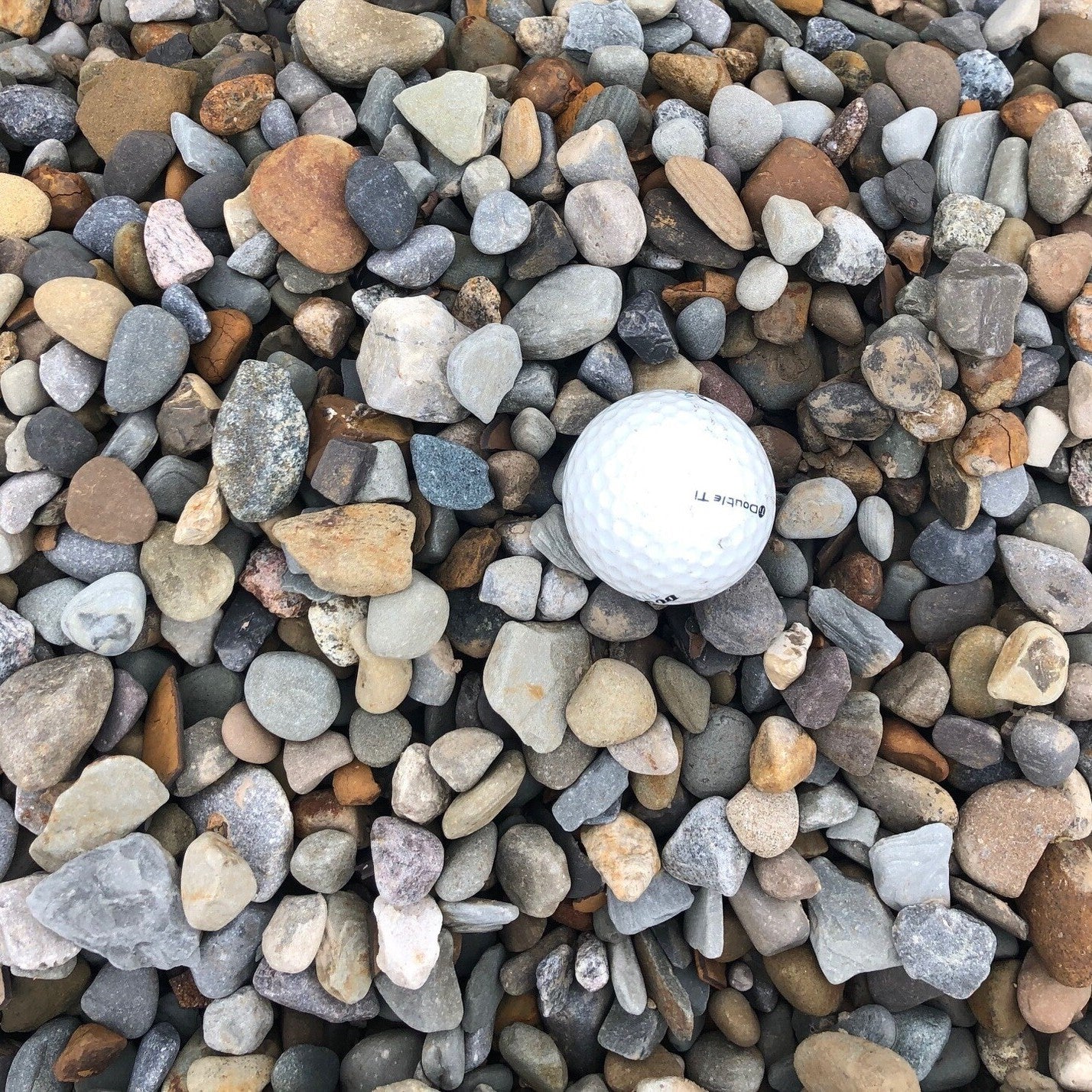

The driver nailed it on putting the gravel I ordered in front of my trailer and between the sidewalk. Very satisfied with how my flowerbeds look now.
About this stone
Number 57 crushed stone, angular limestone graded to about three quarters of an inch. The standard driveway, base and drainage gravel, it locks together under traffic and drains fast.
The driver nailed it on putting the gravel I ordered in front of my trailer and between the sidewalk. Very satisfied with how my flowerbeds look now.
Tell us what you're looking for
Thanks! We received your request.
Something went wrong. Please try again.
How Much Material Do I Need?
How Much Material Do I Need?
For decorative bed coverage over Fort Smith's clay loam soil with landscape fabric in place, 2 to 3 inches of stone depth provides solid, long-lasting coverage. For drainage aggregate in French drains, downspout channels, or foundation borders, plan for 4 to 6 inches of depth to handle the water volumes that Fort Smith's annual rainfall routinely delivers.
Use our free gravel calculator
What is a yard?
What is a yard?
FAQs
FAQs
Fort Smith Gravel Delivery
Fort Smith Gravel Delivery
Regular price
$133.00
per
yard
Regular price
Sale price
$133.00
Unit price
per
Shipping calculated at checkout.
Minimum of 3 yard
Couldn't load pickup availability
Not currently available
We can't take orders for this right now. Tell us what you need and we'll get back to you.
Hand-picked local yards
4,000+ regional deliveries
Dedicated support
Why order through Mulch Mound
The best local stone, without the guesswork.
We hand-pick and partner with the best yards in your region, keep only the ones our buyers rate well, and back each load with our guarantee.
Mulch Mound Guarantee
If your stone isn't the quantity or quality you ordered, we'll make it right.
About this stone
Number 57 crushed stone, angular limestone graded to about three quarters of an inch. The standard driveway, base and drainage gravel, it locks together under traffic and drains fast.
The driver nailed it on putting the gravel I ordered in front of my trailer and between the sidewalk. Very satisfied with how my flowerbeds look now.
How Much Material Do I Need?
How Much Material Do I Need?
For decorative bed coverage over Fort Smith's clay loam soil with landscape fabric in place, 2 to 3 inches of stone depth provides solid, long-lasting coverage. For drainage aggregate in French drains, downspout channels, or foundation borders, plan for 4 to 6 inches of depth to handle the water volumes that Fort Smith's annual rainfall routinely delivers.
Use our free gravel calculator
What is a yard?
What is a yard?
FAQs
FAQs
Tell us what you're looking for
Thanks! We received your request.
Something went wrong. Please try again.
How It Works
Getting started is easy — just follow these simple steps
1
Choose your stone
Make sure you adjust the quantity to your home's needs. You can use our calculator to estimate how much you'll need.
2
Select your delivery date
Select a delivery date you'd like for the product to be dropped off at your home
3
Sit back and wait
Sit back, wait, and let us work our magic to make sure the highest quality product is delivered to your driveway.

Placing an order online was so easy. Delivery was on time. When the driver realized we had a newly poured driveway they erred on the side of cautio...
Read full review
Placing an order online was so easy. Delivery was on time. When the driver realized we had a newly poured driveway they erred on the side of caution and opted not ti drive in it. The company even sent me a message explaining that call. Would recommend!

Online ordering was really simple and I liked the transparent pricing.
Need Help Calculating How Much Gravel You Need?
Use our NEW Trace from Satellite tool to get an estimate for your project based on an aerial view of your property
Try Our CalculatorTo estimate your stone order, multiply the length by the width of your project area in feet and divide by 100 to get the cubic yards needed for a 3-inch layer. Fort Smith's clay loam base does not absorb stone the way sandy soil does, so your depth estimate stays accurate over time as long as landscape fabric is installed underneath to prevent migration. For drainage applications like French drains or dry creek beds, add 20 to 30 percent to your base estimate to account for the extra volume needed inside the trench or channel.
Stone Types We Deliver in Fort Smith
When you need bulk gravel by the yard in Fort Smith, Mulch Mound delivers straight to your driveway, backyard, or job site without the hassle of hauling bags from a store. The Arkansas River valley brings clay-heavy soils and long humid summers, which means choosing the right stone for drainage and comfort is more important here than in drier parts of the country. Our cubic-yard pricing keeps costs predictable and makes it easy to order exactly the volume your landscape project calls for.
Pea Gravel
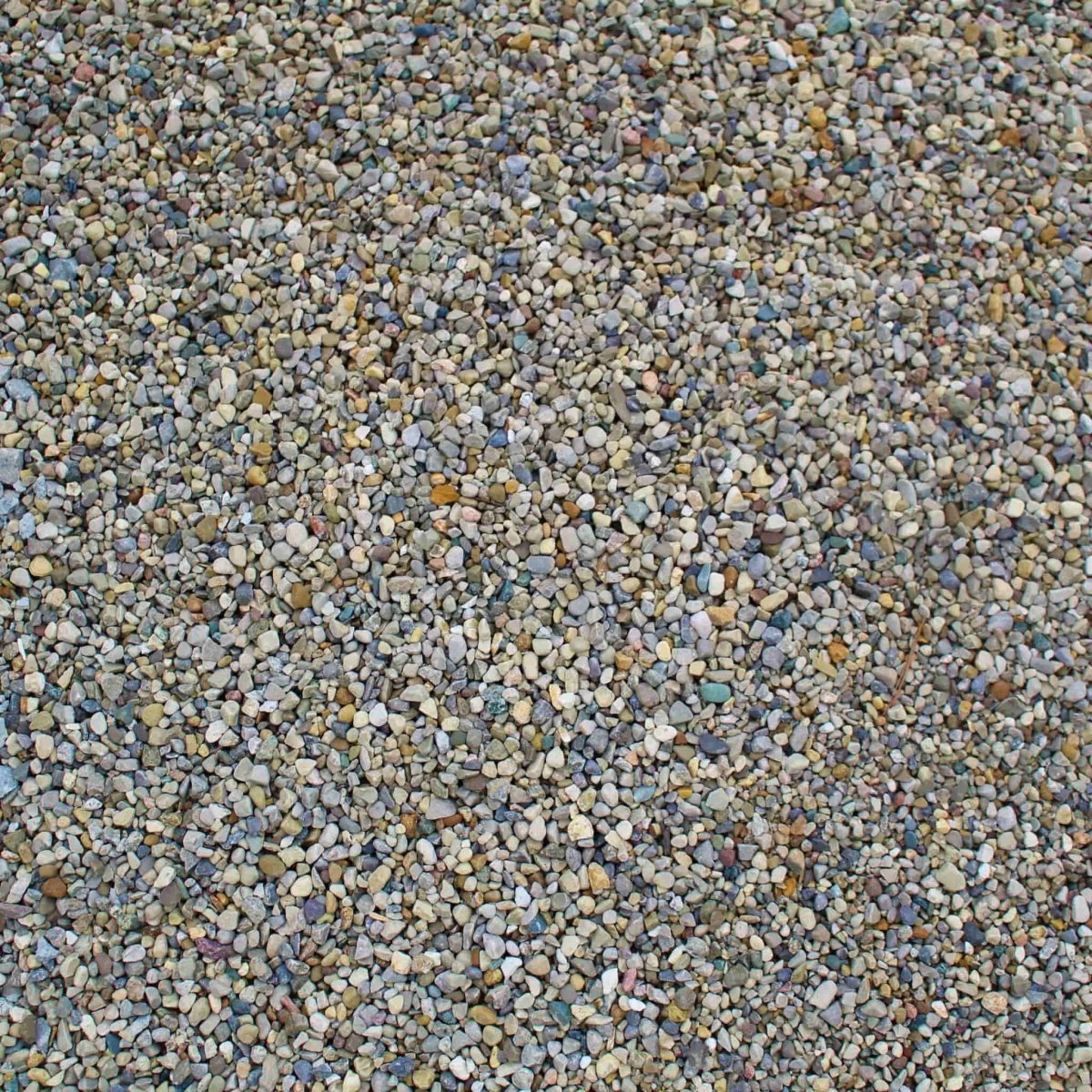
Smooth, rounded pea gravel is a top choice for Fort Smith yards, pairing naturally with the region's traditional brick homes and wooded lots. Its small, uniform stones promote drainage through heavy clay soil and stay comfortable underfoot during hot Arkansas summers. Use it along garden pathways, around patios, or as decorative ground cover beneath trees.
Complete Your Outdoor Stone Project
Stone pathways and drainage features pair naturally with mulched planting beds, creating a clean visual separation between the low-maintenance stone zones and the living planted areas of your Fort Smith landscape. If you are reshaping grade or filling areas adjacent to your stone installation, bulk soil or fill material helps you achieve the right slope to direct water toward your drainage stone and away from structures and foundations.



Service area
Areas we deliver stone and gravel in Fort Smith, Arkansas
Mulch Mound Pro Tip
Fort Smith's wet spring season is actually the ideal time to plan and install stone drainage features because you can observe exactly where water pools and flows across your property during actual rain events. Walking your yard during or immediately after a heavy spring storm reveals problem zones that are completely invisible when conditions are dry. Designing and installing stone drainage channels based on observed water movement gives you a system that solves real problems rather than one based on guesswork made during a dry week.
Mulch Mound Pro Tip
Installing stone around air conditioning units, utility pads, and mechanical equipment is especially practical in Fort Smith because it eliminates the mowing and trimming that would otherwise be required in those tight areas through the long growing season. Stone keeps equipment areas clean, dry, and accessible without any ongoing maintenance commitment. Use a coarser aggregate like 1-inch crushed stone rather than fine pea gravel around equipment bases so small stones are less likely to be picked up by mower blades or pulled into mechanical components by airflow.
Mulch Mound Pro Tip
When building a dry creek bed in a Fort Smith landscape to manage runoff from heavy spring rains, size the channel for the actual volume of water that moves through it during a strong storm rather than how it looks when conditions are dry. A channel that appears perfectly proportional in calm weather can be completely overwhelmed by the flow produced during a 2-inch-per-hour rain event, which Fort Smith experiences multiple times each spring. Building the channel wider and deeper than you think necessary, and using larger anchor stones along the banks, ensures the structure handles real weather without scattering stone across your yard.
The Unique Landscape of Fort Smith
Stone is one of the most practical and lasting landscape materials available to Fort Smith homeowners, particularly given the drainage challenges that come with clay loam soil and nearly 47 inches of annual rainfall. Hard surfaces like crushed granite pathways and river rock drainage channels give moving water a defined path rather than letting it pool on the clay-heavy ground that covers most Fort Smith yards. The city's hot zone 8a summers also make stone a valuable low-maintenance alternative in areas that are difficult to irrigate or access for regular upkeep, since it does not decompose or require seasonal replacement the way organic materials do. Decorative stone around foundations and along fence lines creates clean, stable borders that stay in place through heavy spring storms rather than washing away with the runoff. Whether you are correcting a drainage problem, building a durable walkway, or reducing the amount of lawn you maintain through Fort Smith's long growing season, stone is a material whose value increases over time without additional labor.