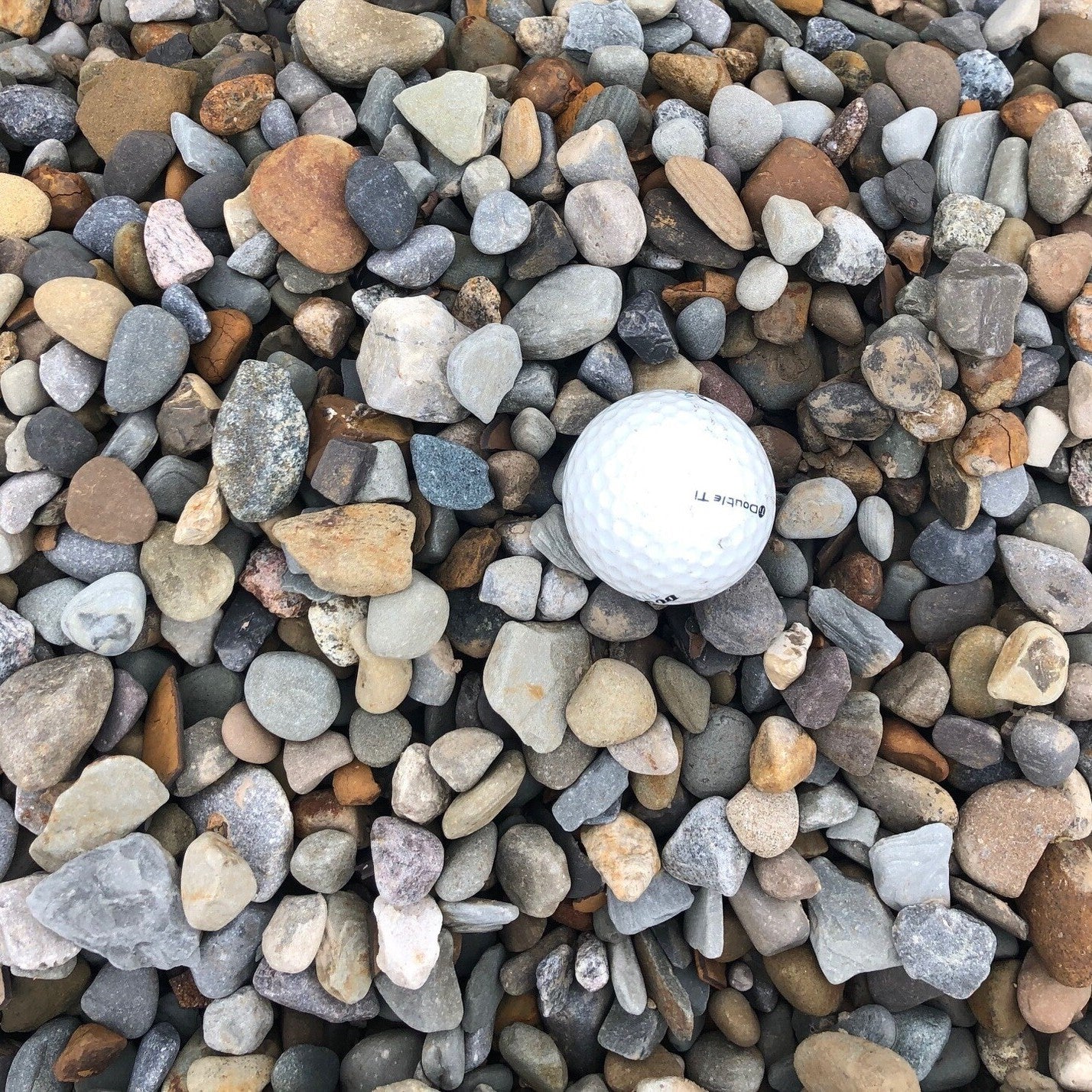
Number 57 crushed stone, angular limestone graded to about three quarters of an inch. The standard driveway, base and drainage gravel, it locks together under traffic and drains fast.
Mulch Mound delivered a yard of pea gravel to us. Delivery was on time, driver was friendly and hit a bullseye on the “tarp target”. We used the pea gravel (which was diameter as specified) to fill several muskrat holes around our pond. I would definitely recommend Mulch Mo...
Tell us what you're looking for
Thanks! We received your request.
Something went wrong. Please try again.
How Much Material Do I Need?
Decorative stone over landscape fabric in Gastonia planting borders needs a minimum 2-inch depth — thin enough to be economical but thick enough to prevent weeds from pushing through and to cover the clay soil completely. For drainage applications and gravel paths subject to foot traffic, go with 3 to 4 inches to account for settling into Gastonia's soft clay subgrade.
Use our free gravel calculator
What is a yard?
A yard is approximately 27 cubic feet. As a general guideline, one yard of material can cover an area of about 100-160 square feet at a 2-3 inch depth.
We can't take orders for this right now. Tell us what you need and we'll get back to you.
What do you need?
Thanks! We received your request.
Something went wrong. Please try again.
Hand-picked local yards
4,000+ regional deliveries
Dedicated support
Why order through Mulch Mound
The best local stone, without the guesswork.
We hand-pick and partner with the best yards in your region, keep only the ones our buyers rate well, and back each load with our guarantee.
Mulch Mound Guarantee
If your stone isn't the quantity or quality you ordered, we'll make it right.
About this stone
Number 57 crushed stone, angular limestone graded to about three quarters of an inch. The standard driveway, base and drainage gravel, it locks together under traffic and drains fast.
Mulch Mound delivered a yard of pea gravel to us. Delivery was on time, driver was friendly and hit a bullseye on the “tarp target”. We used the pea gravel (which was diameter as specified) to fill several muskrat holes around our pond. I would definitely recommend Mulch Mo...
How Much Material Do I Need?
Decorative stone over landscape fabric in Gastonia planting borders needs a minimum 2-inch depth — thin enough to be economical but thick enough to prevent weeds from pushing through and to cover the clay soil completely. For drainage applications and gravel paths subject to foot traffic, go with 3 to 4 inches to account for settling into Gastonia's soft clay subgrade.
Use our free gravel calculator
What is a yard?
A yard is approximately 27 cubic feet. As a general guideline, one yard of material can cover an area of about 100-160 square feet at a 2-3 inch depth.
Mulch Mound delivered a yard of pea gravel to us. Delivery was on time, driver was friendly and hit a bullseye on the “tarp target”. We used the ...
Read full review
Mulch Mound delivered a yard of pea gravel to us. Delivery was on time, driver was friendly and hit a bullseye on the “tarp target”. We used the pea gravel (which was diameter as specified) to fill several muskrat holes around our pond. I would definitely recommend Mulch Mound to a friend!
For stone coverage, measure length and width of the area in feet and multiply for square footage — at 2 inches deep, divide by 162 to get cubic yards; at 3 inches, divide by 108. In Gastonia, erring toward 3 inches on any area that gets foot traffic or water flow is smart because the red clay underneath compresses over time and a thicker layer maintains its look and function longer. For drainage swales, calculate the length and cross-section area separately to ensure you have enough volume to fill the channel completely.
Stone Types We Deliver in Gastonia
Mulch Mound delivers bulk stone by the cubic yard to properties throughout this part of North Carolina, cutting out the effort of hauling heavy bags from a store. If you have been searching for bulk gravel by the yard in Gastonia, we make ordering simple and handle the drop-off. Our stone arrives ready to spread, measured precisely so you order only what your project requires.
Pea Gravel
Pea gravel suits Gastonia homeowners who want a clean, low-maintenance ground cover that handles the region's clay-heavy soil and frequent summer rains with ease. Its smooth, rounded stones in warm earth tones look natural alongside the traditional brick and craftsman home styles common in this part of North Carolina.
Complete Your Outdoor Stone Project
Stone borders and drainage features work best when the surrounding planting beds are properly mulched and graded — pair your stone project with a quality topsoil to address any low spots near your drainage features, and a layer of hardwood mulch in adjacent planting areas keeps the overall landscape looking cohesive. Getting the soil, mulch, and stone layers working together is what separates a Gastonia yard that handles rainfall gracefully from one that fights it every season.
Before you place stone along a Gastonia foundation border, check where your downspouts discharge. If they're dumping water directly into the area you're planning to stone, the stone will become a concentrated erosion point rather than a stable border. Extend downspouts at least 4 feet from the foundation with a splash block or buried extension first, then lay your stone. This is especially important on the east and south elevations of Gastonia homes that take the brunt of afternoon storm rain.
Mulch Mound Pro Tip
In Gastonia yards with significant red clay, landscape fabric under stone is not optional — it's the difference between a feature that looks good for a decade and one that slowly disappears into the ground within three to four years. Fine clay particles wick upward through stone over time, especially in areas that stay moist. Use a woven geotextile fabric rather than the cheap spun-bond type; it allows water to drain through while physically blocking clay migration far more effectively under the heavy stone loads common in decorative borders.
Mulch Mound Pro Tip
Gastonia's 44 inches of annual rainfall means you can use dry-laid stone features — dry creek beds, gravel swales, and French drain outfalls — to actually manage stormwater rather than just decorating it. A properly graded dry creek bed running through a low-lying area of your yard can absorb and redirect meaningful water volume during our spring and summer thunderstorms, protecting foundation plantings, preventing lawn erosion, and eliminating standing water that breeds mosquitoes. The investment in a well-designed stone drainage feature pays back in lower plant losses and lawn repair costs within just a few seasons.
The Unique Landscape of Gastonia
Gastonia's red clay soil and 44-inch annual rainfall create real challenges for any landscape feature that sits on the ground — erosion on slopes, puddles around foundation plantings, and muddy walkways that turn unusable after every rain. Decorative and functional stone solves problems that plants and mulch alone can't fully address, providing stable surfaces, directing water flow, and anchoring landscape elements against washout. At 804 feet of elevation in the Carolina Piedmont, Gastonia yards often have subtle grade changes that funnel water toward foundations or low points, and strategically placed stone — whether river rock in a drainage swale or gravel along a foundation border — intercepts that flow before it becomes a structural or plant health issue. Zone 8a's long active season also means that low-maintenance landscape areas need to stay looking sharp from April through November, and stone delivers year-round visual consistency without the seasonal upkeep of mulch or groundcover. For walkways, borders, dry creek beds, and erosion control on slopes, the right stone material is both a practical investment and a permanent visual upgrade to any Gastonia property.
Frequently Asked Questions
Click a question to see the answer
Answer
What type of stone works best for a drainage swale in a Gastonia yard?
River rock or washed gravel in the 2 to 4 inch range is the standard choice for drainage swales in Gastonia. The rounded edges allow water to flow through quickly, the size is heavy enough not to float away during the intense rainfall events we get from spring and summer storms, and it looks natural winding through a landscape. Line the swale with landscape fabric first to prevent Gastonia's fine red clay particles from slowly migrating up through the stone and clogging the drainage channel over time.
Answer
Can I use gravel instead of mulch around my foundation plantings?
Yes, and in some Gastonia situations it's actually the better choice — particularly on the shady north and east sides of your home where mulch stays damp long enough to invite pests and fungal issues. Gravel or river rock in a foundation border drains quickly after rain, doesn't decompose, and never needs annual refreshing the way mulch does. The trade-off is that stone doesn't add organic matter to the red clay underneath, so it's best used in areas where you're not expecting significant plant growth in the soil below.
Answer
How do I stop the gravel on my Gastonia walkway from sinking into the clay underneath?
Red clay is the enemy of gravel pathways because the weight of foot traffic slowly presses the stone down into the soft clay, eventually making the path muddy and uneven. The fix is proper base prep before you ever lay stone: excavate 4 to 6 inches, compact the clay base, lay heavy landscape fabric, then add 3 to 4 inches of compacted gravel base material before your top decorative layer. Skipping the base is the most common mistake on Gastonia gravel paths, and it shows within one to two years.
Answer
What's a good stone choice for a low-maintenance area where grass won't grow well?
Under mature trees, along narrow side yards, and in heavily shaded areas where Gastonia's heat makes turf establishment nearly impossible, a 2 to 3 inch layer of pea gravel or small river rock on landscape fabric is an excellent permanent solution. It reads clean and intentional rather than neglected, it drains freely so it doesn't create wet spots, and it eliminates the mowing and edging burden of marginal turf areas. In Zone 8a's long growing season, the time savings from converting even one problem area to stone adds up quickly.
Answer
Will decorative stone on a slope hold in place during Gastonia's heavy rainstorms?
Larger stone — 3 inches and above — handles Gastonia slope applications well, especially the angular crushed stone or fieldstone varieties that lock together rather than rolling. Smooth river rock in the 1 to 2 inch range will migrate on any meaningful grade once water velocity picks up in a heavy storm. For steep slopes, larger fieldstone or boulders combined with native plantings to anchor the soil between them is the most stable long-term solution. Slope angle and storm intensity both matter here more than in drier climates.
Answer
How thick should I lay gravel for a driveway apron or parking pad in Gastonia?
For a gravel parking pad on Gastonia's clay soil, you need at least 4 inches of compacted gravel base topped with 2 to 3 inches of surface gravel — don't try to shortcut the base depth. Red clay is notoriously unstable under vehicle load when it's wet, which in our climate is a significant portion of the year. Compact the clay subgrade before laying any material, and consider edging the area with timber or stone borders to keep gravel from migrating into adjacent lawn areas during rain events.
Answer
What's the best stone for defining the edge between my lawn and planting beds?
Flat fieldstone or larger river cobbles work beautifully as bed edging in Gastonia landscapes — they're heavy enough to stay put, they don't deteriorate the way plastic or metal edging can in our climate, and they give a natural look that suits the Piedmont surroundings. Set them slightly below grade so your mower wheel can ride over the edge without scalping. For a cleaner, more formal look, cut stone or brick edging installed with a slight outward lean handles Gastonia's clay heaving better than material set perfectly vertical.
Answer
Is crush and run the same as crusher run?
Crush and run is a driveway base material made of crushed stone and stone dust that packs down hard and tight. With Gastonia's red clay soil and heavy annual rainfall, drainage matters more than compaction for most yard projects, which is why we deliver Crushed Stone #57, a clean stone that lets water pass through instead of pooling.
Answer
Is there a stone yard near Gastonia?
Ask at a stone yard and you'd probably walk out with a few tons of crushed stone, which is exactly what Mulch Mound delivers to your Gastonia driveway or yard by the cubic yard, so there's no trip to a quarry. Crushed stone locks together firmly, which helps it hold up against the red clay and heavy rain here.