




Easy to order, great service, and great product. We enjoy the final look of a very neglected beds we inherited!
About this landscape rock
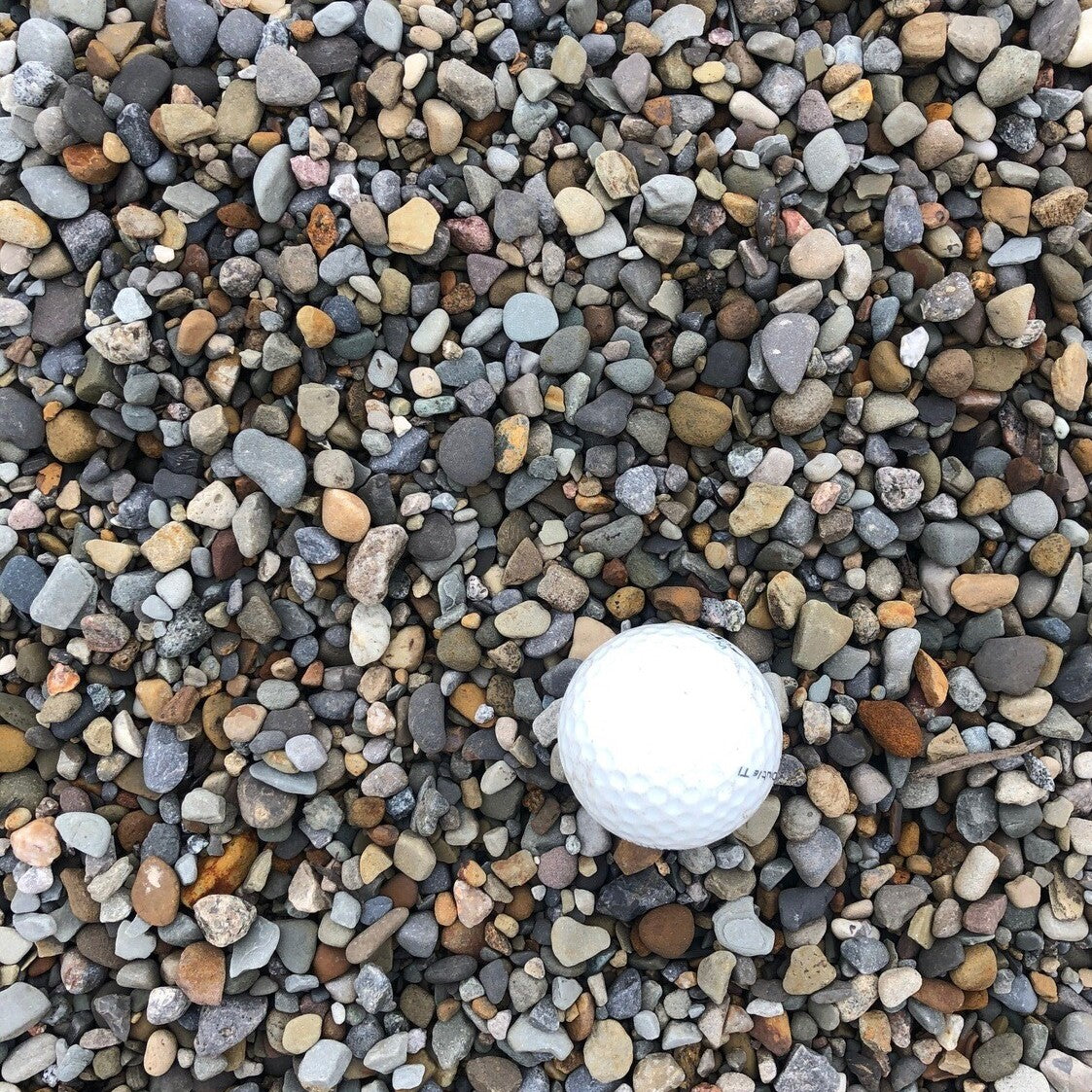
Weathered granite in a fines and chip blend that compacts into a firm natural path surface.
Easy to order, great service, and great product. We enjoy the final look of a very neglected beds we inherited!
Tell us what you're looking for
Thanks! We received your request.
Something went wrong. Please try again.
How Much Landscape Rock Do I Need?
How Much Landscape Rock Do I Need?
At a 2 to 3 inch install depth, one cubic yard covers roughly 162 square feet at the shallow end of that range. Measure your bed in square feet, divide by 162, and round up before you order since rock settles a bit once it is walked on or compacted by rain. Most Georgetown front beds run 100 to 300 square feet, so that is usually one to two cubic yards.
Use our free stone calculator
What is a Yard?
What is a Yard?
FAQs
FAQs
Georgetown Landscape Rock Delivery
Georgetown Landscape Rock Delivery
Regular price
$101.00
per
Yard
Regular price
Sale price
$101.00
Unit price
per
Shipping calculated at checkout.
Minimum of 3 Yard
Couldn't load pickup availability
Not currently available
We can't take orders for this right now. Tell us what you need and we'll get back to you.
Hand-picked local yards
4,000+ regional deliveries
Dedicated support
Why order through Mulch Mound
The best local landscape rock, without the guesswork.
We hand-pick and partner with the best yards in your region, keep only the ones our buyers rate well, and back each load with our guarantee.
Mulch Mound Guarantee
If your landscape rock isn't the quantity or quality you ordered, we'll make it right.
About this landscape rock
Weathered granite in a fines and chip blend that compacts into a firm natural path surface.
Easy to order, great service, and great product. We enjoy the final look of a very neglected beds we inherited!
How Much Landscape Rock Do I Need?
How Much Landscape Rock Do I Need?
At a 2 to 3 inch install depth, one cubic yard covers roughly 162 square feet at the shallow end of that range. Measure your bed in square feet, divide by 162, and round up before you order since rock settles a bit once it is walked on or compacted by rain. Most Georgetown front beds run 100 to 300 square feet, so that is usually one to two cubic yards.
Use our free stone calculator
What is a Yard?
What is a Yard?
FAQs
FAQs
Tell us what you're looking for
Thanks! We received your request.
Something went wrong. Please try again.
How It Works
Getting started is easy — just follow these simple steps
1
Choose your quantity
Adjust the quantity to match your project. One cubic yard covers about 100 to 160 square feet at a 2 to 3 inch depth.
2
Select your delivery date
Select a delivery date you'd like for the product to be dropped off at your home
3
Sit back and wait
Sit back, wait, and let us work our magic to make sure the highest quality product is delivered to your driveway.

I contacted Mulch Mound for #57 river rocks and it was easy and fast to get a delivery right before the holiday weekend. Stone was delivered as pro...
Read full review
I contacted Mulch Mound for #57 river rocks and it was easy and fast to get a delivery right before the holiday weekend. Stone was delivered as promised and place exactly where I asked. Excellent service! I will be ordering mulch next!

I recently ordered from mulch mound and was thoroughly impressed with every aspect of the experience. The entire process, from placing the order to...
Read full review
I recently ordered from mulch mound and was thoroughly impressed with every aspect of the experience. The entire process, from placing the order to delivery was seamless and efficient. The mulch arrived exactly on time, and the quality exceeded my expectations. The color was rich and consistent, and I received more than enough to complete my project with proper coverage and packing.
Customer service was equally outstanding. Communication was clear, and the team was responsive and professional throughout. It’s rare to find a company that delivers both a high-quality product and excellent service, but mulch mound did just that.
Highly recommended, and I wouldn’t hesitate to order from them again.
Complete Your Outdoor Project
Landscape fabric underneath is the difference between a decade long groundcover and a rock bed full of weeds by next summer. Steel or aluminum edging keeps the stone off the lawn and out of the silt loam, which otherwise wants to swallow the border over a season or two. A lot of customers also order a bit of topsoil for the planting pockets they leave inside the rock for shrubs.



Service area
Areas we deliver landscape rock in Georgetown, Kentucky
Mulch Mound Pro Tip
Georgetown's silt loam holds water at the surface longer than sandy soil would, so lay landscape fabric before the rock goes down, not after. Skipping fabric here means silt works up through the stone within a year or two and you end up with a muddy rock bed instead of a clean one. Fabric also keeps the rock from sinking into the soil during our wetter spring stretch before last frost.
Mulch Mound Pro Tip
The biggest mistake we see locally is installing rock right up against the house foundation without a gap or without checking the grade first. Water needs somewhere to go, and stone packed tight against siding traps moisture behind it. Leave a few inches of clearance and make sure the bed still slopes away from the foundation before you spread the first scoop.
Mulch Mound Pro Tip
Buying rock in bulk cubic yards instead of bagged stone saves you from stacking pallets in the truck bed, and it is worth ordering slightly more than your calculation since leftover rock never goes bad. Unlike mulch, it just sits in a pile until your next bed. Combine your rock order with edging or fabric delivery if you can, since fewer trips means less compaction on the lawn from equipment.
Decorative Stone in Georgetown
Georgetown sits on silt loam that compacts and drains slowly after the spring rains that roll through before our April 15 last frost. That kind of soil holds moisture right at the surface, which is exactly why rock beats mulch in low spots and along foundation lines here. Homeowners near the Horse Capital's newer subdivisions are using it for front yard beds that do not need replacing every year, and it holds up fine through our freeze thaw swings each winter. It is not for beds where you want the soil built up over time, it is for beds you want to stop maintaining.
What Landscape Rock Is
Landscape rock is stone chosen for how it looks as much as what it does. River rock is smooth and rounded, decomposed granite is fine and packs firm underfoot. Both are sold by the cubic yard for beds, borders, paths, and dry creek beds.
River Rock vs Decomposed Granite
River rock stays loose and rolls, so it suits beds, borders, and drainage runs where it can sit in place. Decomposed granite compacts into a firm surface, so it suits paths, patios, and anywhere you will walk or roll a wheelbarrow.
Depth and Coverage
Spread river rock 2 to 3 inches deep over landscape fabric so it stays put and weeds stay down. Lay decomposed granite 3 to 4 inches deep, wet it, and compact it in lifts for a surface that sheds water instead of rutting.