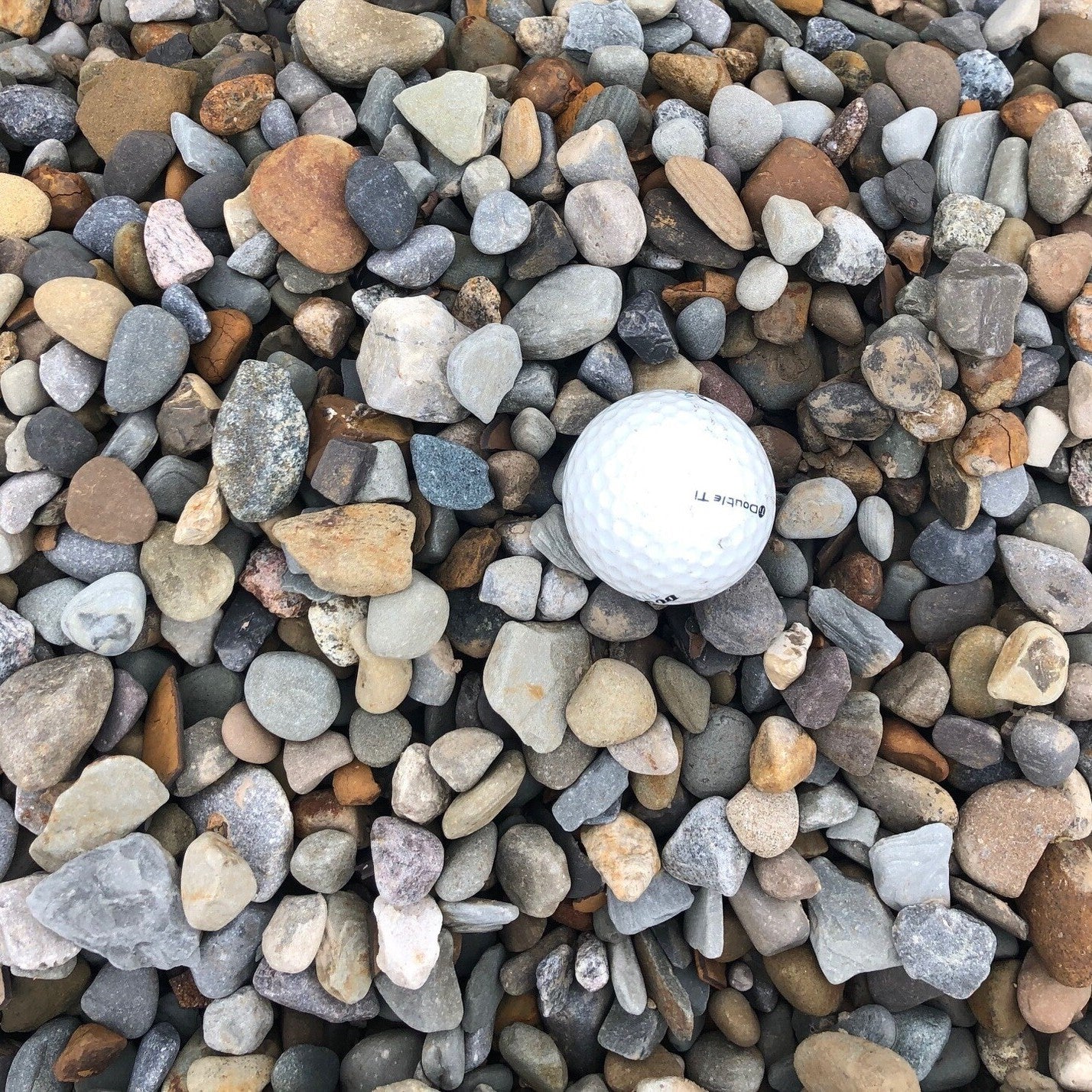
Number 57 crushed stone, angular limestone graded to about three quarters of an inch. The standard driveway, base and drainage gravel, it locks together under traffic and drains fast.
I contacted Mulch Mound for #57 river rocks and it was easy and fast to get a delivery right before the holiday weekend. Stone was delivered as promised and place exactly where I asked. Excellent service! I will be ordering mulch next!
Tell us what you're looking for
Thanks! We received your request.
Something went wrong. Please try again.
How Much Material Do I Need?
Pathway and driveway applications in Graham generally need a two to three inch layer of gravel for stable coverage, while decorative beds look best with a consistent two inch depth of larger stone. Drainage applications like French drains or dry creek beds require deeper material, often six inches or more, depending on the volume of water being managed.
Use our free gravel calculator
What is a Yard?
A yard is approximately 27 cubic feet. As a general guideline, one yard of material can cover an area of about 100-160 square feet at a 2-3 inch depth.
We can't take orders for this right now. Tell us what you need and we'll get back to you.
What do you need?
Thanks! We received your request.
Something went wrong. Please try again.
Hand-picked local yards
4,000+ regional deliveries
Dedicated support
Why order through Mulch Mound
The best local , without the guesswork.
We hand-pick and partner with the best yards in your region, keep only the ones our buyers rate well, and back each load with our guarantee.
Mulch Mound Guarantee
If your isn't the quantity or quality you ordered, we'll make it right.
About this stone
Number 57 crushed stone, angular limestone graded to about three quarters of an inch. The standard driveway, base and drainage gravel, it locks together under traffic and drains fast.
I contacted Mulch Mound for #57 river rocks and it was easy and fast to get a delivery right before the holiday weekend. Stone was delivered as promised and place exactly where I asked. Excellent service! I will be ordering mulch next!
How Much Material Do I Need?
Pathway and driveway applications in Graham generally need a two to three inch layer of gravel for stable coverage, while decorative beds look best with a consistent two inch depth of larger stone. Drainage applications like French drains or dry creek beds require deeper material, often six inches or more, depending on the volume of water being managed.
Use our free gravel calculator
What is a Yard?
A yard is approximately 27 cubic feet. As a general guideline, one yard of material can cover an area of about 100-160 square feet at a 2-3 inch depth.
I contacted Mulch Mound for #57 river rocks and it was easy and fast to get a delivery right before the holiday weekend. Stone was delivered as pro...
Read full review
I contacted Mulch Mound for #57 river rocks and it was easy and fast to get a delivery right before the holiday weekend. Stone was delivered as promised and place exactly where I asked. Excellent service! I will be ordering mulch next!
Stone is heavier than mulch or soil, so getting your quantity right before ordering matters more since adjusting mid-project is less convenient. Measure each area in feet, calculate square footage, decide on your target depth in inches, and use the coverage calculator on this page to get your cubic yard number. For irregular areas like a curved pathway or an organic-shaped bed, divide the shape into smaller rectangles and add the totals together.
Complete Your Outdoor Stone Project
If you are installing decorative stone in planting beds, pairing it with a quality garden soil amendment below the stone layer gives your plants a better root environment than the native gravelly sandy loam alone provides. Mulch is a great complement to stone in mixed landscape designs, where wood mulch covers active planting areas and stone handles the pathways and transitions between zones.
Graham receives most of its 38 inches of annual rain between October and April, which means any gravel pathway or drainage installation you complete before October needs to be finished and settled before the heavy rains begin. Installing stone in late August or September gives you the best timing because the ground is firm and dry for easy compaction and the material has a few weeks to settle into place before the first major rain event tests your work. Rushing an installation in November means working in saturated ground that is much harder to compact properly.
Mulch Mound Pro Tip
When using crushed stone for a driveway or parking area on a Graham property, always compact the material in layers rather than dumping the full depth at once. Each four inch lift needs to be packed with a plate compactor or hand tamper before adding the next layer. Skipping this step results in a surface that looks solid but develops ruts and soft spots by the first rainy season, especially on properties where vehicles make repeated turns in the same spot and the ground softens from the November rains.
Mulch Mound Pro Tip
Decorative river rock and gravel in Graham landscape beds will gradually sink into the native gravelly sandy loam over several years as the fine soil particles migrate upward through the stone layer. Installing a quality woven landscape fabric between the native soil and your stone layer extends the life of the installation significantly and keeps the visual depth and color of the stone consistent for much longer. Fabric does not eliminate this migration entirely but it slows it enough to make a meaningful difference over a five to ten year period.
The Unique Landscape of Graham
Stone and gravel are some of the hardest-working landscape materials available to Graham homeowners, providing drainage solutions, stable pathways, and low-maintenance ground cover that holds up through both the wet winters and dry summers of this area. With 38 inches of annual rainfall concentrated in the cooler months, poorly drained areas and muddy pathways are a real problem throughout Graham, and the right stone application solves these issues without ongoing maintenance. The native gravelly sandy loam already drains reasonably well on flat ground, but slopes and compacted areas near driveways and structures often need gravel support to prevent erosion and pooling. Stone also handles the temperature swings at 830 feet elevation without cracking, heaving, or degrading the way organic materials do, making it a permanent investment in your landscape rather than an annual expense. Whether you need pathway gravel, drainage rock, or decorative stone for a focal area, bulk delivery is the most cost-effective way to tackle projects of any size in Graham.
Frequently Asked Questions
Click a question to see the answer
Answer
What size gravel works best for a pathway that stays usable through Graham's muddy winter months?
A quarter inch minus crushed gravel or a three-eighths inch pea gravel compacts well enough to create a stable walking surface through Graham's wet season without becoming a slipping hazard. Larger decorative gravels shift underfoot and tend to migrate off the path during heavy rain, which becomes an ongoing maintenance issue from November through March. If you are building a pathway that connects a garage or shop to a main door, a two to three inch base of clean crushed rock topped with quarter minus gives you a path that drains instantly and stays firm all winter.
Answer
I have a low spot in my Graham backyard that turns into standing water every February. What stone product helps with that?
A clean drain rock, typically one and a half inch washed river rock, is the standard solution for creating a French drain or dry well to address standing water in Graham yards. The washed clean surface allows water to move freely through the void spaces between rocks without silting up the way a dirty or fines-heavy gravel would. You would trench from the low spot toward a better draining area or install a perforated pipe surrounded by drain rock and covered with filter fabric to redirect February pooling away from the problem zone.
Answer
How does decorative river rock hold up through Graham's freeze and thaw cycles in late October and early November?
River rock handles Graham's late fall and early winter freeze-thaw cycles very well because it is a naturally dense material with no internal porosity that would allow ice expansion to cause cracking. The main thing to watch is any stone that has been artificially tumbled or has hairline fractures from quarrying, as those pieces can break along stress lines after repeated freezing. Naturally smooth river rock sourced from Pacific Northwest deposits is essentially frost-proof at Graham's modest elevation of 830 feet.
Answer
Can I use crushed basalt around my raised garden beds to keep weeds down along the edges?
Yes, crushed basalt is an excellent border material for raised beds in Graham because it is dense, weed-resistant, and does not blow around in wind or wash away during rain the way lighter gravels can. It also stays dark and visually defined against the wooden sides of typical raised beds. Keep the stone layer at two to three inches deep along the perimeter and tuck it snugly against the bed frame to eliminate the gaps where creeping weeds tend to establish themselves during the wet growing months.
Answer
My driveway apron gets torn up every winter from delivery trucks and the rain softening the edge. What gravel helps fix that?
For a driveway apron in Graham that takes regular vehicle stress, three-quarter inch crushed gravel compacted in four inch lifts gives you the best combination of stability and drainage. The angular edges of crushed gravel interlock under load, which means it resists ruts and washouts far better than rounded pea gravel or river rock. If the area has a serious drainage problem, lay a four inch base of clean drain rock first to handle the water, then cap it with the compacted crushed gravel for the surface.
Answer
How much stone do I need to cover the area under my deck where nothing grows and mud tracks into the house?
Measure the length and width of the under-deck area in feet, multiply them together for square footage, and then plan for a two inch layer of quarter inch minus or pea gravel to cover it. Divide the cubic feet by 27 to get cubic yards. For a typical twelve by sixteen foot under-deck area in Graham, a two inch depth requires roughly 1.2 cubic yards. Adding a landscape fabric layer underneath the stone dramatically extends how long the installation stays weed and mud free through the wet winters.
Answer
Is there a stone type that works as a decorative mulch alternative for my front yard beds given how hot and dry Graham gets in summer?
River rock or lava rock in a two to three inch layer works as a decorative ground cover in Graham front beds, particularly for drought-tolerant plantings like ornamental grasses, lavender, and native shrubs that are well suited to zone 8b conditions. The trade-off compared to organic mulch is that stone does not add any organic matter to the gravelly sandy loam over time and can actually increase soil surface temperatures in July and August. For plants that prefer cooler root zones or need consistent moisture, organic mulch is still the better choice, but for a low-maintenance, visually bold front bed around heat-tolerant plants, decorative stone is a great solution.
Answer
Is there a stone yard near Graham?
Fixing a muddy pathway in Graham can mean hauling crushed stone home from a stone yard yourself, or having it delivered right to the spot where you need it. Mulch Mound takes the second route, so you order online by the cubic yard and skip the trip to any quarry. We are not a yard, just a delivery service.