


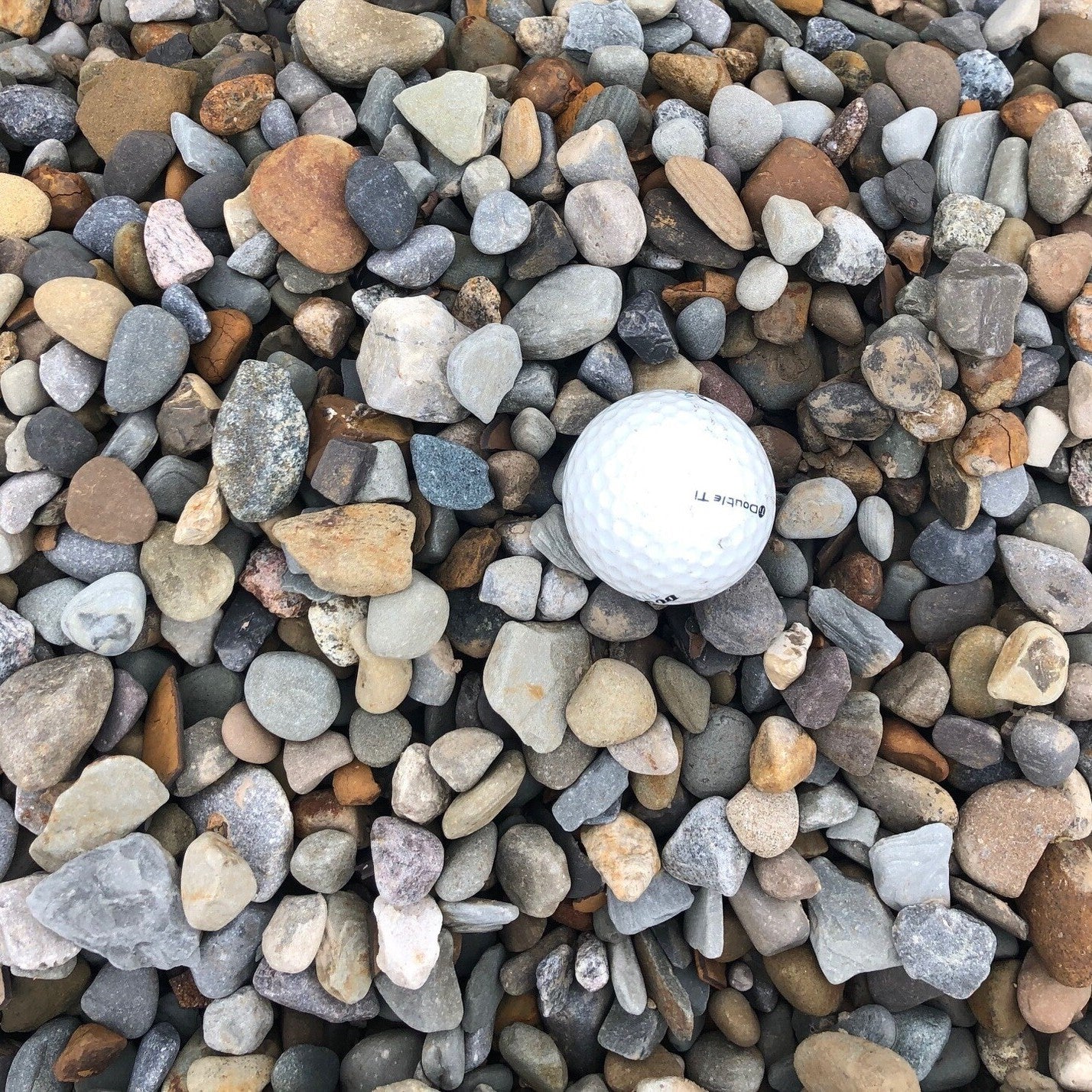

The driver nailed it on putting the gravel I ordered in front of my trailer and between the sidewalk. Very satisfied with how my flowerbeds look now.
About this stone
Number 57 crushed stone, angular limestone graded to about three quarters of an inch. The standard driveway, base and drainage gravel, it locks together under traffic and drains fast.
The driver nailed it on putting the gravel I ordered in front of my trailer and between the sidewalk. Very satisfied with how my flowerbeds look now.
Tell us what you're looking for
Thanks! We received your request.
Something went wrong. Please try again.
How Much Material Do I Need?
How Much Material Do I Need?
Apply decorative stone at 2 to 3 inches deep for landscape beds and weed suppression, and at 4 to 6 inches deep for drainage applications like dry creek beds or French drain channels. One cubic yard of stone covers approximately 160 square feet at a 2 inch depth.
Use our free gravel calculator
What is a Yard?
What is a Yard?
FAQs
FAQs
Grand Forks Gravel Delivery
Grand Forks Gravel Delivery
Regular price
$133.00
per
Yard
Regular price
Sale price
$133.00
Unit price
per
Shipping calculated at checkout.
Minimum of 3 Yard
Couldn't load pickup availability
Not currently available
We can't take orders for this right now. Tell us what you need and we'll get back to you.
Hand-picked local yards
4,000+ regional deliveries
Dedicated support
Why order through Mulch Mound
The best local , without the guesswork.
We hand-pick and partner with the best yards in your region, keep only the ones our buyers rate well, and back each load with our guarantee.
Mulch Mound Guarantee
If your isn't the quantity or quality you ordered, we'll make it right.
About this stone
Number 57 crushed stone, angular limestone graded to about three quarters of an inch. The standard driveway, base and drainage gravel, it locks together under traffic and drains fast.
The driver nailed it on putting the gravel I ordered in front of my trailer and between the sidewalk. Very satisfied with how my flowerbeds look now.
How Much Material Do I Need?
How Much Material Do I Need?
Apply decorative stone at 2 to 3 inches deep for landscape beds and weed suppression, and at 4 to 6 inches deep for drainage applications like dry creek beds or French drain channels. One cubic yard of stone covers approximately 160 square feet at a 2 inch depth.
Use our free gravel calculator
What is a Yard?
What is a Yard?
FAQs
FAQs
Tell us what you're looking for
Thanks! We received your request.
Something went wrong. Please try again.

How It Works
Getting started is easy — just follow these simple steps
1
Choose your stone
Make sure you adjust the quantity to your home's needs. You can use our calculator to estimate how much you'll need.
2
Select your delivery date
Select a delivery date you'd like for the product to be dropped off at your home
3
Sit back and wait
Sit back, wait, and let us work our magic to make sure the highest quality product is delivered to your driveway.

Quick delivery, amazing service. Highly recommend!

They delivered next day as requested. The website was easy to work with and the product is wonderful:)
Need Help Calculating How Much Gravel You Need?
Use our NEW Trace from Satellite tool to get an estimate for your project based on an aerial view of your property
Try Our CalculatorMeasure your project area in feet and multiply length by width to get square footage, then use the depth you plan to apply to calculate cubic footage by multiplying square footage by the depth in feet. Divide that number by 27 to convert to cubic yards. Because stone is dense and does not compress or settle the way soil does, your calculated amount should be quite accurate, though rounding up slightly is always wise for irregular shaped areas common in Grand Forks yards.
Complete Your Outdoor Stone Project
Stone beds look especially sharp when paired with clean steel or plastic landscape edging to contain the material and create a defined border, which also helps prevent gravel from migrating into your lawn during spring thaw. If your stone project is near a garden bed, consider a bulk soil delivery to build up the adjacent planting area at the same time.

Service area
Areas we deliver stone and gravel in Grand Forks, North Dakota
Mulch Mound Pro Tip
One of the most overlooked steps when installing stone beds in Grand Forks is proper landscape fabric selection. Not all fabric is equal, and in our silty clay loam soil environment a thin woven fabric will clog with fine silt particles within two or three seasons, leaving you with a bed that no longer drains properly and eventually heaves the stone upward. Invest in a heavy duty, commercial grade non-woven geotextile fabric that resists clogging and stays permeable for many years, even when fine clay particles from our native soil make contact with it after heavy rains.
Mulch Mound Pro Tip
Grand Forks homeowners often ask whether to use stone or mulch along the north sides of their homes where snow can pile deep and melt slowly into spring. Stone is the clear winner in those locations. North facing areas stay shaded and wet long after the rest of the yard has dried, and organic mulch in those spots can stay damp enough to harbor fungal growth and attract insects all season long. A 3 inch layer of clean river rock or limestone along north facing foundation beds drains instantly after each snowmelt event and requires virtually no seasonal maintenance year over year.
Mulch Mound Pro Tip
If you are using pea gravel for a pathway or patio area in Grand Forks, edging is not optional, it is essential. Prairie winds and foot traffic will gradually migrate pea gravel off the intended surface and into your lawn, where it becomes a mowing hazard and a frustration to retrieve. Steel landscape edging installed at least 3 inches deep around the perimeter of any gravel surface keeps the material contained through our windy springs and active summer use. This one preparation step will make your gravel pathway look intentional and well maintained for many seasons without constant raking and replacement.
The Unique Landscape of Grand Forks
Decorative stone is one of the most durable and low maintenance landscape materials available for Grand Forks homeowners, which makes it especially practical given our harsh freeze and thaw cycles that can damage less stable materials year after year. Unlike organic mulch, stone does not decompose, blow away in prairie winds, or need to be replenished each season, making it a long term investment that holds up through zone 4a winters without complaint. Grand Forks properties also benefit from stone in drainage applications, because our silty clay loam soil struggles to move water efficiently and strategically placed gravel or river rock can redirect runoff away from foundations and low areas. During our dry July and August stretches, stone mulched areas require virtually no supplemental watering because the rock layer slows evaporation from the soil below. Whether used for decorative beds, pathways, dry creek drainage features, or edging, stone adds a permanence to Grand Forks landscapes that organic materials simply cannot match.