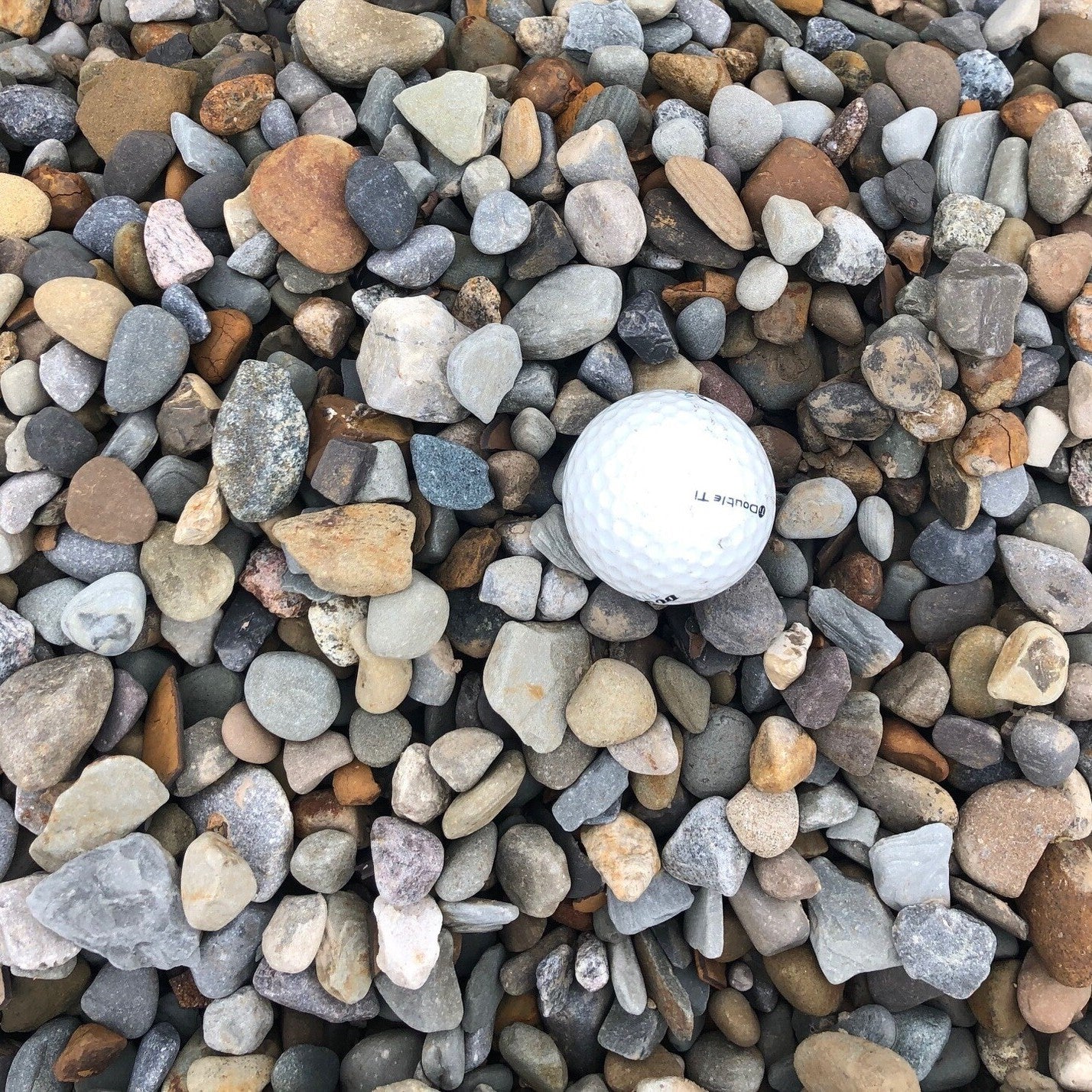
Number 57 crushed stone, angular limestone graded to about three quarters of an inch. The standard driveway, base and drainage gravel, it locks together under traffic and drains fast.
My experience with Mulch Mound was great and super easy. I ordered two yards of screened topsoil and was able to get it delivered within 2 days. They came in my requested time frame (afternoon) and dropped it off where I asked on my driveway. The topsoil was exactly what was a...
Tell us what you're looking for
Thanks! We received your request.
Something went wrong. Please try again.
How Much Material Do I Need?
For decorative ground cover in Grand Island landscape beds, two to three inches of stone is the standard depth and provides enough material to suppress weeds while maintaining a clean surface appearance through the freeze-thaw season. For drainage applications along foundations or in swales where loess runoff needs to be managed, a four to six inch depth allows enough permeability to handle the flow from spring rain events.
Use our free gravel calculator
What is a yard?
A yard is approximately 27 cubic feet. As a general guideline, one yard of material can cover an area of about 100-160 square feet at a 2-3 inch depth.
We can't take orders for this right now. Tell us what you need and we'll get back to you.
What do you need?
Thanks! We received your request.
Something went wrong. Please try again.
Hand-picked local yards
4,000+ regional deliveries
Dedicated support
Why order through Mulch Mound
The best local stone, without the guesswork.
We hand-pick and partner with the best yards in your region, keep only the ones our buyers rate well, and back each load with our guarantee.
Mulch Mound Guarantee
If your stone isn't the quantity or quality you ordered, we'll make it right.
About this stone
Number 57 crushed stone, angular limestone graded to about three quarters of an inch. The standard driveway, base and drainage gravel, it locks together under traffic and drains fast.
My experience with Mulch Mound was great and super easy. I ordered two yards of screened topsoil and was able to get it delivered within 2 days. They came in my requested time frame (afternoon) and dropped it off where I asked on my driveway. The topsoil was exactly what was a...
How Much Material Do I Need?
For decorative ground cover in Grand Island landscape beds, two to three inches of stone is the standard depth and provides enough material to suppress weeds while maintaining a clean surface appearance through the freeze-thaw season. For drainage applications along foundations or in swales where loess runoff needs to be managed, a four to six inch depth allows enough permeability to handle the flow from spring rain events.
Use our free gravel calculator
What is a yard?
A yard is approximately 27 cubic feet. As a general guideline, one yard of material can cover an area of about 100-160 square feet at a 2-3 inch depth.
My experience with Mulch Mound was great and super easy. I ordered two yards of screened topsoil and was able to get it delivered within 2 days. Th...
Read full review
My experience with Mulch Mound was great and super easy. I ordered two yards of screened topsoil and was able to get it delivered within 2 days. They came in my requested time frame (afternoon) and dropped it off where I asked on my driveway. The topsoil was exactly what was advertised, clean with no rocks or other debris. The price was reasonable. I plan to use them again in a couple weeks to order compost for my garden beds.
To estimate bulk stone for your project, measure the length and width of the area in feet and multiply to get square footage, then decide on your target depth. For a two-inch layer of decorative gravel, divide your square footage by 162 to get the cubic yards you need. Grand Island's loess soil can settle slightly under a new stone installation during the first freeze-thaw cycle, so plan to have an extra quarter yard on hand for topping off after the first winter.
Stone Types We Deliver in Grand Island
Mulch Mound delivers bulk stone by the cubic yard directly to homes and properties across central Nebraska, saving you the hassle of renting a trailer or making multiple hardware store runs. If you have been looking for bulk gravel by the yard in Grand Island, our team handles drop-off at your driveway or job site on your schedule. Our selection is well suited to the clay-heavy soils and wide residential lots typical of this part of the state.
Pea Gravel
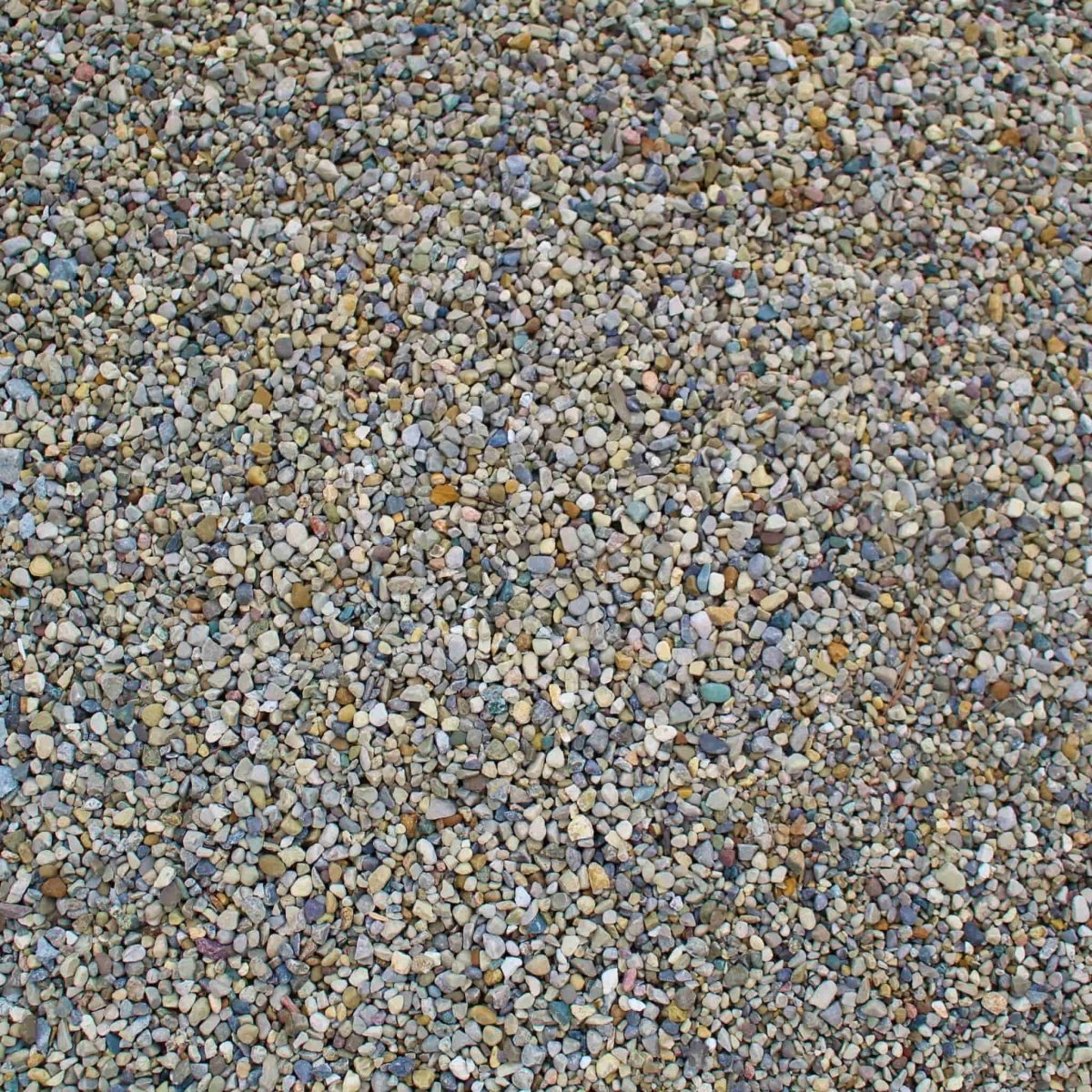
Pea Gravel features smooth, rounded stones in warm earth tones that pair well with the natural, open aesthetic common to central Nebraska yards. It excels on pathways, patios, drainage swales, and decorative beds. Its gentle texture is easy underfoot, and it holds up reliably through the region's freeze-thaw winters.
Complete Your Outdoor Stone Project
For areas where stone meets planting beds, pairing your stone delivery with bulk mulch creates a clean visual separation between hardscape and softscape that holds up well through Grand Island's freeze-thaw winters. If you are building up grade or preparing a subbase before setting stone, our bulk topsoil can help you establish the right slope and compaction profile before your stone layer goes down.
Before spreading stone along any Grand Island foundation border, check the grade of the existing soil and confirm it slopes away from the structure at roughly one inch of fall per foot for the first six feet. Loess soil around foundations tends to settle flat or even slightly toward the building over time, and placing stone on an improper grade locks in a drainage problem rather than solving it. A small investment in regrading before the stone goes down prevents a much larger water management issue later.
Mulch Mound Pro Tip
In Grand Island, the persistent southwest winds that blow across the plains from February through May can scatter fine stone from open landscape areas if the material is too light or spread too shallow. If you are installing pea gravel or small crushed stone in an exposed front-yard bed, consider using a heavier stone in the three-quarter inch range, or embed a thin layer of larger anchor stone beneath your decorative surface material to reduce wind displacement during the most exposed months of the year.
Mulch Mound Pro Tip
Stone pathways in Grand Island need an adequate base to stay level through the freeze-thaw cycle that runs from late September through early April. Laying stone directly on loess without a compacted gravel base means the path surface will heave unevenly as moisture moves in and out of the fine silt below during temperature swings. A three to four inch compacted base of crushed limestone or road gravel beneath your decorative stone layer will absorb most of the seasonal movement and keep your pathway flat and safe to walk on through many Nebraska winters.
The Unique Landscape of Grand Island
Grand Island's flat topography and silty loess soil create specific drainage challenges that decorative stone addresses more effectively than most other landscape materials. When heavy spring rains arrive in April and May, water moves slowly through compacted loess and tends to pool in low spots, along foundation edges, and in pathways where the soil surface has been worn smooth by foot traffic. A layer of crushed stone or river rock over those problem areas intercepts runoff and allows it to percolate downward more freely than bare loess can manage on its own. Stone also provides a permanent, low-maintenance solution for the areas of a Grand Island yard that are difficult to establish grass, such as narrow side yards, shaded north-facing strips, and the dry zones along driveways and fence lines where soil compaction is constant. With the first frost arriving as early as September 26, stone pathways and borders hold their appearance and function through the freeze-thaw cycles that would crack concrete, heave pavers, and shift plastic edging over a single Nebraska winter. For central Nebraska homeowners who want year-round curb appeal without high seasonal maintenance, decorative stone is one of the most practical and durable investments a landscape can hold.
Frequently Asked Questions
Click a question to see the answer
Answer
What size stone works best for walkways and pathways in Grand Island?
Pea gravel in the three-eighths to one-half inch range is the most popular choice for walkways in Grand Island because it compacts slightly underfoot for stability while still allowing rainfall to drain through quickly. Larger stone sizes can be unstable for walking surfaces, especially on Grand Island's flat terrain where paths do not have the natural slope to keep large stone from rolling underfoot. For high-traffic entry pathways, a more angular crushed stone product packs tighter and stays in place better during the windy spring months when loose gravel tends to scatter into surrounding lawn areas.
Answer
Will stone help with the drainage problem I have along my foundation?
Yes, and foundation drainage is one of the most practical applications for stone in Grand Island landscapes. The loess soil around home foundations tends to compact against the structure over time and shed water toward the building rather than away from it. Installing a six to twelve inch wide band of crushed stone along the foundation perimeter improves drainage by creating a permeable layer that intercepts roof runoff and allows it to move downward instead of pooling against the footing. Pairing the stone with a slight grade away from the foundation gives you the best protection during Grand Island's spring rain events.
Answer
How does decorative stone hold up through Grand Island's freeze-thaw winters?
Stone is one of the most freeze-thaw-tolerant landscape materials available, which makes it especially well suited to Grand Island's climate. The freeze-thaw cycles that begin in late September and continue through March can heave pavers, crack concrete borders, and shift plastic edging, but stone simply settles back into position as the ground moves through those cycles. River rock and crushed limestone are both stable through Nebraska winters, and neither material degrades from repeated freezing the way organic mulch or exposed loess soil does. A well-installed stone border will still look clean the following May after going through an entire central Nebraska winter.
Answer
Can I use stone to replace the grass that keeps dying in the narrow areas along my fence line?
Stone is an excellent replacement for turf in those difficult fence-line strips that Grand Island yards often have. The combination of root competition from fence posts and nearby trees, compacted loess along property lines, and reduced access for mowing equipment makes grass in those areas frustrating to maintain year after year. A four-inch base of compacted gravel covered with two to three inches of decorative stone laid over landscape fabric creates a clean, low-maintenance strip that you will not need to water, mow, or reseed through the short growing season between May 16 and September 26.
Answer
What stone is best for controlling erosion on a slope in my Grand Island yard?
For the gentle slopes common in Grand Island yards, a medium-sized angular rock in the one to two inch range is the most effective choice for erosion control. The angular edges interlock as the stone settles, resisting displacement during the heavy downpours that push through central Nebraska in May and June. River rock with its smooth surface tends to roll on slopes, so save it for flat decorative areas and drainage channels at the base of slopes where it can spread flow without migrating uphill over time.
Answer
Should I put landscape fabric under my stone areas in Grand Island?
Landscape fabric under stone is strongly recommended in Grand Island because loess silt is fine enough to migrate upward into a stone layer over time, creating a muddy mix that is difficult to separate and maintain. Fabric acts as a barrier that keeps the stone clean and the soil layer below intact through multiple seasons. In high-traffic areas or pathways, use a woven geotextile fabric rather than the lighter non-woven versions, as the woven type resists tearing during installation and holds up longer under the weight of stone through Nebraska's freeze-thaw winters.
Answer
How much stone do I need to cover a decorative bed area in my Grand Island yard?
For decorative ground cover in a landscape bed, a two to three inch layer of stone provides good coverage and visual depth without requiring an excessive amount of material. To calculate your needs, multiply the length and width of your area in feet to get square footage, then divide by 162 for a two-inch layer or by 108 for a three-inch layer to get cubic yards. Grand Island's persistent wind can scatter lighter pea gravel from open bed areas over time, so if your bed faces the prevailing southwest wind, consider using a slightly heavier stone size to reduce first-season displacement.