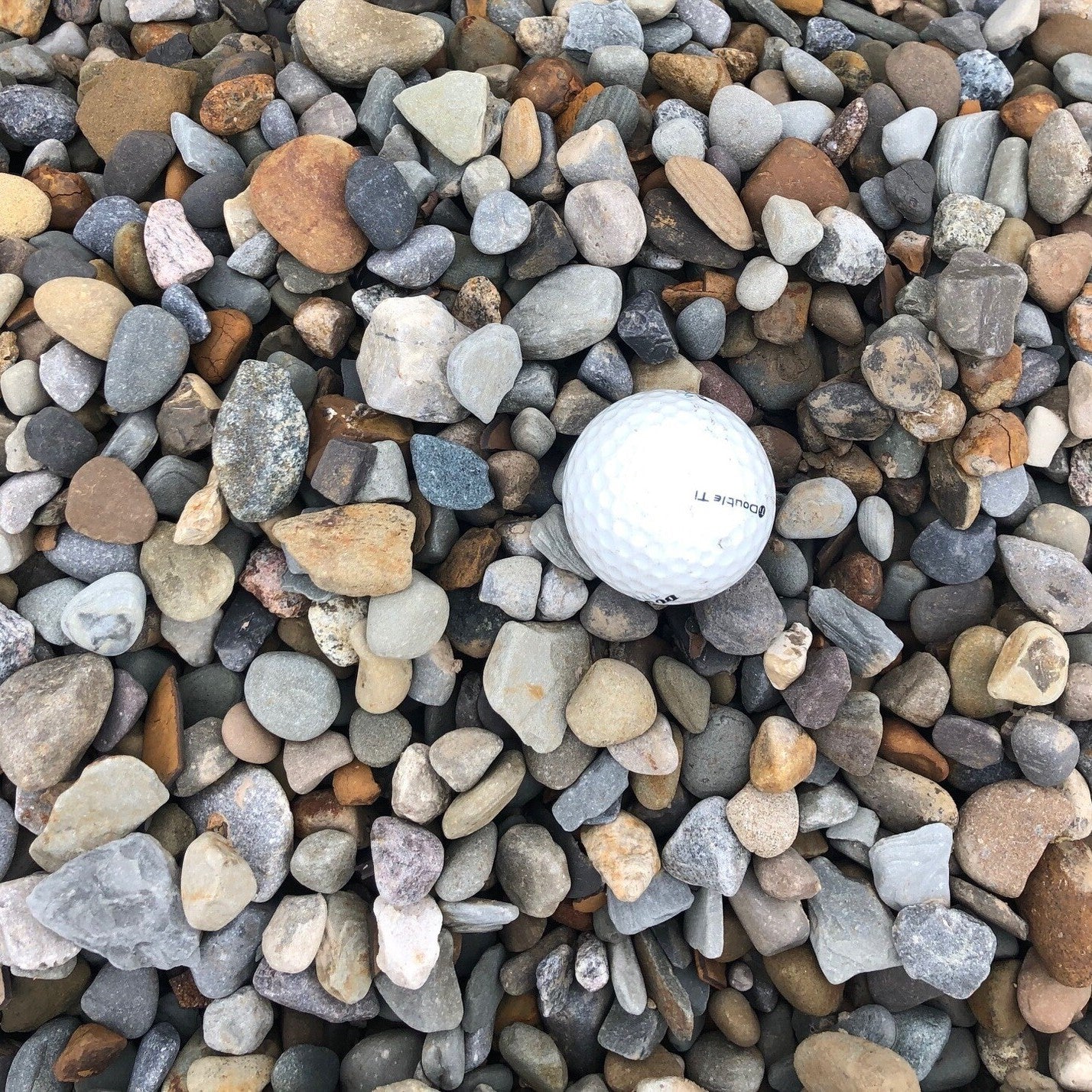
Number 57 crushed stone, angular limestone graded to about three quarters of an inch. The standard driveway, base and drainage gravel, it locks together under traffic and drains fast.
Mulch Mound delivered a yard of pea gravel to us. Delivery was on time, driver was friendly and hit a bullseye on the “tarp target”. We used the pea gravel (which was diameter as specified) to fill several muskrat holes around our pond. I would definitely recommend Mulch Mo...
Tell us what you're looking for
Thanks! We received your request.
Something went wrong. Please try again.
How Much Material Do I Need?
For pathways and decorative ground cover in Grand Junction, a 3-inch layer of gravel or crushed stone is the most practical standard depth, giving you enough material to look substantial and stay in place during the heavy summer rain events that can wash shallow stone out of position. For dry creek drainage features, a deeper fill of 4 to 6 inches of river rock ensures the channel can handle the fast-moving runoff that Grand Junction's slow-draining clay soil generates during summer storms.
Use our free gravel calculator
What is a yard?
A yard is approximately 27 cubic feet. As a general guideline, one yard of material can cover an area of about 100-160 square feet at a 2-3 inch depth.
We can't take orders for this right now. Tell us what you need and we'll get back to you.
What do you need?
Thanks! We received your request.
Something went wrong. Please try again.
Hand-picked local yards
4,000+ regional deliveries
Dedicated support
Why order through Mulch Mound
The best local stone, without the guesswork.
We hand-pick and partner with the best yards in your region, keep only the ones our buyers rate well, and back each load with our guarantee.
Mulch Mound Guarantee
If your stone isn't the quantity or quality you ordered, we'll make it right.
About this stone
Number 57 crushed stone, angular limestone graded to about three quarters of an inch. The standard driveway, base and drainage gravel, it locks together under traffic and drains fast.
Mulch Mound delivered a yard of pea gravel to us. Delivery was on time, driver was friendly and hit a bullseye on the “tarp target”. We used the pea gravel (which was diameter as specified) to fill several muskrat holes around our pond. I would definitely recommend Mulch Mo...
How Much Material Do I Need?
For pathways and decorative ground cover in Grand Junction, a 3-inch layer of gravel or crushed stone is the most practical standard depth, giving you enough material to look substantial and stay in place during the heavy summer rain events that can wash shallow stone out of position. For dry creek drainage features, a deeper fill of 4 to 6 inches of river rock ensures the channel can handle the fast-moving runoff that Grand Junction's slow-draining clay soil generates during summer storms.
Use our free gravel calculator
What is a yard?
A yard is approximately 27 cubic feet. As a general guideline, one yard of material can cover an area of about 100-160 square feet at a 2-3 inch depth.
Mulch Mound delivered a yard of pea gravel to us. Delivery was on time, driver was friendly and hit a bullseye on the “tarp target”. We used the ...
Read full review
Mulch Mound delivered a yard of pea gravel to us. Delivery was on time, driver was friendly and hit a bullseye on the “tarp target”. We used the pea gravel (which was diameter as specified) to fill several muskrat holes around our pond. I would definitely recommend Mulch Mound to a friend!
To estimate the cubic yards of stone you need, multiply the length by the width of your area in feet, multiply by your intended depth in feet, and divide by 27. For most Grand Junction xeriscape or pathway projects, a 2 to 3 inch depth is standard, which works out to roughly one cubic yard per 100 to 160 square feet of coverage. Measure all your planned stone areas together before ordering so one delivery covers the whole project.
Stone Types We Deliver in Grand Junction
Mulch Mound brings bulk stone directly to your property in Grand Junction, making it easy to tackle landscaping projects without hauling material yourself. Whether you are searching for bulk gravel by the yard in Grand Junction or simply need a reliable local source, we deliver by the cubic yard to homes and properties across the area. Our stone is measured and loaded fresh so you get exactly what your project calls for.
Pea Gravel
Smooth and rounded with warm earth tones, pea gravel suits the dry, sun-baked landscapes common across western Colorado. It drains quickly in our arid climate, making it a practical choice for pathways, patios, and decorative ground cover around the low-water plantings and xeriscaped yards typical in this region.
Complete Your Outdoor Stone Project
Pair your stone order with bulk mulch for your planting beds to create a cohesive low-water landscape, and consider adding a layer of quality amended soil beneath any planted areas before laying stone so that the plants you include get a far better start than Grand Junction's native alkaline clay alone can provide.
Grand Junction's afternoon winds, especially during the windy spring months leading up to the last frost in late April, can shift loose stone like pea gravel out of place over time. Installing a firm edging material, whether metal landscape edging, timber, or a stone border, around any loose gravel area keeps the stone where you put it through the windy season. A properly edged gravel path or planting area also looks more finished and requires far less maintenance than one that slowly bleeds into the surrounding lawn or beds.
Mulch Mound Pro Tip
One of the most practical uses of bulk stone in Grand Junction is building a dry creek bed along the natural drainage path of your yard. Grand Junction's clay soil and intense summer thunderstorms combine to create fast-moving runoff that can erode planted areas and pool against structures. A shallow swale lined with river rock 4 to 6 inches deep gives that water a defined path to travel, protects the soil beneath from erosion, and reads as an intentional landscape feature rather than a drainage problem.
Mulch Mound Pro Tip
Stone is often the go-to choice in Grand Junction for areas where grass has repeatedly failed due to the combination of alkaline clay, very low rainfall, and intense high-desert sun. Before converting a troubled lawn area to stone, rake or till the surface and add a 2-inch layer of sand or amended soil over the clay to improve the base, then lay your landscape fabric and stone on top for a finished surface that handles Grand Junction's challenging climate conditions far better than struggling turf ever could.
The Unique Landscape of Grand Junction
Decorative and functional stone is one of the most practical landscaping choices a Grand Junction homeowner can make, given the combination of low rainfall, alkaline clay soil, and intense high-desert sun that makes traditional turf and dense planting difficult to sustain. Stone pathways and gravel mulch areas eliminate the irrigation demand of grass entirely, which matters considerably in a city that averages only 9 inches of rain a year. Grand Junction's clay soil also drains poorly, and strategically placed stone can direct water away from foundations and low spots that would otherwise collect standing water during the intense summer thunderstorms that deliver most of the year's rainfall in short, heavy bursts. River rock, crushed granite, and decorative gravel all perform well in Grand Junction's climate, holding up to the ultraviolet radiation at 4,586 feet of elevation without fading or deteriorating the way organic materials do. Stone is also unaffected by the freeze-thaw cycles around Grand Junction's first and last frost dates, making it a landscape element that looks good year-round without seasonal maintenance. Whether you are building a dry creek bed to handle storm runoff, creating a low-water xeriscape feature, or edging a planting bed, stone is a natural fit for the Grand Junction environment.
Frequently Asked Questions
Click a question to see the answer
Answer
What size stone works best for a walking path in my Grand Junction backyard?
For a comfortable walking surface in a Grand Junction backyard, pea gravel at three-eighths of an inch is a popular choice because it packs down reasonably well underfoot without feeling too loose or unstable. Decomposed granite is another excellent option for paths because it compacts into a firm surface that handles Grand Junction's dry summer conditions very well and stays put even when the occasional summer storm sends a sheet of water across the yard. For both materials, a layer 3 to 4 inches deep over a compacted base and contained by border edging keeps the path from migrating into surrounding beds.
Answer
Can stone help with the drainage problems I have in my clay yard?
Absolutely. Grand Junction's alkaline clay soil absorbs water very slowly, which means the intense summer thunderstorms that deliver most of the area's 9 inches of annual rainfall can cause significant standing water and erosion before the ground can take it in. Dry creek beds filled with river rock or round cobble create a defined channel that carries storm water away from problem areas in a way that looks attractive and requires almost no maintenance. Even a shallow French drain filled with washed gravel and covered with landscape fabric can dramatically reduce standing water in low-lying Grand Junction yards.
Answer
How do I keep weeds from growing up through my decorative stone?
The most effective approach in Grand Junction is to lay a quality woven landscape fabric beneath the stone before spreading it, which blocks sunlight from reaching weed seeds in the alkaline clay below. Grand Junction's dry, windy conditions mean that airborne seeds will land on top of your stone over time, so you will still see some surface weeds, but they are much easier to pull from a gravel surface than from soil. A pre-emergent herbicide applied in early spring, around the time of the last frost in late April, provides additional protection by preventing wind-blown seeds from germinating in the gaps.
Answer
Will stone get uncomfortably hot in the Grand Junction summer sun?
Dark-colored stone in full south or west-facing exposures can get very hot during a Grand Junction July afternoon, especially at 4,586 feet where ultraviolet intensity is higher than at lower elevations. Lighter-colored stones such as tan or buff-toned crushed granite or white river rock reflect more sunlight and stay meaningfully cooler to the touch. If you are placing stone near a seating area, a play space, or anywhere pets will walk, choosing a lighter color and providing some afternoon shade from nearby plants or structures makes a real comfort difference.
Answer
How deep should I lay gravel for a low-water xeriscape planting area?
For a xeriscape planting bed in Grand Junction, a gravel mulch layer of 2 to 3 inches over landscape fabric provides effective weed suppression while still allowing water from your drip irrigation or the occasional summer rain to reach plant roots below. Gravel used as a surface mulch around low-water plants has the added benefit of warming the soil slightly in spring, which helps xeriscape plants break dormancy a bit earlier, useful in Grand Junction where the last frost can linger until around April 22. Avoid going much deeper than 3 inches in active planting areas, as it makes it harder to water roots effectively.
Answer
What stone works best for bordering the foundation of my Grand Junction home?
A 2 to 3 foot wide border of washed river rock or crushed granite along the foundation is a smart choice for Grand Junction homes because it keeps the alkaline clay soil from pressing directly against the structure and allows the occasional heavy summer rain to drain away quickly rather than pooling against the wall. River rock in a two to three inch size is especially popular because it looks clean, stays in place during runoff events, and does not blow around in the afternoon winds common on the Western Slope. Make sure the grade beneath the stone still slopes away from the foundation at roughly one inch per foot.
Answer
How much stone do I need for a typical Grand Junction front yard xeriscape conversion?
A typical Grand Junction front yard xeriscape conversion that replaces a lawn area might run 400 to 800 square feet, which would require roughly 5 to 10 cubic yards of gravel or crushed stone at a 3-inch depth. Measuring your front yard accurately before ordering prevents you from making multiple small deliveries, which is both less convenient and less economical. Having a little extra stone on hand is always useful in Grand Junction because it is common to discover drainage channels or low spots that benefit from additional material once you start working.
Answer
What is road base used for?
Road base is the compacted foundation layer contractors use under driveways, parking pads, and paver patios, made from crushed rock and fines that lock together tightly. In Grand Junction, where clay soil drains poorly, a stable base matters, and for that purpose our Crushed Stone #57 is better suited to drainage and top course applications rather than compaction.