


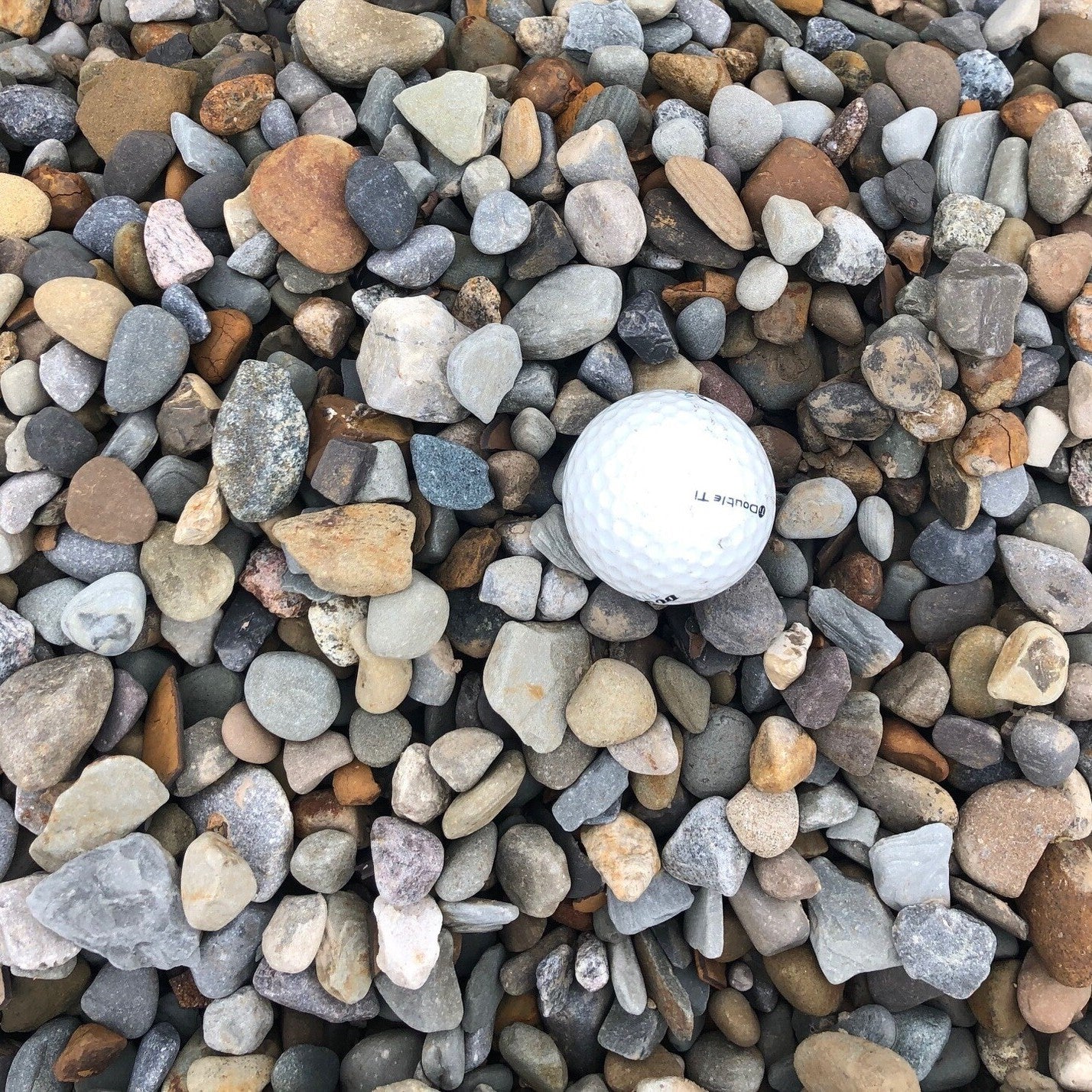

The driver nailed it on putting the gravel I ordered in front of my trailer and between the sidewalk. Very satisfied with how my flowerbeds look now.
About this stone
Number 57 crushed stone, angular limestone graded to about three quarters of an inch. The standard driveway, base and drainage gravel, it locks together under traffic and drains fast.
The driver nailed it on putting the gravel I ordered in front of my trailer and between the sidewalk. Very satisfied with how my flowerbeds look now.
Tell us what you're looking for
Thanks! We received your request.
Something went wrong. Please try again.
How Much Material Do I Need?
How Much Material Do I Need?
For most decorative and drainage applications in Greenwood, a three to four inch depth of stone provides effective coverage and holds in place during the area's heaviest rain events. Foundation borders and active drainage channels should lean toward the full four-inch depth given the concentrated volume of water that moves through those zones after Greenwood's frequent storms.
Use our free gravel calculator
What is a yard?
What is a yard?
FAQs
FAQs
Greenwood Gravel Delivery
Greenwood Gravel Delivery
Regular price
$133.00
per
yard
Regular price
Sale price
$133.00
Unit price
per
Shipping calculated at checkout.
Minimum of 3 yard
Couldn't load pickup availability
Not currently available
We can't take orders for this right now. Tell us what you need and we'll get back to you.
Hand-picked local yards
4,000+ regional deliveries
Dedicated support
Why order through Mulch Mound
The best local stone, without the guesswork.
We hand-pick and partner with the best yards in your region, keep only the ones our buyers rate well, and back each load with our guarantee.
Mulch Mound Guarantee
If your stone isn't the quantity or quality you ordered, we'll make it right.
About this stone
Number 57 crushed stone, angular limestone graded to about three quarters of an inch. The standard driveway, base and drainage gravel, it locks together under traffic and drains fast.
The driver nailed it on putting the gravel I ordered in front of my trailer and between the sidewalk. Very satisfied with how my flowerbeds look now.
How Much Material Do I Need?
How Much Material Do I Need?
For most decorative and drainage applications in Greenwood, a three to four inch depth of stone provides effective coverage and holds in place during the area's heaviest rain events. Foundation borders and active drainage channels should lean toward the full four-inch depth given the concentrated volume of water that moves through those zones after Greenwood's frequent storms.
Use our free gravel calculator
What is a yard?
What is a yard?
FAQs
FAQs
Tell us what you're looking for
Thanks! We received your request.
Something went wrong. Please try again.
How It Works
Getting started is easy — just follow these simple steps
1
Choose your stone
Make sure you adjust the quantity to your home's needs. You can use our calculator to estimate how much you'll need.
2
Select your delivery date
Select a delivery date you'd like for the product to be dropped off at your home
3
Sit back and wait
Sit back, wait, and let us work our magic to make sure the highest quality product is delivered to your driveway.

Quick delivery, amazing service. Highly recommend!

They delivered next day as requested. The website was easy to work with and the product is wonderful:)
Need Help Calculating How Much Gravel You Need?
Use our NEW Trace from Satellite tool to get an estimate for your project based on an aerial view of your property
Try Our CalculatorEstimate your stone needs by measuring the length and width of your project area in feet and multiplying them to get square footage, then using the rule that one cubic yard covers approximately 100 square feet at a three-inch depth as your baseline. For Greenwood drainage channels and dry creek beds that follow irregular or winding paths through the yard, it is most accurate to break the channel into shorter straight segments, estimate the volume for each segment separately, and then add the totals together before placing your order. Always round up to the nearest half yard to avoid running short at the end of a project.
Stone Types We Deliver in Greenwood
Mulch Mound brings bulk stone delivery straight to Greenwood homeowners and landscapers who need quality material without the hassle of hauling it themselves. Whether you are searching for bulk gravel by the yard in Greenwood or planning a large drainage project, we load and drop off exactly what your job requires. Our cubic-yard deliveries make it easy to tackle driveways, garden beds, and patios in one straightforward order.
Pea Gravel
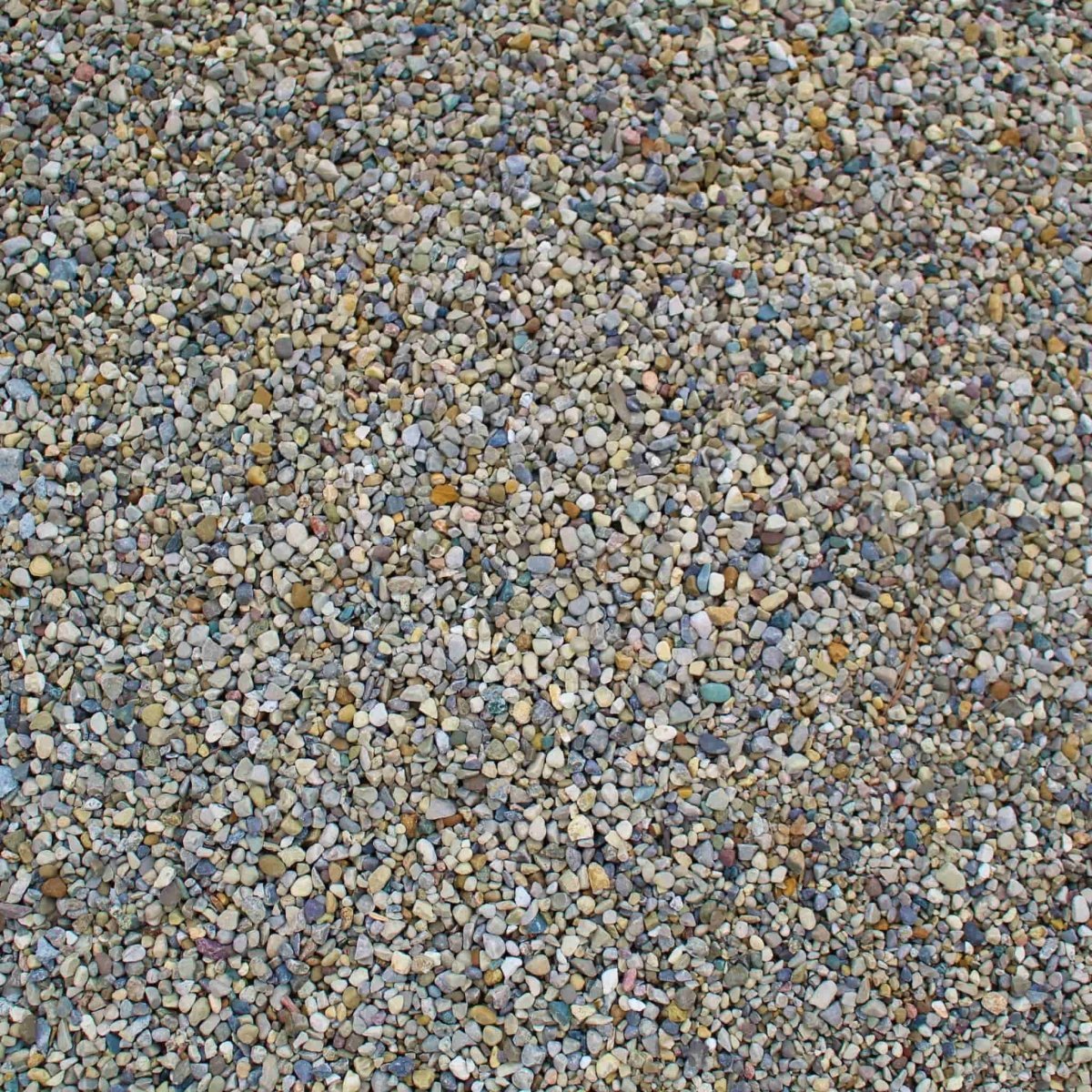
Smooth and rounded with warm earth tones, pea gravel is a go-to choice for the cottage-style gardens and shaded backyard patios common throughout this part of South Carolina. It drains well in the clay-heavy soils of the Piedmont region, and its soft edges make it comfortable underfoot on walkways and play areas.
Complete Your Outdoor Stone Project
Many Greenwood homeowners find it most efficient to combine a stone delivery with a topsoil or grading soil order, addressing drainage and leveling work before installing stone features so everything works together as a system. Adding hardwood mulch to planted areas adjacent to your new stone installations ties the overall landscape together visually and reduces erosion at the transition zones between stone and exposed soil.



Mulch Mound Pro Tip
One of the most overlooked uses for bulk stone in Greenwood is managing the erosion that occurs at the base of downspouts and gutter outlets. Greenwood's red clay erodes rapidly when concentrated water hits it repeatedly, carving ruts and washing away mulch and topsoil from nearby beds across just a few rain seasons. Installing a small splash pad of larger river rock or 57 stone beneath each downspout dissipates the energy of falling water before it contacts the soil, protecting the ground below and preventing the progressive erosion that damages bed edges and lawn areas around Greenwood homes year after year.
Mulch Mound Pro Tip
When installing stone pathways in Greenwood, the quality of the base layer beneath the decorative stone matters more than almost anything else. Greenwood's red clay soil swells when it absorbs moisture during wet seasons and can gradually shift stone path surfaces out of level if there is no stable aggregate base beneath them. Excavating two to three inches below your planned finished surface and filling with compacted crusher run before adding the decorative top layer gives you a pathway that stays level and firm even after Greenwood's heaviest spring rain events and returns to good condition quickly as the ground dries out.
Mulch Mound Pro Tip
Greenwood's mild Zone 8a winters mean stone installations rarely suffer the severe freeze-thaw damage common in colder regions, but the area's wet fall and winter season can still cause settling in stone features installed over poorly drained clay. After the first frost arrives around October 31, walking your stone paths, borders, and drainage features to identify any areas that shifted or sunk during the fall rain season takes only a few minutes and is far easier to correct then than after winter has fully set in. Resetting settled stones before the heavier rains that typically return to Greenwood in March and April prevents water from finding new unintended channels through your stone work.
The Unique Landscape of Greenwood
Landscape stone is one of the most practical and durable investments Greenwood homeowners can make given the combination of red clay soil, 45 inches of annual rainfall, and a long growing season that creates constant pressure for low-maintenance outdoor solutions. Red clay does not drain efficiently, and poorly managed water around foundations, walkways, and bed edges causes erosion, settling, and gradual structural damage that compounds over years. Stone pathways, dry creek beds, drainage channels, and decorative borders redirect Greenwood's considerable annual rainfall away from problem areas without requiring the ongoing maintenance that planted or mulched spaces demand through the Zone 8a growing season. Greenwood's mild Zone 8a winters mean stone installations are rarely disrupted by the freeze-thaw cycles that crack and shift hardscaping in colder climates further north, making stone an exceptionally durable long-term choice for local landscapes. Whether the goal is solving a persistent drainage challenge, creating a low-maintenance landscape zone, or adding decorative structure to a yard, bulk stone delivered to your Greenwood property delivers excellent lasting value.