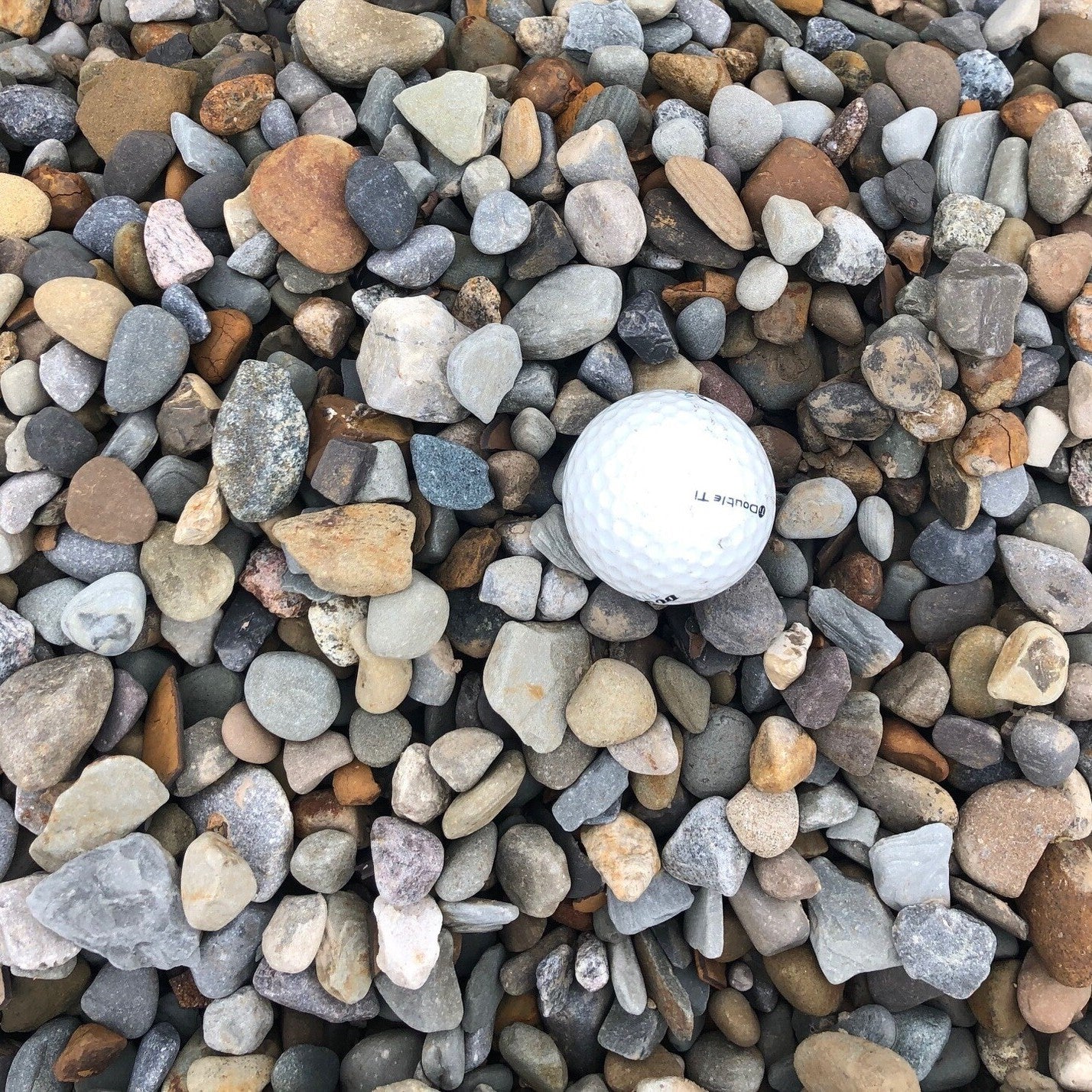
Number 57 crushed stone, angular limestone graded to about three quarters of an inch. The standard driveway, base and drainage gravel, it locks together under traffic and drains fast.
I contacted Mulch Mound for #57 river rocks and it was easy and fast to get a delivery right before the holiday weekend. Stone was delivered as promised and place exactly where I asked. Excellent service! I will be ordering mulch next!
Tell us what you're looking for
Thanks! We received your request.
Something went wrong. Please try again.
How Much Material Do I Need?
Plan on 2 to 3 inches of stone depth for decorative ground cover and pathway applications throughout your Groveland landscape. Drainage channels and erosion-prone slopes that take the direct force of Groveland's summer storms may need 4 to 6 inches of larger rock to stay in position through the heaviest rain events of the season.
Use our free gravel calculator
What is a yard?
A yard is approximately 27 cubic feet. As a general guideline, one yard of material can cover an area of about 100-160 square feet at a 2-3 inch depth.
We can't take orders for this right now. Tell us what you need and we'll get back to you.
What do you need?
Thanks! We received your request.
Something went wrong. Please try again.
Hand-picked local yards
4,000+ regional deliveries
Dedicated support
Why order through Mulch Mound
The best local stone, without the guesswork.
We hand-pick and partner with the best yards in your region, keep only the ones our buyers rate well, and back each load with our guarantee.
Mulch Mound Guarantee
If your stone isn't the quantity or quality you ordered, we'll make it right.
About this stone
Number 57 crushed stone, angular limestone graded to about three quarters of an inch. The standard driveway, base and drainage gravel, it locks together under traffic and drains fast.
I contacted Mulch Mound for #57 river rocks and it was easy and fast to get a delivery right before the holiday weekend. Stone was delivered as promised and place exactly where I asked. Excellent service! I will be ordering mulch next!
How Much Material Do I Need?
Plan on 2 to 3 inches of stone depth for decorative ground cover and pathway applications throughout your Groveland landscape. Drainage channels and erosion-prone slopes that take the direct force of Groveland's summer storms may need 4 to 6 inches of larger rock to stay in position through the heaviest rain events of the season.
Use our free gravel calculator
What is a yard?
A yard is approximately 27 cubic feet. As a general guideline, one yard of material can cover an area of about 100-160 square feet at a 2-3 inch depth.
I contacted Mulch Mound for #57 river rocks and it was easy and fast to get a delivery right before the holiday weekend. Stone was delivered as pro...
Read full review
I contacted Mulch Mound for #57 river rocks and it was easy and fast to get a delivery right before the holiday weekend. Stone was delivered as promised and place exactly where I asked. Excellent service! I will be ordering mulch next!
Measure your path, bed border, or drainage area in square feet and multiply by your desired stone depth in feet to get cubic feet, then divide by 27 to convert to cubic yards. In Groveland, where the growing season runs nearly 10 months, going a full 3 inches deep rather than 2 pays off quickly in reduced weeding time over the season. Areas near downspouts or natural drainage channels may need extra depth to handle the concentrated water flow that comes with Groveland's summer storms.
Stone Types We Deliver in Groveland
Mulch Mound brings bulk stone delivery by the cubic yard right to your driveway. Whether you are searching for bulk gravel by the yard in Groveland or planning a new patio, our team handles the heavy lifting. Our stones are well suited to the sandy soils and open, sun-filled landscapes common across this part of Lake County.
Pea Gravel
The smooth, rounded pebbles drain quickly, which suits the rainy Florida summers well. Pea gravel is a top choice for pathways, patios, and decorative ground cover around homes throughout this area. Its natural earth tones complement Florida greenery, and the small size makes it easy to spread and maintain over sandy soil.
3/4" River Stone
This smooth, rounded river rock delivers a clean, polished look that works well in Florida landscapes. At three quarters of an inch, it is large enough to stay in place but small enough for planting borders and dry creek beds. It performs especially well in areas where drainage matters during heavy summer rains.
1-2" River Stone
The larger rounded profile of this river stone suits bold decorative features and statement landscaping projects. It handles runoff well during Florida's frequent afternoon storms and holds up in the heat. Use it to frame wide garden beds, fill dry creek beds, or add natural texture to open yard spaces.
Complete Your Outdoor Stone Project
For a polished and functional finish, combine your stone order with bulk mulch for the planted areas adjacent to your stone work, keeping the low-maintenance hardscape zones clearly separated from the growing areas. Pairing stone borders with quality topsoil in nearby garden beds gives you the best of both worlds, a durable and weed-resistant hardscape alongside productive planting zones that handle Groveland's growing conditions well.
Before spreading stone in Groveland, install a quality woven landscape fabric rather than cheaper plastic sheeting. Groveland's sandy soil is highly porous and fine sand particles migrate upward into stone layers over time, especially after repeated soaking from summer storms. Woven fabric allows water to pass through freely while keeping sand from mixing up into your stone layer, which means the surface stays cleaner and the weed barrier remains effective for years longer than it would with no separation layer.
Mulch Mound Pro Tip
Groveland's mild winter period between the first frost around December 10 and the last frost around February 17 is an ideal time to install stone pathways and borders. The ground is firm, the temperature is manageable for physical outdoor work, and completing hardscape projects before the spring growing season means everything is set and settled when weeds and plants begin pushing again in late February. Winter installation also gives any disturbed soil at the edges time to stabilize before the summer storm season adds water pressure to the landscape.
Mulch Mound Pro Tip
In Groveland's zone 9b climate, light-colored stone placed around the base of citrus and sensitive fruit trees can absorb daytime warmth and release it slowly overnight, creating a slightly warmer microclimate that offers a small but real benefit during the brief frost window between December 10 and February 17. Place the stone in a ring starting about 6 inches from the trunk to avoid holding moisture directly against the bark. This simple design choice turns a decorative ground cover decision into a practical frost mitigation strategy for the trees most vulnerable to Groveland's occasional cold nights.
The Unique Landscape of Groveland
Stone is one of the most practical landscape materials available for Groveland properties because it handles the local conditions that organic materials consistently struggle with. Groveland's 49 inches of annual rainfall arrives mostly in powerful summer storms that erode unprotected soil and wash mulch off slopes and garden edges with regularity. A layer of decorative stone or gravel holds its position through even the heaviest downpours and requires no seasonal replacement the way organic ground covers do. The long growing season in zone 9b also means that any area left with bare soil or thin organic coverage needs constant maintenance from roughly late February through early December. Stone paths, drainage channels, and decorative ground cover areas dramatically cut down on weeding and upkeep during a growing season that in Groveland almost never stops.
Frequently Asked Questions
Click a question to see the answer
Answer
What size stone works best for drainage channels and swales on my Groveland property?
For drainage channels and swales in Groveland, river rock in the 2 to 4 inch range is typically the most effective choice. It is large enough to resist being displaced by the fast-moving water that builds during summer thunderstorms, but small enough to pack together and slow erosion at the channel edges. For French drains or underground drainage lines, a clean washed gravel in the half-inch to one-inch range works best around the perforated pipe.
Answer
Will stone get too hot for bare feet or pets to walk on during a Groveland summer?
Dark stones like black lava rock or dark granite can become very hot during Groveland's peak summer months, when ground temperatures under direct sun routinely reach extreme levels. Lighter colored stones such as white marble chips or tan pea gravel reflect more heat and stay noticeably cooler to the touch. For pet runs or areas where people walk barefoot, stick to lighter colored crushed shell or pea gravel and position those areas in spots that receive afternoon shade where possible.
Answer
Can stone help with the standing water I get in parts of my yard after Groveland summer storms?
Absolutely. Groveland's sandy soil drains quickly in most spots, but low-lying areas of a yard can still pool temporarily after the intense 2 to 3 inch rain events that are common in summer. A French drain filled with washed gravel redirects that water effectively, and a decorative stone channel leading away from the problem area can handle surface flow without looking out of place in the landscape. Stone holds up particularly well in these applications because it will not float away, compact down, or break apart like soil-based solutions over time.
Answer
How does stone compare to mulch for keeping my Groveland yard low maintenance over the long run?
Stone wins on long-term maintenance in Groveland's climate by a considerable margin. Organic mulch breaks down faster in zone 9b heat and needs refreshing every 12 to 18 months, while stone essentially never needs replacing under normal conditions. Stone also does not decompose and lose its weed-suppressing density the way mulch does over a season. The trade-off is that stone does not improve your sandy soil the way mulch does, so it is best used in areas where plant growth is not the primary goal, such as pathways, borders, and foundation zones.
Answer
What type of stone is best for a garden path in a Groveland backyard?
Pea gravel and crushed granite are both popular and practical choices for Groveland garden paths. Pea gravel is comfortable underfoot and stays in place reasonably well with defined borders, while crushed granite compacts slightly and creates a firmer walking surface that holds up well under regular foot traffic. Both handle Groveland's rainfall without washing out when the path has proper edging, and neither retains enough heat to be uncomfortable during the morning or evening hours when most Groveland gardening actually gets done.
Answer
Should I use stone around my home's foundation here in Groveland to prevent moisture problems?
Yes, a stone border along your foundation is a genuinely smart practice in Groveland. It keeps organic mulch away from the structure, which reduces persistent moisture against the foundation and discourages the termite and pest activity that is a real concern in zone 9b's warm, year-round climate. A 12 to 18 inch gravel border also improves drainage away from the foundation after heavy storms, which is particularly useful given the intensity of Groveland's summer rain events.
Answer
How much stone do I need to cover a typical side yard or garden path at my Groveland home?
For standard pathway or side yard coverage in Groveland, plan on 2 to 3 inches of stone depth to fully cover the soil and suppress weeds through the long growing season. At 2 inches deep, one cubic yard of stone covers approximately 160 square feet. Measure your total area in square feet, decide on your desired depth, and use our calculator to confirm the right quantity. Laying landscape fabric beneath the stone before you spread it will dramatically reduce the weed pressure that Groveland's 10-month growing season would otherwise push up through your coverage.
Answer
Is crush and run the same as crusher run?
Crush and run and crusher run are the same product, a mix of crushed stone and stone dust that compacts tight for driveways and bases. With Groveland's heavy summer rainfall, that dust content can hold water instead of draining it. Our Crushed Stone #57 has the fines washed out, so it drains freely and resists erosion better for local conditions.