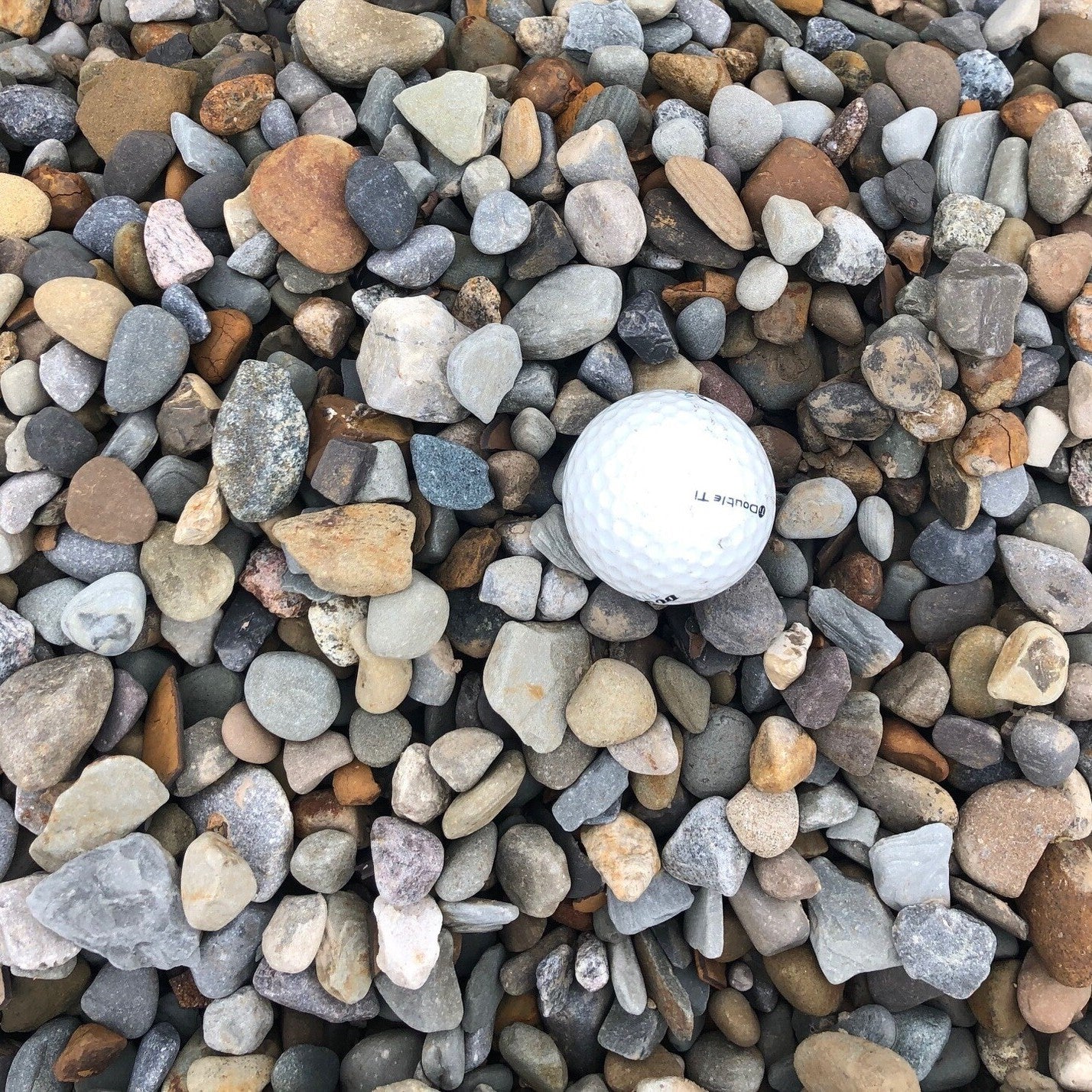
Number 57 crushed stone, angular limestone graded to about three quarters of an inch. The standard driveway, base and drainage gravel, it locks together under traffic and drains fast.
I contacted Mulch Mound for #57 river rocks and it was easy and fast to get a delivery right before the holiday weekend. Stone was delivered as promised and place exactly where I asked. Excellent service! I will be ordering mulch next!
Tell us what you're looking for
Thanks! We received your request.
Something went wrong. Please try again.
How Much Material Do I Need?
Most decorative stone applications in Hickory work best at a 2 to 3 inch depth, which is enough to suppress weeds effectively and stay stable through wet weather. For drainage and erosion control on clay slopes, a 3 to 4 inch layer provides meaningful coverage and prevents clay from washing up through the stone layer during Hickory's heaviest spring rain events.
Use our free gravel calculator
What is a yard?
A yard is approximately 27 cubic feet. As a general guideline, one yard of material can cover an area of about 100-160 square feet at a 2-3 inch depth.
We can't take orders for this right now. Tell us what you need and we'll get back to you.
What do you need?
Thanks! We received your request.
Something went wrong. Please try again.
Hand-picked local yards
4,000+ regional deliveries
Dedicated support
Why order through Mulch Mound
The best local stone, without the guesswork.
We hand-pick and partner with the best yards in your region, keep only the ones our buyers rate well, and back each load with our guarantee.
Mulch Mound Guarantee
If your stone isn't the quantity or quality you ordered, we'll make it right.
About this stone
Number 57 crushed stone, angular limestone graded to about three quarters of an inch. The standard driveway, base and drainage gravel, it locks together under traffic and drains fast.
I contacted Mulch Mound for #57 river rocks and it was easy and fast to get a delivery right before the holiday weekend. Stone was delivered as promised and place exactly where I asked. Excellent service! I will be ordering mulch next!
How Much Material Do I Need?
Most decorative stone applications in Hickory work best at a 2 to 3 inch depth, which is enough to suppress weeds effectively and stay stable through wet weather. For drainage and erosion control on clay slopes, a 3 to 4 inch layer provides meaningful coverage and prevents clay from washing up through the stone layer during Hickory's heaviest spring rain events.
Use our free gravel calculator
What is a yard?
A yard is approximately 27 cubic feet. As a general guideline, one yard of material can cover an area of about 100-160 square feet at a 2-3 inch depth.
I contacted Mulch Mound for #57 river rocks and it was easy and fast to get a delivery right before the holiday weekend. Stone was delivered as pro...
Read full review
I contacted Mulch Mound for #57 river rocks and it was easy and fast to get a delivery right before the holiday weekend. Stone was delivered as promised and place exactly where I asked. Excellent service! I will be ordering mulch next!
Measure your project area in square feet and decide on the depth you need, typically 2 inches for decorative groundcover and 3 inches for pathways and drainage areas. Multiply the square footage by the depth in inches, then divide by 324 to get the cubic yards needed. Hickory projects on sloped clay ground often need extra material to fill in low spots after initial settling, so adding 10 percent to your order is a practical buffer for most installations.
Stone Types We Deliver in Hickory
Searching for bulk gravel by the yard in Hickory is simple with Mulch Mound, a local landscape material delivery company that brings cubic-yard orders straight to your property. The Piedmont's clay-rich soil and warm, humid summers make choosing the right stone important, and our focused catalog covers the variety that local homeowners and contractors rely on most. Every delivery is measured and priced by the cubic yard with no guesswork.
Pea Gravel
Pea Gravel is a smooth, rounded stone prized for its natural earth tones and easy handling. It drains freely through the clay-influenced soils common in this part of North Carolina, making it a dependable choice across wet seasons. Homeowners reach for it along pathways, patios, play areas, and decorative garden beds.
Complete Your Outdoor Stone Project
A stone delivery pairs well with a bulk mulch order for the planted areas adjacent to your hardscape, keeping the overall landscape cohesive and low-maintenance through the season. If you are prepping a nearby bed or lawn area at the same time, a bulk soil order can arrive alongside your stone to handle all phases of the project in a single delivery.
Hickory's red clay expands noticeably after soaking rains and contracts again during dry periods, a cycle that gradually shifts loose stone out of place along borders and pathways. Digging 3 to 4 inches down and setting a compacted gravel base before laying decorative stone adds an hour of work upfront but can double or triple how long your installation stays level and tidy through the wet and dry cycles that define a typical Hickory landscape year.
Mulch Mound Pro Tip
If you are using stone in a drainage swale or low area of your Hickory yard, orient the channel so it directs water away from the foundation and toward a lower point on the property. Clay soil's poor permeability means water will always move laterally before it soaks in, and a well-planned stone channel takes advantage of that tendency rather than fighting it. This approach is especially valuable during Hickory's heavy March and April rain events when water moves across the landscape faster than the clay beneath can absorb it.
Mulch Mound Pro Tip
Shaded areas under Hickory's mature oaks and maples often have a dense network of surface roots that make any kind of ground preparation difficult. Rather than tilling or digging and damaging those roots, lay landscape fabric directly on the ground surface and cut small X-shaped slits around any roots or stems that protrude, then spread 2 to 3 inches of stone over the fabric. This approach covers the problem area without disturbing the root system and gives you a permanent attractive solution that holds up through the freeze-thaw cycles of a Hickory winter.
The Unique Landscape of Hickory
Decorative and functional stone is one of the most durable investments a Hickory homeowner can make given the landscape challenges this area presents. Red clay soil shifts and heaves with moisture changes, and hardscape elements built on stone bases stay stable through the wet-dry cycles that Hickory's 45 inches of annual rainfall create year after year. Stone pathways and drainage channels handle runoff from heavy spring storms far better than turf or bare soil, which erodes quickly on the rolling terrain common throughout the Hickory area. At 1,161 feet of elevation, Hickory landscapes also deal with freeze-thaw cycles between November and March that can damage wood and composite materials, while natural stone weathers those cycles without deteriorating. Low-maintenance stone groundcover in high-traffic or heavily shaded areas solves the persistent problem of grass that refuses to establish under tree canopy or on slopes where compacted red clay makes turf growth nearly impossible.
Frequently Asked Questions
Click a question to see the answer
Answer
What size stone works best for a drainage swale in a Hickory yard?
For drainage swales handling the kind of runoff Hickory yards experience during heavy spring storms, a 1.5 to 3 inch river rock or washed gravel works best. That size is heavy enough to stay in place during strong water flow without requiring mortar, and the gaps between stones allow water to move through quickly rather than pooling on top. Smaller pea gravel tends to migrate on Hickory's clay-heavy soil when water moves through it and can clog with clay sediment over time.
Answer
Can I use stone to solve the erosion problem on the slope in my Hickory backyard?
Stone is one of the best permanent solutions for slope erosion in Hickory. The rolling terrain and red clay combination means bare or thinly grassed slopes shed water rapidly during the area's frequent spring rain events. A layer of 2 to 4 inch river rock or angular gravel set over landscape fabric on the slope breaks the energy of rainfall and holds the clay in place. For steeper grades, dry-stacked stone retaining walls built in terraces are an especially effective and attractive long-term fix.
Answer
How much stone do I need for a simple backyard pathway in Hickory?
For a pea gravel or crushed stone pathway, a 3-inch depth is standard and gives you enough material to stay comfortable underfoot while resisting displacement. A typical 3-foot wide by 20-foot long pathway at 3 inches deep needs about 0.56 cubic yards of material. Because Hickory's red clay can push up through thin stone layers after wet winters, using landscape fabric beneath the stone and keeping the depth at 3 inches helps the path stay stable through the freeze-thaw season from November through March.
Answer
Will stone get too hot around my foundation plantings during a Hickory summer?
Light-colored stone like tan river rock or natural limestone gravel reflects more heat than dark materials, which helps in Hickory's warm Zone 7b summers. Very dark stone placed in full sun can raise soil temperatures beneath it significantly, which can stress shallow-rooted foundation shrubs during July and August heat. If you are using stone as a ground cover near plants, choosing a lighter color and leaving a few inches of clearance between stone and plant stems gives roots better conditions through the hottest part of the season.
Answer
Does stone work well in the shaded areas under my Hickory trees where grass will not grow?
Stone is one of the most practical solutions for those problem shaded areas that are common in Hickory yards with mature hardwoods. Grass struggles under dense canopy on clay soil because it lacks light and competes with surface roots, but stone requires no light or supplemental water to maintain its appearance. A layer of small river rock or crushed gravel over landscape fabric keeps the area tidy, prevents erosion when tree root channels funnel rain across the ground, and eliminates the frustration of trying to grow turf in genuinely impossible conditions.
Answer
What stone works best for decorative borders around my Hickory planting beds?
For bed borders in Hickory, a medium river rock between 2 and 4 inches in diameter gives you the best balance of visual weight and practicality. Smaller decorative stone tends to migrate into the lawn with mowing and during Hickory's frequent heavy rains, while larger river rock or fieldstone provides a clean defined edge that stays put through wet seasons. Natural buff or tan river rock also complements the warm tones of mulched beds and looks consistent through the long growing season from April through November.
Answer
How do I keep stone from sinking into Hickory's clay soil over time?
Clay's tendency to expand when wet and contract when dry means stone set directly on native Hickory soil will shift and partially sink over a few seasons. The best practice is to dig out the area 4 to 5 inches deep, add a 2-inch layer of compacted crushed gravel as a base, lay landscape fabric over that, and then add your finished stone on top. This base layer separates the decorative stone from the clay and gives water somewhere to drain laterally, which prevents the frost-heave cycle from pushing stone out of position during Hickory's November through March cold season.
Answer
Is crush and run the same as crusher run?
Same product, different regional name. Crush and run is crushed stone blended with stone dust that compacts into a solid base for driveways and paver projects. In Hickory, where wet-dry cycles and red clay soil shift over time, we deliver Crushed Stone #57 instead, a clean stone that drains well for stable, long-lasting results.