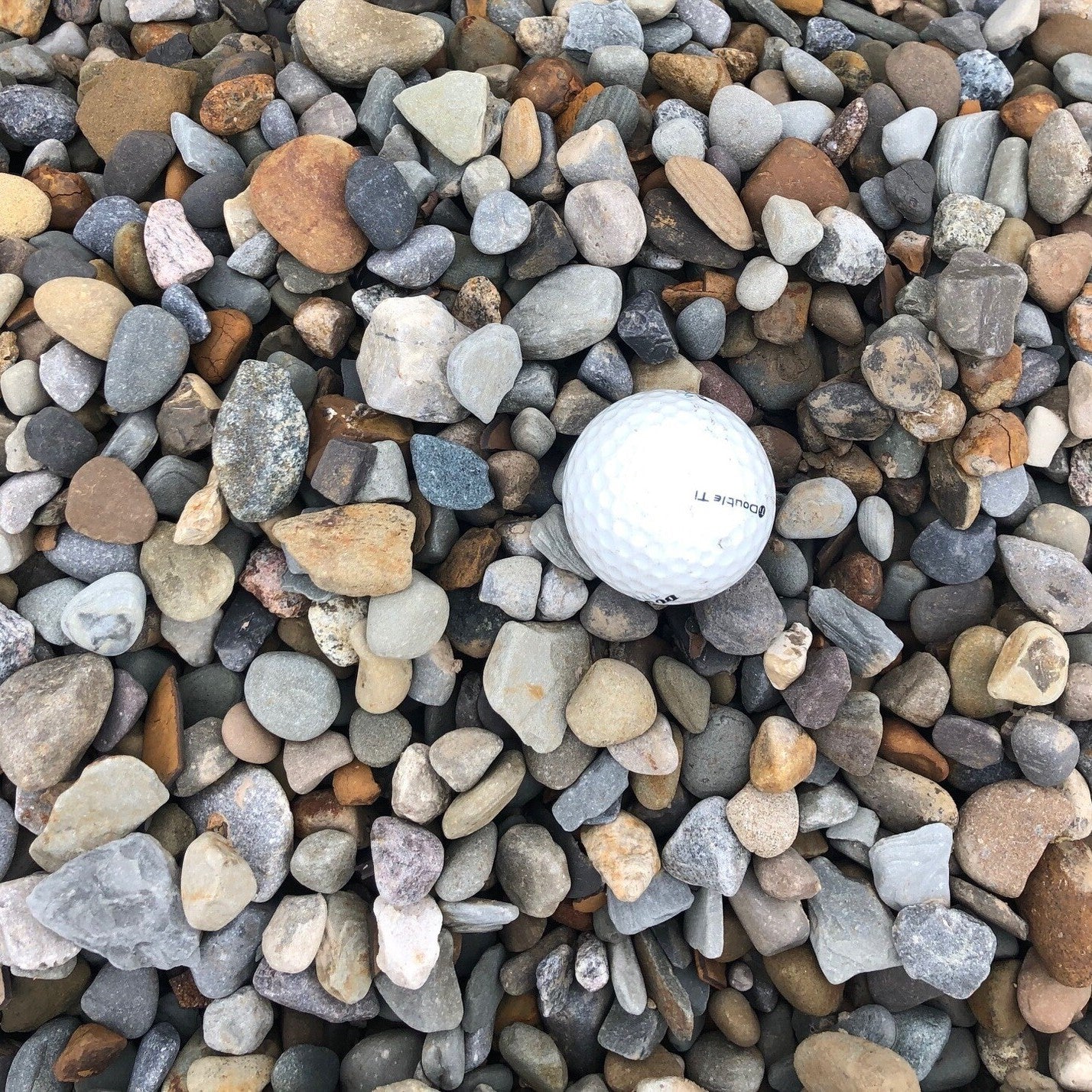
Number 57 crushed stone, angular limestone graded to about three quarters of an inch. The standard driveway, base and drainage gravel, it locks together under traffic and drains fast.
I used Mulch Mound to have 3 cubic yards of garden soil delivered. The process was easy and I love that I didn't have to call anyone. I placed my order online, picked my delivery date, laid out my tarp and the dirt was delivered. My delivery had to be pushed back, but I was ke...
Tell us what you're looking for
Thanks! We received your request.
Something went wrong. Please try again.
How Much Material Do I Need?
For pathways, decorative beds, and drainage installations in High Point, a 3-4 inch stone depth is the functional minimum — shallower installations over red clay shift and sink unevenly within one seasonal wet-dry cycle, requiring constant raking and redistribution that defeats the purpose of a low-maintenance material.
Use our free gravel calculator
What is a yard?
A yard is approximately 27 cubic feet. As a general guideline, one yard of material can cover an area of about 100-160 square feet at a 2-3 inch depth.
We can't take orders for this right now. Tell us what you need and we'll get back to you.
What do you need?
Thanks! We received your request.
Something went wrong. Please try again.
Hand-picked local yards
4,000+ regional deliveries
Dedicated support
Why order through Mulch Mound
The best local stone, without the guesswork.
We hand-pick and partner with the best yards in your region, keep only the ones our buyers rate well, and back each load with our guarantee.
Mulch Mound Guarantee
If your stone isn't the quantity or quality you ordered, we'll make it right.
About this stone
Number 57 crushed stone, angular limestone graded to about three quarters of an inch. The standard driveway, base and drainage gravel, it locks together under traffic and drains fast.
I used Mulch Mound to have 3 cubic yards of garden soil delivered. The process was easy and I love that I didn't have to call anyone. I placed my order online, picked my delivery date, laid out my tarp and the dirt was delivered. My delivery had to be pushed back, but I was ke...
How Much Material Do I Need?
For pathways, decorative beds, and drainage installations in High Point, a 3-4 inch stone depth is the functional minimum — shallower installations over red clay shift and sink unevenly within one seasonal wet-dry cycle, requiring constant raking and redistribution that defeats the purpose of a low-maintenance material.
Use our free gravel calculator
What is a yard?
A yard is approximately 27 cubic feet. As a general guideline, one yard of material can cover an area of about 100-160 square feet at a 2-3 inch depth.
I used Mulch Mound to have 3 cubic yards of garden soil delivered. The process was easy and I love that I didn't have to call anyone. I placed my o...
Read full review
I used Mulch Mound to have 3 cubic yards of garden soil delivered. The process was easy and I love that I didn't have to call anyone. I placed my order online, picked my delivery date, laid out my tarp and the dirt was delivered. My delivery had to be pushed back, but I was kept informed via text, which was great. So why not 5 stars? The description of garden soil on the website is "A balanced mix of topsoil and organic amendments ready for raised beds, flower gardens, and new planting areas. Good drainage, solid nutrients, easy to work with." What I got was more like fill dirt. It had a lot of gravel, a lot of clay, and random trash mixed in. I didn't test the soil to see if it actually had "amendments" because I already have compost and alpaca manure ready to add, but if I'd known the quality of the dirt was going to be the same as the bagged dirt I bought last year, I probably would have gotten 2 yards of top soil and a yard of leaf compost for better quality, especially since the leaf compost is cheaper. Photo of my mountain of dirt and just some of the trash I found in it.
For stone coverage estimates in High Point projects, 1 cubic yard covers approximately 100 square feet at 3 inches deep or 80 square feet at 4 inches deep. High Point's clay subgrade shifts seasonally with moisture changes, creating subtle unevenness across most yards, so add 10-15% to your estimate to account for low spots that need extra material to achieve a consistent, level finished surface.
Stone Types We Deliver in High Point
Mulch Mound delivers bulk stone by the cubic yard straight to homes and properties throughout High Point, North Carolina. Whether you are searching for bulk gravel by the yard in High Point or planning a larger landscape project, we make it simple to get the right material without hauling it yourself. Our stone is sold loose in full cubic yard quantities, priced fairly and dropped exactly where you need it.
Pea Gravel
Smooth, rounded, and naturally earth-toned, pea gravel is one of the most popular choices for High Point homeowners working with the region's clay-heavy soils. It layers beautifully over landscape fabric to improve drainage, define walkways, and add a clean, polished look to patios and garden beds in the Piedmont style.
Complete Your Outdoor Stone Project
Stone works best as part of a complete system — pair it with quality topsoil where grade corrections are needed to direct water properly, and add hardwood mulch within planting beds to insulate root zones that stone borders protect on the outside.
Before placing stone in any drainage-sensitive area of your High Point yard, invest time in establishing the correct grade first. Stone placed over a poorly graded clay surface will redirect water to a new location rather than solving the underlying problem — and over time, that misrouted water will undercut your stone installation, creating new erosion channels that require complete reinstallation. The sequence matters: grade and compact first, then landscape fabric, then stone, for a result that holds through High Point's wet seasons year after year.
Mulch Mound Pro Tip
High Point's long Zone 7b growing season means weeds will exploit any gap in stone coverage from late March through October — a full seven months of pressure. The most effective prevention is a commercial-grade, UV-stabilized woven landscape fabric installed beneath all stone pathways and decorative beds before any stone is placed. Inexpensive fabric degrades within two seasons in High Point's climate, allowing weeds to root through and eventually lift the stone layer. Spending more on quality fabric at installation costs far less than pulling weeds from between stones every few weeks for years.
Mulch Mound Pro Tip
Stone's thermal mass is a genuine seasonal asset in High Point, where the average last frost falls around April 19 but surprise cold nights can extend into early May at this elevation. Decorative stone in planting beds absorbs warmth during mild spring afternoons and releases it slowly overnight — a subtle temperature buffer that can protect newly planted annuals and tender perennials from a light frost without any additional covering. Positioning stone thoughtfully near heat-sensitive new plantings in spring takes advantage of a natural thermal property that most homeowners overlook entirely.
The Unique Landscape of High Point
In High Point, decorative and functional stone is one of the most durable landscape investments a homeowner can make — largely because of what red clay soil does when 45 inches of annual rainfall lands on it. Clay sheds water rather than absorbing it quickly, and that runoff carries topsoil, undercuts bed edges, and pools against foundations in patterns that repeat every rainy season unless the underlying water management is addressed. Stone pathways, dry creek beds, and drainage borders redirect that water permanently, without requiring annual replacement or maintenance the way organic materials do. At High Point's elevation of 939 feet, temperature swings between seasons are more pronounced than in surrounding lower Piedmont cities, and stone's thermal mass helps moderate soil temperatures in planting beds through late-spring cold snaps and early-November frost events. Whether installed as erosion-controlling creek rock on a clay slope, as a clean foundation border that keeps moisture away from siding, or as a permanent low-maintenance pathway that holds up through wet winters and dry summers alike, stone works with High Point's challenging native conditions rather than against them.
Frequently Asked Questions
Click a question to see the answer
Answer
What type of stone works best for a drainage channel or dry creek bed through my High Point backyard?
For drainage channels in High Point's clay landscape, washed river rock in the 2-4 inch range is the practical standard. Rounded edges allow water to flow freely without trapping debris, and the size is substantial enough to stay in place during High Point's heavier summer storm events without mortar or rigid edging. Before placing stone in a dry creek bed, lay a quality woven landscape fabric on the channel floor — this prevents red clay from migrating up into the stone over time, a common problem in High Point yards that eventually clogs drainage channels and requires full reinstallation.
Answer
Will decorative gravel or stone wash away in High Point's heavy rain?
Properly sized and contained stone won't wash away, but undersized pea gravel in steep or unedged areas will migrate with High Point's storm runoff. For open sloped areas, angular crushed stone like #57 granite or crusher run interlocks better than rounded river rock and resists displacement under heavy rain. For flat pathways and decorative beds, pea gravel is stable when edged with steel or aluminum containment. The consistent principle in High Point is containment first — good edging keeps stone where you placed it through the wettest spring seasons.
Answer
How should I use stone to protect my foundation from water damage in High Point's rainy climate?
A 12-18 inch wide stone border running along your foundation perimeter is one of the highest-impact things a High Point homeowner can do for water management. Unlike mulch or bare soil, stone doesn't hold moisture against wood sills and masonry, and it slows the velocity of water running off the roof or down clay slopes so the ground has time to absorb it before it reaches the foundation. Use coarser river rock or angular granite gravel, grade it slightly away from the house, and install landscape fabric underneath to prevent clay migration into the stone layer over time.
Answer
Is stone a better low-maintenance alternative to mulch for High Point's hot summers?
Stone excels as a low-maintenance option in High Point for areas where annual replenishment is undesirable — slopes, decorative beds with drought-tolerant plants, and foundation borders are ideal candidates. Unlike mulch, stone doesn't decompose, doesn't need seasonal refreshing, and won't wash out during summer thunderstorms. However, stone can significantly raise soil temperatures in midsummer, which stresses shallow-rooted plants in full sun. For mixed perennial and shrub beds, organic mulch remains the better insulator. Stone's greatest advantage is in zones where minimal maintenance and permanent water management are the goals.
Answer
How deep should I install gravel for a garden pathway in my High Point yard?
For a stable, functional pathway in High Point, plan for 3-4 inches of gravel depth over a compacted base or landscape fabric. High Point's red clay expands when saturated and contracts when dry, creating seasonal movement that can shift a shallow stone path out of level within a year or two. For high-traffic pathways, install a 2-inch compacted crusher run base layer first, then top with finish gravel. This two-layer system provides the stability needed to handle High Point's wet winters, heavy spring rains, and summer dry periods without constant regrading.
Answer
Can I use stone to control erosion on a sloped area of my High Point yard?
Stone is among the most effective erosion control strategies available for High Point's clay slopes. Red clay on a grade becomes highly erodible when rain hits bare soil — it sheds water rather than absorbing it, and that runoff carries topsoil with it every storm. A layer of angular stone or river rock anchors the slope surface and breaks the energy of falling rain before it can dislodge soil particles. For steeper grades, combining larger anchor boulders or step stones with smaller fill gravel between them creates both an attractive visual feature and a functional erosion barrier that holds through High Point's heaviest rainfall events.
Answer
Does stone affect soil temperature around my plants during High Point's frost season?
Stone's thermal mass has a measurable effect in High Point's shoulder seasons — particularly in late October through November and again in March, when nighttime temperatures can swing significantly. Stone absorbs heat during mild days and releases it slowly after dark, moderating those overnight dips and providing a subtle but real buffer against light frosts. However, when High Point's first frost arrives around November 3 and temperatures drop consistently, stone provides far less insulating value than organic mulch for root systems. The best approach is to use stone in pathways and borders while keeping organic mulch within planting beds where frost protection for roots matters most.
Answer
Is crush and run the same as crusher run?
Crush and run gets its name from the mix of crushed stone and stone dust that compacts into a firm base for driveways and paver projects. It is the same material most people call crusher run. For High Point properties dealing with heavy clay runoff, our Crushed Stone #57 drains freely instead of holding water against foundations and bed edges.
Answer
Is there a stone yard near High Point?
Redirecting runoff away from a High Point foundation usually means hauling crushed stone yourself from a stone yard, loading it, and shoveling it out again. With Mulch Mound, you order online and the stone is delivered by the cubic yard right to the spot you choose, so there is no trip to a quarry at all.