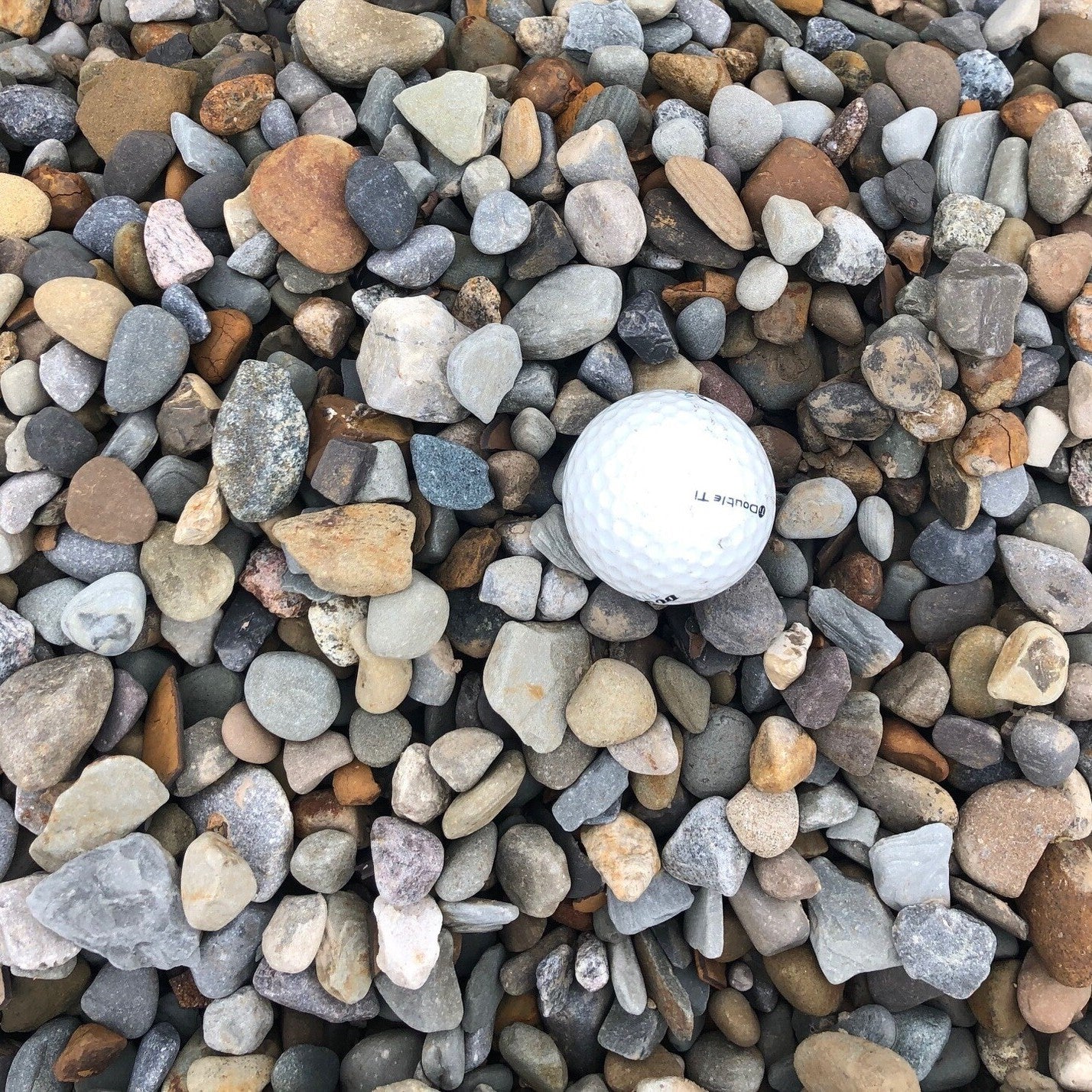
Number 57 crushed stone, angular limestone graded to about three quarters of an inch. The standard driveway, base and drainage gravel, it locks together under traffic and drains fast.
I contacted Mulch Mound for #57 river rocks and it was easy and fast to get a delivery right before the holiday weekend. Stone was delivered as promised and place exactly where I asked. Excellent service! I will be ordering mulch next!
Tell us what you're looking for
Thanks! We received your request.
Something went wrong. Please try again.
How Much Material Do I Need?
For decorative ground cover and pathway applications in Jefferson, a two to three inch depth of stone provides solid coverage and good drainage over the clay soil below, while drainage trenches and dry creek beds function best with a four to six inch depth of clean washed gravel.
Use our free gravel calculator
What is a yard?
A yard is approximately 27 cubic feet. As a general guideline, one yard of material can cover an area of about 100-160 square feet at a 2-3 inch depth.
We can't take orders for this right now. Tell us what you need and we'll get back to you.
What do you need?
Thanks! We received your request.
Something went wrong. Please try again.
Hand-picked local yards
4,000+ regional deliveries
Dedicated support
Why order through Mulch Mound
The best local stone, without the guesswork.
We hand-pick and partner with the best yards in your region, keep only the ones our buyers rate well, and back each load with our guarantee.
Mulch Mound Guarantee
If your stone isn't the quantity or quality you ordered, we'll make it right.
About this stone
Number 57 crushed stone, angular limestone graded to about three quarters of an inch. The standard driveway, base and drainage gravel, it locks together under traffic and drains fast.
I contacted Mulch Mound for #57 river rocks and it was easy and fast to get a delivery right before the holiday weekend. Stone was delivered as promised and place exactly where I asked. Excellent service! I will be ordering mulch next!
How Much Material Do I Need?
For decorative ground cover and pathway applications in Jefferson, a two to three inch depth of stone provides solid coverage and good drainage over the clay soil below, while drainage trenches and dry creek beds function best with a four to six inch depth of clean washed gravel.
Use our free gravel calculator
What is a yard?
A yard is approximately 27 cubic feet. As a general guideline, one yard of material can cover an area of about 100-160 square feet at a 2-3 inch depth.
I contacted Mulch Mound for #57 river rocks and it was easy and fast to get a delivery right before the holiday weekend. Stone was delivered as pro...
Read full review
I contacted Mulch Mound for #57 river rocks and it was easy and fast to get a delivery right before the holiday weekend. Stone was delivered as promised and place exactly where I asked. Excellent service! I will be ordering mulch next!
For stone projects in Jefferson, measure your area in square feet and decide on coverage depth, typically two to three inches for decorative applications and four to six inches for drainage work. Most stone products cover roughly 80 to 100 square feet per ton at a two inch depth, but coverage varies by stone size, so confirm when ordering. Jefferson's clay soil base tends to compact under stone weight over time, so starting with a slightly deeper layer than you think you need helps maintain coverage through the first season.
Stone Types We Deliver in Jefferson
When you need bulk gravel by the yard in Jefferson, we make it simple with scheduled delivery straight to your property. The red clay soil common throughout this part of Georgia benefits from properly placed stone to manage water runoff and reduce erosion. We deliver by the cubic yard so you get exactly the right amount for your project, with no guesswork and no extra trips.
Pea Gravel
Pea gravel is a popular choice for properties where drainage is a concern and a clean, natural look is desired. Its smooth, rounded edges make it comfortable underfoot on garden paths and patios, and the warm earth tones suit the wooded, traditional landscapes common throughout this part of Georgia.
Complete Your Outdoor Stone Project
Pairing decorative stone borders with a quality topsoil fill for planting areas creates a polished, functional landscape in Jefferson that handles the region's heavy rainfall without constant maintenance, and finishing planted sections with hardwood mulch between stone elements ties the whole design together naturally.
Jefferson's red clay expands and contracts with moisture changes throughout the year, which can gradually shift stone edging and pathway borders out of alignment. When installing stone borders around beds or along walkways, setting the first course of stone slightly below grade gives the clay soil room to move without pushing the stone out of position. Checking and resetting borders after the first wet winter is a normal part of getting a new stone installation settled in Jefferson's environment.
Mulch Mound Pro Tip
Jefferson's hot summers mean that dark-colored stone such as black lava rock or dark grey crushed granite can absorb significant heat and raise soil temperatures in planting beds to levels that stress roots. In full-sun beds, choosing lighter-colored stone like tan pea gravel or natural river rock reflects more solar radiation and keeps the root zone cooler. This is particularly important for beds planted with perennials and shrubs that will stay in place for multiple growing seasons in Jefferson's Zone 8a climate.
Mulch Mound Pro Tip
Jefferson receives about 49 inches of rain per year, and during spring storm season it can fall in concentrated bursts that overwhelm clay-heavy soil quickly. If you are using stone for a drainage application such as a French drain or dry creek bed, always extend the outfall of your drainage feature well past any lawn or planted area so water exits onto a stable surface like a gravel apron or a sloped area with established grass. A stone drainage channel that terminates in the middle of a Jefferson lawn will simply create a new erosion point where the flow disperses into the clay.
The Unique Landscape of Jefferson
Jefferson's combination of red clay soil, 49 inches of annual rainfall, and gently rolling terrain creates persistent drainage and erosion challenges that decorative and functional stone is uniquely equipped to address. Unlike organic materials that break down in Jefferson's humid Zone 8a climate, stone stays in place season after season, requiring minimal upkeep through wet winters and hot summers alike. Gravel pathways and stone drainage channels redirect the heavy spring and summer rain that Jefferson's clay cannot absorb fast enough, reducing erosion and standing water problems across the property. Stone borders along foundation beds also create a clean separation that keeps mulch and soil from washing against siding during downpours. Whether used for aesthetics, drainage, or hardscaping, stone delivers lasting value in Jefferson's demanding outdoor environment.
Frequently Asked Questions
Click a question to see the answer
Answer
What type of stone works best for drainage solutions in my Jefferson clay yard?
Clean crushed granite or washed river gravel in the quarter inch to one inch range works very well for drainage applications in Jefferson. The key is that the stone is washed free of fines, meaning the clay-like dust that clogs pore spaces. Jefferson's red clay already drains slowly on its own, so using unwashed stone in a drainage trench essentially recreates the same problem underground. Clean gravel allows water to move laterally through the channel and away from the problem area.
Answer
Can I use decorative stone instead of mulch in my planting beds?
Stone can replace mulch in ornamental beds in Jefferson, but there are trade-offs to consider. Stone does not add organic matter to Jefferson's nutrient-poor red clay the way decomposing mulch does, so beds with stone will need more regular fertilization to keep plants healthy. Stone also absorbs heat during Jefferson's summers and radiates it back toward plants, which can stress moisture-sensitive species. It is a great low-maintenance choice for drought-tolerant plants, foundation borders, and beds where you do not want to refresh material each year.
Answer
How do I keep stone from sinking into Jefferson's red clay soil over time?
Laying a permeable landscape fabric beneath your stone layer is the best way to prevent migration into Jefferson's clay. The fabric acts as a separation barrier while still allowing water to pass through. Without it, foot traffic and rainfall gradually work stone particles down into the soft clay, and you end up needing to top-dress every couple of years. For pathways and high-traffic areas in Jefferson, a slight compacted base of crusher run beneath the decorative layer adds long-term stability.
Answer
What size gravel should I use for a walkway on my Jefferson property?
Pea gravel in the three-eighths inch range is popular for casual garden paths in Jefferson because it is comfortable underfoot and stays relatively stable. For a firmer walking surface, a compacted base of crusher run topped with a decorative pea gravel or chat finish works well and holds up through Jefferson's wet winter months when clay-heavy ground stays soft. Avoid very large stone on walkways because it shifts underfoot and becomes uncomfortable to walk on over any distance.
Answer
Will stone help with the erosion I get on the slope behind my Jefferson house?
Yes, stone is one of the most effective erosion controls for sloped areas in Jefferson where grass struggles to establish on clay and heavy rains keep washing exposed soil downhill. A layer of larger river rock or fieldstone along the base of a slope catches and slows runoff, while gravel-filled swales redirect water laterally away from the erosion area. For steeper grades, a stepped stone arrangement paired with ground cover planting between the layers gives both erosion protection and visual appeal.
Answer
Is gravel a good option around my foundation in Jefferson to prevent water problems?
A gravel border along your Jefferson home's foundation serves two important purposes. It creates a fast-draining zone directly against the structure so rainwater moves away from the foundation wall rather than pooling against it in the clay soil. It also eliminates the damp conditions that attract pests in Jefferson's humid summers. A six to twelve inch wide strip of clean washed gravel sloped slightly away from the house, kept separate from the lawn by a metal or plastic edge, is a simple and durable solution.
Answer
How much stone do I need for a dry creek bed in my Jefferson yard?
Dry creek beds in Jefferson are a beautiful and practical way to channel storm water away from low spots in the yard. A typical residential dry creek bed about 18 inches wide and four to six inches deep will need roughly one ton of mixed river rock per 15 to 20 linear feet. Because Jefferson receives 49 inches of rain per year, sizing your dry creek a little wider than you think you need it is smart, since undersized channels overflow during heavy downpours and cause erosion along the banks.
Answer
Is crush and run the same as crusher run?
Same product, different name. Crush and run is crushed stone blended with stone dust that compacts tight for driveways and paver bases. With Jefferson's red clay soil and heavy rainfall, our Crushed Stone #57 drains freely instead of holding water against your foundation or walkway.