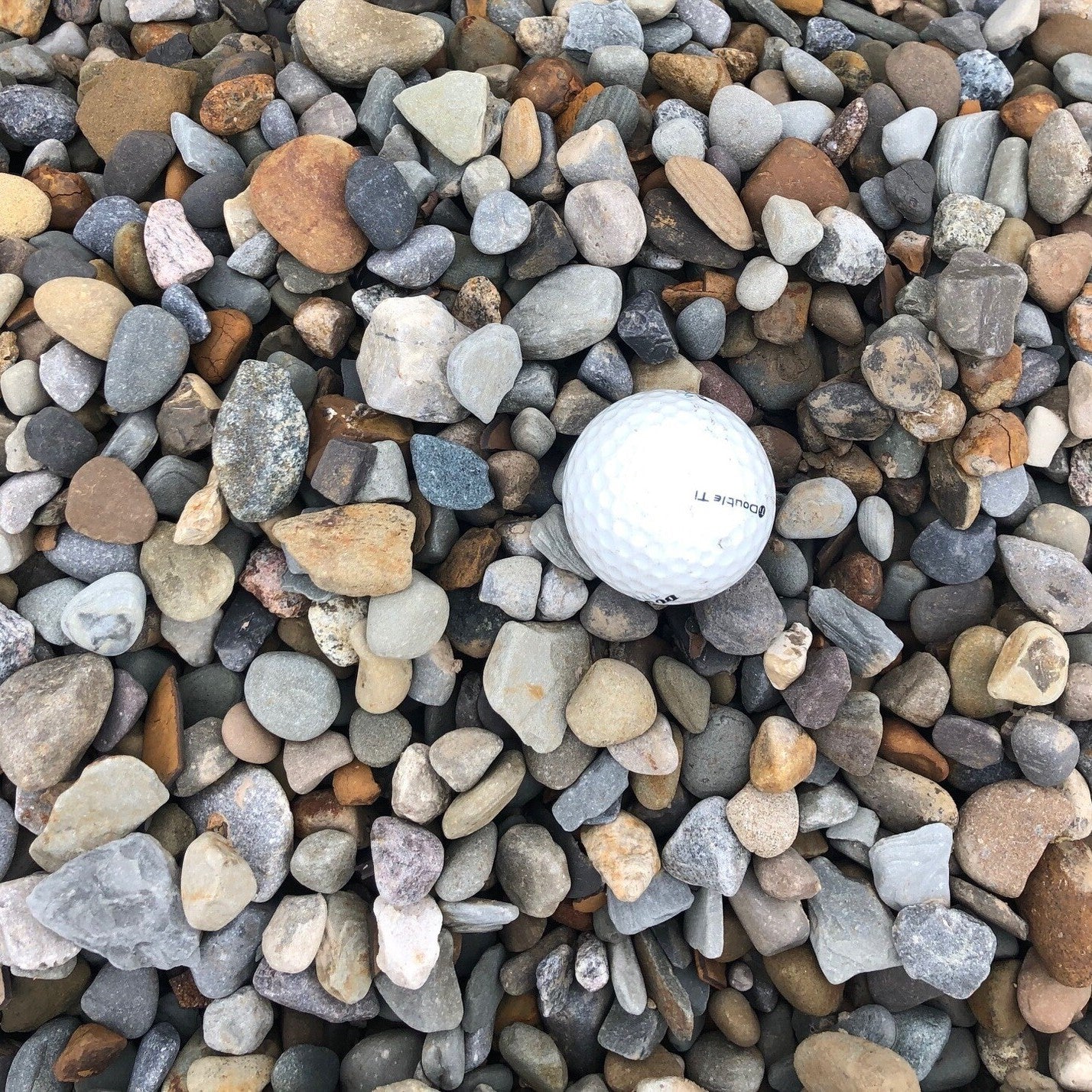
Number 57 crushed stone, angular limestone graded to about three quarters of an inch. The standard driveway, base and drainage gravel, it locks together under traffic and drains fast.
I contacted Mulch Mound for #57 river rocks and it was easy and fast to get a delivery right before the holiday weekend. Stone was delivered as promised and place exactly where I asked. Excellent service! I will be ordering mulch next!
Tell us what you're looking for
Thanks! We received your request.
Something went wrong. Please try again.
How Much Material Do I Need?
For decorative ground cover and pathway applications in Johnson City, a 3 to 4 inch depth of stone provides good coverage and reliable stability against the region's regular rainfall and seasonal freeze-thaw movement. Drainage and erosion control applications along slopes or near downspouts may need 4 to 6 inches of depth for adequate performance on the silt loam soils common throughout the Johnson City area.
Use our free gravel calculator
What is a yard?
A yard is approximately 27 cubic feet. As a general guideline, one yard of material can cover an area of about 100-160 square feet at a 2-3 inch depth.
We can't take orders for this right now. Tell us what you need and we'll get back to you.
What do you need?
Thanks! We received your request.
Something went wrong. Please try again.
Hand-picked local yards
4,000+ regional deliveries
Dedicated support
Why order through Mulch Mound
The best local stone, without the guesswork.
We hand-pick and partner with the best yards in your region, keep only the ones our buyers rate well, and back each load with our guarantee.
Mulch Mound Guarantee
If your stone isn't the quantity or quality you ordered, we'll make it right.
About this stone
Number 57 crushed stone, angular limestone graded to about three quarters of an inch. The standard driveway, base and drainage gravel, it locks together under traffic and drains fast.
I contacted Mulch Mound for #57 river rocks and it was easy and fast to get a delivery right before the holiday weekend. Stone was delivered as promised and place exactly where I asked. Excellent service! I will be ordering mulch next!
How Much Material Do I Need?
For decorative ground cover and pathway applications in Johnson City, a 3 to 4 inch depth of stone provides good coverage and reliable stability against the region's regular rainfall and seasonal freeze-thaw movement. Drainage and erosion control applications along slopes or near downspouts may need 4 to 6 inches of depth for adequate performance on the silt loam soils common throughout the Johnson City area.
Use our free gravel calculator
What is a yard?
A yard is approximately 27 cubic feet. As a general guideline, one yard of material can cover an area of about 100-160 square feet at a 2-3 inch depth.
I contacted Mulch Mound for #57 river rocks and it was easy and fast to get a delivery right before the holiday weekend. Stone was delivered as pro...
Read full review
I contacted Mulch Mound for #57 river rocks and it was easy and fast to get a delivery right before the holiday weekend. Stone was delivered as promised and place exactly where I asked. Excellent service! I will be ordering mulch next!
Measure the length and width of your stone coverage area in feet and multiply to get your total square footage. In Johnson City, where rainfall and sloped terrain can cause lighter stone to shift, planning for a 3 to 4 inch installation depth provides better long-term stability than a thinner application that thins further with each heavy rain. Divide your square footage by 100 for a 3-inch layer or by 75 for a 4-inch layer to estimate cubic yards, keeping in mind that stone is also commonly sold by the ton and your supplier can help convert between the two.
Stone Types We Deliver in Johnson City
Mulch Mound delivers bulk stone by the cubic yard directly to homes and properties throughout the area, making it simple to complete landscaping and hardscaping projects without multiple supply store trips. Whether you are searching for bulk gravel by the yard in Johnson City or planning a larger patio or drainage installation, we haul the material straight to your driveway or job site. Our stone is sold loose in bulk, so you order exactly what your project calls for and avoid paying retail markups.
Pea Gravel
Pea Gravel is a smooth, rounded stone available in warm earth tones that works well for pathways, patios, and decorative ground cover. In this part of Tennessee, where heavy clay soils can trap moisture around foundations and plant beds, pea gravel provides reliable drainage while giving the yard a tidy, finished appearance year round.
Complete Your Outdoor Stone Project
Stone works beautifully alongside hardwood mulch in mixed landscape designs, with stone handling high-traffic, drainage-sensitive, or foundation-adjacent areas while mulch covers the planted sections of your Johnson City yard. If you are adding stone to a freshly graded area, a base layer of quality topsoil underneath helps level the surface and improve drainage integration before your finish stone goes down.
In Johnson City's hillier neighborhoods, erosion along slopes between planting beds, driveways, and lower lawn areas is one of the most common and frustrating landscape problems homeowners face. Installing a 4 to 6 inch layer of larger river rock or angular drainage stone along these transition zones intercepts runoff before it can carry silt loam downhill and deposit it across paved surfaces. The key is sizing your stone appropriately for the grade, with larger material on steeper slopes so that Johnson City's heaviest rainfall events do not displace what you put down.
Mulch Mound Pro Tip
Johnson City's late winter freeze-thaw cycles can cause fine decorative stones to shift and heave slightly as the ground repeatedly freezes and thaws between January and March. Choosing angular crushed stone rather than smooth river pebbles in pathways and driveway borders helps the material lock together and resist movement as temperatures fluctuate through these months. A compacted base layer of gravel beneath your finish stone dramatically improves long-term stability and keeps your surfaces looking intentional rather than scattered through every seasonal change.
Mulch Mound Pro Tip
Foundation borders are among the most practical uses for decorative stone around Johnson City homes, especially given the moisture conditions in this part of East Tennessee. The silt loam soil in this area stays wet for extended periods after rain, and organic mulch held against a foundation over multiple seasons can trap that moisture against siding and masonry in ways that accelerate deterioration. A 12 to 18 inch stone border running directly adjacent to the foundation allows water to drain away quickly after each rain event while still giving the exterior of your home a clean, finished landscape appearance.
The Unique Landscape of Johnson City
Johnson City's combination of hilly terrain, silt loam soil, and 44 inches of annual rainfall creates natural conditions for erosion along slopes, pathways, and foundation borders throughout the area. Decorative stone provides a durable, low-maintenance ground cover that holds its position through heavy rain events far better than organic materials, which shift and thin with each passing season. At 1,635 feet of elevation, Johnson City landscapes also experience more pronounced freeze-thaw cycles than lower portions of Tennessee, and properly installed stone areas remain structurally stable through those temperature swings without heaving or decomposing. Stone is also an excellent choice for high-traffic areas where repeated foot use would compact and erode a traditional mulched or planted surface within a single season. For Johnson City homeowners looking to reduce ongoing landscape maintenance while improving the function and appearance of their outdoor spaces, decorative stone delivers long-lasting performance that organic materials simply cannot match.
Frequently Asked Questions
Click a question to see the answer
Answer
What size stone works best for garden pathways on a sloped yard in Johnson City?
For pathways on sloped terrain in Johnson City, angular crushed gravel in the 3/4 inch to 1.5 inch range is a practical choice because the irregular edges interlock and resist shifting far better than smooth rounded river pebbles on a grade. On flatter walkways, a smaller 3/8 inch crushed stone provides a comfortable, firm walking surface that packs down nicely over time. Regardless of stone size, including a compacted base layer of gravel beneath your finish stone adds stability through Johnson City's frequent rainfall and winter freeze-thaw cycles.
Answer
Can I use decorative stone to control erosion on a steep slope in my yard?
Yes, stone is one of the most effective and long-lasting erosion control materials available for Johnson City's sloped landscapes. The silt loam soil common throughout this area is particularly vulnerable to surface erosion during heavy rain events, and a 4 to 6 inch layer of river rock or drainage stone on a slope significantly reduces soil movement compared to bare ground or thin organic cover. For steeper grades, using larger stone in the 2 to 4 inch river rock range provides the most resistance against the concentrated water flow that follows Johnson City's heavier storms.
Answer
How deep should I install decorative stone to make sure it stays in place with all the rain we get?
In Johnson City, where 44 inches of annual rainfall includes intense spring and fall storm events, a minimum 3 to 4 inch installation depth is recommended for decorative stone in standard ground cover applications. Drainage and erosion control areas on slopes should go 4 to 6 inches deep to handle more concentrated water flow without displacing material. Installing quality landscape fabric underneath also helps prevent stone from gradually sinking into the silt loam soil over time, which is a common issue in areas that stay moist for extended periods after rain.
Answer
Is stone a better choice than mulch for the planting beds right along my foundation?
In most cases, yes, particularly in East Tennessee's climate. The silt loam soil in Johnson City tends to stay moist for extended periods after rainfall, and organic mulch pressed against a foundation can trap that moisture against siding, masonry, or wood framing over time. Stone drains almost immediately and does not hold moisture against your home's structure the way mulch does. Using decorative stone for the first 12 to 18 inches adjacent to your foundation and transitioning to mulch further out into the beds gives you the drainage benefits where they matter most.
Answer
Will river rock wash away in drainage areas given how much it rains in Johnson City?
River rock in the 2 to 4 inch size range handles Johnson City's typical rainfall well in most drainage swales and downspout splash zones. Smaller river pebbles under 1 inch can migrate during heavy storm events, especially in areas where water concentrates and flows with speed through a channel. For active drainage areas like gutter outlets, swale bottoms, or catch basins, choosing stone on the larger end of the range, 3 to 5 inch river rock, gives you the best chance of material staying in place through the heaviest rain events of the year.
Answer
How do I figure out how much stone I need for a backyard pathway project?
A standard garden pathway is typically 3 feet wide, so a 20-foot pathway gives you 60 square feet of coverage area to work with. At a 3-inch installation depth, that works out to roughly 0.6 cubic yards, though most homeowners order a bit extra to account for waste and edge fill. Stone is considerably denser than mulch, so a small volume goes further by weight, but the tonnage adds up quickly on larger projects, making it worth calculating ahead of time rather than estimating by eye.
Answer
Do I need to put landscape fabric down under my decorative stone here in Johnson City?
Landscape fabric is strongly recommended under decorative stone in the Johnson City area because silt loam soil has a natural tendency to gradually absorb stone from below over time, particularly in beds and pathways that stay moist after rainfall. Without fabric separating the two layers, fine soil particles work their way up between the stones over a season or two, and weed seeds take root in that accumulated material at the surface. A quality woven geotextile fabric, rather than thin plastic sheeting, allows water to pass through freely while keeping your stone and soil cleanly separated through multiple seasons.
Answer
Is crush and run the same as crusher run?
Crush and run is a Southern term for crusher run, a mix of crushed stone and stone dust that compacts into a firm base for driveways and paver projects. With Johnson City's hilly terrain and heavy rainfall, our Crushed Stone #57 is a better choice for drainage and erosion control, though it will not lock together the way crush and run does.