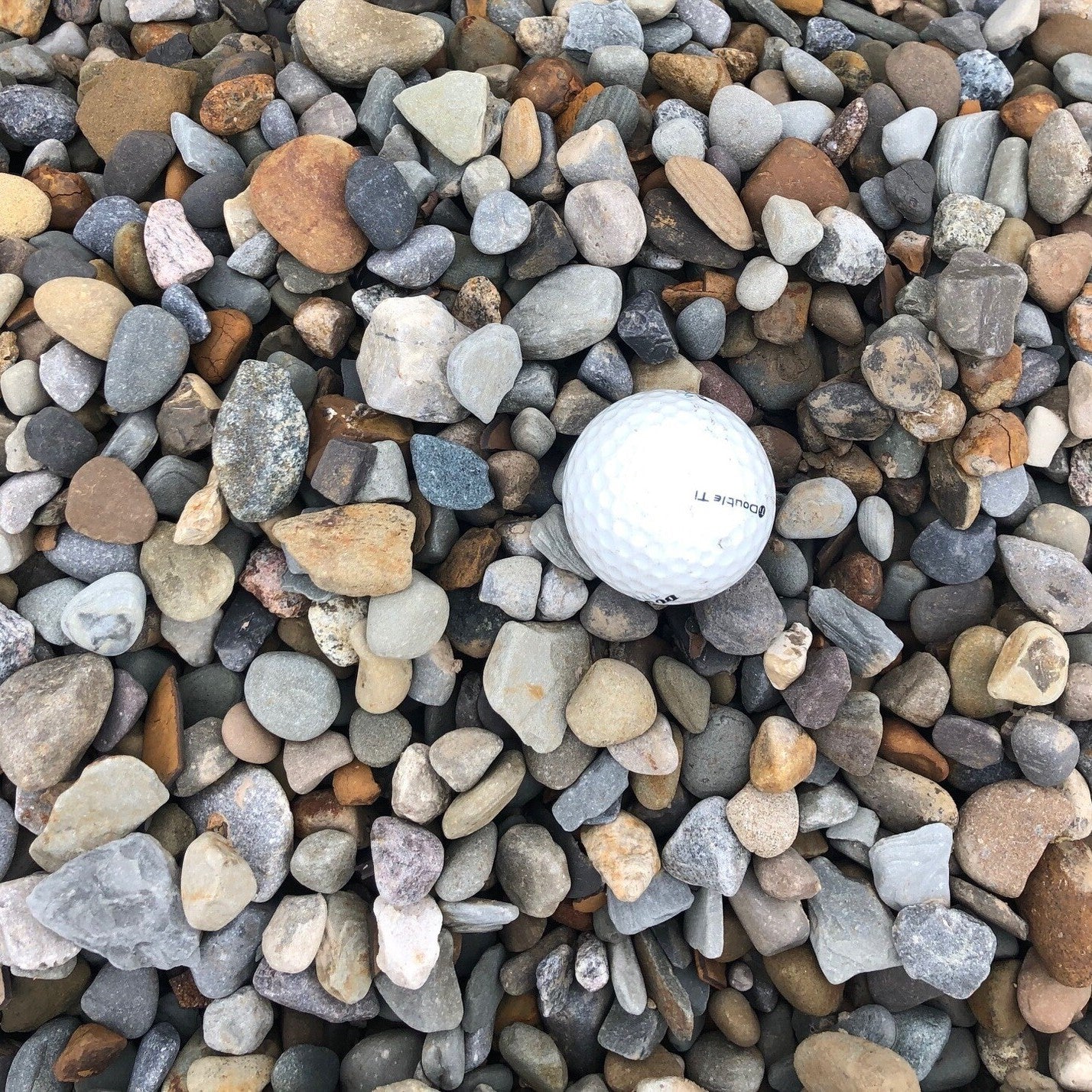
Number 57 crushed stone, angular limestone graded to about three quarters of an inch. The standard driveway, base and drainage gravel, it locks together under traffic and drains fast.
I contacted Mulch Mound for #57 river rocks and it was easy and fast to get a delivery right before the holiday weekend. Stone was delivered as promised and place exactly where I asked. Excellent service! I will be ordering mulch next!
Tell us what you're looking for
Thanks! We received your request.
Something went wrong. Please try again.
How Much Material Do I Need?
For decorative stone borders and bed edging in Johnstown, a two-to-three-inch depth gives a clean, settled appearance and enough mass to resist displacement during heavy rain events. For functional drainage applications or pathways on clay loam ground, three to four inches of stone provides the stability needed to perform through Johnstown's wet seasons and winter freeze-thaw cycles.
Use our free gravel calculator
What is a yard?
A yard is approximately 27 cubic feet. As a general guideline, one yard of material can cover an area of about 100-160 square feet at a 2-3 inch depth.
We can't take orders for this right now. Tell us what you need and we'll get back to you.
What do you need?
Thanks! We received your request.
Something went wrong. Please try again.
Hand-picked local yards
4,000+ regional deliveries
Dedicated support
Why order through Mulch Mound
The best local stone, without the guesswork.
We hand-pick and partner with the best yards in your region, keep only the ones our buyers rate well, and back each load with our guarantee.
Mulch Mound Guarantee
If your stone isn't the quantity or quality you ordered, we'll make it right.
About this stone
Number 57 crushed stone, angular limestone graded to about three quarters of an inch. The standard driveway, base and drainage gravel, it locks together under traffic and drains fast.
I contacted Mulch Mound for #57 river rocks and it was easy and fast to get a delivery right before the holiday weekend. Stone was delivered as promised and place exactly where I asked. Excellent service! I will be ordering mulch next!
How Much Material Do I Need?
For decorative stone borders and bed edging in Johnstown, a two-to-three-inch depth gives a clean, settled appearance and enough mass to resist displacement during heavy rain events. For functional drainage applications or pathways on clay loam ground, three to four inches of stone provides the stability needed to perform through Johnstown's wet seasons and winter freeze-thaw cycles.
Use our free gravel calculator
What is a yard?
A yard is approximately 27 cubic feet. As a general guideline, one yard of material can cover an area of about 100-160 square feet at a 2-3 inch depth.
I contacted Mulch Mound for #57 river rocks and it was easy and fast to get a delivery right before the holiday weekend. Stone was delivered as pro...
Read full review
I contacted Mulch Mound for #57 river rocks and it was easy and fast to get a delivery right before the holiday weekend. Stone was delivered as promised and place exactly where I asked. Excellent service! I will be ordering mulch next!
Measure the length and width of your project area in feet and multiply to find square footage, then determine how deep you want your stone layer in inches. Divide the square footage by 324 for a one-inch depth to get cubic yards, then multiply by your desired depth in inches to find the total amount needed. In Johnstown, where slopes and drainage needs often call for deeper stone installations than in flatter areas, adding an extra half inch to your initial depth estimate is a practical buffer against shifting during the wet season.
Stone Types We Deliver in Johnstown
Mulch Mound makes it easy to source bulk stone by the cubic yard, handling delivery directly to your property so you can skip the hassle of hauling materials yourself. If you have been searching for bulk gravel by the yard in Johnstown, we offer straightforward scheduling and honest pricing for residential and contractor orders alike. The region's hilly terrain and wet spring seasons make choosing the right stone size an important step, and our team is here to help.
Pea Gravel
Pea gravel suits Johnstown homeowners looking for a versatile and easy to maintain ground cover that holds up through cold Pennsylvania winters. The smooth, rounded stones blend naturally into the earthy tones common in this part of the state and perform well along pathways, patios, and drainage areas where seasonal rain is heavy.
Complete Your Outdoor Stone Project
Stone pairs naturally with bulk mulch in Johnstown landscapes, where stone handles the high-traffic and drainage-prone areas while mulch covers the planting beds and helps the underlying clay loam soil retain moisture between rainstorms. If your stone project involves grading or filling gaps between features, a bulk topsoil order gives you the material to shape the ground properly before stone goes down.
Before placing any landscape stone on Johnstown's clay loam base, installing a layer of geotextile landscape fabric makes a meaningful long-term difference. Clay loam slowly migrates upward into stone layers over time, muddying the appearance and compromising drainage function. A fabric barrier between the clay loam and your stone keeps the two materials separated through multiple seasons of Johnstown's heavy rainfall and freeze-thaw activity, preserving both the look and the performance of your installation.
Mulch Mound Pro Tip
For gravel pathways in Johnstown, angular crushed stone compacts far more effectively than rounded river stone, creating a firm walking surface that does not shift underfoot after rain. Rounded stone rolls under foot pressure and spreads outward with each wet season, requiring frequent raking and redistribution. Angular crushed limestone or crusher run locks in place once compacted, making it a much more practical choice for any path that sees regular foot traffic on Johnstown's frequently wet ground.
Mulch Mound Pro Tip
Johnstown's elevation of 1,178 feet and its position in a valley means cold air drains into low-lying areas of many properties, creating frost pockets that persist later into spring than the surrounding higher ground. Stone borders and pathways in these low spots absorb heat during the day and release it slowly at night, moderating temperatures slightly compared to bare soil or mulch. Homeowners who place stone thoughtfully around tender perennials in low spots may find those plants survive the late-season frosts that catch unprotected beds off guard near the September 26 first frost date.
The Unique Landscape of Johnstown
Johnstown's clay loam soil and 46 inches of annual rainfall create a challenging combination for any landscape feature that needs to stay stable and functional through wet seasons and freeze-thaw cycles. Bulk landscape stone solves several of these challenges at once, providing drainage pathways, erosion control, and stable surfaces that hold up where grass and soil cannot. At 1,178 feet of elevation, Johnstown properties often include sloped terrain where runoff from heavy rains carves channels through bare soil and erodes planting bed edges year after year. Stone installed along these vulnerable areas intercepts the flow, slows it down, and disperses it without requiring the ongoing maintenance that organic materials demand. Whether you are creating a gravel pathway, lining a dry creek bed, or placing a decorative border around foundation plantings, landscape stone is one of the most durable and practical investments Johnstown homeowners can make against a climate that tests every surface it touches.
Frequently Asked Questions
Click a question to see the answer
Answer
What type of landscape stone works best for drainage on a sloped Johnstown yard?
For drainage on slopes in Johnstown, crushed limestone or crushed gravel with angular edges works best because the irregular shapes lock together and resist displacement during heavy rain events. Johnstown averages 46 inches of precipitation annually, and on clay loam slopes where runoff moves quickly, rounded river stone can roll and shift under water pressure. Angular crushed stone stays in place, channels water effectively, and does not wash downhill the way fine materials can after a hard storm.
Answer
Can I use river stone to control erosion along the edges of my Johnstown garden beds?
River stone is a practical and attractive choice for erosion control along bed edges in Johnstown, particularly where rain splashes soil outward onto lawns or walkways. The rounded smooth surface does not interlock as tightly as crushed stone, so for steep slopes river stone should be backed by a border or edging to hold it in place. On level or gently sloped bed edges, a four-to-six-inch band of river stone provides a clean visual border and stops the surface erosion that Johnstown's frequent rains cause on bare clay loam.
Answer
Will landscape stone help with the standing water I get in my yard after heavy rain?
Stone alone will not solve standing water caused by Johnstown's slow-draining clay loam, but it is an important part of the solution. Installing a gravel trench or dry creek bed filled with crushed stone gives water a preferred path to travel away from problem areas. The stone layer allows water to move through it laterally rather than sitting on the clay loam surface. Pairing stone drainage features with grade corrections using bulk topsoil gives you the most complete fix for low spots that flood after Johnstown's heavier rain events.
Answer
Is gravel a good low-maintenance alternative to grass in shaded parts of my Johnstown yard?
Gravel is an excellent alternative to struggling grass in Johnstown's shadier spots, especially under dense tree canopies where turf thins out by midsummer. Clay loam soil in these areas tends to compact under foot traffic without the anchoring effect of healthy grass roots, creating muddy patches that are difficult to manage through the rainy season. A layer of landscape fabric topped with decorative gravel stops weeds, holds up to foot traffic, and does not require mowing, seeding, or watering, making it one of the lowest-maintenance surfaces available for a Johnstown homeowner.
Answer
How much stone do I need to build a simple gravel path through my backyard?
For a standard gravel walking path in Johnstown, plan for a depth of three to four inches, which provides a stable, firm surface that does not shift noticeably underfoot. Measure the length and width of your path in feet and multiply them together to get square footage, then divide by 81 to estimate cubic yards needed at a four-inch depth. On Johnstown's clay loam base, four inches of compacted gravel over a layer of landscape fabric gives you a surface that handles wet spring conditions without becoming muddy.
Answer
What stone is best for placing around my house foundation in Johnstown?
For foundation borders in Johnstown, a clean decorative gravel or small river stone in the one-to-two-inch size range works well both visually and functionally. Johnstown's clay loam soil holds water close to foundations when it becomes saturated, and a stone border replacing a soil or mulch strip creates better drainage and allows water to disperse away from the structure. Avoid very fine stone right against foundations since fine material can pack together and hold moisture similarly to the clay loam you are trying to replace.
Answer
Will freeze-thaw cycles in Johnstown shift or displace my landscape stone over winter?
Freeze-thaw cycles are a real factor in Johnstown, where temperatures fluctuate across the freezing point repeatedly between fall and early spring given the area's 1,178-foot elevation. Larger decorative stone and angular crushed stone are generally more resistant to frost heave than fine materials because they do not absorb water as readily and are heavy enough to settle back into position. For pathways, installing stone over a compacted gravel base rather than directly on clay loam reduces the heaving effect significantly, since the base layer buffers the expansion of the frozen soil beneath.