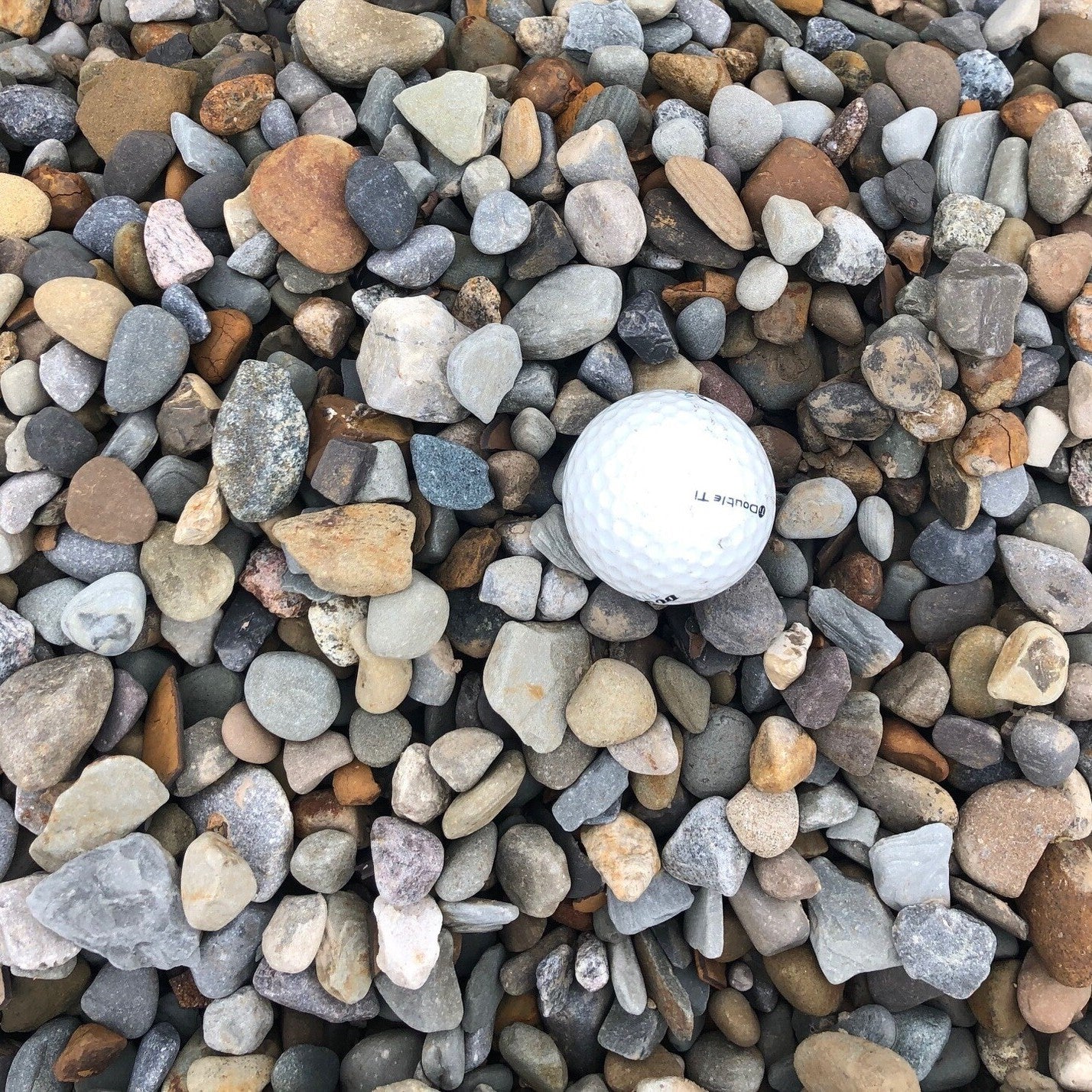
About this stone

#8 washed gravel: small angular crushed stone perfect for drainage, French drains, and concrete bases.

I used Mulch Mound to have 3 cubic yards of garden soil delivered. The process was easy and I love that I didn't have to call anyone. I placed my order online, picked my delivery date, laid out my tarp and the dirt was delivered. My delivery had to be pushed back, but I was ke...

Two inches of depth is enough for decorative rock over fabric, while drainage and driveway applications need four inches or more. Going deeper than three inches in a planting bed makes it hard to work around plants later.
Use our free stone calculator

A yard is approximately 27 cubic feet. As a general guideline, one yard of material can cover an area of about 100-160 square feet at a 2-3 inch depth.

Junction City Stone Delivery

Junction City Stone Delivery

4.7
137 reviews
Regular price $101.00 per Yard
Regular price Sale price $101.00
Sale Sold out
Shipping calculated at checkout.
Type
Size
Hand-picked local yards
4,000+ regional deliveries
Dedicated support
Why order through Mulch Mound

The best local , without the guesswork.

We hand-pick and partner with the best yards in your region, keep only the ones our buyers rate well, and back each load with our guarantee.

Mulch Mound Guarantee

If your isn't the quantity or quality you ordered, we'll make it right.

About this stone

#8 washed gravel: small angular crushed stone perfect for drainage, French drains, and concrete bases.

I used Mulch Mound to have 3 cubic yards of garden soil delivered. The process was easy and I love that I didn't have to call anyone. I placed my order online, picked my delivery date, laid out my tarp and the dirt was delivered. My delivery had to be pushed back, but I was ke...

Two inches of depth is enough for decorative rock over fabric, while drainage and driveway applications need four inches or more. Going deeper than three inches in a planting bed makes it hard to work around plants later.
Use our free stone calculator

A yard is approximately 27 cubic feet. As a general guideline, one yard of material can cover an area of about 100-160 square feet at a 2-3 inch depth.

View full details

How It Works

Getting started is easy — just follow these simple steps

1

Choose your stone

Make sure you adjust the quantity to your home's needs. You can use our calculator to estimate how much you'll need.

2

Select your delivery date

Select a delivery date you'd like for the product to be dropped off at your home

3

Sit back and wait

Sit back, wait, and let us work our magic to make sure the highest quality product is delivered to your driveway.

From The Mouths of Junction City Folks

4.7
out of 5 based on 137 reviews
Google Reviews

Need Help Calculating How Much Stone & Gravel You Need?

Use our NEW Trace from Satellite tool to get an estimate for your project based on an aerial view of your property

Try Our Calculator
📍

Measure length and width in feet for each area, and for pathways just multiply the path length by its width. Junction City drainage projects like French drains and downspout runs are measured as trenches, so use trench length by width by depth. Because stone is priced and hauled by weight, ordering accurately matters more here than with lighter materials.

Complete Your Outdoor Stone Project

Pair your stone with heavy duty landscape fabric and steel or paver edging to keep everything contained, and consider a load of screened topsoil if you are regrading around the area first.

Map of the stone delivery area around Junction City, Kansas

Service area

Areas we deliver stone and gravel in Junction City, Kansas

Mulch Mound Pro Tip

Install a real edge before the stone arrives. Junction City runoff will push loose rock into your lawn within a single storm season if there is nothing holding the line. Steel edging or a buried paver course set slightly below grade contains the stone without creating a mowing obstacle, and it keeps the boundary crisp for years without the annual reset that plastic edging always seems to require.

Mulch Mound Pro Tip

Match stone color to your home and our light. Junction City gets bright, open prairie sun with limited tree cover on most lots, and stark white or very light gray rock creates real glare off a south facing bed. Buff limestone, tan river rock, and darker granite blends read better in that light and hide the fine dust that inevitably settles in over a couple of windy seasons.

Mulch Mound Pro Tip

Compact in layers for anything that carries weight. Junction City freeze and thaw cycles between October and April will find every void in a poorly built gravel base and turn it into a rut or a sunken spot. Spread stone in two or three inch lifts and compact each lift with a plate compactor before adding the next. It takes an extra hour and saves you a rebuild in three years.

The Unique Landscape of Junction City

Stone earns its keep in Junction City because our rainfall arrives in bursts, with intense storms that can drop an inch or more in an hour and send water racing down sloped yards. Decorative rock and drainage gravel hold their ground where mulch would wash into the street, which matters on the rolling terrain common around the Flint Hills edge. Stone also stands up to the steady prairie wind that scatters lighter materials across driveways. In a zone 6a climate with sharp freeze and thaw swings between the October 15 first frost and the April 15 last frost, properly bedded gravel drains water away from foundations before it can freeze and shift concrete. And unlike organic material, it never needs replacing, which suits Junction City homeowners who would rather spend a Saturday somewhere other than a wheelbarrow.

Frequently Asked Questions

Click a question to see the answer

Answer

Will stone hold up better than mulch on my sloped Junction City yard?

Considerably better. Our storms often deliver an inch or more of rain in a short window, and that runoff floats mulch right out of a sloped bed. Angular stone in the one to two inch range interlocks and stays put. Use landscape fabric underneath and a solid edge at the bottom of the slope for best results.

Answer

What size gravel should I use for a driveway here?

A crushed limestone base topped with three quarter inch minus works well on Geary County properties because the fines pack tight and shed water. Round river rock never compacts and will rut under vehicle traffic. Plan on four to six inches of total depth over a compacted subgrade.

Answer

Does stone make my beds too hot for plants in the summer?

It can. Junction City summers regularly push into the upper nineties, and light colored rock reflects that heat back onto foliage. Stone works best around drought tolerant natives like little bluestem, coneflower, and yucca that handle the extra warmth. Keep it away from hydrangeas, hostas, and anything that wilts in afternoon sun.

Answer

How do I keep weeds from growing in my rock beds?

The weeds do not grow up through the rock, they grow in the dust and organic debris that collects on top over a few Junction City seasons. Blow out leaves each fall before the October frost, and spot treat early in spring. Quality woven fabric underneath handles anything trying to push up from below.

Answer

Can I use stone right against my foundation?

Yes, and it is often a good idea in Junction City where expansive soil movement stresses basement walls. A band of washed gravel two to three feet wide moves storm water away quickly instead of letting it soak in next to the footing. Just make sure the ground still slopes away at least six inches over the first ten feet.

Answer

How much does a yard of stone weigh compared to mulch?

A cubic yard of stone runs roughly 2,400 to 2,800 pounds, while mulch is closer to 500 to 800 pounds. That difference matters when you are planning where the truck can park and how you will move the material. Most Junction City homeowners move stone in half loaded wheelbarrows to avoid tipping.

Answer

Will river rock wash away during our spring storms?

Larger river rock in the two to four inch range generally stays put, but smaller pea gravel will migrate during a heavy May downpour, especially on any grade. If your yard has slope, choose angular crushed stone that locks together rather than rounded rock that rolls. Proper edging solves most of the rest.