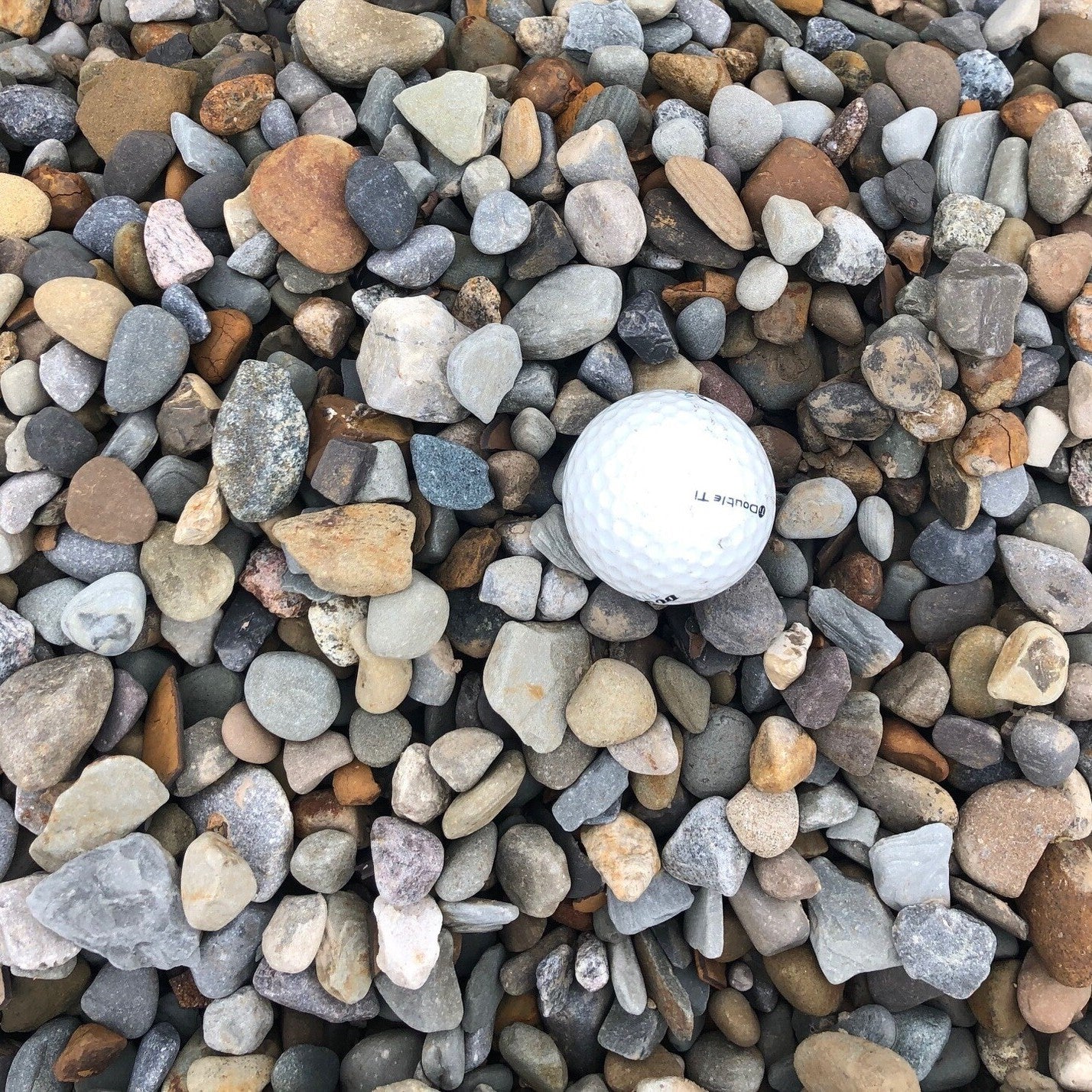
Number 57 crushed stone, angular limestone graded to about three quarters of an inch. The standard driveway, base and drainage gravel, it locks together under traffic and drains fast.
I used Mulch Mound to have 3 cubic yards of garden soil delivered. The process was easy and I love that I didn't have to call anyone. I placed my order online, picked my delivery date, laid out my tarp and the dirt was delivered. My delivery had to be pushed back, but I was ke...
Tell us what you're looking for
Thanks! We received your request.
Something went wrong. Please try again.
How Much Material Do I Need?
Plan for 2 to 3 inches of decorative stone in bed areas and at least 4 inches of compacted gravel beneath any flagstone pathway or patio to create a stable base above Kannapolis's expansive clay soil. Drainage applications like dry creek beds and French drains typically require 6 to 12 inches of stone depth to move the volume of water that clay-heavy Kannapolis yards generate during heavy rainfall events.
Use our free gravel calculator
What is a yard?
A yard is approximately 27 cubic feet. As a general guideline, one yard of material can cover an area of about 100-160 square feet at a 2-3 inch depth.
We can't take orders for this right now. Tell us what you need and we'll get back to you.
What do you need?
Thanks! We received your request.
Something went wrong. Please try again.
Hand-picked local yards
4,000+ regional deliveries
Dedicated support
Why order through Mulch Mound
The best local stone, without the guesswork.
We hand-pick and partner with the best yards in your region, keep only the ones our buyers rate well, and back each load with our guarantee.
Mulch Mound Guarantee
If your stone isn't the quantity or quality you ordered, we'll make it right.
About this stone
Number 57 crushed stone, angular limestone graded to about three quarters of an inch. The standard driveway, base and drainage gravel, it locks together under traffic and drains fast.
I used Mulch Mound to have 3 cubic yards of garden soil delivered. The process was easy and I love that I didn't have to call anyone. I placed my order online, picked my delivery date, laid out my tarp and the dirt was delivered. My delivery had to be pushed back, but I was ke...
How Much Material Do I Need?
Plan for 2 to 3 inches of decorative stone in bed areas and at least 4 inches of compacted gravel beneath any flagstone pathway or patio to create a stable base above Kannapolis's expansive clay soil. Drainage applications like dry creek beds and French drains typically require 6 to 12 inches of stone depth to move the volume of water that clay-heavy Kannapolis yards generate during heavy rainfall events.
Use our free gravel calculator
What is a yard?
A yard is approximately 27 cubic feet. As a general guideline, one yard of material can cover an area of about 100-160 square feet at a 2-3 inch depth.
I used Mulch Mound to have 3 cubic yards of garden soil delivered. The process was easy and I love that I didn't have to call anyone. I placed my o...
Read full review
I used Mulch Mound to have 3 cubic yards of garden soil delivered. The process was easy and I love that I didn't have to call anyone. I placed my order online, picked my delivery date, laid out my tarp and the dirt was delivered. My delivery had to be pushed back, but I was kept informed via text, which was great. So why not 5 stars? The description of garden soil on the website is "A balanced mix of topsoil and organic amendments ready for raised beds, flower gardens, and new planting areas. Good drainage, solid nutrients, easy to work with." What I got was more like fill dirt. It had a lot of gravel, a lot of clay, and random trash mixed in. I didn't test the soil to see if it actually had "amendments" because I already have compost and alpaca manure ready to add, but if I'd known the quality of the dirt was going to be the same as the bagged dirt I bought last year, I probably would have gotten 2 yards of top soil and a yard of leaf compost for better quality, especially since the leaf compost is cheaper. Photo of my mountain of dirt and just some of the trash I found in it.
For stone projects in Kannapolis, measure your coverage area in square feet and use our calculator to find the right cubic yardage at your target depth — most decorative stone beds look best at 2 to 3 inches, while drainage stone in a channel or French drain typically needs 6 to 12 inches depending on the runoff volume you're managing. Keep in mind that Kannapolis red clay doesn't absorb rainfall quickly, so drainage stone installations often benefit from going deeper than minimum specs to handle the surface flow that clay generates during heavy spring and summer storms. Total all your areas before ordering so everything arrives in a single delivery.
Stone Types We Deliver in Kannapolis
Mulch Mound delivers bulk stone by the cubic yard straight to local driveways and job sites, saving you the time and effort of hauling materials yourself. Whether you are searching for bulk gravel by the yard in Kannapolis or simply need a dependable local source for landscape stone, we make ordering straightforward and efficient. We sell and deliver by the cubic yard so your project gets exactly the right amount without waste.
Pea Gravel
Pea gravel suits Piedmont homeowners who want a clean, low-maintenance ground cover that holds up to North Carolina's heavy summer rains without washing away. Its smooth, rounded edges and warm earth tones complement garden beds, pathways, and patios, and the stones also improve drainage in the clay-heavy soils common across this region.
Complete Your Outdoor Stone Project
Pair your stone order with a delivery of shredded mulch for any adjacent planting beds that border your new pathway or drainage feature, and consider adding topsoil if you're building grade alongside a stone retaining wall or filling low spots that have been channeling water toward your home's foundation.
Before placing stone in a Kannapolis yard, always install landscape fabric or a woven geotextile barrier on the prepared clay surface beneath. Without it, Kannapolis's red clay will gradually work its way up into gravel and stone layers through cycles of rain, freeze, and foot traffic — a process that muddies up gravel paths and clogs drainage stone over time. A quality geotextile separates the clay from your stone, keeps pathways clean underfoot year-round, and significantly extends the effective life of any drainage installation you're putting in.
Mulch Mound Pro Tip
For stone pathway and patio installations in Kannapolis, pay close attention to base compaction before laying your surface material. Red clay is a naturally firm subgrade but it swells when saturated and shrinks during dry summer stretches, creating movement that shifts surface stones over time. A 4-inch base of compacted crusher run or #21A stone between the clay and your finished surface absorbs those seasonal movement cycles without letting flagstone or steppers rock and settle unevenly — skipping the base is the single most common reason Kannapolis stone installations look out of level after just a season or two.
Mulch Mound Pro Tip
Stone is one of the smartest investments a Kannapolis homeowner can make to address the recurring problem of erosion alongside driveways and around downspout exits. With 44 inches of annual rainfall falling on red clay that infiltrates slowly, concentrated flow from rooflines and paved surfaces can gouge the same channels in your yard year after year. A properly graded dry creek bed filled with river rock or fieldstone redirects that water away from your foundation while adding a finished, intentional look — turning an ongoing seasonal erosion problem into a clean landscape feature that handles every storm without your intervention.
The Unique Landscape of Kannapolis
Stone is one of the most practical and underused landscape materials in Kannapolis, where red clay soil creates persistent drainage problems, erosion on sloped yards, and muddy foot-traffic areas that mulch or grass can't reliably manage on their own. Unlike organic materials, stone doesn't break down under Kannapolis's 44 inches of annual rainfall — it stays in place, keeps performing, and often looks better after a hard rain than before it. For homeowners dealing with drainage swales, foundation borders, or slopes that wash out every spring, properly installed stone provides the structural solution that bare soil or mulch simply can't deliver season after season. Zone 7b's long, hot summers mean stone-covered areas require almost no seasonal maintenance — no remulching, no reseeding, no mowing — making them ideal for areas of your Kannapolis yard where you want permanent coverage without recurring seasonal cost. Whether you're building a walking path between raised beds, creating a dry creek channel for stormwater runoff, or edging planting borders to keep mulch contained, stone brings durability and finished structure to a Piedmont landscape that sees real weather through a seven-month growing season. At 801 feet of elevation, Kannapolis yards experience more freeze-thaw activity than lower-lying Piedmont areas, and well-set stone handles those cycles without cracking or heaving the way concrete borders sometimes do.
Frequently Asked Questions
Click a question to see the answer
Answer
What type of stone works best for drainage in Kannapolis's red clay yards?
For drainage channels and French drain systems, washed river gravel or #57 stone is the standard choice — the rounded, clean stone allows water to move freely through the voids without the fine particles that would clog the system over time. Kannapolis red clay drains slowly by nature, so when you're directing water away from a foundation or through a low area in the yard, the stone's ability to carry water quickly through the system is more important than aesthetics. For surface dry creek beds designed to handle sheet flow from heavy spring storms, larger river rock or fieldstone looks natural and handles volume without washing downstream.
Answer
I have a sloped backyard in Kannapolis that erodes badly every time it rains hard — can stone fix that?
Stone is the most durable long-term erosion control option for Kannapolis slopes, where red clay sheds water quickly and the city's 44 inches of annual rainfall carries enough energy to move unprotected soil steadily down a grade. Larger flat stones or fieldstone set into a slope slow water velocity and give runoff a chance to infiltrate rather than cutting channels downhill. A dry-stacked stone retaining wall combined with a gravel swale at the base of a slope is a common and highly effective approach for Kannapolis yards where turf or mulch alone can't hold the grade during heavy summer thunderstorms.
Answer
Can I use decorative stone as a substitute for mulch in my Kannapolis planting beds?
You can, but there are trade-offs worth understanding for Kannapolis's specific conditions. Decorative stone won't decompose and feed organic matter into your red clay the way hardwood mulch does, so beds covered in stone won't improve soil structure over time. Stone also absorbs and radiates heat, which can stress plants during Kannapolis's peak summer temperatures in Zone 7b — especially shallow-rooted perennials planted near a stone-covered surface. Stone mulch works best in Kannapolis for heat-tolerant, low-water plantings like ornamental grasses, yucca, or foundation shrubs in south-facing beds where heat retention and low maintenance are both priorities.
Answer
What stone works best for a backyard pathway or patio in Kannapolis?
Flagstone set on a compacted gravel base is a popular and durable choice for Kannapolis patios and pathways — it handles freeze-thaw cycles at 801-foot elevation without cracking, looks natural in a Piedmont yard, and avoids the drainage problems that solid concrete or impervious paver surfaces can create over slow-draining red clay. For informal walking paths through garden areas, pea gravel or decomposed granite over weed fabric gives a clean, finished look that holds up well through the full Zone 7b season and complements both traditional and cottage-style landscapes common in the Kannapolis area.
Answer
How do I know how much stone to order for a pathway or drainage project?
For a gravel pathway, measure the length and width in feet, multiply by your intended depth in inches, and divide by 324 to get cubic yards. For decorative stone in beds, 2 to 3 inches of coverage is standard. In Kannapolis, we recommend going slightly deeper on pathways than you might in sandier soils — the red clay base is firm, but a thin gravel layer can work up through the surface under heavy foot traffic and after the freeze-thaw cycles Kannapolis sees in January and February at 801 feet of elevation.
Answer
Will stone stay in place in my Kannapolis yard during heavy rain and summer storms?
Larger stone at 1.5 inches and up holds well on flat and moderately sloped surfaces through normal Kannapolis rain events. On steeper slopes or in concentrated flow channels, angular crushed stone grips itself and the soil surface better than rounded river gravel, which can roll during intense downpours. For Kannapolis yards that handle significant stormwater — common given red clay's low infiltration rate — pairing stone drainage channels with proper edging or a stone border keeps material from migrating outward when high-volume runoff moves through during a strong summer storm.
Answer
Is a stone yard or stone bed covering a good option for low-maintenance landscaping in Kannapolis's hot summers?
Stone is one of the most effective low-maintenance options for Kannapolis front yards, particularly in areas where turf struggles — south-facing slopes, narrow strips between driveways and walks, and foundation beds where a roof overhang limits the rainfall that reaches the ground. Unlike mulch, stone doesn't need annual replacement, and it won't blow around or wash out during summer thunderstorms. The one thing to plan for in Kannapolis's climate is weed pressure — fine-rooted weeds and annual grasses will eventually establish in stone beds without proper weed fabric installed underneath, so base preparation is the key to a clean, hands-off result.
Answer
Is crush and run the same as crusher run?
Crusher run is the same material most people in the South call crush and run, a mix of crushed stone and stone dust that compacts into a solid base for driveways and paver projects. With Kannapolis red clay already fighting drainage, we deliver Crushed Stone #57 instead, since its washed, gap graded texture drains freely and resists the mud and pooling that clay soil causes.
Answer
Is there a stone yard near Kannapolis?
Fixing a muddy, eroding stretch of clay yard in Kannapolis usually means laying a crushed stone path or drainage bed, and the stone comes straight to your driveway instead of a trip to a stone yard. Mulch Mound is not a quarry, so you order crushed stone online by the cubic yard and we drop it where you want it.