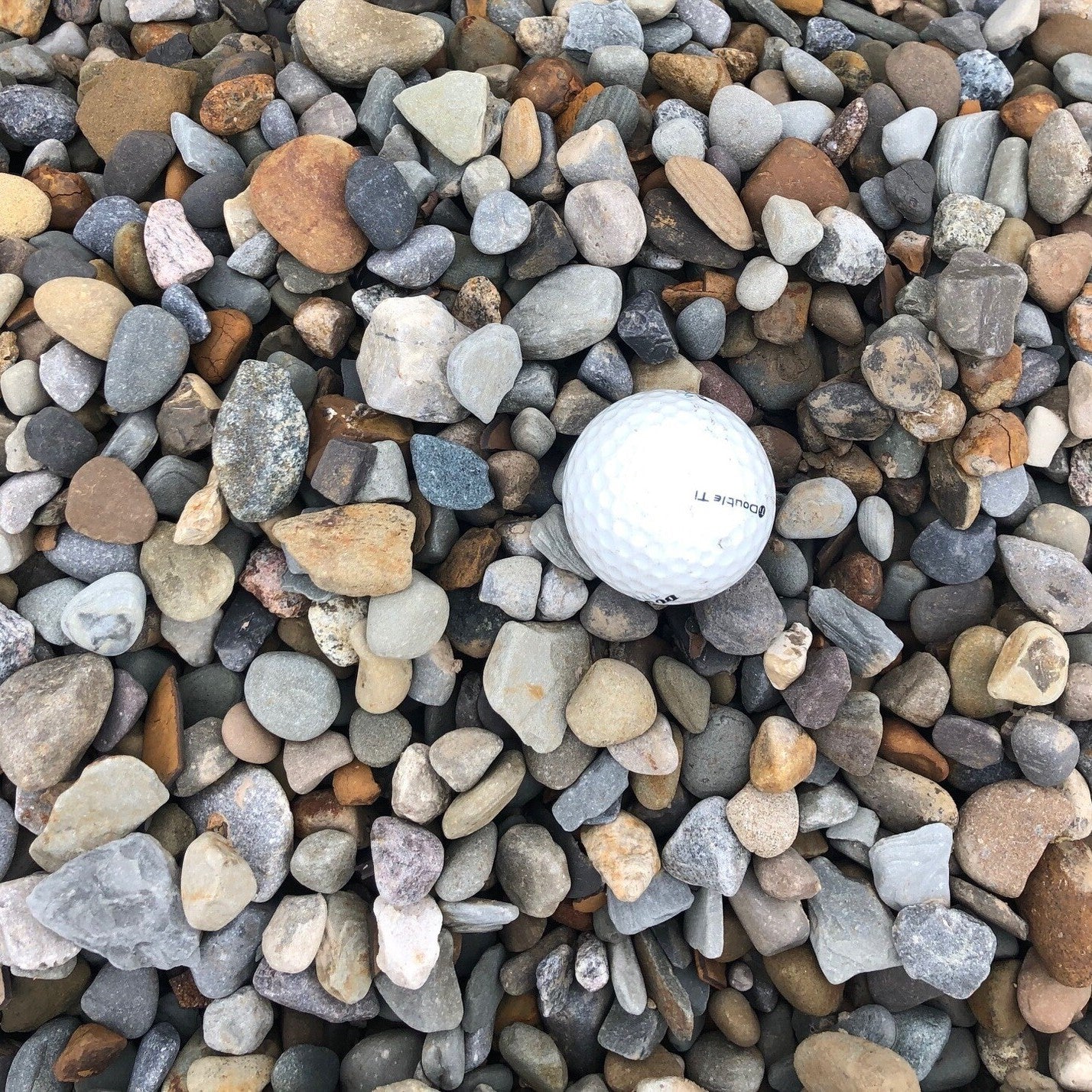
Number 57 crushed stone, angular limestone graded to about three quarters of an inch. The standard driveway, base and drainage gravel, it locks together under traffic and drains fast.
Mulch Mound delivered a yard of pea gravel to us. Delivery was on time, driver was friendly and hit a bullseye on the “tarp target”. We used the pea gravel (which was diameter as specified) to fill several muskrat holes around our pond. I would definitely recommend Mulch Mo...
Tell us what you're looking for
Thanks! We received your request.
Something went wrong. Please try again.
How Much Material Do I Need?
Plan on two inches of decorative stone for bed coverage and four inches for pathways or driveways, with one cubic yard covering approximately 160 square feet at the two-inch depth. For drainage swales and dry creek beds, estimate the volume of the channel and add 15 percent for settling.
Use our free gravel calculator
What is a Yard?
A yard is approximately 27 cubic feet. As a general guideline, one yard of material can cover an area of about 100-160 square feet at a 2-3 inch depth.
We can't take orders for this right now. Tell us what you need and we'll get back to you.
What do you need?
Thanks! We received your request.
Something went wrong. Please try again.
Hand-picked local yards
4,000+ regional deliveries
Dedicated support
Why order through Mulch Mound
The best local , without the guesswork.
We hand-pick and partner with the best yards in your region, keep only the ones our buyers rate well, and back each load with our guarantee.
Mulch Mound Guarantee
If your isn't the quantity or quality you ordered, we'll make it right.
About this stone
Number 57 crushed stone, angular limestone graded to about three quarters of an inch. The standard driveway, base and drainage gravel, it locks together under traffic and drains fast.
Mulch Mound delivered a yard of pea gravel to us. Delivery was on time, driver was friendly and hit a bullseye on the “tarp target”. We used the pea gravel (which was diameter as specified) to fill several muskrat holes around our pond. I would definitely recommend Mulch Mo...
How Much Material Do I Need?
Plan on two inches of decorative stone for bed coverage and four inches for pathways or driveways, with one cubic yard covering approximately 160 square feet at the two-inch depth. For drainage swales and dry creek beds, estimate the volume of the channel and add 15 percent for settling.
Use our free gravel calculator
What is a Yard?
A yard is approximately 27 cubic feet. As a general guideline, one yard of material can cover an area of about 100-160 square feet at a 2-3 inch depth.
Mulch Mound delivered a yard of pea gravel to us. Delivery was on time, driver was friendly and hit a bullseye on the “tarp target”. We used the ...
Read full review
Mulch Mound delivered a yard of pea gravel to us. Delivery was on time, driver was friendly and hit a bullseye on the “tarp target”. We used the pea gravel (which was diameter as specified) to fill several muskrat holes around our pond. I would definitely recommend Mulch Mound to a friend!
Placing an order online was so easy. Delivery was on time. When the driver realized we had a newly poured driveway they erred on the side of cautio...
Read full review
Placing an order online was so easy. Delivery was on time. When the driver realized we had a newly poured driveway they erred on the side of caution and opted not ti drive in it. The company even sent me a message explaining that call. Would recommend!
Stone coverage is typically calculated at two inches deep for decorative beds and four inches deep for walking surfaces, and one cubic yard covers roughly 160 square feet at two inches. Sketch your coverage area on paper and break irregular shapes into rectangles before doing your math. In Kansas City yards with established borders, measuring twice and ordering once saves you from having leftover stone with nowhere practical to use it.
Complete Your Outdoor Stone Project
Landscape fabric installed beneath your stone order is essential in Kansas City clay soil to prevent migration and weed breakthrough over time. Pairing decorative stone borders with a quality mulch interior creates a layered bed design that looks intentional and manages both moisture and aesthetics through the full growing season.
In Kansas City, freeze-thaw cycles between November and March can displace stone edging and shift gravel paths more than homeowners expect. The clay soil swells when frozen and contracts when it thaws, and that movement is transmitted through anything sitting on or in it. Setting stone borders on a two-inch compacted gravel base rather than directly on clay significantly reduces heaving because the gravel layer drains freely and does not hold the water that freezes and expands. This one foundation step makes the difference between borders that stay put and ones that need resetting every spring.
Mulch Mound Pro Tip
Lighter colored stone such as tan river rock or white marble chips reflects sunlight and stays cooler to the touch during Kansas City's hottest months, which matters if you have pets, children, or bare-foot pathways in your yard. Dark stone like black lava rock or charcoal gravel absorbs heat significantly and can raise soil temperatures in bed areas by several degrees during July and August, which is already the most stressful period for plant roots in zone 6b. Choose stone color based on where it goes. Light tones in full sun beds, darker tones in shaded areas where the extra warmth is actually beneficial.
Mulch Mound Pro Tip
Stone is the right material for the perimeter zones of Kansas City homes where downspout water exits onto the soil, because organic mulch in those spots floats, displaces, and breaks down too quickly under the concentrated flow. Create a splash pad of river rock or crushed limestone at least 18 inches in diameter around each downspout outlet, and extend a gravel channel away from the foundation if the grade allows it. This protects your foundation soil from erosion during the intense spring storm season and gives you a maintenance-free solution that looks far better than bare dirt or concrete splash blocks.
The Unique Landscape of Kansas City
Kansas City, KS landscapes face a specific set of challenges that make inorganic stone materials an intelligent long-term choice for many applications. The clay soil that underlies most local yards shifts noticeably through the freeze-thaw cycles that happen repeatedly between November and late March, and that movement can heave edging, crack borders, and undo years of landscaping work. Stone does not decompose, does not float away during the heavy spring rains that drop significant moisture on the area each year, and does not require annual replenishment the way organic mulch does. The elevation of 869 feet in Kansas City means temperature drops happen quickly in the evenings during transitional seasons, and stone retains daytime heat in a way that can extend the productive growing season around heat-loving plants like tomatoes and peppers. Whether used for pathways, drainage solutions, decorative beds, or ground cover around trees, stone provides a permanence that organic materials simply cannot match in this climate.
Frequently Asked Questions
Click a question to see the answer
Answer
Will gravel or river rock sink into my Kansas City clay over time?
Yes, stone will gradually work its way into clay soil without a barrier layer underneath it. Clay is plastic enough that the weight of stone slowly pushes individual pieces downward over one to three seasons, especially in areas that receive foot traffic or heavy rainfall. The solution is simple. Lay a permeable landscape fabric over prepared soil before placing stone, and you will have a stable surface that stays in place for years. The fabric lets water pass through to the clay while preventing the stone from migrating downward.
Answer
What kind of stone works best for drainage swales in a Kansas City yard?
Clean crushed limestone or river rock in the 1.5 to 3 inch size range is the best choice for drainage swales in Kansas City. The rounded shape of river rock allows water to flow between pieces without clogging, and the larger size means it will not displace during the fast-moving sheet flow that develops when two inches of rain falls in an hour, which is a realistic storm scenario here. Pea gravel is too fine for active swales because it moves with fast water and can dam smaller drain openings.
Answer
Can I use stone around the base of my trees instead of mulch?
Stone around trees is a debated topic among local arborists, and for good reason. Decorative stone does not contribute organic matter to the soil beneath it, which means tree roots in Kansas City's already lean clay do not receive the soil improvement benefit that decomposing mulch provides over time. Stone also absorbs and radiates heat, which can elevate soil temperatures around tree roots during Kansas City's hottest months above the range that fine feeder roots tolerate. If you prefer the look of stone, use it for pathways and borders and keep an organic mulch ring directly around tree trunks.
Answer
How deep should I lay pea gravel for a walkway or patio area?
Three to four inches of pea gravel is the standard depth for a stable walking surface, but in Kansas City clay soil you should account for the fact that the base material will shift more than it would in a sandy or loam-based soil. Compact the clay base firmly before laying fabric and stone, and consider a one-inch layer of coarse sand between the fabric and the gravel to provide a more stable transition zone. A four-inch depth gives you enough material to rake level after settling occurs in the first season.
Answer
Does stone help or hurt with my yard's drainage problems?
Stone is one of the best tools for managing drainage in Kansas City yards precisely because it does not compact, does not absorb water, and creates air space that channels moisture toward outlet points. A dry creek bed filled with river rock across a natural drainage path can redirect water that would otherwise pond against a foundation or flood a low bed. The key is that stone manages water movement but does not solve the underlying clay drainage issue. Pairing stone drainage features with perforated pipe underneath gives you a system that handles Kansas City's heavy rain events without relocating the problem.
Answer
What is the difference between crushed limestone and river rock for landscaping, and which one is better here?
Crushed limestone is angular and locks together when compacted, making it excellent for driveways, parking areas, and base layers where stability matters. River rock is smooth and rounded, which makes it visually appealing in beds and water features but less stable underfoot. In Kansas City, crushed limestone is also locally abundant, which often makes it more affordable than imported river rock. For decorative bed coverage and drainage features, river rock is the better visual choice. For utility paths and driveways, crushed limestone outperforms it for stability and cost.
Answer
How do I keep weeds from growing up through my gravel areas?
A quality non-woven landscape fabric installed before stone placement is the most reliable weed barrier in Kansas City conditions. Avoid woven black plastic because it degrades in UV light within a few seasons and the weave opens up enough for weed roots to push through. Overlap fabric edges by at least six inches at seams and pin them every 18 inches. Even with good fabric, some wind-deposited seeds will germinate in the stone layer itself, so an annual light spray of a contact herbicide in early May before broadleaf weeds establish keeps gravel areas looking clean through the growing season.
Answer
Is there a stone yard near Kansas City?
Clay soil under Kansas City yards shifts through repeated freeze and thaw cycles from November to late March, so a compacted crushed stone base that won't decompose or wash away holds up best. Mulch Mound can deliver that crushed stone by the cubic yard right to your driveway or yard, so you never have to visit a stone yard or a gravel pit.