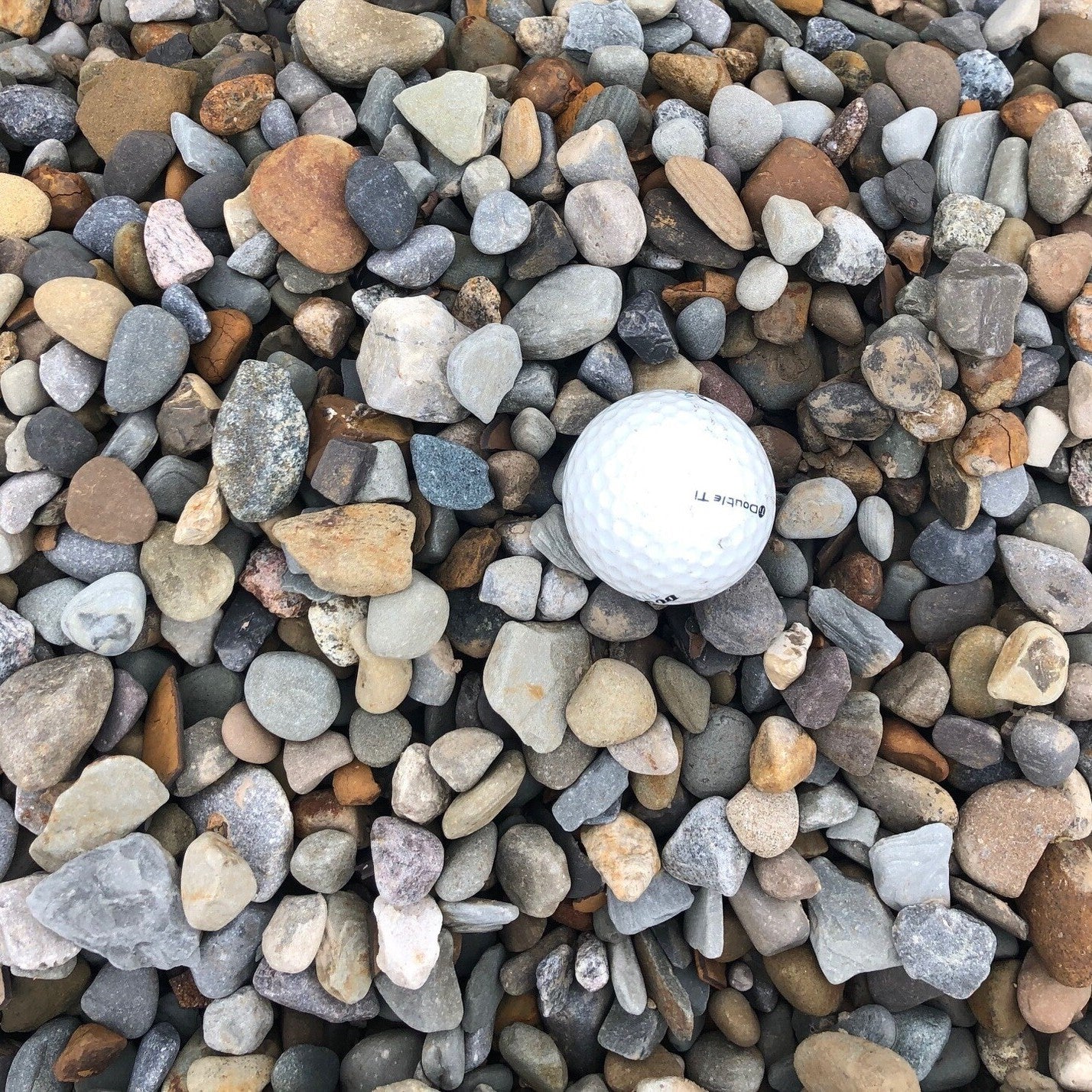
Number 57 crushed stone, angular limestone graded to about three quarters of an inch. The standard driveway, base and drainage gravel, it locks together under traffic and drains fast.
I used Mulch Mound to have 3 cubic yards of garden soil delivered. The process was easy and I love that I didn't have to call anyone. I placed my order online, picked my delivery date, laid out my tarp and the dirt was delivered. My delivery had to be pushed back, but I was ke...
Tell us what you're looking for
Thanks! We received your request.
Something went wrong. Please try again.
How Much Material Do I Need?
For decorative ground cover in Kennewick xeriscape beds and planting areas, plan on a 2 to 3 inch depth of stone to fully suppress weeds and cover the landscape fabric beneath. For drainage applications such as dry creek beds or the base of downspouts, a 4 to 6 inch layer provides the functional depth needed to manage water movement effectively during the intense but brief rain events Kennewick experiences.
Use our free gravel calculator
What is a Yard?
A yard is approximately 27 cubic feet. As a general guideline, one yard of material can cover an area of about 100-160 square feet at a 2-3 inch depth.
We can't take orders for this right now. Tell us what you need and we'll get back to you.
What do you need?
Thanks! We received your request.
Something went wrong. Please try again.
Hand-picked local yards
4,000+ regional deliveries
Dedicated support
Why order through Mulch Mound
The best local , without the guesswork.
We hand-pick and partner with the best yards in your region, keep only the ones our buyers rate well, and back each load with our guarantee.
Mulch Mound Guarantee
If your isn't the quantity or quality you ordered, we'll make it right.
About this stone
Number 57 crushed stone, angular limestone graded to about three quarters of an inch. The standard driveway, base and drainage gravel, it locks together under traffic and drains fast.
I used Mulch Mound to have 3 cubic yards of garden soil delivered. The process was easy and I love that I didn't have to call anyone. I placed my order online, picked my delivery date, laid out my tarp and the dirt was delivered. My delivery had to be pushed back, but I was ke...
How Much Material Do I Need?
For decorative ground cover in Kennewick xeriscape beds and planting areas, plan on a 2 to 3 inch depth of stone to fully suppress weeds and cover the landscape fabric beneath. For drainage applications such as dry creek beds or the base of downspouts, a 4 to 6 inch layer provides the functional depth needed to manage water movement effectively during the intense but brief rain events Kennewick experiences.
Use our free gravel calculator
What is a Yard?
A yard is approximately 27 cubic feet. As a general guideline, one yard of material can cover an area of about 100-160 square feet at a 2-3 inch depth.
I used Mulch Mound to have 3 cubic yards of garden soil delivered. The process was easy and I love that I didn't have to call anyone. I placed my o...
Read full review
I used Mulch Mound to have 3 cubic yards of garden soil delivered. The process was easy and I love that I didn't have to call anyone. I placed my order online, picked my delivery date, laid out my tarp and the dirt was delivered. My delivery had to be pushed back, but I was kept informed via text, which was great. So why not 5 stars? The description of garden soil on the website is "A balanced mix of topsoil and organic amendments ready for raised beds, flower gardens, and new planting areas. Good drainage, solid nutrients, easy to work with." What I got was more like fill dirt. It had a lot of gravel, a lot of clay, and random trash mixed in. I didn't test the soil to see if it actually had "amendments" because I already have compost and alpaca manure ready to add, but if I'd known the quality of the dirt was going to be the same as the bagged dirt I bought last year, I probably would have gotten 2 yards of top soil and a yard of leaf compost for better quality, especially since the leaf compost is cheaper. Photo of my mountain of dirt and just some of the trash I found in it.
To calculate stone coverage, measure the length and width of your project area in feet and multiply them to get square footage. For a 2-inch cover depth, divide the square footage by 162 to get cubic yards needed. For a 3-inch depth, divide by 108. These formulas work for most decorative stone sizes used in Kennewick landscaping, though very large cobble may require a slightly deeper application to achieve full ground coverage.
Complete Your Outdoor Stone Project
Combine your stone order with a soil refresh for any remaining planting beds to give your landscape a cohesive look where the planted areas are just as healthy as the hardscaped zones. Adding a layer of mulch around individual plants or trees within a stone landscape prevents the heat-absorbing rock from competing too aggressively with plant root zones during the hottest weeks of the Kennewick summer.
Before laying landscape fabric and stone in a Kennewick xeriscape conversion, take time to address any grading issues in your yard. The silt loam soil in this area can develop uneven surfaces from irrigation erosion and settling over time, and covering those low spots with stone just locks them in place permanently. A light regrading pass with a landscaping rake before fabric installation ensures your finished stone surface sheds water evenly toward the street rather than pooling against your foundation or walkways.
Mulch Mound Pro Tip
When using decorative stone around trees and shrubs in Kennewick, leave a 6-inch gap between the stone and the base of each plant. Stone holds and radiates heat far more intensely in Kennewick's summer conditions than organic mulch does, and direct contact with a plant crown can cause bark stress and create entry points for insects. Placing a thin ring of organic mulch directly around each plant base, then transitioning to the surrounding decorative stone, gives you the best of both materials and protects your plants through the hot season.
Mulch Mound Pro Tip
Consider using locally sourced basalt rock in your Kennewick landscape design whenever possible. The dark volcanic rock found throughout the Columbia Basin is not just aesthetically appropriate for the region, it is also extremely durable in the freeze-thaw cycles Kennewick experiences between late October and early April. Softer imported stones like limestone or sandstone can crack and flake over several winters in this climate, while basalt stays structurally intact for decades and only improves in appearance as it weathers to a natural patina.
The Unique Landscape of Kennewick
Decorative and functional landscape stone has become one of the most practical choices for Kennewick homeowners who want a beautiful yard without the maintenance demands that intense irrigation and constant upkeep require in a desert climate. With only 8 inches of rain per year, traditional high-water-use landscaping is increasingly being replaced by stone-based designs that look sharp year-round with almost no ongoing input. Kennewick's strong seasonal winds and low humidity are hard on organic materials, while stone holds its color, shape, and position through all of it. The silt loam soil in this area is also prone to erosion in areas without plant cover, and a layer of stone over landscape fabric is one of the most effective long-term erosion control solutions available. From river rock that reflects the natural aesthetics of the nearby Columbia River corridor to crushed basalt that echoes the volcanic geology of the region, stone lets Kennewick landscapes feel like they truly belong to this part of the world.
Frequently Asked Questions
Click a question to see the answer
Answer
What size of river rock works best for a xeriscape bed in my Kennewick front yard?
For xeriscape beds in Kennewick, a 1 to 2 inch river rock is the most popular choice because it is large enough to stay in place during the wind events common in the Columbia River corridor but small enough to give a neat, finished appearance. Smaller pea gravel tends to track onto sidewalks and driveways in the wind and underfoot. Larger cobble rock in the 3 to 5 inch range works well as an accent or border material but covers ground less efficiently and costs more per square foot to fill a bed.
Answer
Should I put landscape fabric under my decorative stone here in Kennewick?
Yes, landscape fabric is strongly recommended under decorative stone in Kennewick for two important reasons. First, it prevents the fine silt loam soil native to this area from wicking up into the stone layer over time, which causes the rock to look dirty and sink into the ground. Second, it provides a consistent weed barrier that reduces maintenance in a region where weeds can germinate rapidly in irrigated beds even in a dry climate. Choose a woven, commercial-grade fabric rather than the thin plastic sheeting, which degrades quickly in Kennewick's UV-intense summer sun.
Answer
Will dark-colored stone make my yard too hot in the summer?
This is a legitimate concern in Kennewick where summer ground temperatures are already high. Dark volcanic rock and black lava rock absorb significantly more solar radiation than lighter-colored materials and can radiate heat into adjacent planting beds in the evening hours. If your stone is adjacent to plants, lighter-colored decomposed granite, tan river rock, or white marble chips reflect more heat and light and are gentler on nearby root zones. Dark stone is fine for purely decorative or hardscape areas away from plants, and it does offer a striking visual contrast against the dry landscape.
Answer
What is the best stone to use for a dry creek bed to manage stormwater in my yard?
For dry creek bed features in Kennewick, a combination of 3 to 5 inch river cobble for the main channel and larger boulders for the edges creates the most natural look given the Columbia River influence on the region's aesthetic. These creek features also serve a real function in Kennewick by directing the runoff from the occasional heavy summer thunderstorm away from foundations and toward street drainage. River rock is the preferred material because its smooth, rounded edges look appropriate for a water-carved channel even when it is dry 350 days of the year.
Answer
How much stone do I need to cover a typical front yard xeriscape conversion in Kennewick?
A standard front yard in Kennewick that is roughly 500 square feet covered with a 2 to 3 inch layer of decorative rock requires approximately 3 to 4 cubic yards of material. The exact amount depends on the rock size, since smaller river rock packs more densely and covers ground more efficiently than larger cobble. When converting a lawn to xeriscape, measure your total square footage carefully and use our calculator to estimate your needs, then add about 10 percent for edged areas and the slight settling that happens after the first season.
Answer
Is decomposed granite a good choice for pathways in a Kennewick yard?
Decomposed granite is an excellent pathway material for Kennewick and widely used throughout the Tri-Cities area for this exact purpose. It compacts firmly under foot traffic, drains well after the occasional rainstorm, and its tan and gold tones complement the natural desert palette of the surrounding landscape. Apply it 3 to 4 inches deep and consider using a stabilizing binder if your path gets heavy traffic, as loose DG can scatter over time in windy conditions. It also stays cooler underfoot than concrete or asphalt in midsummer heat.
Answer
How do I prevent weeds from growing up through my river rock after a few years?
Weed management in established stone beds in Kennewick is primarily about preventing windblown soil and organic debris from accumulating on top of the rock, which creates a seedbed for weeds above the fabric. Blowing or raking the surface of your rock periodically removes this layer of debris before it builds up. For weeds that do establish themselves, a pre-emergent herbicide applied in early March, just before the spring germination window, is very effective in Kennewick's climate and dramatically reduces hand-pulling labor throughout the summer.
Answer
Is there a stone yard near Kennewick?
A few cubic yards of crushed stone is what you'd ask for at the counter of a stone yard or a nearby quarry. Mulch Mound brings that same crushed stone to your door in Kennewick, so you skip the trip entirely. It suits the area well because it needs no watering and holds up through dry desert years with almost no upkeep.