


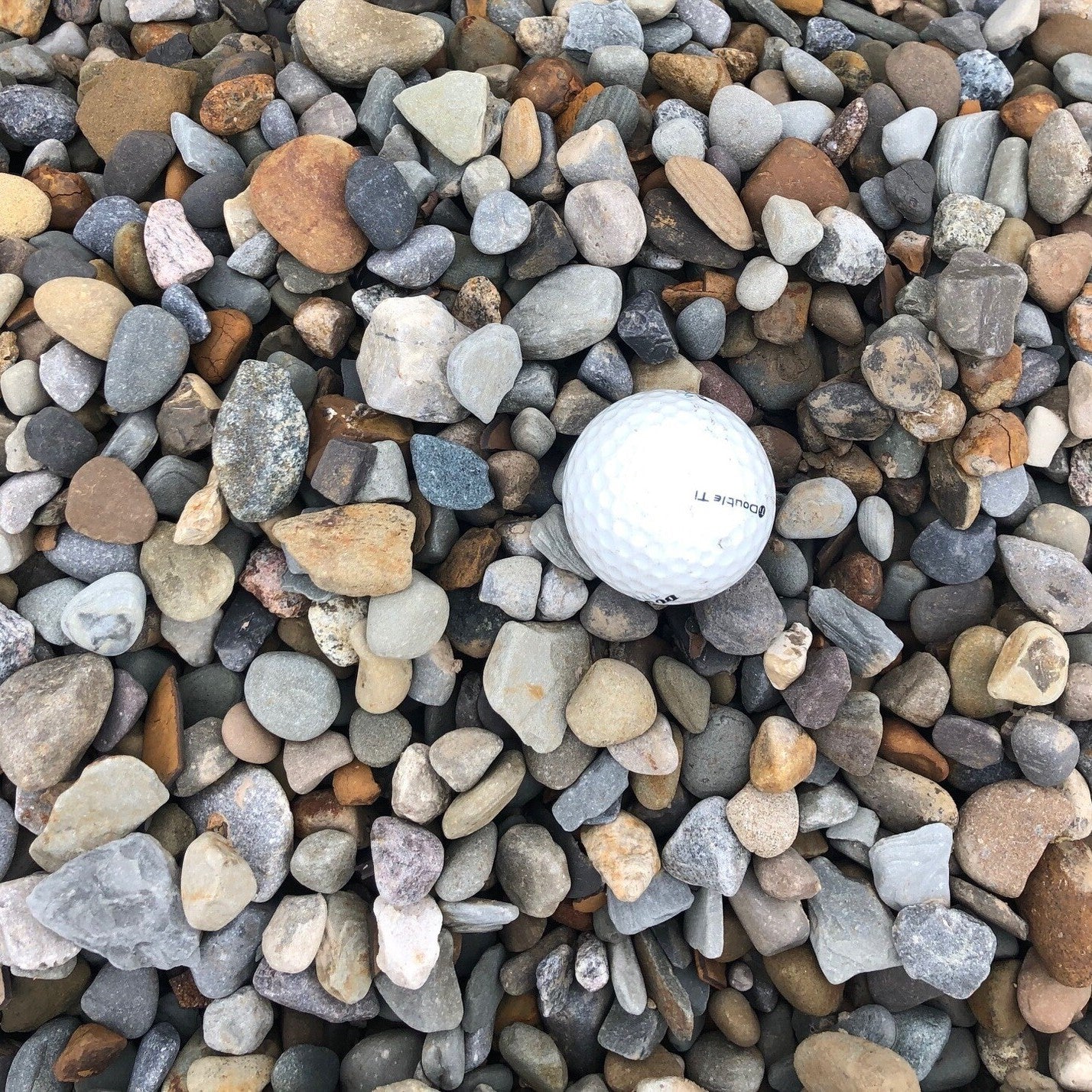

The driver nailed it on putting the gravel I ordered in front of my trailer and between the sidewalk. Very satisfied with how my flowerbeds look now.
About this stone
Number 57 crushed stone, angular limestone graded to about three quarters of an inch. The standard driveway, base and drainage gravel, it locks together under traffic and drains fast.
The driver nailed it on putting the gravel I ordered in front of my trailer and between the sidewalk. Very satisfied with how my flowerbeds look now.
Tell us what you're looking for
Thanks! We received your request.
Something went wrong. Please try again.
How Much Material Do I Need?
How Much Material Do I Need?
For pathways and decorative beds in Lafayette, a 2 to 3 inch layer of stone provides stable coverage and good visual density, while drainage channels and foundation borders should be built up to 4 inches to manage the runoff volumes that Lafayette's rainfall generates. Plan to add a light top-off layer every few years as Lafayette's silt loam base gradually settles and stone depth naturally decreases.
Use our free gravel calculator
What is a yard?
What is a yard?
FAQs
FAQs
Lafayette Gravel Delivery
Lafayette Gravel Delivery
Regular price
$133.00
per
yard
Regular price
Sale price
$133.00
Unit price
per
Shipping calculated at checkout.
Minimum of 3 yard
Couldn't load pickup availability
Not currently available
We can't take orders for this right now. Tell us what you need and we'll get back to you.
Hand-picked local yards
4,000+ regional deliveries
Dedicated support
Why order through Mulch Mound
The best local stone, without the guesswork.
We hand-pick and partner with the best yards in your region, keep only the ones our buyers rate well, and back each load with our guarantee.
Mulch Mound Guarantee
If your stone isn't the quantity or quality you ordered, we'll make it right.
About this stone
Number 57 crushed stone, angular limestone graded to about three quarters of an inch. The standard driveway, base and drainage gravel, it locks together under traffic and drains fast.
The driver nailed it on putting the gravel I ordered in front of my trailer and between the sidewalk. Very satisfied with how my flowerbeds look now.
How Much Material Do I Need?
How Much Material Do I Need?
For pathways and decorative beds in Lafayette, a 2 to 3 inch layer of stone provides stable coverage and good visual density, while drainage channels and foundation borders should be built up to 4 inches to manage the runoff volumes that Lafayette's rainfall generates. Plan to add a light top-off layer every few years as Lafayette's silt loam base gradually settles and stone depth naturally decreases.
Use our free gravel calculator
What is a yard?
What is a yard?
FAQs
FAQs
Tell us what you're looking for
Thanks! We received your request.
Something went wrong. Please try again.
How It Works
Getting started is easy — just follow these simple steps
1
Choose your stone
Make sure you adjust the quantity to your home's needs. You can use our calculator to estimate how much you'll need.
2
Select your delivery date
Select a delivery date you'd like for the product to be dropped off at your home
3
Sit back and wait
Sit back, wait, and let us work our magic to make sure the highest quality product is delivered to your driveway.

Placing an order online was so easy. Delivery was on time. When the driver realized we had a newly poured driveway they erred on the side of cautio...
Read full review
Placing an order online was so easy. Delivery was on time. When the driver realized we had a newly poured driveway they erred on the side of caution and opted not ti drive in it. The company even sent me a message explaining that call. Would recommend!

Online ordering was really simple and I liked the transparent pricing.
Need Help Calculating How Much Gravel You Need?
Use our NEW Trace from Satellite tool to get an estimate for your project based on an aerial view of your property
Try Our CalculatorMeasure your coverage area in square feet and plan for a minimum 2 to 3 inch depth for decorative beds and pathways, and a 3 to 4 inch depth for drainage swales where Lafayette's heavy rains will push significant water volume through the channel. Multiply length by width by depth in feet and divide by 27 to get cubic yards, then add 10 percent to account for settling in Lafayette's silt loam base. Stone compacts more noticeably than mulch after the first several rainfall events, so that extra buffer ensures your coverage stays at the right depth through the first wet season.
Stone Types We Deliver in Lafayette
Mulch Mound makes it easy to order bulk gravel by the yard in Lafayette, with delivery straight to your driveway or job site. Our stone is priced and sold by the cubic yard, so you get exactly the volume your project needs without overpaying for bagged material. The warm, humid climate and heavy clay soils common across this part of Louisiana make proper drainage a real priority, and the right stone can solve that while keeping your yard looking sharp.
Pea Gravel
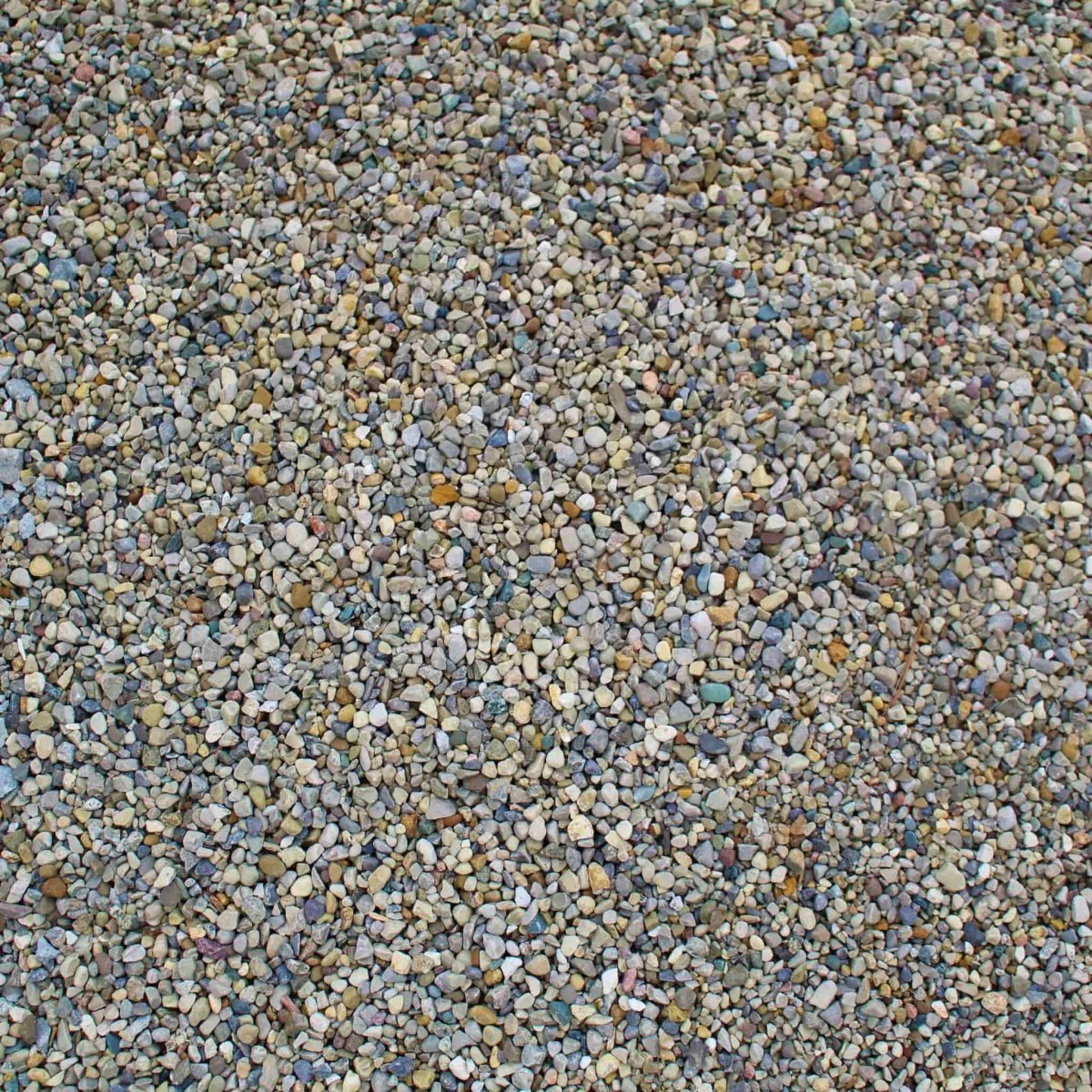
Pea gravel suits the landscape style found throughout south Louisiana, with smooth, rounded edges and warm earth tones that blend naturally into garden beds and outdoor living spaces. It performs reliably over heavy clay soils, improving drainage along pathways, patios, and planting areas where standing water is a common concern.
Complete Your Outdoor Stone Project
Combine your stone order with a load of fill soil to correct any low spots and establish proper grade before laying stone, so water drains away from your foundation rather than collecting under hardscape, and add hardwood mulch to surrounding planting beds to create a finished look that ties soft landscape areas and stone features together.



Service area
Areas we deliver stone and gravel in Lafayette, Louisiana
Mulch Mound Pro Tip
Lafayette receives enough rainfall each year to cause real erosion along sloped yard edges, around downspout outlets, and in any bare areas between planted beds. Installing a 4 to 6 inch deep channel of clean river rock or crushed stone at those erosion-prone spots absorbs the energy of falling and flowing water and slows runoff before it carries silt loam off your property or into your beds. Placing stone splash pads directly beneath downspout openings is one of the simplest and most cost-effective improvements Lafayette homeowners can make to protect both their foundation and surrounding landscape from the concentrated flow that comes off rooflines during a strong Louisiana storm.
Mulch Mound Pro Tip
Lafayette's nearly year-round outdoor season, which runs from around February 15 through early December, makes durable pathways a much better investment here than in colder climates where outdoor use is limited to a few months. Compacted crushed granite or limestone creates a firm, permeable walking surface that stays passable even after the extended rain events that turn Lafayette grass and mulch areas into muddy paths. Installing landscape fabric beneath the stone layer before spreading is especially important in Lafayette because silt loam, when disturbed by foot traffic and repeatedly wetted, will gradually work its way up into gravel over time and reduce both drainage performance and visual appeal.
Mulch Mound Pro Tip
When choosing decorative stone for Lafayette landscapes, the color you select has practical as well as aesthetic implications given the region's intense summer heat. Dark stones like black lava rock or charcoal slate absorb sunlight and radiate heat that can raise soil temperatures in adjacent planting beds, which adds stress to zone 9a plants that are already managing Lafayette's summer conditions on their own. Lighter options like buff limestone, natural pea gravel, or cream river rock reflect more sunlight, keep nearby soil temperatures more moderate, and also tend to show off the contrast with green plant material more effectively in the bright sun that Lafayette landscapes receive through the long growing season.
The Unique Landscape of Lafayette
Stone and gravel are among the most durable and practical landscape materials available to Lafayette homeowners who want attractive outdoor spaces that hold up through the region's demanding subtropical conditions. Lafayette's 62 inches of annual rainfall creates persistent challenges with erosion, pooling, and surface displacement that organic materials like mulch cannot fully address on their own. Crushed stone, river rock, and gravel provide weight, permeability, and stability that allow water to move through or around landscape features rather than washing everything into a muddy mess after a significant storm. At 40 feet of elevation, Lafayette properties tend to be relatively flat, which means water moves slowly and needs help getting away from foundations, walkways, and planting areas. Stone used in swales, border channels, and drainage paths works with that hydrology rather than against it, guiding water without washing away in the process. Lafayette's long frost-free season, running from around February 15 through December 3, means stone surfaces see heavy use for most of the year, making durability and visual appeal equally important considerations.