


About this compost
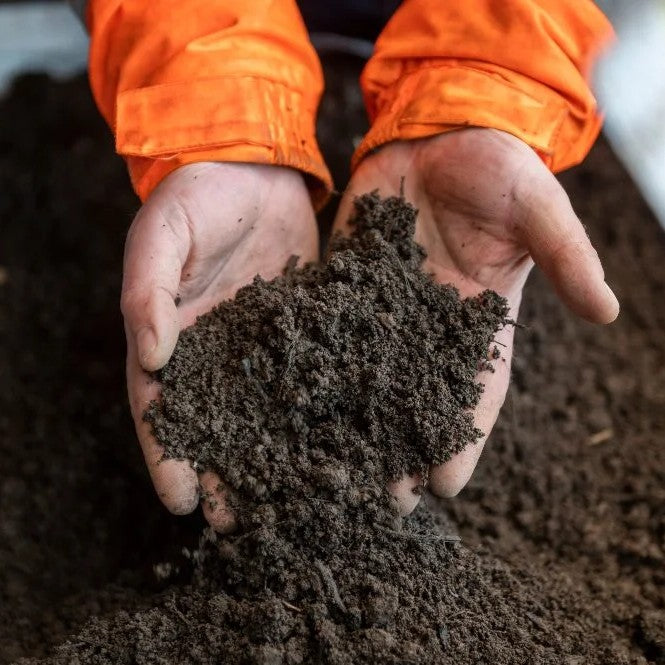
Rich, finished compost loaded with organic matter. Mix it into beds to boost nutrients, improve water retention, and build the kind of soil plants love.

Tell us what you're looking for
Thanks! We received your request.
Something went wrong. Please try again.
How Much Compost Do I Need?
How Much Compost Do I Need?
One cubic yard of our compost covers about 324 square feet at a 1 inch depth, which is the right depth for topdressing an established lawn. For bed work, plan on 2 to 3 inches tilled in, which cuts that coverage down to roughly 110 to 160 square feet per yard, so measure your beds separately from your lawn area before ordering.
Use our free compost calculator
What is a yard?
What is a yard?
FAQs
FAQs
Madison Compost Delivery
Madison Compost Delivery
Regular price
$68.00
per
yard
Regular price
Sale price
$68.00
Unit price
per
Shipping calculated at checkout.
Couldn't load pickup availability
Not currently available
We can't take orders for this right now. Tell us what you need and we'll get back to you.
Hand-picked local yards
4,000+ regional deliveries
Dedicated support
Why order through Mulch Mound
The best local compost, without the guesswork.
We hand-pick and partner with the best yards in your region, keep only the ones our buyers rate well, and back each load with our guarantee.
Mulch Mound Guarantee
If your compost isn't the quantity or quality you ordered, we'll make it right.
About this compost
Rich, finished compost loaded with organic matter. Mix it into beds to boost nutrients, improve water retention, and build the kind of soil plants love.
How Much Compost Do I Need?
How Much Compost Do I Need?
One cubic yard of our compost covers about 324 square feet at a 1 inch depth, which is the right depth for topdressing an established lawn. For bed work, plan on 2 to 3 inches tilled in, which cuts that coverage down to roughly 110 to 160 square feet per yard, so measure your beds separately from your lawn area before ordering.
Use our free compost calculator
What is a yard?
What is a yard?
FAQs
FAQs
Tell us what you're looking for
Thanks! We received your request.
Something went wrong. Please try again.

How It Works
Getting started is easy — just follow these simple steps
1
Choose your quantity
Adjust the quantity to match your project. One cubic yard covers about 100 to 160 square feet at a 2 to 3 inch depth.
2
Select your delivery date
Select a delivery date you'd like for the product to be dropped off at your home
3
Sit back and wait
Sit back, wait, and let us work our magic to make sure the highest quality product is delivered to your driveway.

First time going with this company for mulch and it was an efficient process from start to finish. Website was easy—I told them exactly where I wan...
Read full review
First time going with this company for mulch and it was an efficient process from start to finish. Website was easy—I told them exactly where I wanted the mulch put on my driveway, and it was delivered perfectly when I got home from work the next day. Best deal around when I compared it to competitors and I will definitely be becoming back.

Ordered Dirt. Received Dirt. Would Buy Again.
Complete Your Outdoor Project
Compost pairs well with a topsoil blend if you're building up a new bed from scratch, and with mulch layered on top once the compost is worked in, since the mulch holds moisture in that improved soil. If you're overseeding a lawn this fall or spring, compost topdressing before seeding gives the new grass something better than clay to root into.


Service area
Areas we deliver compost in Madison, Wisconsin
Mulch Mound Pro Tip
In silty clay, compost works best mixed in rather than left on the surface to sit. For beds, till or fork it into the top 6 to 8 inches so it actually blends with the clay instead of forming a separate layer that water runs across. For lawns, 1 inch topdressed and left alone is correct, raking a thin layer in helps it settle past the thatch instead of smothering the grass underneath.
Mulch Mound Pro Tip
The most common mistake we see is piling on too much compost thinking more equals faster results. Excess compost, especially if it's not fully finished, can tie up nitrogen as microbes work through it, which actually stalls plant growth for a season. Stick to 1 inch on lawns and 2 to 3 inches tilled into beds, then repeat next season rather than doubling up now.
Mulch Mound Pro Tip
Fall applications ahead of the September 30 first frost let compost integrate over winter with minimal weed pressure, since most weed seeds aren't germinating in cold soil. Spring application after the May 20 last frost gets nutrients moving right as things wake up, but you're competing with weed seeds too. Either window works, it mostly comes down to whether you're prepping a new bed or maintaining an existing one.
Building Better Soil in Madison
Silty clay is the default soil across most Madison yards, and it drains slowly and compacts under foot traffic or heavy rain. Compost worked into the top few inches breaks up that density and gives roots somewhere to actually spread. With a growing season bounded by a May 20 last frost and a September 30 first frost, there are two solid windows each year, spring bed prep before planting and fall top dressing before the ground locks up. Isthmus City yards tend to be smaller and tightly landscaped, so getting the depth right matters more than dumping extra material and hoping.
What Finished Compost Is
Finished compost is organic matter that has fully broken down into a dark, crumbly material with an earthy smell. It feeds soil life, improves structure, and helps beds hold water without staying soggy.
How Much to Apply
Work 1 to 2 inches into new beds, or topdress lawns with a quarter to half inch and rake it in. More is not better. Too thick a layer can smother roots instead of feeding them.
When to Apply
Spring and fall are both good windows. Spring applications feed the growing season ahead, and fall applications break down over winter so beds are ready at first thaw.