Placing an order online was so easy. Delivery was on time. When the driver realized we had a newly poured driveway they erred on the side of caution and opted not ti drive in it. The company even sent me a message explaining that call. Would recommend!
Tell us what you're looking for
Thanks! We received your request.
Something went wrong. Please try again.
How Much Sand Do I Need?
At a 1 inch depth, one cubic yard covers about 324 square feet, and most mortar or paver joint applications only need a 1 to 2 inch working layer, not a full bed depth. For a small patio or walkway joint job, half a yard to a yard is usually plenty, while a full pool deck base or larger hardscape project can run several yards. Measure the actual square footage of joints or work area first rather than the whole patio footprint, since sand for joints goes a lot further than people expect. Use our free sand calculator
What is a Yard?
A yard is approximately 27 cubic feet. As a general guideline, one yard of material can cover an area of about 100-160 square feet at a 2-3 inch depth.
Placing an order online was so easy. Delivery was on time. When the driver realized we had a newly poured driveway they erred on the side of caution and opted not ti drive in it. The company even sent me a message explaining that call. Would recommend!
How Much Sand Do I Need?
At a 1 inch depth, one cubic yard covers about 324 square feet, and most mortar or paver joint applications only need a 1 to 2 inch working layer, not a full bed depth. For a small patio or walkway joint job, half a yard to a yard is usually plenty, while a full pool deck base or larger hardscape project can run several yards. Measure the actual square footage of joints or work area first rather than the whole patio footprint, since sand for joints goes a lot further than people expect. Use our free sand calculator
What is a Yard?
A yard is approximately 27 cubic feet. As a general guideline, one yard of material can cover an area of about 100-160 square feet at a 2-3 inch depth.
Placing an order online was so easy. Delivery was on time. When the driver realized we had a newly poured driveway they erred on the side of cautio...
Read full review
Placing an order online was so easy. Delivery was on time. When the driver realized we had a newly poured driveway they erred on the side of caution and opted not ti drive in it. The company even sent me a message explaining that call. Would recommend!
One of the easiest customer service experiences I've had in a long time! Mulch Mound made it so simple. After putting it off for a while, I looked ...
Read full review
One of the easiest customer service experiences I've had in a long time! Mulch Mound made it so simple. After putting it off for a while, I looked at the weather and knew I needed to get to mulching ASAP before the rain came if I didn't want to wait another week. I put my order in for the next day online and they came right at 9 AM. The employee who dropped off the mulch did a great job, putting it right on the tarp I laid out, she even made sure none of it got on the yard and double checked the truck bed to make sure it all came out. The mulch was exactly what I needed and arrived right on time.
Sand pairs naturally with paver base gravel underneath and with paver edging to hold joint lines once they are swept and compacted. If you are moving away from sand for joint fill, our chip stone is worth pricing out for the same job since it resists the pumping and washout that loose sand can suffer through a Manchester winter. For mortar work, keep portland cement and a mixing tub on the list.
For mortar mixing in Manchester, keep your sand dry and covered until you are ready to batch, damp sand throws off your water to cement ratio more than people expect. If the pile sits outside overnight before a cool fall pour, expect it to hold moisture longer than it looks like it does, so adjust your mix water down slightly rather than eyeballing consistency off a wet surface.
Mulch Mound Pro Tip
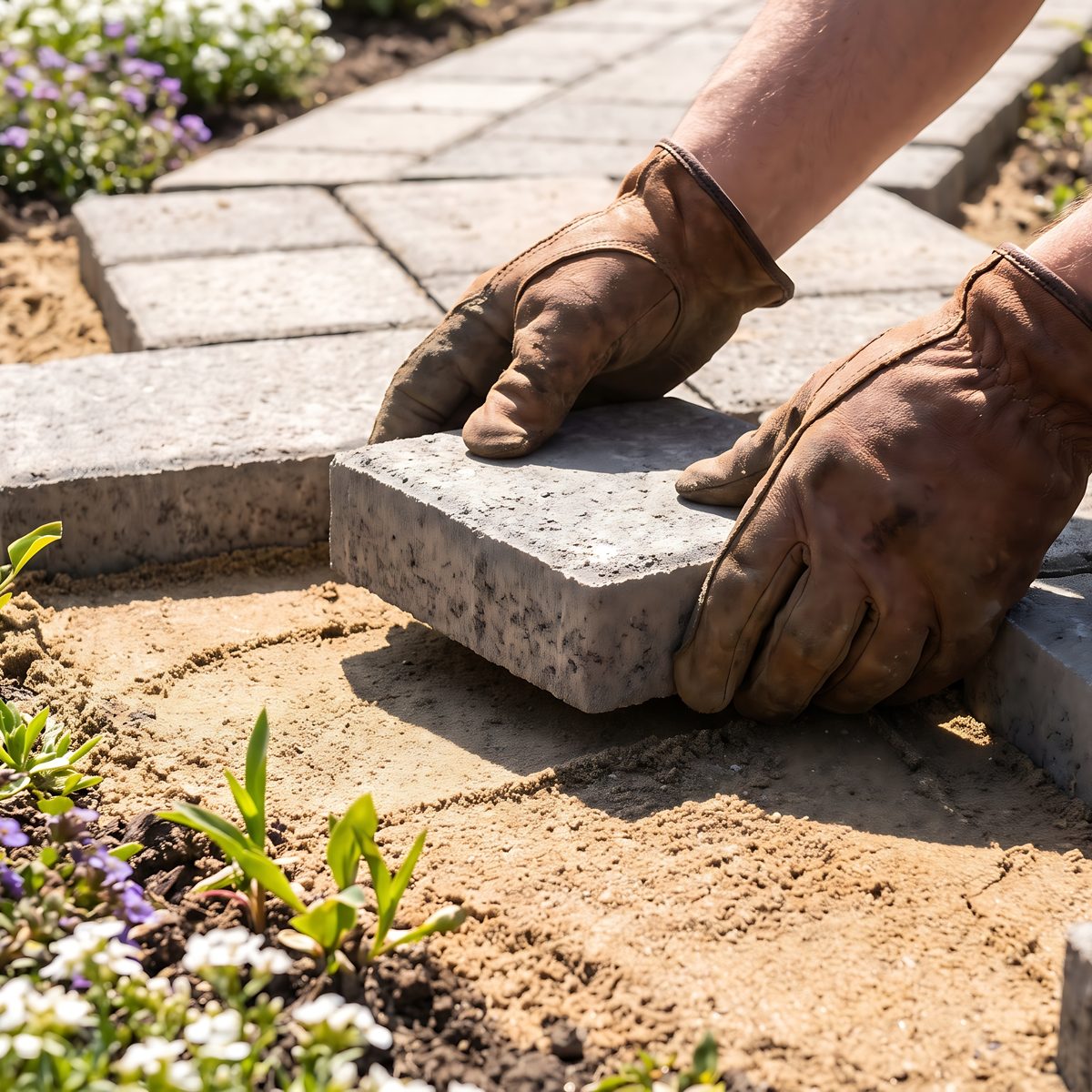
A common mistake on paver jobs here is filling joints with sand and assuming it is done. Sandy loam soil under a patio can shift slightly with our freeze thaw cycle, and loose joint sand pumps out over a winter or two, leaving gaps by spring. Compacting joints in stages and topping off once after the first rain gets a much longer lasting result than a single pass fill.
Mulch Mound Pro Tip
If your project mixes mortar work and paver joints, order the mason sand as one combined yardage rather than two separate small deliveries, since minimums and trip charges add up fast on small loads. Stockpile leftover sand under a tarp rather than letting it sit exposed, since Manchester's rain will wash fines out of an uncovered pile and change its grading before your next batch.
Working With Sand in Manchester
Manchester sits on sandy loam with an elevation of 266 feet, which drains well but does not make this sand redundant, mason sand and mortar sand are a finer, more consistent product than what is already in the ground here. Hardscape projects in this city, patios, walkways, and pool decks, need that consistency for joints and bedding to behave predictably. With a growing season bounded by a May 10 last frost and an October 1 first frost, most masonry and paver work gets packed into six or seven workable months, so timing an order matters. People here are also shifting paver joints toward chip stone since straight sand can pump out over a New Hampshire freeze thaw cycle.
Masonry vs Fill Sand
Masonry sand is washed and finely screened, the right choice for mortar work, paver joints, and sandboxes. Fill sand is coarser and less processed, better suited to leveling, bedding pipe, and filling low spots.
Bedding and Leveling
For pavers, screed a 1 inch sand bed over a compacted base rather than using sand to fix deep grade problems. A thin, even bed locks pavers in place. A thick one shifts underfoot.
Working With Moisture
Slightly damp sand spreads, screeds, and compacts far more easily than bone dry sand, which just flows back into your screed lines. Lightly wetting the pile before you work it saves real effort.
Frequently Asked Questions
Click a question to see the answer
Answer
Is this the same as mason sand or concrete sand?
This is washed, finely screened mason sand, finer and more uniform than concrete sand. That finer grain is what makes mortar workable and gives paver joints a tighter, more consistent fill. If your project specifically calls for concrete sand's coarser grade, let us know before ordering since the two are not interchangeable for structural mixes.
Answer
How much sand do I need for a small paver patio?
For joint fill only, figure a fraction of your patio's square footage since sand fills narrow gaps, not the whole surface. One cubic yard covers about 324 square feet at a 1 inch depth, so most patios under 300 square feet need well under a full yard for joints alone. Measure your actual joint width and length to size it accurately.
Answer
When is the best time to do paver or mortar work in Manchester?
Spring through fall is the workable window here, roughly May 10 through October 1 before frost risk returns. Hardscape and mortar jobs need dry, above freezing conditions to cure and set properly, so most contractors in the city book these projects from late spring through early fall rather than pushing into late October.
Answer
Can the delivery truck access a tight driveway near downtown Manchester?
In most cases yes, but let us know your access details when you schedule since older neighborhoods near downtown can have narrower driveways or on street parking that limits truck placement. We place the load as close to your work area as the truck can safely reach, so clear space ahead of time helps.
Answer
Should I use sand or chip stone for paver joints?
Sand has been standard for joint fill for years and remains fine for many patios, but chip stone is increasingly used instead because it locks in place and does not pump out over freeze thaw cycles the way sand can. If long term joint stability matters more than upfront cost, chip stone is worth considering for this climate.