Good quality, great price, fast delivery. All online - no submitting forms and waiting for days for quotes. Getting mulch should be this easy from everyone. Only Mulch Mound is ACTUALLY this simple.
Tell us what you're looking for
Thanks! We received your request.
Something went wrong. Please try again.
How Much Material Do I Need?
For most Marysville planting beds, plan on two to three inches of mulch depth to handle the rainfall and weed pressure common in this area. One cubic yard of mulch covers roughly 100 square feet at a three-inch depth, so a typical suburban Marysville front bed of 300 square feet will need about three cubic yards to start.
Use our free mulch calculator
What is a yard?
A yard is approximately 27 cubic feet. As a general guideline, one yard of material can cover an area of about 100-160 square feet at a 2-3 inch depth.
Good quality, great price, fast delivery. All online - no submitting forms and waiting for days for quotes. Getting mulch should be this easy from everyone. Only Mulch Mound is ACTUALLY this simple.
How Much Material Do I Need?
For most Marysville planting beds, plan on two to three inches of mulch depth to handle the rainfall and weed pressure common in this area. One cubic yard of mulch covers roughly 100 square feet at a three-inch depth, so a typical suburban Marysville front bed of 300 square feet will need about three cubic yards to start.
Use our free mulch calculator
What is a yard?
A yard is approximately 27 cubic feet. As a general guideline, one yard of material can cover an area of about 100-160 square feet at a 2-3 inch depth.
Good quality, great price, fast delivery. All online - no submitting forms and waiting for days for quotes. Getting mulch should be this easy fr...
Read full review
Good quality, great price, fast delivery. All online - no submitting forms and waiting for days for quotes. Getting mulch should be this easy from everyone. Only Mulch Mound is ACTUALLY this simple.
I highly recommend Mulch Mound. The quality of the mulch is very good. The ordering system on their website makes it very easy. The delivery driver...
Read full review
I highly recommend Mulch Mound. The quality of the mulch is very good. The ordering system on their website makes it very easy. The delivery driver did a great job placing the mulch on the driveway. To finish off, the pricing was very reasonable as well.
They offered a quick turnaround and delivered high quality mulch at a reasonable price. They also dropped it off exactly where I told them to put i...
Read full review
They offered a quick turnaround and delivered high quality mulch at a reasonable price. They also dropped it off exactly where I told them to put it. Good service!
Measure each bed's length and width in feet, then multiply those two numbers together to get your square footage. Multiply that square footage by 0.25 for a three-inch depth and divide by 27 to convert cubic feet to cubic yards, which is how bulk mulch is sold. For irregularly shaped Marysville yards with curved borders or multiple disconnected beds, break the space into rough rectangles, calculate each section separately, and add a ten percent buffer to account for settling after Marysville's winter rains compress the material.
Mulch vs. No Mulch: The Difference
Marysville's 42 inches of annual rainfall and mild zone 8b winters mean organic mulch decomposes at a noticeably faster rate than in drier Washington climates, so the debate between mulch and no mulch is not really a debate here. Bare silt loam beds in Marysville compact under rain impact and develop a surface crust that restricts oxygen exchange and drives up weed pressure dramatically from April through June. Mulch is not optional in this climate if you want low-maintenance, healthy beds year after year.
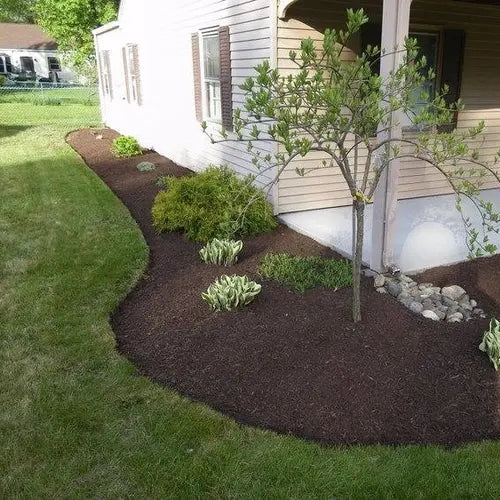
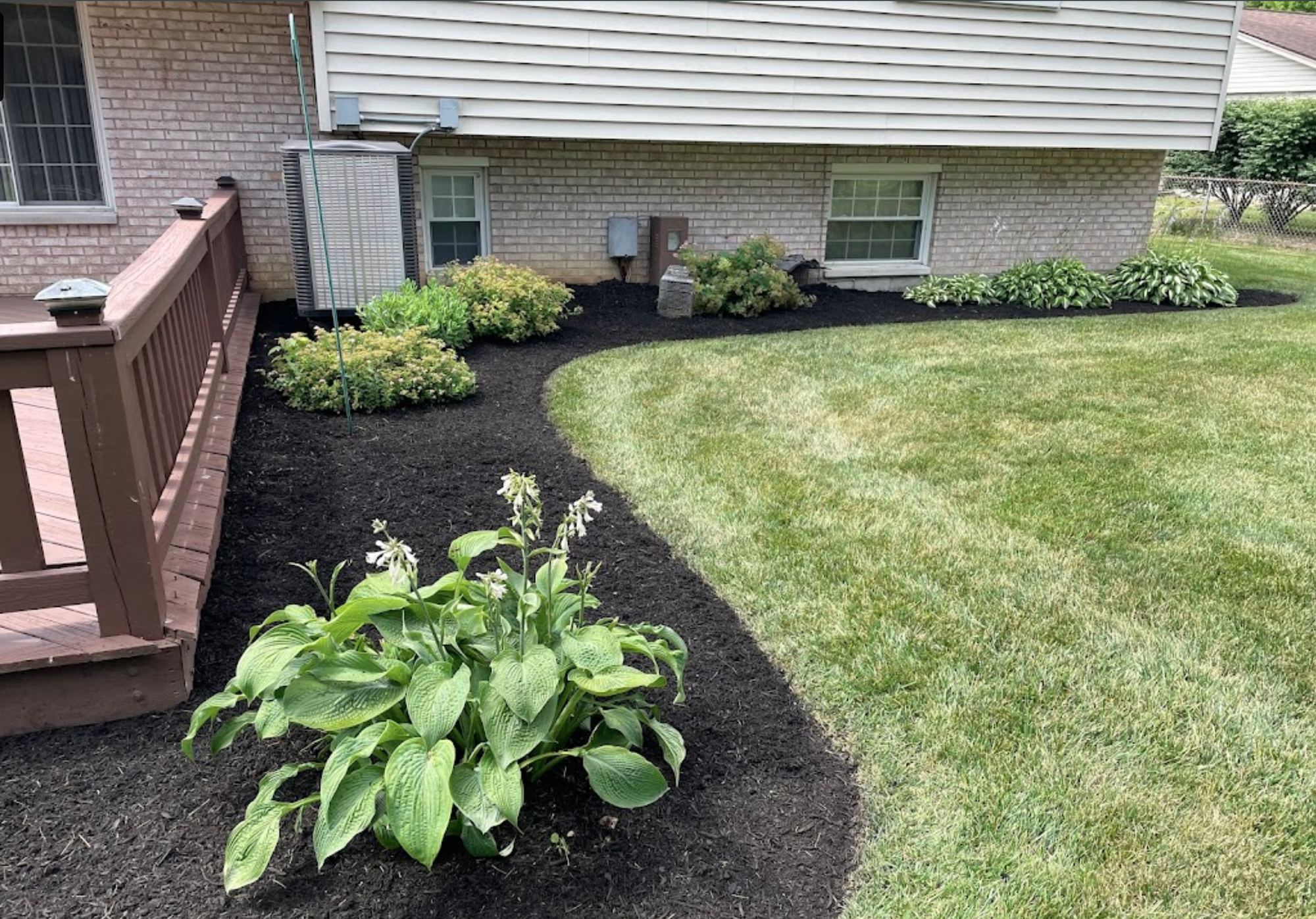
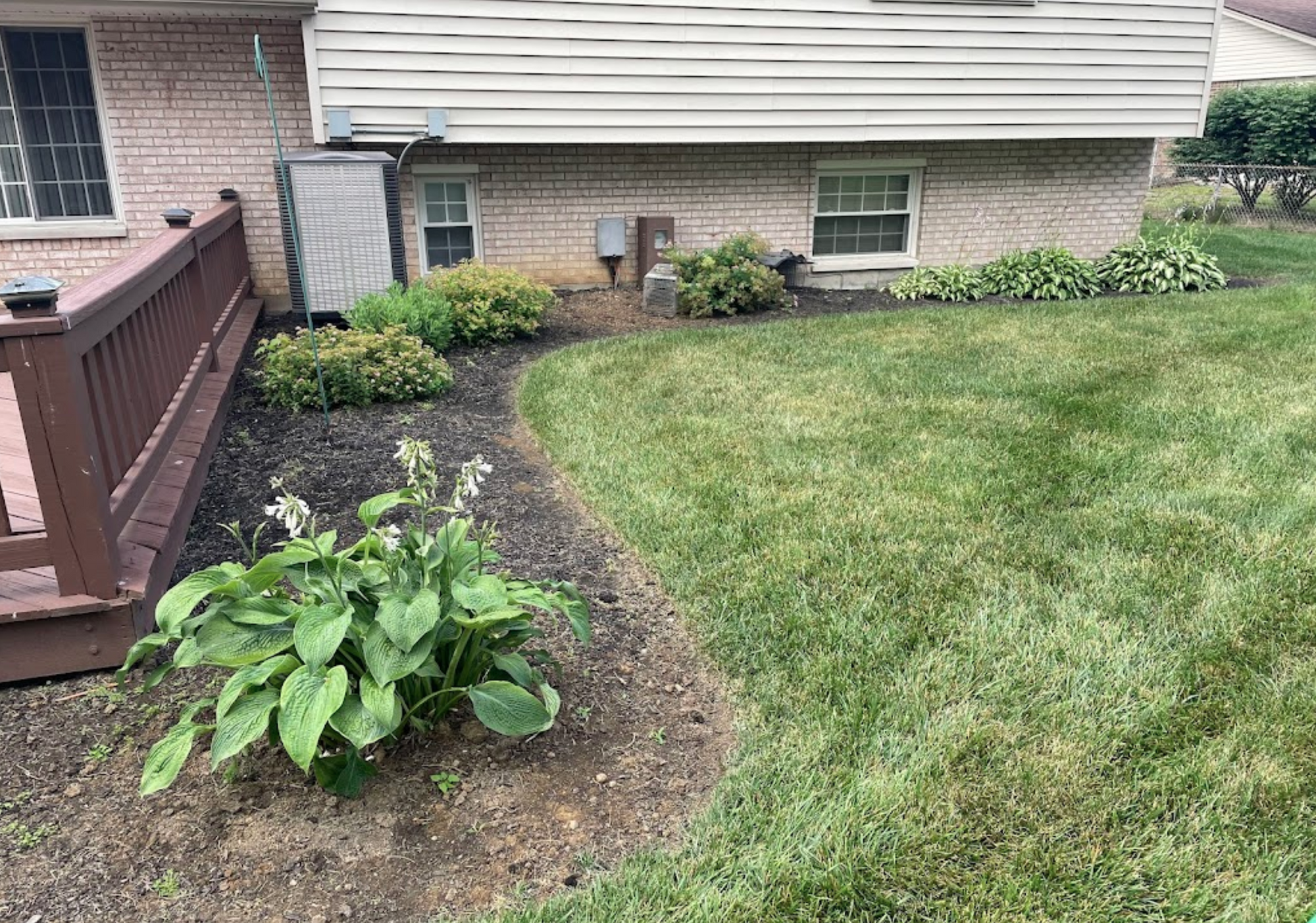
Before
After
Best Mulch Choice for Marysville Lawns
Most yards in the Marysville area sit on type of soil. Marysville's native silt loam has a fine texture that compacts easily under foot traffic and heavy rainfall, creating drainage problems that stress plant roots during the wet season. A coarse organic mulch layer on top acts as a buffer, absorbing rain impact before it can seal the soil surface and slowing the lateral spread of compaction into planting beds.
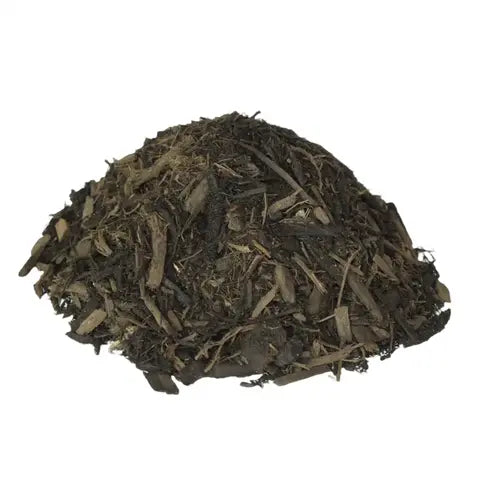
Hardwood Mulch
Hardwood mulch is a particularly good match for Marysville's silt loam because as it decomposes in the warm, moist growing season it adds fibrous organic matter that improves soil aggregation. This gradual amendment opens up the fine-textured silt loam particles, improving both drainage in wet months and water retention during the drier stretches of July and August that Marysville experiences each summer.
Complete Your Outdoor Mulch Project
If you are refreshing beds along with your mulch order, adding a layer of quality garden soil or compost-amended topsoil beneath new plantings gives roots a better foundation than Marysville's native silt loam alone. Pairing mulch with a landscape-grade decorative stone border can also help keep bulk mulch from migrating across driveways or hardscaped areas during heavy winter rains.
Marysville's silt loam holds moisture exceptionally well, which is a blessing in dry summers but a hazard in wet winters. When you apply mulch in the fall, pull it back two inches from the base of any woody shrub or tree trunk. The gap allows the crown and lower bark to dry out during rain breaks, which significantly reduces the risk of fungal cankers and collar rot that become problems when organic material stays wet against bark for weeks at a time during the November through February rainy stretch.
Mulch Mound Pro Tip
If you are spreading mulch on a sloped area of your Marysville property, consider a shredded wood product rather than bark nuggets or chips. Larger bark pieces are buoyant and will float downhill during the heavy rain events Marysville gets from October through March, ending up against your foundation or in the street. Shredded hardwood mulch interlocks as it settles and stays put far better on inclines, reducing the need to rake it back into place after every significant storm.
Mulch Mound Pro Tip
Timing your mulch application around Marysville's last frost date of April 4 gives you a strategic advantage. Applying mulch in mid to late April, after the soil has had a chance to warm from the winter cold, locks in that warmth and gives early-season vegetable transplants and perennials a more stable root environment. Mulching too early in March while the soil is still cold can actually slow warming and delay the start of your growing season, so let the ground recover from winter before laying down your fresh layer.
Frequently Asked Questions
Click a question to see the answer
Answer
How thick should I apply mulch in Marysville given how much rain we get?
In Marysville's wet climate, two to three inches of mulch hits the sweet spot. Go thinner and the heavy rainfall will compact exposed silt loam within weeks. Go thicker than four inches and you risk trapping too much moisture against plant crowns during the long wet season, which can encourage crown rot on shrubs and perennials. For slopes near the Ebey Slough or other low-lying areas, three inches is ideal because it holds in place during heavy rain events without becoming a soggy mat.
Answer
Will mulch break down faster here than in drier parts of Washington?
Yes, significantly faster. Marysville's combination of 42 inches of annual rainfall, mild zone 8b winters, and a growing season that stays relatively warm through October creates ideal conditions for microbial decomposition. A wood chip mulch that might last three years in eastern Washington will often need refreshing after 18 to 24 months in Marysville. The upside is that this decomposing organic matter adds valuable structure to the native silt loam below, slowly improving drainage and nutrient retention over time.
Answer
My yard floods a bit every winter near the back fence. Is mulch still a good idea?
Mulch can still work well in seasonally wet Marysville yards, but material choice matters a lot. Avoid fine-textured bark that compacts and turns anaerobic when submerged. A coarser wood chip or shredded hardwood mulch allows water to pass through more freely and is less likely to float and migrate during heavy rain. If your back fence area sits in standing water for more than a few days at a time, pairing mulch with improved subsurface drainage is the better long-term approach.
Answer
What is the best time of year to order mulch delivery in Marysville?
Late March through early May is the most popular window, and for good reason. The last frost in Marysville typically falls around April 4, and getting mulch down shortly after that date protects soil warmth and suppresses the early weed flush that follows spring rains. A second good window is mid-September through mid-October, right before the wet season locks in, so beds stay insulated through the winter frost period ending in late October and beyond.
Answer
Does mulch help with the weeds that go crazy in my Marysville garden every spring?
Absolutely, and this is one of the biggest benefits for Marysville homeowners. The combination of mild temperatures and abundant spring rainfall creates a weed germination frenzy in exposed silt loam beds every year. A fresh two to three inch layer of mulch physically blocks light from reaching weed seeds in the soil and keeps the ground from drying out in the brief warm spells that stimulate germination. You will not eliminate every weed, but a consistent mulch layer dramatically reduces the time you spend pulling bindweed and bittercress between April and June.
Answer
Should I remove old mulch before adding a new layer each year?
In most Marysville beds you do not need to remove old mulch, but you should check the depth before adding more. Because organic mulch breaks down quickly in this climate, what started as three inches is often down to one inch or less by the following spring. A light raking to loosen any compacted layer, followed by topping up to the two to three inch target depth, is usually all that is needed. If you find a thick soggy mat of partially decomposed material that is not breaking down cleanly, removing the top layer and letting the lower portion finish composting into the soil is a good idea.
Answer
I have a lot of rhododendrons and azaleas. Is there a specific mulch that works better for them in this area?
Rhododendrons and azaleas thrive in Marysville's climate but are particular about their root environment. These plants prefer a slightly acidic soil pH, which aligns well with the natural pH of Marysville's silt loam. A shredded conifer or hemlock bark mulch is an excellent match because it maintains that slight acidity as it breaks down and has an open texture that does not compact against the shallow fibrous root systems these plants rely on. Keep mulch pulled back an inch or two from the main stem to prevent moisture-related stem rot, which is a real concern given the long wet season.
The Unique Landscape of Marysville
Marysville sits at just 20 feet of elevation in the Snohomish River lowlands, where the combination of 42 inches of annual rainfall and heavy silt loam soil creates challenging conditions for plant beds and garden borders. Without a proper mulch layer, the relentless Pacific Northwest rain compacts exposed soil surfaces, forming a crust that restricts water infiltration and suffocates shallow root systems. The long wet season stretching from fall through spring means bare soil stays waterlogged for months, accelerating root rot and weed pressure in ornamental beds. A consistent mulch layer insulates roots through the brief but real frost window between late October and early April, protecting perennials during the temperature swings that Marysville experiences in zone 8b. Mulch also slows the aggressive breakdown of organic matter that happens in Marysville's warm, moist growing season, keeping nutrients in the root zone rather than washing into storm drains. Choosing the right mulch for Marysville means thinking about drainage, decomposition rate, and how the material interacts with the native silt loam beneath it.