About this sand

Washed and finely screened masonry sand for mortar, paver joints, and pool bases. Consistent grain, ready to screed.

Placing an order online was so easy. Delivery was on time. When the driver realized we had a newly poured driveway they erred on the side of caution and opted not ti drive in it. The company even sent me a message explaining that call. Would recommend!

One cubic yard of mason sand covers about 324 square feet at a 1 inch depth, and most paver joint or pool base work only needs 1 to 2 inches. For a typical backyard patio or pool installation, that usually lands between 1 and 3 cubic yards depending on how thick you are setting it. Measure your square footage first, then decide on depth based on what you are building.

A yard is approximately 27 cubic feet. As a general guideline, one yard of material can cover an area of about 100-160 square feet at a 2-3 inch depth.

Massapequa Park Sand Delivery

Massapequa Park Sand Delivery

4.7
137 reviews
Regular price $74.00 per Yard
Regular price Sale price $74.00
Sale Sold out
Shipping calculated at checkout.
Type
Size
Minimum of 3 Yard
Hand-picked local yards
4,000+ regional deliveries
Dedicated support
Why order through Mulch Mound

The best local sand, without the guesswork.

We hand-pick and partner with the best yards in your region, keep only the ones our buyers rate well, and back each load with our guarantee.

Mulch Mound Guarantee

If your sand isn't the quantity or quality you ordered, we'll make it right.

About this sand

Washed and finely screened masonry sand for mortar, paver joints, and pool bases. Consistent grain, ready to screed.

Placing an order online was so easy. Delivery was on time. When the driver realized we had a newly poured driveway they erred on the side of caution and opted not ti drive in it. The company even sent me a message explaining that call. Would recommend!

One cubic yard of mason sand covers about 324 square feet at a 1 inch depth, and most paver joint or pool base work only needs 1 to 2 inches. For a typical backyard patio or pool installation, that usually lands between 1 and 3 cubic yards depending on how thick you are setting it. Measure your square footage first, then decide on depth based on what you are building.

A yard is approximately 27 cubic feet. As a general guideline, one yard of material can cover an area of about 100-160 square feet at a 2-3 inch depth.

View full details

How It Works

Getting started is easy — just follow these simple steps

1

Choose your quantity

Adjust the quantity to match your project. One cubic yard covers about 100 to 160 square feet at a 2 to 3 inch depth.

2

Select your delivery date

Select a delivery date you'd like for the product to be dropped off at your home

3

Sit back and wait

Sit back, wait, and let us work our magic to make sure the highest quality product is delivered to your driveway.

From The Mouths of Massapequa Park Folks

4.7
out of 5 based on 137 reviews
Google Reviews

Complete Your Outdoor Project

Mason sand is usually paired with pavers or edging stone for patio and walkway builds, and with crushed stone or gravel as a base layer underneath. If you are doing pool installation, a lot of Massapequa Park customers also order stone for the surrounding deck area at the same time. Ordering the base materials together on one delivery keeps the job moving without extra trips.

Map of the sand delivery area around Massapequa Park, New York

Service area

Areas we deliver sand in Massapequa Park, New York

Mulch Mound Pro Tip

Mason sand is finer and more uniform than concrete sand, which is exactly why it works for mortar but is a poor choice as loose paver bedding on its own. If you are setting pavers, many installers here are shifting to clean chip stone under the joints instead, since it locks together and will not pump up through joints the way sand can after heavy rain. Save the mason sand for the mortar mix and joint fill, not the base layer.

Mulch Mound Pro Tip

A common mistake is ordering sand too early in spring when the ground is still saturated from snowmelt and April rains. Mason sand compacts poorly over wet subgrade, and pool bases especially need a dry, stable layer underneath. Wait until the soil has had a few dry weeks, usually late April into May here, before setting a base layer you expect to last.

Mulch Mound Pro Tip

If your project needs both mason sand and a base material like gravel or crushed stone, order them together rather than in separate deliveries. Not only does it save on repeat delivery trips, it also lets you build the base and bedding layers back to back while conditions are still workable, which matters once the fall frost date starts closing in on outdoor work.

Working With Sand in Massapequa Park

Massapequa Park sits on sandy loam already, so people assume the ground handles drainage fine on its own, but mason sand still plays a specific role here that native soil cannot replace. It is used under pavers and pool liners because it compacts evenly and does not shift the way native fill does once frost works into it after November. With first frost typically landing around November 8 and the ground staying workable well past that, hardscape crews here run projects deep into fall before winter locks things up. This sand also gets pulled for mortar work on the older brick and block homes near the Preserve.

Masonry vs Fill Sand

Masonry sand is washed and finely screened, the right choice for mortar work, paver joints, and sandboxes. Fill sand is coarser and less processed, better suited to leveling, bedding pipe, and filling low spots.

Bedding and Leveling

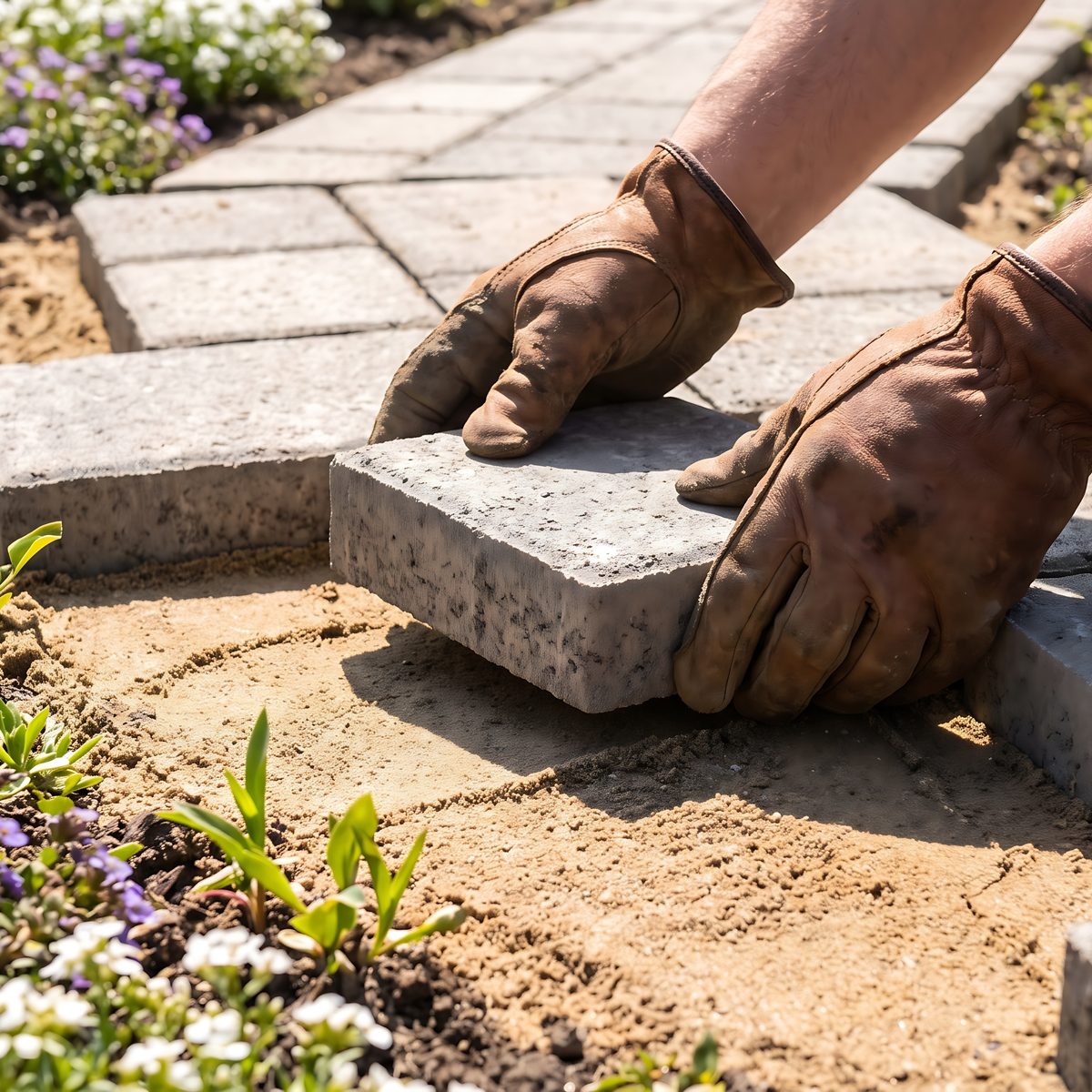
For pavers, screed a 1 inch sand bed over a compacted base rather than using sand to fix deep grade problems. A thin, even bed locks pavers in place. A thick one shifts underfoot.

Working With Moisture

Slightly damp sand spreads, screeds, and compacts far more easily than bone dry sand, which just flows back into your screed lines. Lightly wetting the pile before you work it saves real effort.

Frequently Asked Questions

Click a question to see the answer

Answer

Is this the same as the sand used for mortar mixing?

Yes, this is washed and finely screened mason sand, the standard choice for mortar because it is more uniform and finer than concrete sand. That fine, consistent grain is what keeps mortar workable when you are laying brick or block. It is also commonly used for pool bases and filling paver joints.

Answer

How many cubic yards do I need for a patio base?

One cubic yard covers roughly 324 square feet at a 1 inch depth. Most paver or pool base work runs 1 to 2 inches deep, so a 300 square foot patio at 1.5 inches would need close to 1.5 cubic yards. Measure your area and multiply by your target depth to size the order.

Answer

When is the best time to install sand for a hardscape project?

Late spring through fall works best here, once the ground has dried out from spring rains and before the first frost around November 8 locks up outdoor work. Installing over wet or partially frozen subgrade leads to poor compaction, which shows up later as uneven pavers or a shifting pool base.

Answer

Where will the sand be placed when it is delivered?

The truck delivers to a spot you specify at checkout, typically a driveway or the closest safe access point to your work area. Clear the space ahead of time and note any tight access, like narrow driveways common in older Massapequa Park lots, so the delivery can be placed where you actually need it.

Answer

Should I use sand or chip stone under my pavers?

Mason sand still works well for mortar and joint filling, but for paver bedding, many installers are moving to clean chip stone instead. Chip stone locks together and resists pumping up through joints after rain, while sand can shift over time. If your project is joint fill or mortar, stick with sand.那

More delivery around Massapequa Park, New York

All Massapequa Park, New York landscape supply