I can’t say enough good things about Mulch Mound! If you read my review below you will see I had a problem with my order. Mulch Mound was quick to respond and solved the issue with my delivery. Will definitely be a customer next year.
First time purchase...
Tell us what you're looking for
Thanks! We received your request.
Something went wrong. Please try again.
How Much Material Do I Need?
Plan on two to three inches over established beds and up to four inches on new beds where you are smothering weeds in bare silt loam. Order about ten percent extra, because settling and the first heavy McComb rain will compress the layer.
Use our free mulch calculator
What is a yard?
A yard is approximately 27 cubic feet. As a general guideline, one yard of material can cover an area of about 100-160 square feet at a 2-3 inch depth.
I can’t say enough good things about Mulch Mound! If you read my review below you will see I had a problem with my order. Mulch Mound was quick to respond and solved the issue with my delivery. Will definitely be a customer next year.
First time purchase...
How Much Material Do I Need?
Plan on two to three inches over established beds and up to four inches on new beds where you are smothering weeds in bare silt loam. Order about ten percent extra, because settling and the first heavy McComb rain will compress the layer.
Use our free mulch calculator
What is a yard?
A yard is approximately 27 cubic feet. As a general guideline, one yard of material can cover an area of about 100-160 square feet at a 2-3 inch depth.
I can’t say enough good things about Mulch Mound! If you read my review below you will see I had a problem with my order. Mulch Mou...
Read full review
UPDATE!
I can’t say enough good things about Mulch Mound! If you read my review below you will see I had a problem with my order. Mulch Mound was quick to respond and solved the issue with my delivery. Will definitely be a customer next year.
First time purchase from Mulch Mound!! First what I liked! Easy to order online and straight forward pricing and delivery. The driver was on time and courteous and delivered my Mulch exactly where I requested! The product is of good quality and comparable to others I have purchased from before. Now what I DID’NT LIKE! I have been mulching the same house and yard for almost 20 years. I always order the same amount and don’t have any issues with covering the same area but this year I fell about a yard short. I was home when the mulch was delivered and when the driver dumped it I noticed that it seemed a bit less than I was used to. I didn’t apply it any thicker than usual and probably a bit thinner than usual because I was worried about running out.
Mulch Mound made it so easy! So happy with the pricing, turn around time, delivery and product. I submitted my online order on a Thursday. The mu...
Read full review
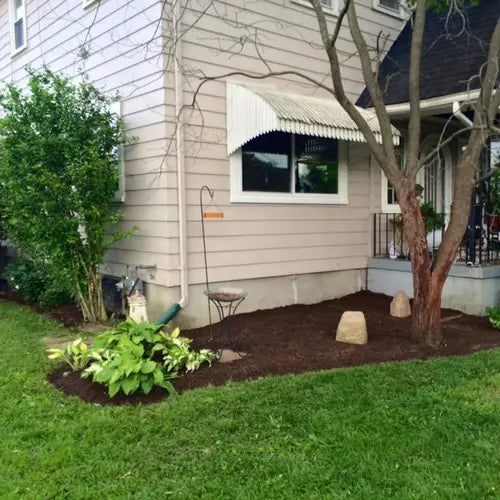
Mulch Mound made it so easy! So happy with the pricing, turn around time, delivery and product. I submitted my online order on a Thursday. The mulch was delivered to the designated location by a local landscape company at 8:30 a.m. the following Saturday morning. We had the job completed by that afternoon. We chose the natural brown mulch, and the plant beds are beautiful.
Measure each bed separately, since curved foundation beds around McComb homes rarely form a neat rectangle. Break odd shapes into rough rectangles and circles, add the square footage together, then pick your depth. One cubic yard covers about 160 square feet at two inches deep or roughly 108 square feet at three inches.
Mulch vs. No Mulch: The Difference
McComb's combination of 62 inches of yearly rain, long humid summers and a short mild winter creates near ideal conditions for decomposition. Organic mulches like hardwood and pine straw can lose a third of their volume in a single season here, which is great for feeding the silt loam but means annual replenishment. Non organic options such as river rock and crushed stone hold their shape indefinitely, which makes them the practical pick for downspout aprons, drip lines and high traffic paths.
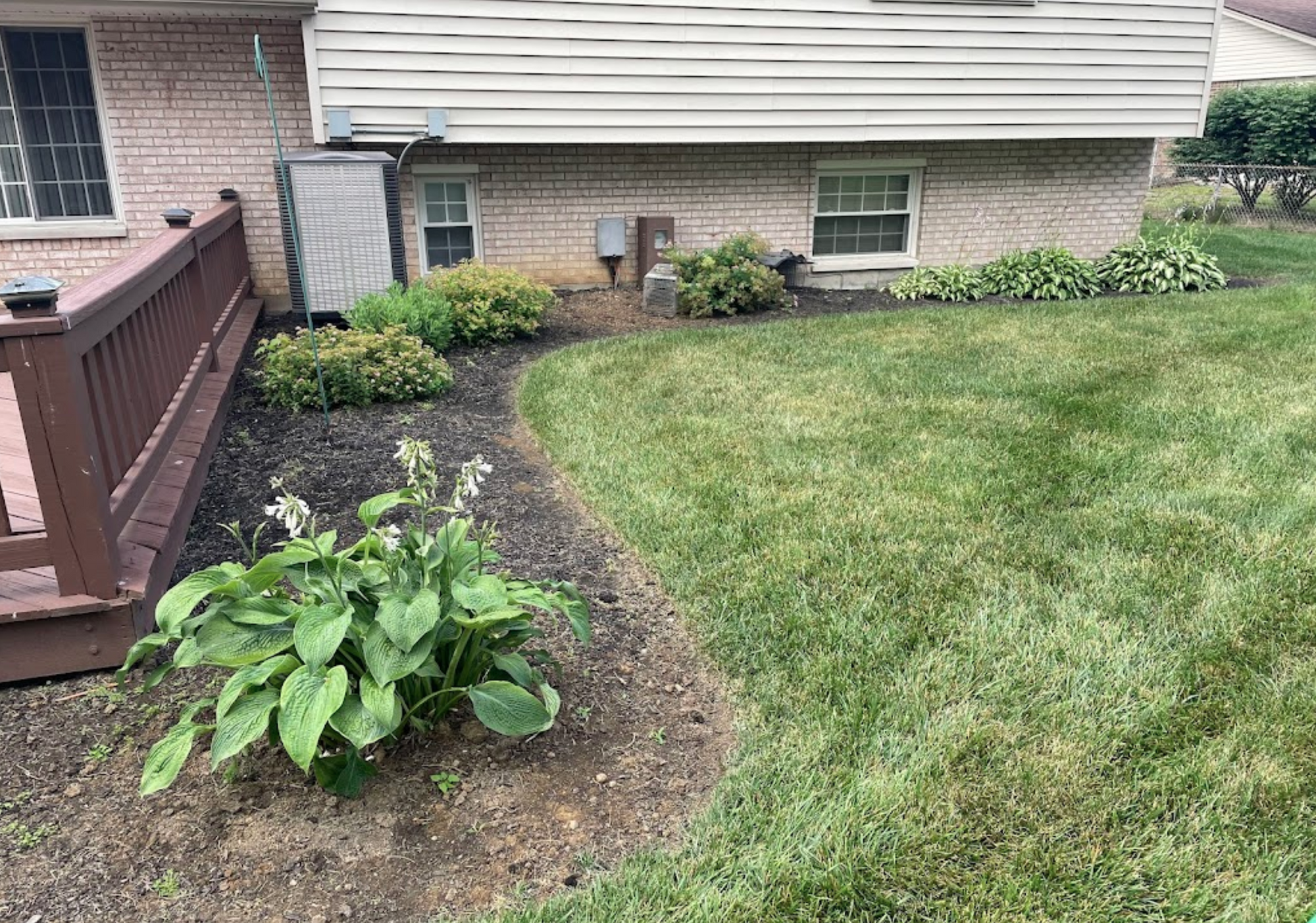
Before
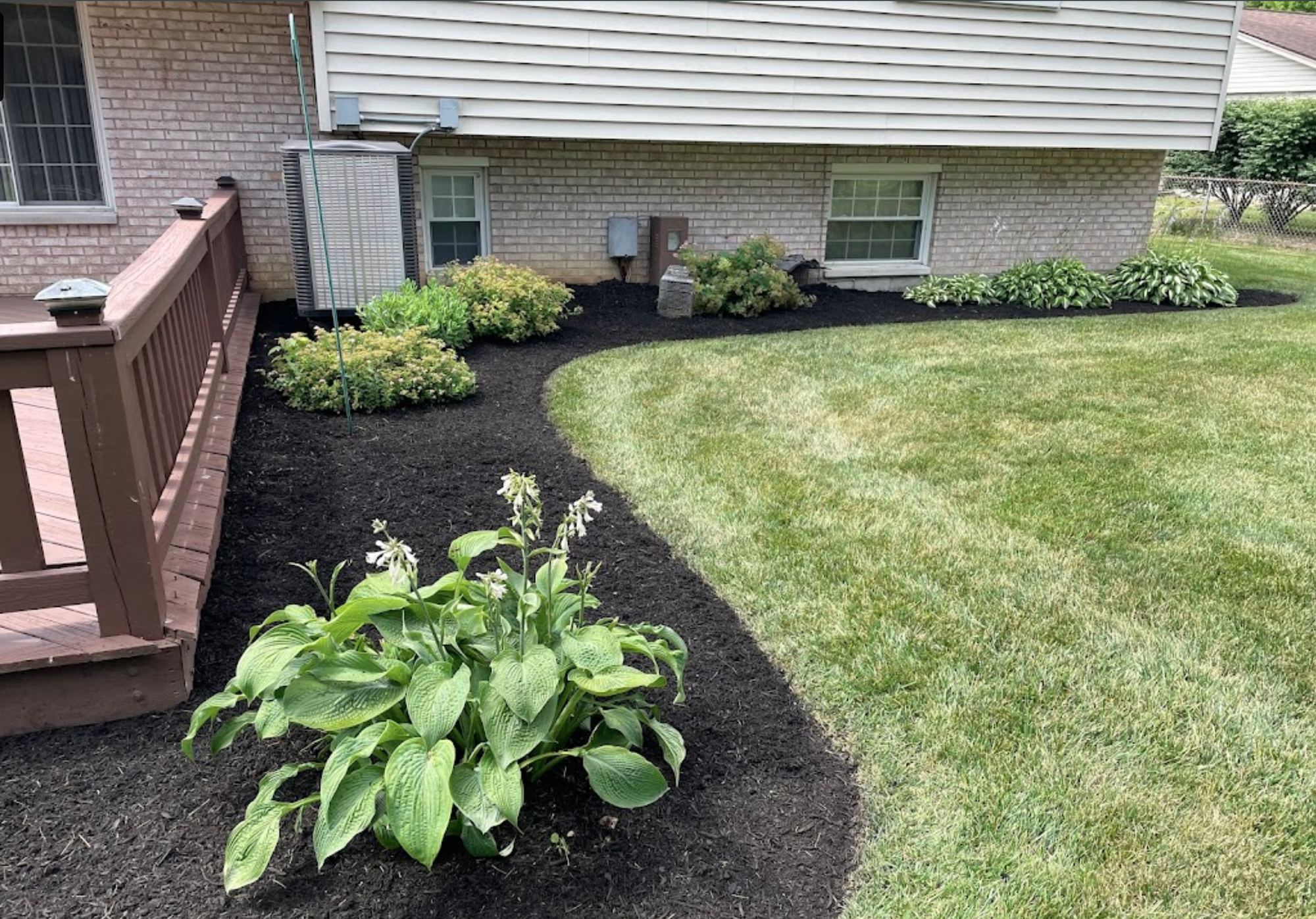
After
Best Mulch Choice for McComb Lawns
Most yards in the McComb area sit on type of soil. McComb's silt loam holds nutrients and moisture nicely, but it compacts under foot traffic and rain impact until water runs off instead of soaking in, leaving plant roots dry even after a big storm.
Hardwood Mulch
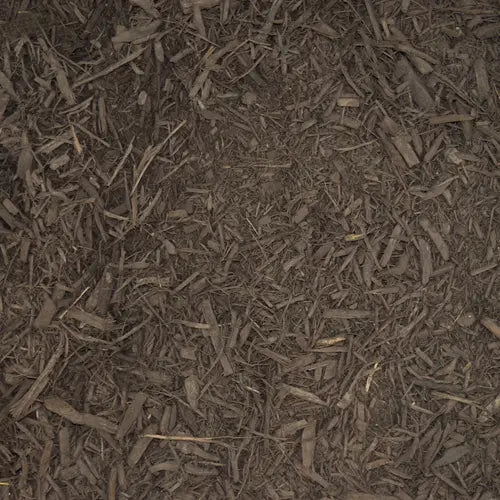
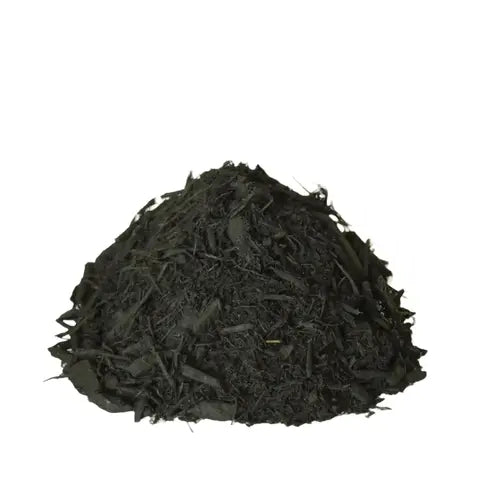
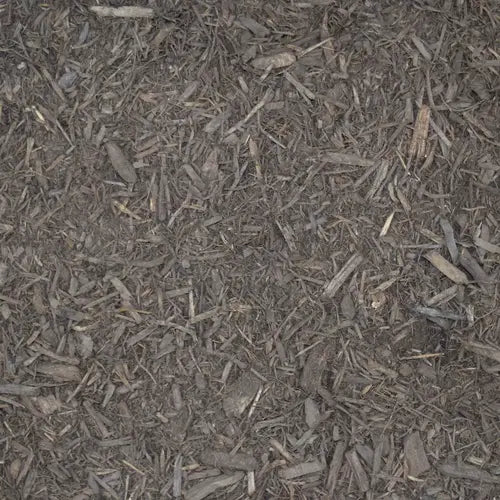
Shredded hardwood mulch is the fix, because it absorbs the force of heavy rain, prevents crusting, and slowly feeds organic matter and earthworm activity into the silt loam, which loosens the structure and improves both drainage and moisture holding over time.
Complete Your Outdoor Mulch Project
Pair your mulch with a few yards of screened topsoil or compost to build up the bed before spreading, and add decorative stone or crushed gravel where downspouts and drip lines would otherwise blow the mulch out.
Edge before you mulch. McComb's silt loam is easy to cut with a flat spade, so slice a three to four inch deep trench along the bed line and angle the wall toward the bed. That trench catches mulch during heavy Gulf rains and stops centipede and St. Augustine runners from creeping in. Redo the edge each spring and your beds will look sharp with far less string trimming all summer.
Mulch Mound Pro Tip
Do not mulch over compacted, crusted soil. After a dry McComb spell the silt loam surface seals into a hard skin that sheds water. Scratch the top inch with a cultivator or garden fork first, then spread your mulch. That single step lets the next downpour actually soak into the root zone instead of running toward the street, and it dramatically improves how quickly the mulch layer feeds the soil below.
Mulch Mound Pro Tip
Watch your mulch volcanoes. Piling mulch up against trunks is common around McComb landscapes and it slowly kills crape myrtles, maples and young oaks by holding moisture against the bark in our humid climate. Spread the mulch flat and leave a two to three inch clear ring around every trunk. The mulch ring should look like a doughnut, never a cone.
Frequently Asked Questions
Click a question to see the answer
Answer
How many inches of mulch should I put down in McComb?
Two to three inches is the sweet spot for McComb beds. With 62 inches of annual rain, anything deeper stays soggy against the silt loam and invites root rot in azaleas, gardenias and boxwood. Keep it at three inches on sunny, sloped areas that dry out fast and closer to two inches in shaded low spots that stay damp.
Answer
When is the best time to mulch here in Pike County?
Late February through mid March, right around the March 15 average last frost, is ideal. You get the mulch down before spring weeds germinate and before the summer heat sets in. A lighter refresh in early October, ahead of the November 12 first frost, protects tender roots through winter cold snaps.
Answer
Will mulch make my termite problem worse?
Termite pressure is real in southwest Mississippi, but mulch itself is not the food source people fear. The bigger issue is contact with your foundation and trapped moisture. Keep mulch pulled back 12 to 18 inches from brick and siding, hold it below the weep holes, and never pile it against wooden porch posts or steps.
Answer
Does mulch wash away in our heavy rains?
It can if you use the wrong product on a grade. Fine, uniform mulch floats and migrates during a two inch McComb downpour. On slopes and near downspouts choose double ground or shredded hardwood, which knits together into a mat, and edge the bed with steel, stone or a shallow trench so the mulch has something to hold against.
Answer
Why does my mulch grow white or yellow fungus in the summer?
That is normal decomposition in our humidity. Slime molds and artillery fungus show up in July and August when overnight lows stay in the seventies and the mulch never fully dries. Rake and fluff the surface every few weeks to break the mat, and avoid piling mulch too thick under low branches where air movement is poor.
Answer
How often do I need to replace mulch in McComb?
Hardwood mulch breaks down noticeably within a single McComb season because heat, humidity and constant rain speed up microbial activity. Most homeowners top dress once a year in early spring and add a light touch up in fall. Pine straw usually needs refreshing twice a year since it compresses and fades faster.
Answer
Is pine straw or bark better for my azaleas?
Both work well here. Pine straw is the traditional McComb choice because it locks together on slopes, breathes in the humidity, and gently acidifies as it breaks down, which azaleas and camellias appreciate. Pine bark nuggets last longer and look tidier in formal front beds, though they can float out of low spots after a hard rain.
The Unique Landscape of McComb
McComb sits in Zone 8b with roughly 62 inches of rain a year, and most of that arrives in heavy Gulf driven downpours that hammer bare beds and splash silt loam onto siding, walkways and plant foliage. Mulch is the buffer that absorbs that impact, keeps Pike County topsoil from washing toward the ditch, and slows evaporation during the sticky July and August stretch when afternoons climb into the mid nineties. Silt loam holds moisture well but crusts over and sheds water once it dries, so a mulch blanket keeps the surface open and lets rain soak in instead of running off. Because McComb winters are mild, with first frost around November 12 and last frost near March 15, weed seeds germinate almost year round and an unmulched bed will be green with chickweed and nutsedge by February. A steady two to three inch layer also insulates shallow rooted azaleas and camellias, which are everywhere in older McComb neighborhoods, through both the humid summers and the occasional hard freeze.