


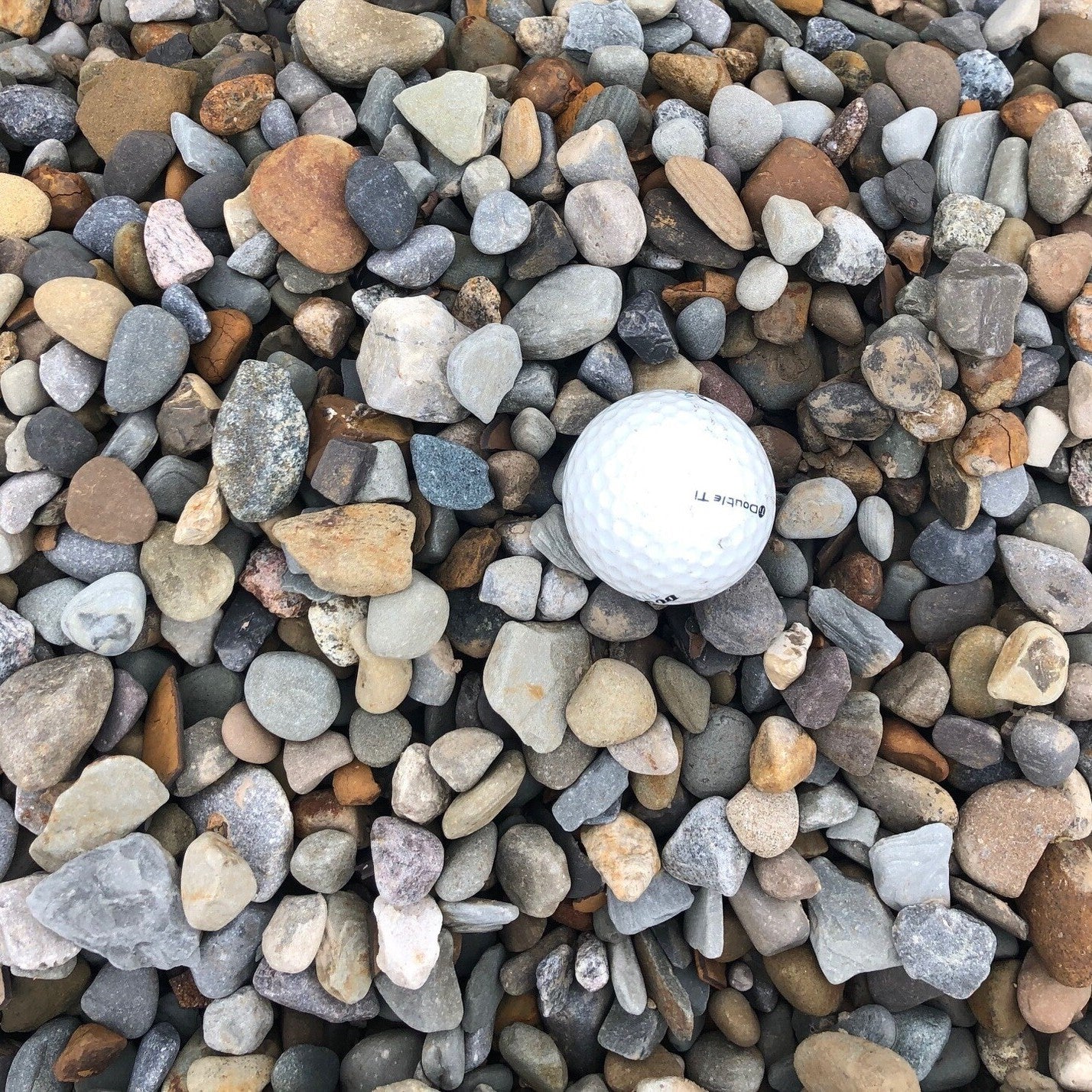


The driver nailed it on putting the gravel I ordered in front of my trailer and between the sidewalk. Very satisfied with how my flowerbeds look now.
About this stone
1” West Texas Black Crushed Stone landscape rock, sourced from our local supply yard. Color and gradation may vary slightly by quarry lot. Sold by the yard.
The driver nailed it on putting the gravel I ordered in front of my trailer and between the sidewalk. Very satisfied with how my flowerbeds look now.
Tell us what you're looking for
Thanks! We received your request.
Something went wrong. Please try again.
How Much Material Do I Need?
How Much Material Do I Need?
For ground cover and decorative applications in McKinney, a 3 to 4 inch layer of stone gives you reliable weed suppression and a finished look that holds up through the wet spring and dry summer cycle without significant settling. For drainage trenches and dry creek beds, plan on a depth of 6 to 8 inches so the stone layer stays effective even when McKinney's heavy spring storms move large volumes of water rapidly across the landscape.
Use our free gravel calculator
What is a yard?
What is a yard?
FAQs
FAQs
McKinney Gravel Delivery
McKinney Gravel Delivery
Regular price
$549.00
per
yard
Regular price
Sale price
$549.00
Unit price
per
Shipping calculated at checkout.
Minimum of 2 yard
Couldn't load pickup availability
Not currently available
We can't take orders for this right now. Tell us what you need and we'll get back to you.
Hand-picked local yards
4,000+ regional deliveries
Dedicated support
Why order through Mulch Mound
The best local stone, without the guesswork.
We hand-pick and partner with the best yards in your region, keep only the ones our buyers rate well, and back each load with our guarantee.
Mulch Mound Guarantee
If your stone isn't the quantity or quality you ordered, we'll make it right.
About this stone
1” West Texas Black Crushed Stone landscape rock, sourced from our local supply yard. Color and gradation may vary slightly by quarry lot. Sold by the yard.
The driver nailed it on putting the gravel I ordered in front of my trailer and between the sidewalk. Very satisfied with how my flowerbeds look now.
How Much Material Do I Need?
How Much Material Do I Need?
For ground cover and decorative applications in McKinney, a 3 to 4 inch layer of stone gives you reliable weed suppression and a finished look that holds up through the wet spring and dry summer cycle without significant settling. For drainage trenches and dry creek beds, plan on a depth of 6 to 8 inches so the stone layer stays effective even when McKinney's heavy spring storms move large volumes of water rapidly across the landscape.
Use our free gravel calculator
What is a yard?
What is a yard?
FAQs
FAQs
Tell us what you're looking for
Thanks! We received your request.
Something went wrong. Please try again.
How It Works
Getting started is easy — just follow these simple steps
1
Choose your stone
Make sure you adjust the quantity to your home's needs. You can use our calculator to estimate how much you'll need.
2
Select your delivery date
Select a delivery date you'd like for the product to be dropped off at your home
3
Sit back and wait
Sit back, wait, and let us work our magic to make sure the highest quality product is delivered to your driveway.


Need Help Calculating How Much Gravel You Need?
Use our NEW Trace from Satellite tool to get an estimate for your project based on an aerial view of your property
Try Our CalculatorTo estimate stone for a McKinney project, measure the length and width of the area in feet, multiply to get square footage, then multiply by the desired depth in inches and divide by 324 to get cubic yards needed. Stone is considerably denser than mulch, and some products like river rock are also sold by the ton, so confirm which unit applies to your selected material before ordering. For drainage projects over Houston Black Clay, order slightly more than your base calculation shows since the clay surface often has low spots that consume more fill than a flat-grade estimate predicts.
Stone Types We Deliver in McKinney
Mulch Mound brings bulk stone delivery straight to McKinney driveways and job sites, measured by the cubic yard so you get exactly what your project needs. Whether you are searching for bulk gravel by the yard in McKinney or planning a full landscape overhaul, our team loads and drops off fresh material fast. North Texas clay soil and hot summers make the right ground cover a practical investment, and we make sourcing it simple.
Pea Gravel
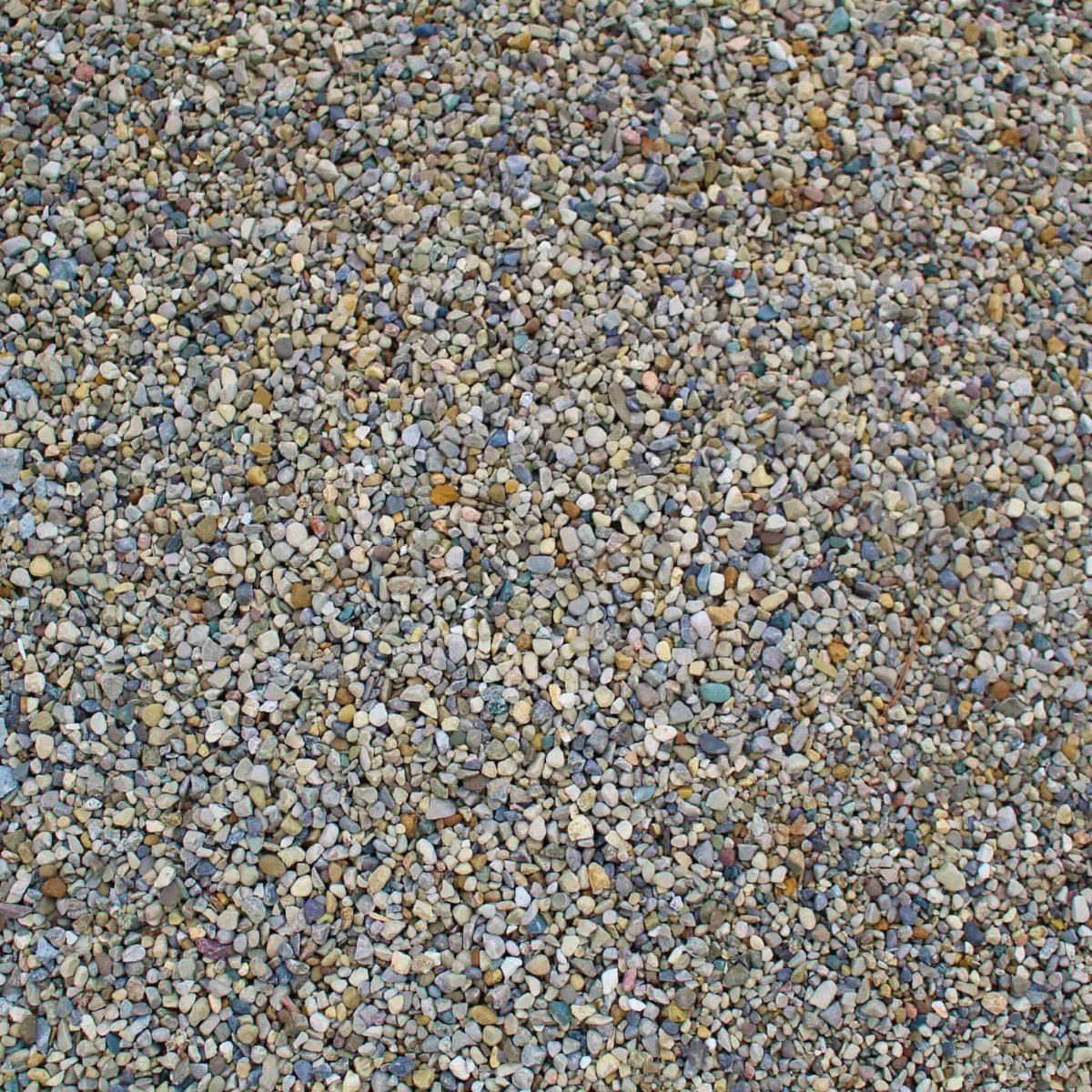
Smooth, rounded pea gravel is a go-to choice for McKinney homeowners who want a clean, natural look without a lot of upkeep. Its earthy tones complement the neutral brick and stone exteriors common across this part of Texas, and it drains quickly through the heavy clay soil, making it ideal for pathways, patios, and decorative beds.
Complete Your Outdoor Stone Project
Pairing decorative stone with bulk mulch in adjacent planting beds creates a visually balanced McKinney landscape that also manages moisture and erosion from two complementary angles at the same time. Adding a quality topsoil or garden soil blend under any planted border alongside your stone features gives new plants the root environment they need to compete with the dense native Houston Black Clay just below the surface.



Service area
Areas we deliver stone and gravel in McKinney, Texas
Mulch Mound Pro Tip
Before laying any stone ground cover over McKinney's Houston Black Clay, install a high-quality woven landscape fabric rather than the thin plastic sheeting commonly sold at big-box stores. The clay here carries enough organic matter that weed seeds can germinate right at the fabric surface if the material is too porous or degrades within a few years. A commercial-grade woven fabric rated for extended outdoor use holds up through the repeated wet-dry cycles that McKinney's seasonal weather pattern creates, keeping stone beds nearly maintenance-free for years after installation.
Mulch Mound Pro Tip
Stone pathways and patio areas in McKinney perform significantly better when you account for clay movement before laying the surface material. Compact a 2 to 3 inch base layer of crushed limestone or road base material over the clay before setting flagstones or pavers. This base layer distributes weight more evenly and gives the surface a stable platform that does not heave as dramatically as raw clay does when moisture levels swing between the saturated spring months and the extended dry summer that follows in North Texas.
Mulch Mound Pro Tip
In McKinney, foundation stone borders do double duty that most homeowners do not fully appreciate until they see the results. The 41 inches of annual rainfall that the city receives arrives largely in spring, saturating the Houston Black Clay against foundations and then leaving it to dry and contract through the summer. A 12 to 18 inch wide stone border prevents mulch and vegetation from holding extra moisture against the foundation wall, and it also makes it visually obvious when the soil is pulling away from the slab so you can water the perimeter intentionally during extended dry stretches to prevent differential settling.
The Unique Landscape of McKinney
Stone is one of the most practical and enduring landscaping materials available to McKinney homeowners, offering solutions that work with the realities of Houston Black Clay, concentrated seasonal rainfall, and a growing season that rewards low-maintenance landscape design. Because the native clay soil expands and contracts so dramatically with moisture changes, hardscape features built from stone hold their position where organic materials shift and erode over time. McKinney receives 41 inches of rain annually, much of it arriving in concentrated spring storms, and gravel, decomposed granite, and crushed stone are among the most effective tools for directing that runoff away from foundations and chronically wet yard areas. Pathways built from flagstone or compacted decomposed granite give residents a firm walking surface that does not sink into softened clay the way mulched or bare-soil paths do after a heavy rain. Decorative stone also reduces the total lawn and bed area that requires irrigation, an important consideration in a region where summer water demand rises sharply and drought stress is a regular seasonal challenge.