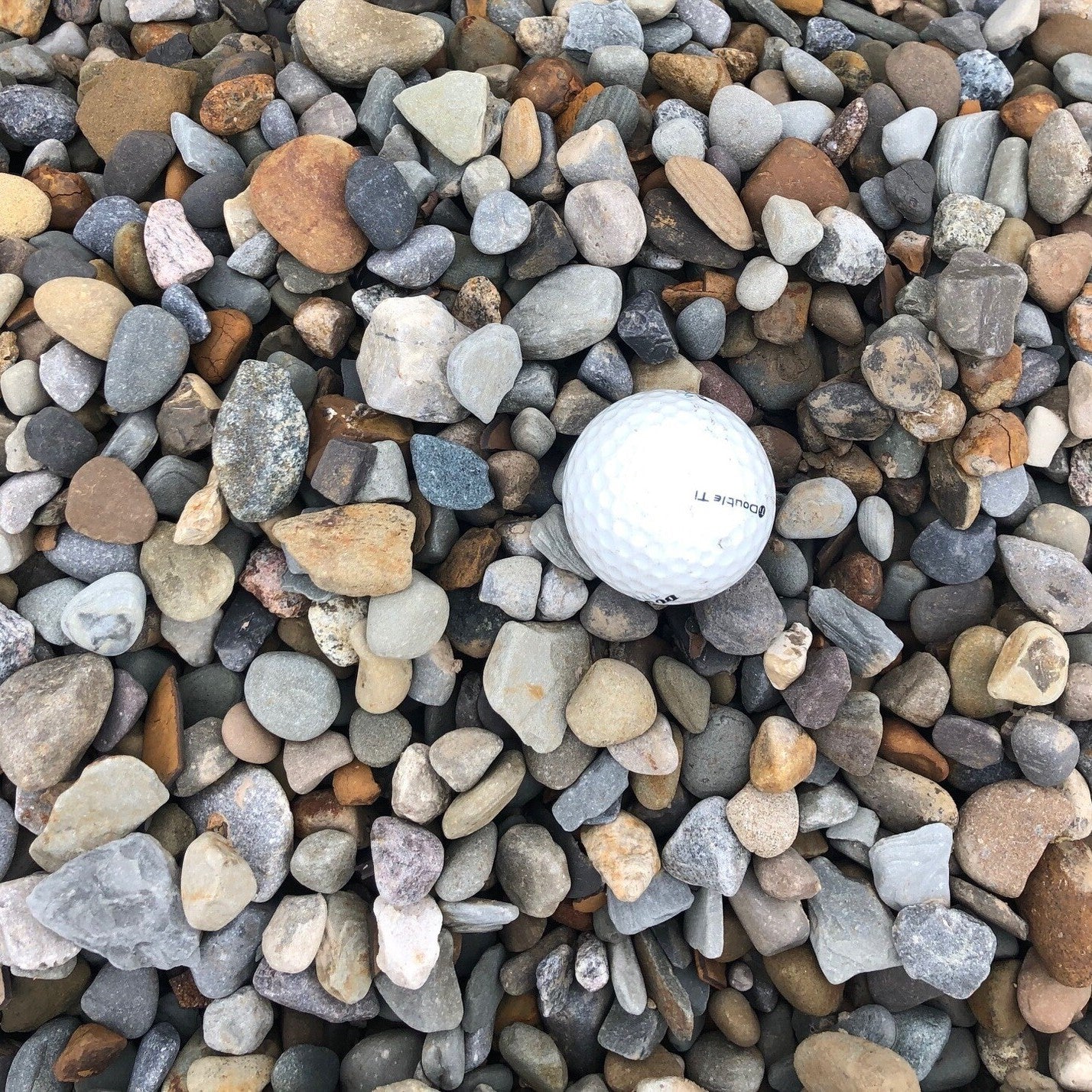
Number 57 crushed stone, angular limestone graded to about three quarters of an inch. The standard driveway, base and drainage gravel, it locks together under traffic and drains fast.
I used Mulch Mound to have 3 cubic yards of garden soil delivered. The process was easy and I love that I didn't have to call anyone. I placed my order online, picked my delivery date, laid out my tarp and the dirt was delivered. My delivery had to be pushed back, but I was ke...
Tell us what you're looking for
Thanks! We received your request.
Something went wrong. Please try again.
How Much Material Do I Need?
For decorative stone beds in Menomonee Falls landscapes, a 2-inch depth provides solid coverage and weed suppression; for drainage channels and pathway base applications directly over clay soil, use 4 to 6 inches of crushed stone to build a stable, water-permeable layer above the heavy native subgrade.
Use our free gravel calculator
What is a yard?
A yard is approximately 27 cubic feet. As a general guideline, one yard of material can cover an area of about 100-160 square feet at a 2-3 inch depth.
What is a ton?
A ton is approximately 2,000 pounds. Coverage varies by stone type and depth, but as a general guideline, one ton covers roughly 80-100 square feet at 2 inches deep.
We can't take orders for this right now. Tell us what you need and we'll get back to you.
What do you need?
Thanks! We received your request.
Something went wrong. Please try again.
Hand-picked local yards
4,000+ regional deliveries
Dedicated support
Why order through Mulch Mound
The best local stone, without the guesswork.
We hand-pick and partner with the best yards in your region, keep only the ones our buyers rate well, and back each load with our guarantee.
Mulch Mound Guarantee
If your stone isn't the quantity or quality you ordered, we'll make it right.
About this stone
Number 57 crushed stone, angular limestone graded to about three quarters of an inch. The standard driveway, base and drainage gravel, it locks together under traffic and drains fast.
I used Mulch Mound to have 3 cubic yards of garden soil delivered. The process was easy and I love that I didn't have to call anyone. I placed my order online, picked my delivery date, laid out my tarp and the dirt was delivered. My delivery had to be pushed back, but I was ke...
How Much Material Do I Need?
For decorative stone beds in Menomonee Falls landscapes, a 2-inch depth provides solid coverage and weed suppression; for drainage channels and pathway base applications directly over clay soil, use 4 to 6 inches of crushed stone to build a stable, water-permeable layer above the heavy native subgrade.
Use our free gravel calculator
What is a yard?
A yard is approximately 27 cubic feet. As a general guideline, one yard of material can cover an area of about 100-160 square feet at a 2-3 inch depth.
What is a ton?
A ton is approximately 2,000 pounds. Coverage varies by stone type and depth, but as a general guideline, one ton covers roughly 80-100 square feet at 2 inches deep.
I used Mulch Mound to have 3 cubic yards of garden soil delivered. The process was easy and I love that I didn't have to call anyone. I placed my o...
Read full review
I used Mulch Mound to have 3 cubic yards of garden soil delivered. The process was easy and I love that I didn't have to call anyone. I placed my order online, picked my delivery date, laid out my tarp and the dirt was delivered. My delivery had to be pushed back, but I was kept informed via text, which was great. So why not 5 stars? The description of garden soil on the website is "A balanced mix of topsoil and organic amendments ready for raised beds, flower gardens, and new planting areas. Good drainage, solid nutrients, easy to work with." What I got was more like fill dirt. It had a lot of gravel, a lot of clay, and random trash mixed in. I didn't test the soil to see if it actually had "amendments" because I already have compost and alpaca manure ready to add, but if I'd known the quality of the dirt was going to be the same as the bagged dirt I bought last year, I probably would have gotten 2 yards of top soil and a yard of leaf compost for better quality, especially since the leaf compost is cheaper. Photo of my mountain of dirt and just some of the trash I found in it.
For stone coverage, measure your project area in square feet and determine the right depth—2 inches for a decorative surface layer, 4 to 6 inches for drainage or pathway base applications over clay. Multiply length by width by depth in feet and divide by 27 to get cubic yards. Because Menomonee Falls clay often has low spots and frost-heaved unevenness, excavate slightly deeper than your finish target depth to account for the compacted gravel sub-base you'll need before adding decorative stone on top.
Stone Types We Deliver in Menomonee Falls
When Menomonee Falls homeowners need bulk gravel by the yard, our stone delivery makes it simple to get the right material dropped directly at your property. We sell and deliver by the cubic yard so you order only what your project actually requires. From front-yard pathways to backyard drainage, our smooth stone varieties are well suited to the clay-heavy soils and four-season climate common throughout this part of Wisconsin.
Pea Gravel
Small, smooth, and versatile, pea gravel is one of the most popular choices for Wisconsin yards. Its rounded edges are comfortable underfoot on garden paths and patios, and it drains reliably through the dense clay soils found in this region. A warm earth-tone palette blends naturally with both traditional and modern home styles.
1-2" River Stone
This mid-size smooth river stone is a strong choice for decorative ground cover in planting beds and along foundation plantings. Its rounded surface sheds water effectively, which is a real advantage during heavy spring rains. The neutral tones pair well with the brick and neutral siding common on homes throughout southeastern Wisconsin.
2-4" River Stone
Larger and bolder, these smooth river stones make a strong visual statement in dry creek beds and accent features. Their size also makes them practical for erosion control along slopes and low-lying spots, which are common in yards with the gently rolling terrain found in this part of Wisconsin.
Complete Your Outdoor Stone Project
Pair your stone order with a bulk mulch delivery to keep organic planting beds looking sharp while stone manages your pathways and drainage zones; adding topsoil lets you re-grade problem areas in your Menomonee Falls yard before setting stone so your final grade sheds water properly.
Menomonee Falls winters cycle through hard freezes and thaws repeatedly from November through March, and any stone installed directly on native clay will shift and heave noticeably by the time spring arrives. A compacted crushed gravel sub-base is not optional—it's the single most important part of any stone installation in this climate. The gravel layer compresses and expands slightly with frost movement without transmitting that force up into your decorative surface, keeping pathways, borders, and beds level season after season.
Mulch Mound Pro Tip
If you're placing stone near downspouts, low corners of your yard, or any area where Menomonee Falls's seasonal rains collect, design your installation as a functional dry creek bed rather than a flat decorative layer. Thunderstorms here can deliver intense rainfall in short windows that overwhelm slow-draining clay instantly. A stone channel that moves water intentionally toward a yard outlet or storm drain protects your foundation and landscape investment far better than decorative stone that simply sits in the path of the flow.
Mulch Mound Pro Tip
Stone is one of the most effective weed suppressors available for Menomonee Falls landscapes—but only when paired with the right landscape fabric underneath. Standard woven fabric breaks down faster in Menomonee Falls's wet seasonal conditions, and clay fines migrate upward through the weave over time, giving weed seeds a seedbed right in your stone layer. Use non-woven, heavy-duty landscape fabric rated for long-term burial applications; it maintains a sharp barrier between clay and stone for years longer and keeps your installation looking clean with far less maintenance.
The Unique Landscape of Menomonee Falls
Menomonee Falls clay soil and Wisconsin's grinding freeze-thaw cycles create persistent erosion, settling, and drainage challenges that decorative and functional stone is uniquely built to address. Unlike organic materials that decompose through the region's wet springs and heavy snowfall, stone remains structurally stable year after year—making it the genuinely low-maintenance option for pathways, drainage channels, and foundation borders in a Zone 5b landscape. Clay's notoriously poor drainage means water frequently sits at the surface in Menomonee Falls yards, and a properly installed stone bed with a crushed gravel sub-base can redirect that moisture before it damages foundations or drowns plant roots. Stone pathways and edging also resist the frost heaving that cracks asphalt and destabilizes concrete edges, offering a far more resilient hardscape alternative for a climate that sees freeze-thaw cycling from November through March. Whether you need a dry creek bed to manage runoff, a mulch-free low-maintenance zone, or a decorative focal point that holds up through another Wisconsin winter, bulk stone delivers lasting value specific to Menomonee Falls conditions.
Frequently Asked Questions
Click a question to see the answer
Answer
What type of stone actually works for drainage in Menomonee Falls's heavy clay soil?
For drainage applications in Menomonee Falls clay, clean crushed limestone or washed river rock in the three-quarter to one-and-a-half inch range is the go-to choice. Angular crushed stone locks together and resists migration while the open voids allow water to move freely through the layer rather than pooling above clay. Avoid pea gravel for drainage trenches—its round, smooth profile allows it to migrate into clay over time and clog your channel. Always install a non-woven landscape fabric barrier between clay and stone to keep them separated.
Answer
Will decorative stone sink into my clay yard over time, or shift around after winter?
Without proper base preparation, stone will gradually sink into Menomonee Falls clay—particularly in areas that experience standing water or regular foot traffic. The solution is a compacted base: excavate 2 to 3 inches of clay, lay landscape fabric, add a compacted crushed gravel base layer, and top with your decorative stone. Zone 5b freeze-thaw cycles can also push stone upward through winter; that same compacted gravel base absorbs the movement and dramatically reduces surface heaving.
Answer
Is stone a practical solution for the shaded areas under my trees where grass won't grow?
Stone is one of the best solutions for tree rings and dense shade areas in Menomonee Falls where grass thins out or gives up entirely. Clay soil around tree root zones compacts quickly under foot traffic, which stresses both grass and the trees themselves. A 2 to 3 inch decorative stone ring eliminates the mowing challenge, reduces compaction, and stays tidy through winter without the annual top-dressing organic mulch requires. Keep a gap at the trunk to prevent moisture from sitting against bark.
Answer
How can I use stone to deal with the erosion on my sloped backyard in Menomonee Falls?
Erosion on sloped clay soil is a common and frustrating problem in Menomonee Falls, where spring snowmelt creates strong sheet flow across bare ground. Riprap or large irregular fieldstone placed at the toe of slopes slows runoff momentum and prevents undercutting. For moderate grades, a dry creek bed filled with river rock channels water in a deliberate path rather than letting it carve through clay wherever it wants. This approach is both one of the most effective erosion control strategies and one of the most attractive landscape features you can add to a residential Menomonee Falls property.
Answer
Can I install a stone pathway myself, or is the clay soil here too difficult to work with?
Stone pathways are very DIY-friendly in Menomonee Falls—the key is not skipping base preparation. Plan to excavate 3 to 4 inches of clay, lay landscape fabric, compact 2 inches of crushed gravel as a base, then top with 1 to 2 inches of decorative stone or set stepping stones into the gravel layer. That base is what separates a pathway that stays level for years from one that needs resetting every spring after frost heave does its damage. The excavation is the hardest part; the rest goes quickly.
Answer
Does dark stone get hot enough in the summer to damage the plants and mulch around it?
Dark stone absorbs significantly more heat than lighter options, and during Menomonee Falls's summer afternoons it can reach temperatures that stress nearby plant crowns and stems. If you're installing stone mulch around plantings, choose lighter shades—limestone, cream river rock, or tan pea gravel—and keep stone a few inches clear of plant bases. The trade-off is that stone of any color does not break down or alter soil chemistry the way organic materials can, giving you a chemically neutral, stable surface year after year.
Answer
How much stone will I need for a dry creek bed or French drain in my Menomonee Falls yard?
For a French drain or dry creek bed, measure your channel's length and planned width, then calculate for a 6 to 8 inch stone depth. A channel 2 feet wide, 25 feet long, and 6 inches deep needs roughly 1.5 cubic yards. One important Menomonee Falls caveat: once you start digging into clay to establish a drainage channel, you'll often find the problem zone is larger than it looked from the surface. Order 15 to 20 percent more than your baseline calculation to avoid a mid-project shortage when the clay opens up.