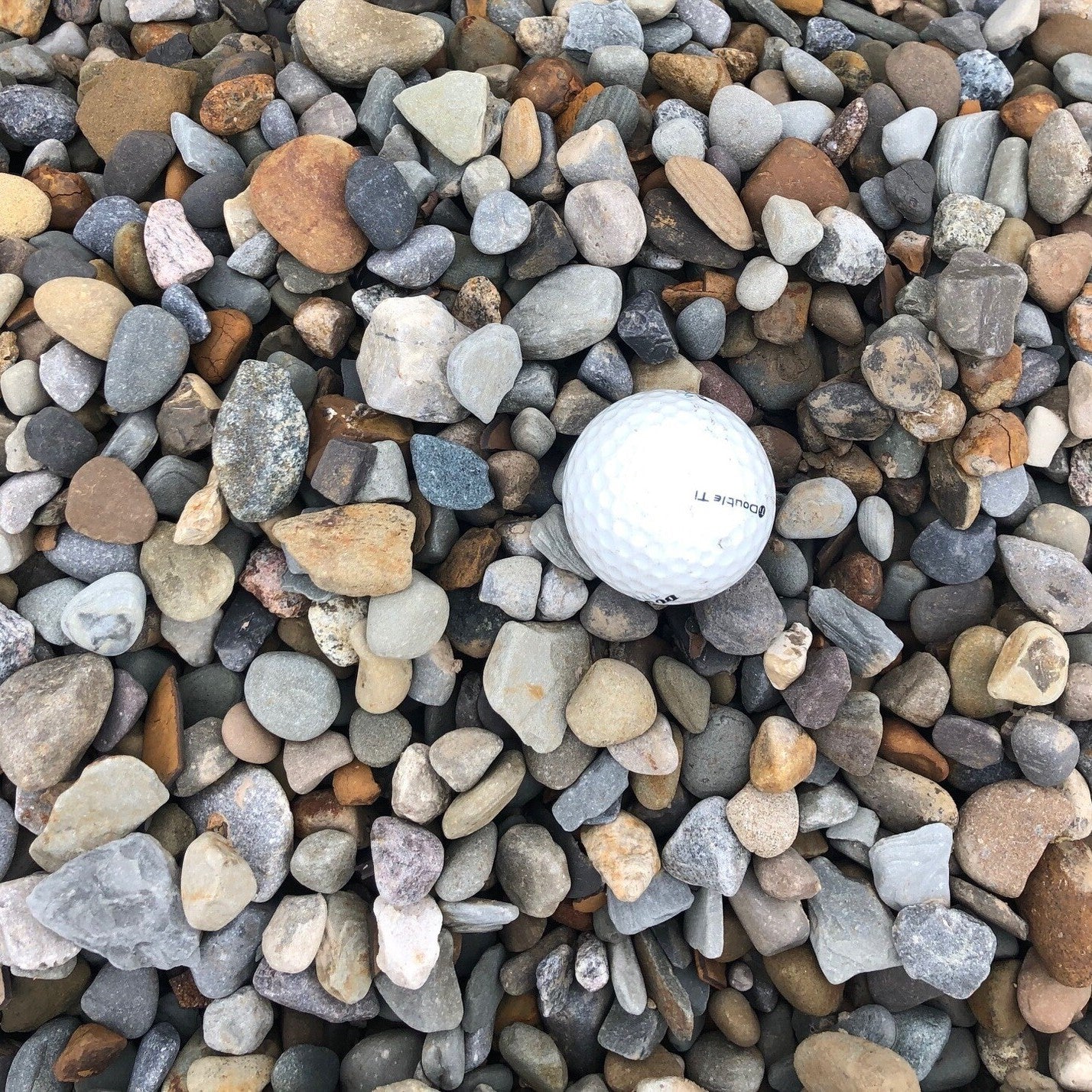
Number 57 crushed stone, angular limestone graded to about three quarters of an inch. The standard driveway, base and drainage gravel, it locks together under traffic and drains fast.
I contacted Mulch Mound for #57 river rocks and it was easy and fast to get a delivery right before the holiday weekend. Stone was delivered as promised and place exactly where I asked. Excellent service! I will be ordering mulch next!
Tell us what you're looking for
Thanks! We received your request.
Something went wrong. Please try again.
How Much Material Do I Need?
Decomposed granite and crushed stone should be installed at a minimum depth of 3 inches for weed suppression and a finished appearance, with 4 inches being ideal for areas with higher foot traffic or more aggressive weed pressure. One cubic yard of decomposed granite covers approximately 80 square feet at a 4 inch depth, so measure your coverage area carefully before finalizing your order.
Use our free gravel calculator
What is a Yard?
A yard is approximately 27 cubic feet. As a general guideline, one yard of material can cover an area of about 100-160 square feet at a 2-3 inch depth.
What is a ton?
A ton is 2,000 pounds of material. As a general guideline, one ton of rock covers roughly 100 square feet at 2 inches deep, depending on rock size and density.
We can't take orders for this right now. Tell us what you need and we'll get back to you.
What do you need?
Thanks! We received your request.
Something went wrong. Please try again.
Hand-picked local yards
4,000+ regional deliveries
Dedicated support
Why order through Mulch Mound
The best local , without the guesswork.
We hand-pick and partner with the best yards in your region, keep only the ones our buyers rate well, and back each load with our guarantee.
Mulch Mound Guarantee
If your isn't the quantity or quality you ordered, we'll make it right.
About this stone
Number 57 crushed stone, angular limestone graded to about three quarters of an inch. The standard driveway, base and drainage gravel, it locks together under traffic and drains fast.
I contacted Mulch Mound for #57 river rocks and it was easy and fast to get a delivery right before the holiday weekend. Stone was delivered as promised and place exactly where I asked. Excellent service! I will be ordering mulch next!
How Much Material Do I Need?
Decomposed granite and crushed stone should be installed at a minimum depth of 3 inches for weed suppression and a finished appearance, with 4 inches being ideal for areas with higher foot traffic or more aggressive weed pressure. One cubic yard of decomposed granite covers approximately 80 square feet at a 4 inch depth, so measure your coverage area carefully before finalizing your order.
Use our free gravel calculator
What is a Yard?
A yard is approximately 27 cubic feet. As a general guideline, one yard of material can cover an area of about 100-160 square feet at a 2-3 inch depth.
What is a ton?
A ton is 2,000 pounds of material. As a general guideline, one ton of rock covers roughly 100 square feet at 2 inches deep, depending on rock size and density.
I contacted Mulch Mound for #57 river rocks and it was easy and fast to get a delivery right before the holiday weekend. Stone was delivered as pro...
Read full review
I contacted Mulch Mound for #57 river rocks and it was easy and fast to get a delivery right before the holiday weekend. Stone was delivered as promised and place exactly where I asked. Excellent service! I will be ordering mulch next!
Stone and decomposed granite are measured and sold by the cubic yard, so take the time to calculate your square footage accurately before placing your order to avoid running short mid-project. For irregular yard shapes, photograph the space from above if possible and break the area into rectangles and triangles to estimate total square footage more accurately. Because stone settles over time, especially decomposed granite that compacts with foot traffic, ordering slightly more than your minimum calculation gives you material for initial settling and future top-offs.
Complete Your Outdoor Stone Project
Pairing decorative stone with quality landscape edging and weed barrier fabric before installation gives you a much cleaner finished result that holds up through Mesa's monsoon season without constant maintenance. If you are also working on planting beds in the same project, our soil and mulch options can complete the areas around plants while stone handles the open ground cover zones.
Before spreading any decorative stone in a Mesa yard, take the time to grade the surface so it slopes very slightly away from the house foundation and toward the street or a designated drainage area. Mesa's monsoon storms drop rain fast and even a stone-covered yard can channel water toward a foundation if the grade is not right. A gentle slope of just an inch or two per 10 feet of horizontal distance is enough to keep water moving in the right direction and protects your foundation from the moisture intrusion that periodic intense rain events can cause.
Mulch Mound Pro Tip
If your Mesa landscape design includes a mix of stone ground cover and planted areas, define the transition zones with a quality steel or aluminum landscape edging installed at least 4 inches deep. Mesa's sandy soil means edging that is not set deeply enough can shift over time, especially after the soil swells slightly during monsoon moisture events and then shrinks back during dry periods. A deep-set rigid edging keeps your stone from migrating into planting beds and your mulch from spilling into stone areas, which saves a lot of touch-up maintenance over the years.
Mulch Mound Pro Tip
When choosing stone colors for a Mesa yard, look at how the color reads in both morning light and the harsh midday sun of June and July, not just in the comfortable conditions when you are shopping. Some stone colors that look warm and appealing in moderate light can wash out to a pale, bleached appearance under intense Mesa summer sun. Bringing home a small sample of your chosen stone and placing it in the yard for a few days before committing to a full order gives you a realistic preview of how it will look through all the lighting conditions that a Mesa yard experiences across the year.
The Unique Landscape of Mesa
Decorative stone and decomposed granite are foundational materials in Mesa landscaping precisely because they were made for the conditions that define this desert city. Stone does not break down in heat, does not require water to maintain, and does not disappear between seasons the way organic mulch does in a climate where 110 degree summers accelerate decomposition. Mesa receives only about 8 inches of rain annually, which means a stone ground cover can go long periods without any attention while still looking clean and well-kept. The alkaline sandy soil that underlies most Mesa yards pairs naturally with mineral stone mulch because it maintains the same well-drained, low-organic character that desert plants prefer. Beyond function, stone gives Mesa landscapes the desert character that fits the regional aesthetic and holds up year after year without fading under the intense UV exposure that breaks down many synthetic materials.
Frequently Asked Questions
Click a question to see the answer
Answer
What is the best type of stone for a low-water front yard in Mesa?
Decomposed granite is the most popular choice for low-water front yards in Mesa and across the greater Phoenix area because it compacts into a stable surface, comes in warm desert tones that complement the regional palette, and costs less per square foot than many other stone options. For a more finished look with some texture contrast, many Mesa homeowners pair a layer of decomposed granite as a base with larger river rock or Arizona flagstone accents around plants and along borders. The combination stays extremely low-maintenance through Mesa's long dry periods and handles the brief intensity of monsoon rains well.
Answer
How deep does my decomposed granite need to be to block weeds in Mesa?
For effective weed suppression in Mesa, decomposed granite should be installed at a depth of at least 3 to 4 inches. At that depth, most weed seeds that blow in and land on the surface do not have enough soil contact to germinate successfully. Using a quality weed barrier fabric underneath the decomposed granite adds another layer of control, which is especially helpful in areas of your Mesa yard that have a history of persistent weeds like spurge or Bermuda grass pushing up from the edges.
Answer
Will decorative rock get too hot in the summer to walk on or be near my house in Mesa?
This is a genuine consideration in Mesa's climate. Dark-colored stones like black Mexican pebbles can reach surface temperatures well above 150 degrees during peak summer afternoon hours, which is uncomfortable for bare feet and can radiate significant heat toward exterior walls and windows. Lighter toned stones like beige or buff decomposed granite reflect more sunlight and stay meaningfully cooler. Positioning stone ground cover on the west and south sides of your home where afternoon sun is most intense deserves extra thought if heat reflection toward the house is a concern.
Answer
Do I need weed fabric under my decorative stone in Mesa or can I skip it?
In Mesa, weed fabric is highly recommended under decorative stone even though Mesa's dry climate means you will see fewer weeds than in wetter regions. The weeds that do survive Mesa's conditions, particularly spurge, Bermuda grass, and globe chamomile, are persistent and can work through loose stone over time if they get started. Fabric does eventually break down after many years and can complicate future landscape renovations, so choosing a quality commercial-grade woven fabric rather than the thin plastic sheeting sold in home improvement stores gives you better longevity and weed control.
Answer
Can I put stone around my citrus trees or will it hurt them?
Inorganic stone mulch works fine around citrus trees in Mesa as long as you keep a small clear zone directly at the base of the trunk where the bark can stay dry between waterings. Stone does not add any organic matter or moisture retention the way wood mulch does, which means your irrigation schedule for citrus under stone mulch needs to account for faster soil drying during summer. Some Mesa citrus growers prefer a blend approach, using decomposed granite in the paths and open areas with a ring of wood mulch directly under the tree canopy where the moisture retention benefit matters most.
Answer
How do I keep my decomposed granite looking fresh after Mesa monsoon rains wash it around?
Mesa's monsoon storms can arrive with surprising intensity even though total annual rainfall is low, and fast-moving water can scatter and reroute decomposed granite across your yard. Installing a border edge, whether metal landscape edging, concrete curbing, or a row of larger rocks, along the downslope edges of your DG areas helps contain material during heavy rain events. After monsoon season it is also worth raking and re-leveling any areas where the DG has migrated and adding a small top-off quantity to spots where erosion thinned the layer below 3 inches.
Answer
What stone colors work best with the tan and brown exterior colors that are common on Mesa homes?
Mesa's housing stock has a lot of warm beige, tan, clay, and soft orange stucco exteriors that pair naturally with desert-toned stones in the buff, gold, and rust range. Buff decomposed granite and gold quartzite are reliable choices that blend into the surrounding desert palette without competing with the home's exterior. For homeowners who want more contrast, Arizona red rock or a reddish brown DG can create a nice visual distinction against a pale stucco wall while still feeling appropriate to the regional desert character. Cooler gray tones like crushed basalt can work well against modern or contemporary Mesa homes with gray or white exteriors.
Answer
Is there a stone yard near Mesa?
Spreading crushed stone over a Mesa yard in place of organic mulch can mean hauling it home from a stone yard yourself or having it delivered straight to your driveway. We are not a rock yard, and you never have to visit one, because you order online and we drop the material exactly where you want it. That also saves you the loading and the long summer drive.