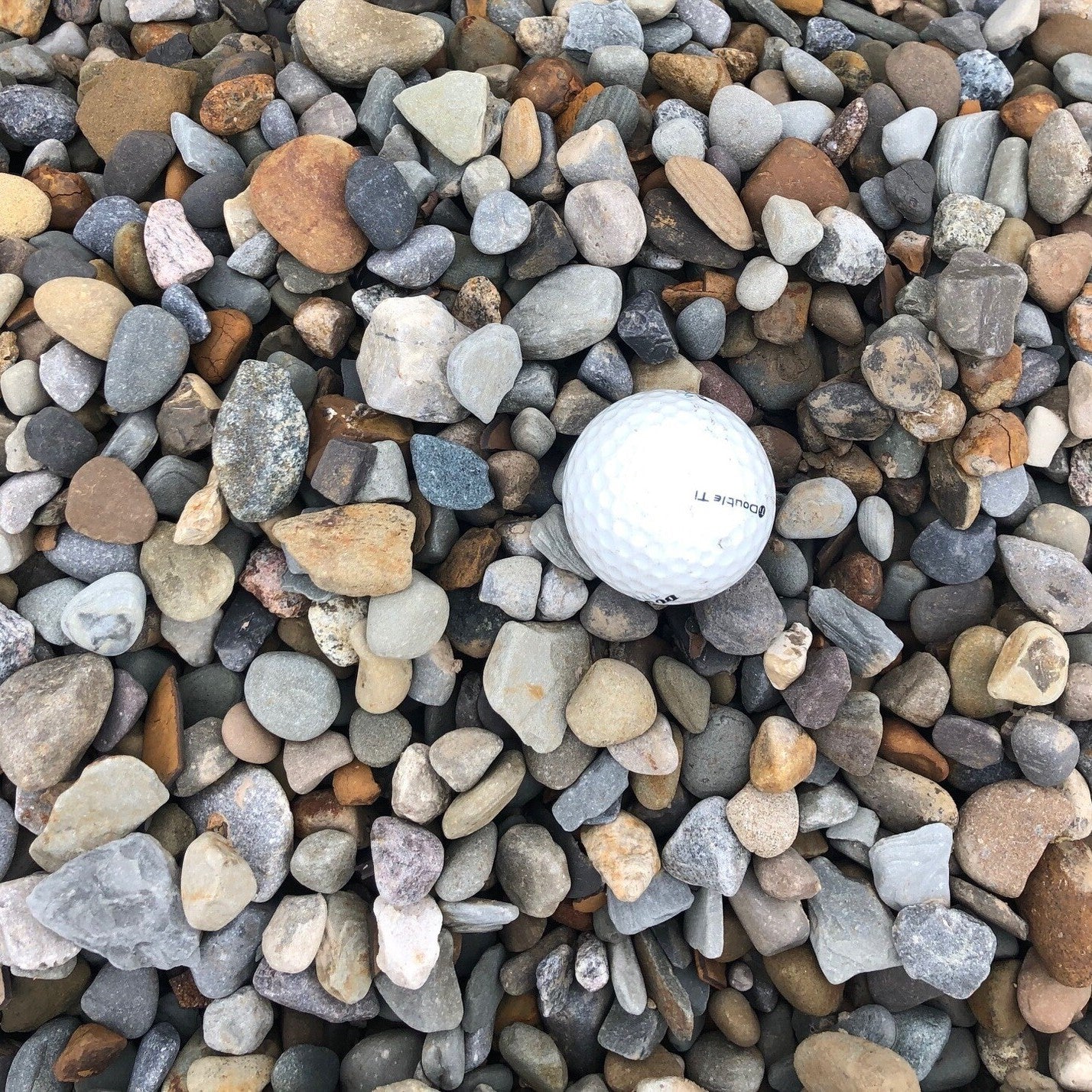
Number 57 crushed stone, angular limestone graded to about three quarters of an inch. The standard driveway, base and drainage gravel, it locks together under traffic and drains fast.
My experience with Mulch Mound was great and super easy. I ordered two yards of screened topsoil and was able to get it delivered within 2 days. They came in my requested time frame (afternoon) and dropped it off where I asked on my driveway. The topsoil was exactly what was a...
Tell us what you're looking for
Thanks! We received your request.
Something went wrong. Please try again.
How Much Material Do I Need?
For decorative stone mulch beds in Missoula, plan on 2 inches of depth for light coverage and visual appeal, or 3 inches for better weed suppression and moisture management in xeriscape plantings. One cubic yard of stone covers approximately 160 square feet at 2 inches deep, which is a helpful benchmark when measuring your project areas.
Use our free gravel calculator
What is a Yard?
A yard is approximately 27 cubic feet. As a general guideline, one yard of material can cover an area of about 100-160 square feet at a 2-3 inch depth.
We can't take orders for this right now. Tell us what you need and we'll get back to you.
What do you need?
Thanks! We received your request.
Something went wrong. Please try again.
Hand-picked local yards
4,000+ regional deliveries
Dedicated support
Why order through Mulch Mound
The best local , without the guesswork.
We hand-pick and partner with the best yards in your region, keep only the ones our buyers rate well, and back each load with our guarantee.
Mulch Mound Guarantee
If your isn't the quantity or quality you ordered, we'll make it right.
About this stone
Number 57 crushed stone, angular limestone graded to about three quarters of an inch. The standard driveway, base and drainage gravel, it locks together under traffic and drains fast.
My experience with Mulch Mound was great and super easy. I ordered two yards of screened topsoil and was able to get it delivered within 2 days. They came in my requested time frame (afternoon) and dropped it off where I asked on my driveway. The topsoil was exactly what was a...
How Much Material Do I Need?
For decorative stone mulch beds in Missoula, plan on 2 inches of depth for light coverage and visual appeal, or 3 inches for better weed suppression and moisture management in xeriscape plantings. One cubic yard of stone covers approximately 160 square feet at 2 inches deep, which is a helpful benchmark when measuring your project areas.
Use our free gravel calculator
What is a Yard?
A yard is approximately 27 cubic feet. As a general guideline, one yard of material can cover an area of about 100-160 square feet at a 2-3 inch depth.
My experience with Mulch Mound was great and super easy. I ordered two yards of screened topsoil and was able to get it delivered within 2 days. Th...
Read full review
My experience with Mulch Mound was great and super easy. I ordered two yards of screened topsoil and was able to get it delivered within 2 days. They came in my requested time frame (afternoon) and dropped it off where I asked on my driveway. The topsoil was exactly what was advertised, clean with no rocks or other debris. The price was reasonable. I plan to use them again in a couple weeks to order compost for my garden beds.
Really appreciate the care and follow thru that this company had with our order. A hiccup came up but they were quick to respond and address all co...
Read full review
Really appreciate the care and follow thru that this company had with our order. A hiccup came up but they were quick to respond and address all concerns, which made our garden day a success! Thank you for your prompt care.
To estimate stone for a flat area like a patio or path, measure the length and width in feet and multiply together to find square footage, then choose your target depth. A 2-inch depth is standard for decorative rock mulch beds, while paths and driveways need 3 to 4 inches. Our calculator on this page converts your square footage and depth into cubic yards, which is how bulk stone is measured and priced for Missoula deliveries.
Complete Your Outdoor Stone Project
Consider pairing your stone delivery with a quality landscape fabric order to prevent Missoula's fine silt loam from migrating up into your gravel over time and keeping your stone looking clean season after season. A base layer of compacted road gravel under decorative stone is also a smart addition for any path or patio project.
One of the most practical uses of stone in Missoula landscapes is lining the downspout splash zones around your home's foundation. With silt loam soil that can erode and compact quickly, concentrated water from roof runoff creates bare, muddy channels that wear away over time. A 12 to 18 inch band of river rock or drain rock around splash areas absorbs the impact, slows water flow, and directs it away from your foundation without creating the soggy, compacted soil zones that are so common around Missoula homes.
Mulch Mound Pro Tip
Missoula homeowners interested in water-wise landscaping should look at decomposed granite as a versatile ground cover that works well in the valley's dry climate. Unlike rounded river gravel, decomposed granite compacts slightly when wet and creates a firm, walkable surface that holds its shape through spring snowmelt and summer thunderstorms. It is an excellent choice for informal pathways, seating areas under native trees, and transition zones between lawn and planted beds where you want a natural, low-effort surface that does not require seasonal replacement.
Mulch Mound Pro Tip
When placing large decorative boulders or rock features in your Missoula yard, position them to take advantage of the sun angles at this latitude. A large stone on the south side of a planting bed will absorb heat during the day and radiate it back at night, which can extend your effective growing season by a few degrees around frost-sensitive plants. This is a technique used by experienced Missoula gardeners to push zone 6a plants a little further, taking advantage of the thermal mass of stone to buffer against the early September cold snaps that can catch gardeners off guard.
The Unique Landscape of Missoula
Decorative and functional landscape stone is one of the most durable choices you can make for a Missoula property, precisely because it does not depend on rainfall, soil quality, or a short growing season to look good. In a city that receives only 16 inches of precipitation annually, stone mulch and gravel paths hold up beautifully through the long dry stretches of summer without the fading or decomposition that affects organic materials. At 3,209 feet of elevation, Missoula experiences significant freeze-thaw activity every fall and spring, and properly installed stone groundcover handles those cycles far better than many other landscape materials. The silt loam soil in the Missoula valley can shift and settle over time, so using stone for pathways, drainage channels, and dry creek beds is both a practical and attractive solution for managing erosion and runoff. Whether you are covering a low-water xeriscape bed or creating a formal gravel driveway, stone brings a permanence to your Missoula landscape that organic materials simply cannot match.
Frequently Asked Questions
Click a question to see the answer
Answer
What size gravel works best for a dry creek bed to handle the runoff I get during snowmelt in spring?
For managing snowmelt runoff in Missoula yards, a 3 to 5 inch river rock is ideal for the main channel of a dry creek bed because it is large enough to stay in place during fast-moving water while still looking natural. The surrounding edges of the bed can be transitioned with smaller 1.5 to 2 inch river rock for a more gradual visual effect. Because Missoula's silt loam can migrate up through gravel over time, always install a layer of landscape fabric beneath the rock to keep the stone clean and prevent the channel from clogging with fine soil particles after a few seasons.
Answer
Will decorative rock help me use less water in my Missoula yard?
Yes, replacing turf or exposed soil with decorative rock in low-traffic areas is one of the most effective water-saving strategies for Missoula landscapes. Stone mulch eliminates evaporation from bare soil entirely in the areas it covers and removes the need for irrigation in those zones altogether. When combined with drought-tolerant native plants like blanketflower, yarrow, or sagebrush, a rock mulch design can dramatically reduce your overall outdoor water use, which is a meaningful benefit in a city where summer irrigation drives up water bills during the driest months of the year.
Answer
Does gravel or rock mulch get too hot in summer for plants growing through it?
This is a real concern in Missoula during July and August when sunny days can drive surface temperatures high. Dark-colored stones absorb significantly more heat than light-colored ones, so if you are using rock mulch around plants, lighter colored gravel or river rock is a better choice than black lava rock in exposed, south-facing beds. For areas with no plants, darker stone is fine and can actually help warm the soil in early spring, which is a bonus for a city with a last frost as late as May 15.
Answer
How deep should I lay gravel for a walking path in my Missoula backyard?
For a stable, comfortable walking path in Missoula, plan on a 3 to 4 inch depth of compacted base gravel topped with 1 to 2 inches of finer decorative gravel or decomposed granite. The base layer is important because Missoula's silt loam soil shifts during freeze-thaw cycles every fall and spring, and without a solid base the path surface will become uneven within a season or two. Compacting the base gravel with a hand tamper before adding the top layer makes a real difference in long-term path stability.
Answer
I want to do a low-maintenance rock garden on a steep slope in my yard. What type of stone should I use?
For a rock garden on a steep Missoula slope, angular flagstone or larger boulders in the 6 to 18 inch range are the most stable choices because their irregular surfaces interlock and resist sliding even on a significant grade. Round river rock tends to roll and shift on slopes over time, especially during spring runoff when the silt loam beneath can become saturated and mobile. Combining larger anchor stones with a groundcover of 1.5 to 2 inch angular gravel between them gives you great erosion control while also creating the look of a natural mountain landscape that suits the Missoula setting well.
Answer
Will stone shift or sink in my yard if the ground freezes and thaws every year?
Some movement is inevitable in any Missoula landscape because the freeze-thaw cycle is a real force, but proper installation dramatically reduces how much shifting occurs. The key is to not skip the base preparation. Removing the top 4 to 6 inches of soft silt loam, compacting the subsoil, and laying a gravel base before your decorative stone creates a stable platform that moves far less than stone laid directly on native ground. Edging borders installed around pathways and beds also help contain stone from migrating outward over the years.
Answer
Is it better to use rock mulch or wood mulch around my trees and shrubs in Missoula?
Both have legitimate uses in Missoula landscapes, and the best choice depends on your goals. Wood mulch is generally better for trees and shrubs because it decomposes into organic matter that feeds the soil and improves the silt loam structure over time. Rock mulch does not provide any organic benefit and can raise soil temperature in summer, which stresses shallow-rooted shrubs. That said, rock is an excellent low-maintenance choice around drought-tolerant xeriscape plants, along foundations where drainage is important, and in areas where wood mulch would wash or blow away.
Answer
Is there a stone yard near Missoula?
Laying a gravel path that sits on landscape fabric, so Missoula's fine silt loam stays out of your stone, is a common weekend project, and the crushed stone for it arrives at your driveway instead of requiring a trip to a stone yard. We are not a gravel pit, just an online order dropped by the cubic yard wherever you want it.