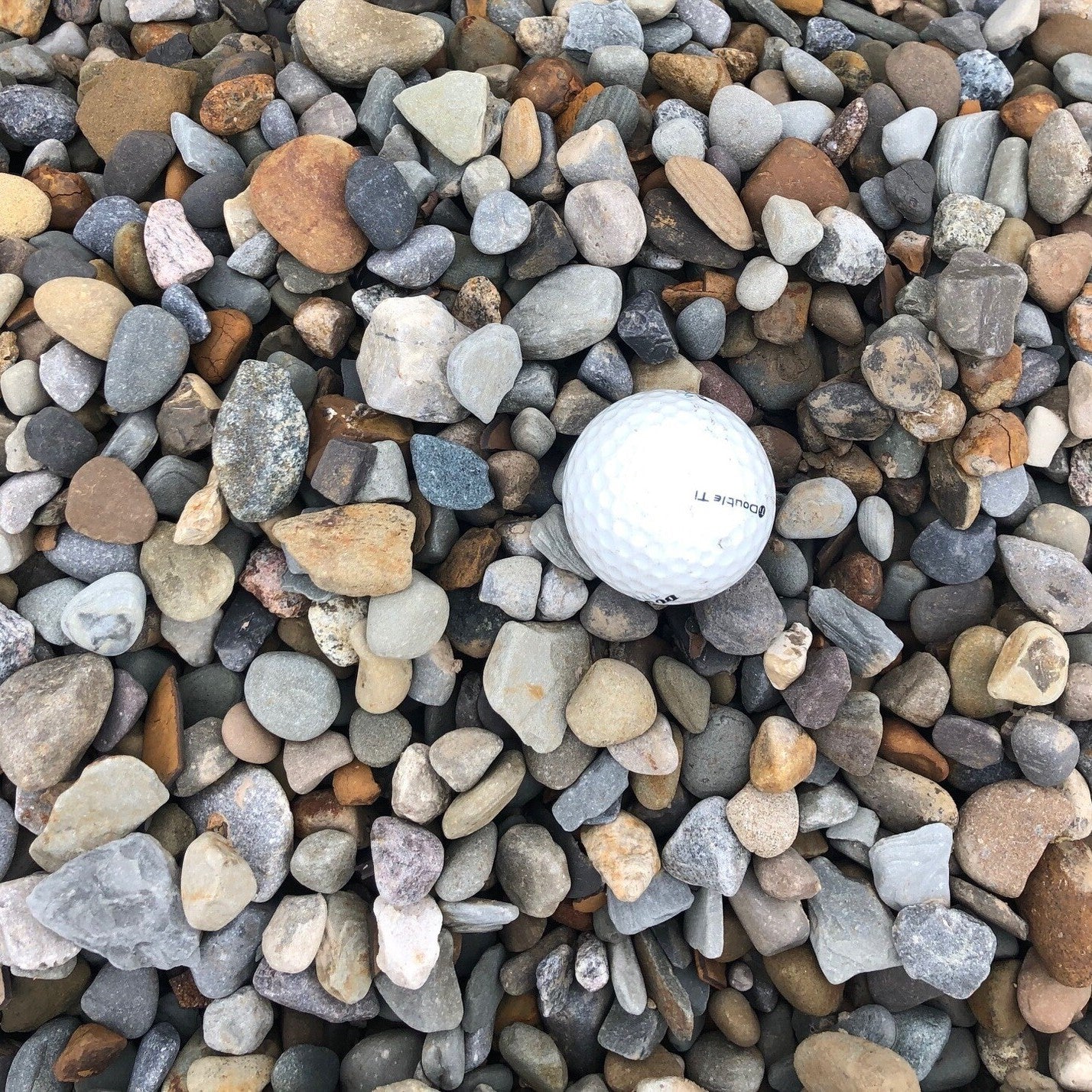
Number 57 crushed stone, angular limestone graded to about three quarters of an inch. The standard driveway, base and drainage gravel, it locks together under traffic and drains fast.
My experience with Mulch Mound was great and super easy. I ordered two yards of screened topsoil and was able to get it delivered within 2 days. They came in my requested time frame (afternoon) and dropped it off where I asked on my driveway. The topsoil was exactly what was a...
Tell us what you're looking for
Thanks! We received your request.
Something went wrong. Please try again.
How Much Material Do I Need?
Use 2 to 3 inches of stone for decorative beds and walkways, and 4 to 6 inches for driveways and parking pads over compacted subgrade. One cubic yard covers about 160 square feet at 2 inches or 80 square feet at 4 inches.
Use our free gravel calculator
What is a Yard?
A yard is approximately 27 cubic feet. As a general guideline, one yard of material can cover an area of about 100-160 square feet at a 2-3 inch depth.
We can't take orders for this right now. Tell us what you need and we'll get back to you.
What do you need?
Thanks! We received your request.
Something went wrong. Please try again.
Hand-picked local yards
4,000+ regional deliveries
Dedicated support
Why order through Mulch Mound
The best local , without the guesswork.
We hand-pick and partner with the best yards in your region, keep only the ones our buyers rate well, and back each load with our guarantee.
Mulch Mound Guarantee
If your isn't the quantity or quality you ordered, we'll make it right.
About this stone
Number 57 crushed stone, angular limestone graded to about three quarters of an inch. The standard driveway, base and drainage gravel, it locks together under traffic and drains fast.
My experience with Mulch Mound was great and super easy. I ordered two yards of screened topsoil and was able to get it delivered within 2 days. They came in my requested time frame (afternoon) and dropped it off where I asked on my driveway. The topsoil was exactly what was a...
How Much Material Do I Need?
Use 2 to 3 inches of stone for decorative beds and walkways, and 4 to 6 inches for driveways and parking pads over compacted subgrade. One cubic yard covers about 160 square feet at 2 inches or 80 square feet at 4 inches.
Use our free gravel calculator
What is a Yard?
A yard is approximately 27 cubic feet. As a general guideline, one yard of material can cover an area of about 100-160 square feet at a 2-3 inch depth.
My experience with Mulch Mound was great and super easy. I ordered two yards of screened topsoil and was able to get it delivered within 2 days. Th...
Read full review
My experience with Mulch Mound was great and super easy. I ordered two yards of screened topsoil and was able to get it delivered within 2 days. They came in my requested time frame (afternoon) and dropped it off where I asked on my driveway. The topsoil was exactly what was advertised, clean with no rocks or other debris. The price was reasonable. I plan to use them again in a couple weeks to order compost for my garden beds.
Really appreciate the care and follow thru that this company had with our order. A hiccup came up but they were quick to respond and address all co...
Read full review
Really appreciate the care and follow thru that this company had with our order. A hiccup came up but they were quick to respond and address all concerns, which made our garden day a success! Thank you for your prompt care.
Measure length and width in feet, then convert your desired depth to feet by dividing inches by 12. Multiply all three and divide by 27 to get cubic yards. For Monroe driveways and drainage trenches, measure the deepest rut or trench section rather than the average, since undersizing on a floodplain lot means redoing the work after the next big rain.
Complete Your Outdoor Stone Project
Add woven landscape fabric and steel or paver edging to keep stone from migrating into Monroe's soft silt loam, and pick up screened topsoil if you are shaping swales or berms to direct water toward your new drainage stone.
Compact your subgrade before the first stone goes down. Monroe silt loam is soft when damp, and skipping compaction is the single most common reason local gravel drives develop ruts within a year. Run a plate compactor or roller over the prepared base, then place stone in two lifts rather than one, compacting between each. It doubles your labor and easily triples the lifespan.
Mulch Mound Pro Tip
Match stone shape to function. Angular crushed limestone has fractured faces that interlock and stay put, which is why it belongs in drives, walkway bases, and paths. Rounded river rock rolls, which makes it ideal for dry creek beds and decorative bands where water flow is the point, and terrible for anything you walk or drive on. Monroe yards usually need both, in different places.
Mulch Mound Pro Tip
Keep stone off the slab. Building a 12 to 18 inch band of washed gravel along your foundation stops rain splashback from staining siding and helps water shed away from the house, which matters at Monroe's low elevation. Slope that band away from the wall at roughly a quarter inch per foot, and never let the stone level rise above your weep holes or the top of your slab.
The Unique Landscape of Monroe
In a place that catches 58 inches of rain a year and sits at 72 feet of elevation, moving water is the central landscaping challenge, and stone is the primary tool for it. Monroe's silt loam holds water and turns to soft muck in low spots, so gravel drives, drainage beds, and French drains all rely on properly sized aggregate to stay firm. Unlike mulch, stone does not decompose in our humid zone 8b climate, so it holds its line season after season without annual replacement. Decorative river rock and crushed stone also solve the problem of mulch floating away in bed areas that flood during heavy Ouachita Parish downpours. Along foundations, a stone band keeps splashback and moisture off siding and slab edges. For any part of a Monroe yard where water collects or traffic wears through, stone is the durable answer.
Frequently Asked Questions
Click a question to see the answer
Answer
What size gravel works best for a driveway in Monroe?
A crushed limestone base such as number 57 topped with a fines blend like crusher run locks together and resists rutting. Straight rounded river rock will not compact and will scatter under tires. Given how soft Monroe silt loam gets after a heavy rain, budget for a base of at least 4 to 6 inches, more if you park a truck or trailer on it.
Answer
Will gravel help with the standing water in my back yard?
It can, but only as part of a system. On flat Monroe lots the water needs somewhere to go, so a French drain with perforated pipe surrounded by washed drainage gravel and wrapped in filter fabric moves water toward a lower outlet. Loose gravel dumped in a wet spot without an outlet just gives the water a rockier place to sit.
Answer
Does landscape fabric go under stone here?
Yes, and it matters more in Monroe than in most places. Fine silt loam migrates upward into stone every time the ground saturates and dries, which is often with 58 inches of rain a year. A quality woven geotextile under drives and stone beds keeps the aggregate from disappearing into the subgrade and adds years to the installation.
Answer
Can I use stone instead of mulch around my shrubs?
You can, and it is a good choice in areas that flood or wash out. Keep in mind that stone absorbs heat, which raises root zone temperatures during Monroe summers when we are running upper 90s for weeks. It also adds no organic matter to silt loam. Use stone in drainage areas and along foundations, and keep hardwood mulch around azaleas, camellias, and other heat sensitive plantings.
Answer
How thick should stone be in a dry creek bed?
Excavate 6 to 8 inches, line with fabric, then place a mix of 2 to 4 inch river rock with some larger accent boulders. In Monroe you should size the channel for real volume, since our thunderstorms can dump 2 or 3 inches in an afternoon. A dry creek that only handles a light shower will simply flood around its edges.
Answer
Do weeds grow in stone beds around Monroe?
They will eventually. Our long warm season and humidity mean windblown seed and silt collect in the voids and create a shallow seedbed on top of the stone. Blow or rinse debris out of stone beds a couple of times a year, especially after leaf drop following our November 10 first frost, and you will cut weed pressure dramatically.
Answer
How much gravel do I need to fix my washed out driveway?
For a typical 12 by 40 foot Monroe driveway, 480 square feet, a 4 inch topcoat takes about 6 cubic yards. If ruts run deeper than 4 inches, fill and compact those separately first with base rock before adding your surface layer, otherwise the new stone just settles back into the same low spots.