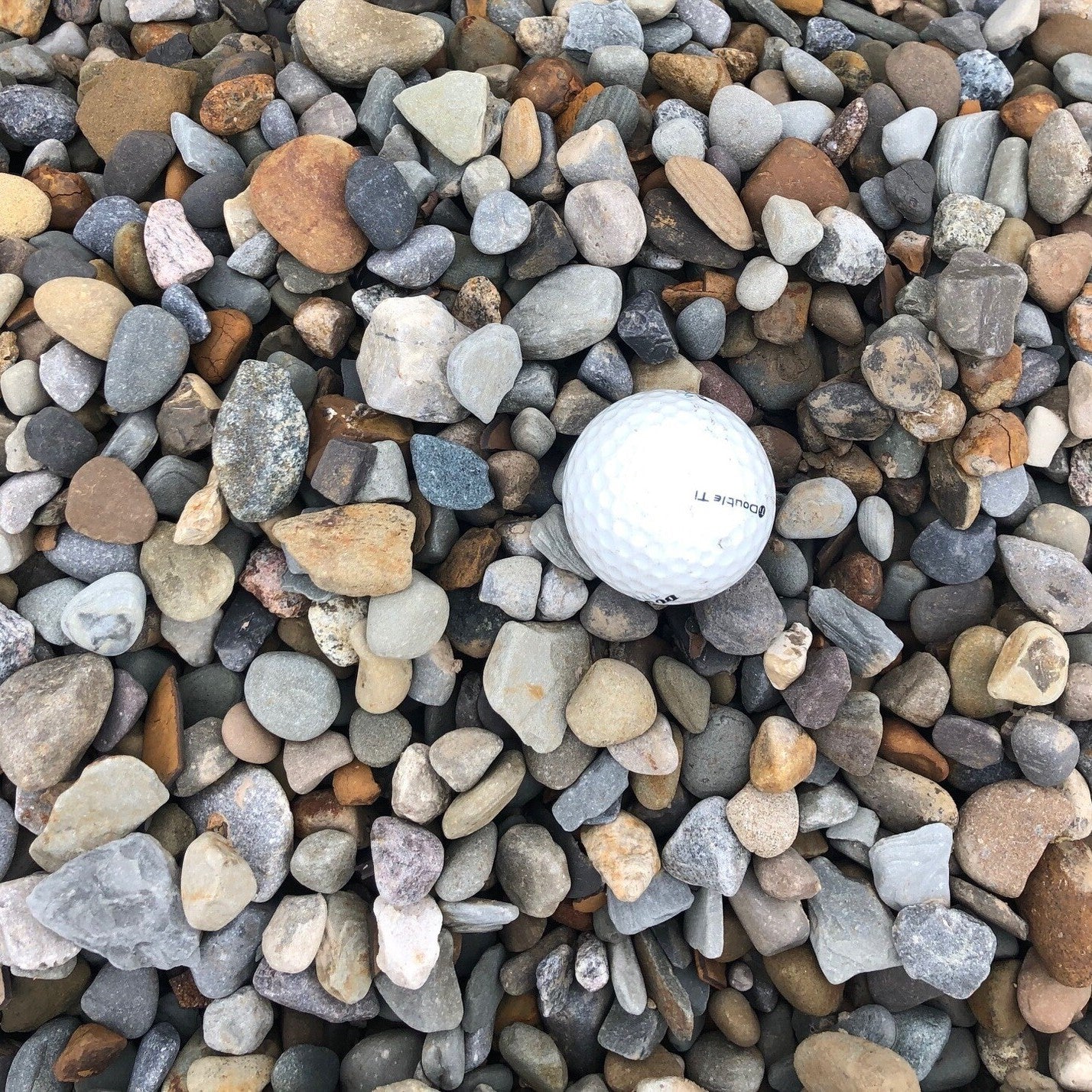
Number 57 crushed stone, angular limestone graded to about three quarters of an inch. The standard driveway, base and drainage gravel, it locks together under traffic and drains fast.
Mulch Mound delivered a yard of pea gravel to us. Delivery was on time, driver was friendly and hit a bullseye on the “tarp target”. We used the pea gravel (which was diameter as specified) to fill several muskrat holes around our pond. I would definitely recommend Mulch Mo...
Tell us what you're looking for
Thanks! We received your request.
Something went wrong. Please try again.
How Much Material Do I Need?
For most decorative pathways and garden stone applications in Montgomery, a 2-inch depth provides good coverage and stability over the red clay surface. Drainage swales, erosion control areas, and any application designed to manage concentrated stormwater benefit from a full 3-inch layer to handle the volumes generated by Montgomery's frequent heavy rain events.
Use our free gravel calculator
What is a yard?
A yard is approximately 27 cubic feet. As a general guideline, one yard of material can cover an area of about 100-160 square feet at a 2-3 inch depth.
We can't take orders for this right now. Tell us what you need and we'll get back to you.
What do you need?
Thanks! We received your request.
Something went wrong. Please try again.
Hand-picked local yards
4,000+ regional deliveries
Dedicated support
Why order through Mulch Mound
The best local stone, without the guesswork.
We hand-pick and partner with the best yards in your region, keep only the ones our buyers rate well, and back each load with our guarantee.
Mulch Mound Guarantee
If your stone isn't the quantity or quality you ordered, we'll make it right.
About this stone
Number 57 crushed stone, angular limestone graded to about three quarters of an inch. The standard driveway, base and drainage gravel, it locks together under traffic and drains fast.
Mulch Mound delivered a yard of pea gravel to us. Delivery was on time, driver was friendly and hit a bullseye on the “tarp target”. We used the pea gravel (which was diameter as specified) to fill several muskrat holes around our pond. I would definitely recommend Mulch Mo...
How Much Material Do I Need?
For most decorative pathways and garden stone applications in Montgomery, a 2-inch depth provides good coverage and stability over the red clay surface. Drainage swales, erosion control areas, and any application designed to manage concentrated stormwater benefit from a full 3-inch layer to handle the volumes generated by Montgomery's frequent heavy rain events.
Use our free gravel calculator
What is a yard?
A yard is approximately 27 cubic feet. As a general guideline, one yard of material can cover an area of about 100-160 square feet at a 2-3 inch depth.
Mulch Mound delivered a yard of pea gravel to us. Delivery was on time, driver was friendly and hit a bullseye on the “tarp target”. We used the ...
Read full review
Mulch Mound delivered a yard of pea gravel to us. Delivery was on time, driver was friendly and hit a bullseye on the “tarp target”. We used the pea gravel (which was diameter as specified) to fill several muskrat holes around our pond. I would definitely recommend Mulch Mound to a friend!
Placing an order online was so easy. Delivery was on time. When the driver realized we had a newly poured driveway they erred on the side of cautio...
Read full review
Placing an order online was so easy. Delivery was on time. When the driver realized we had a newly poured driveway they erred on the side of caution and opted not ti drive in it. The company even sent me a message explaining that call. Would recommend!
Measure the length and width of your project area in feet, multiply by your desired depth converted to a decimal in feet, then divide by 27 to get cubic yards. Stone is significantly denser than mulch, so delivery weight adds up fast, and it is worth double-checking your depth needs since Montgomery drainage applications often require a full 3-inch layer to handle the runoff volume that comes with 53 inches of annual rainfall. When in doubt, order slightly more since stone stores well and is easy to use in a second project.
Stone Types We Deliver in Montgomery
When you need bulk stone delivered by the cubic yard in Montgomery, Mulch Mound brings the material straight to your driveway or job site. The warm, humid climate and clay-rich soils found throughout this part of Alabama make stone a practical choice for drainage work, pathway surfacing, and low-maintenance landscaping. We stock a carefully chosen selection of stone varieties and sell by the full cubic yard so you always get exactly the right amount for your project.
Pea Gravel
Pea gravel's smooth, rounded stones and warm earth tones suit the relaxed outdoor living styles common across central Alabama. It performs well in the region's clay-heavy soil by letting rainwater drain freely rather than pooling on the surface. Use it by the cubic yard for walkways, patios, French drains, or decorative ground cover around plantings.
Complete Your Outdoor Stone Project
Stone borders pair naturally with mulch beds across Montgomery landscapes, providing a clean, stable edge that keeps mulch from washing onto hardscapes during heavy rains while giving beds a finished, defined look. Adding amended topsoil behind stone borders before mulching gives plants the best possible root environment while the stone handles drainage and visual structure at the bed edge.
Stone pathways that cut through lawn areas in Montgomery benefit from a very slight crown in the center so rainwater sheds to both sides rather than pooling on the surface. Red clay beneath a path can heave slightly during wet winters as moisture expands the soil, and a crowned profile keeps the stone draining well through all of Montgomery's wet weather months without requiring annual releveling or stone replacement.
Mulch Mound Pro Tip
Decomposed granite is worth considering as a surface material for transition areas between hard pathways and lawn in Montgomery yards. It compacts into a firm, stable surface, resists the zone 8b heat without fading, and reduces the tracking of loose gravel onto grass or hardscape areas. It also provides a softer visual and physical transition than sharp-edged crushed stone, working particularly well in naturalistic garden designs that use native or adapted plantings suited to Montgomery's red clay conditions.
Mulch Mound Pro Tip
Larger river rock placed in the natural low-lying areas of your Montgomery yard can function as a dry creek bed feature that moves water efficiently during the area's 53 inches of annual rainfall while looking like a deliberate design element rather than a drainage solution. Map where water naturally flows across your property after a heavy rain and use that existing path as the guide for your stone channel. This approach protects the red clay from erosion, manages stormwater without infrastructure, and adds a distinctive landscape feature that requires almost no maintenance through any season.
The Unique Landscape of Montgomery
Landscape stone is one of the most practical investments Montgomery homeowners can make given the area's combination of heavy rainfall and expansive red clay soil. With 53 inches of rain each year, gravel and crushed stone provide stable, well-draining surfaces that hold up far better than mulch or bare soil in high-traffic areas and drainage corridors. Red clay becomes slick and unstable when wet, making stone pathways and borders a meaningful safety and maintenance improvement over grass paths or bare dirt that turns to mud after every storm. Stone handles Montgomery's intense summer heat without breaking down, fading, or shifting the way organic materials do in zone 8b's humid climate. From foundation borders to dry creek drainage features, stone delivers lasting function with minimal upkeep through every season Montgomery's weather brings.
Frequently Asked Questions
Click a question to see the answer
Answer
What size gravel works best for residential walkways in a Montgomery yard?
Pea gravel in the 3/8-inch range is the most popular choice for residential walkways in Montgomery. It is small enough to be comfortable underfoot, packs reasonably well, and drains quickly, which matters a great deal given the frequency of heavy rain events in the area. Larger sizes like 1-inch crushed stone are better for utility paths that prioritize stability over comfort and see equipment or heavy foot traffic.
Answer
Will gravel help with erosion on my sloped Montgomery yard?
Gravel is highly effective for erosion control on slopes in Montgomery, where red clay surfaces can sheet-erode noticeably during the area's frequent heavy rain events. A 2 to 3-inch layer of crushed stone or river rock stabilizes the soil surface and significantly slows runoff velocity before it carries clay particles away. For steeper slopes, larger 2 to 3-inch stone is more stable and resists displacement during intense downpours better than fine gravel sizes.
Answer
Can I use stone as a mulch substitute around plants in my Montgomery landscape?
Stone works well around heat-tolerant shrubs, ornamental grasses, and drought-adapted plants in Montgomery, but it is not a good substitute for organic mulch around plants that benefit from the soil improvement that decomposing wood provides. Stone also absorbs and radiates heat, which can stress shallow root systems during Montgomery's peak summer temperatures in July and August. Reserve stone for foundation borders, pathways, and drainage features, and keep organic mulch directly over plant root zones.
Answer
How do I keep gravel from sinking into Montgomery's red clay over time?
Laying a quality landscape fabric before installing gravel is the most effective solution for Montgomery's red clay. Without a barrier, the clay migrates upward through gravel over time, especially after heavy rains saturate and expand the soil beneath the stone. A 4-ounce or heavier non-woven landscape fabric keeps the two materials separated and extends the clean look and drainage function of your stone installation by several years.
Answer
What kind of stone is best for drainage swales and consistently wet areas in Montgomery?
For drainage swales and areas that collect stormwater runoff in Montgomery, clean crushed granite or river rock in the 1.5 to 3-inch range are the most effective options. These sizes allow water to pass through quickly without washing the stone downslope during heavy rain. Clean stone, meaning stone without fine particles mixed in, is especially important for drainage applications since fines fill the air pockets that give gravel its capacity to carry water.
Answer
How deep should I apply gravel for a driveway or overflow parking area in Montgomery?
For a residential driveway or parking area in Montgomery, plan on a minimum of 4 inches of compacted gravel. Montgomery's red clay base shifts and pumps under vehicle load when saturated, so a sufficient gravel depth prevents the ruts and soft spots that appear after rainy stretches. A two-layer installation with coarser crusher run on the bottom and cleaner gravel on top gives the best long-term performance over the clay subgrade.
Answer
Is river rock a good low-maintenance option for the area around my home's foundation in Montgomery?
River rock is an excellent low-maintenance choice for foundation borders in Montgomery. It does not break down like mulch, does not hold moisture against the foundation, and stays in place through heavy rain without washing into the lawn. Pulling it back 2 to 3 inches from siding and laying it over landscape fabric minimizes termite habitat and keeps the border looking clean through all of Montgomery's weather seasons with almost no upkeep.
Answer
Is crush and run the same as crusher run?
Crush and run is the Southern term for crusher run, a mix of crushed stone and stone dust that compacts into a firm base for driveways and paver projects. In Montgomery, where heavy rainfall and red clay soil make drainage a real concern, our Crushed Stone #57 is the better choice since it drains freely instead of holding water like a compacted base material.