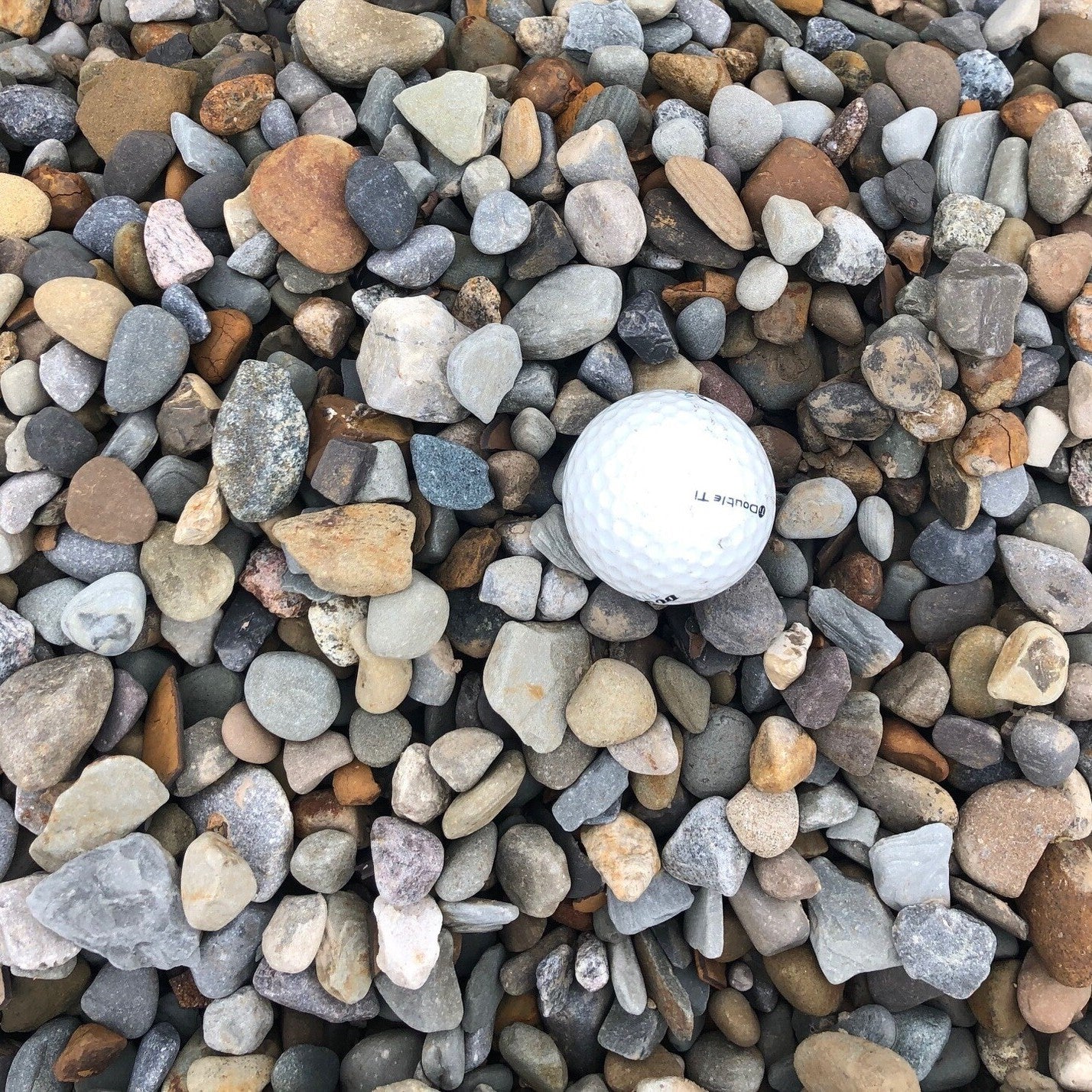
Number 57 crushed stone, angular limestone graded to about three quarters of an inch. The standard driveway, base and drainage gravel, it locks together under traffic and drains fast.
My experience with Mulch Mound was great and super easy. I ordered two yards of screened topsoil and was able to get it delivered within 2 days. They came in my requested time frame (afternoon) and dropped it off where I asked on my driveway. The topsoil was exactly what was a...
Tell us what you're looking for
Thanks! We received your request.
Something went wrong. Please try again.
How Much Material Do I Need?
Two to three inches is right for decorative beds, three to four inches for walkways and patios, and four to six inches of base plus a top layer for driveways. One cubic yard of stone covers roughly 100 to 110 square feet at three inches deep.
Use our free gravel calculator
What is a Yard?
A yard is approximately 27 cubic feet. As a general guideline, one yard of material can cover an area of about 100-160 square feet at a 2-3 inch depth.
We can't take orders for this right now. Tell us what you need and we'll get back to you.
What do you need?
Thanks! We received your request.
Something went wrong. Please try again.
Hand-picked local yards
4,000+ regional deliveries
Dedicated support
Why order through Mulch Mound
The best local , without the guesswork.
We hand-pick and partner with the best yards in your region, keep only the ones our buyers rate well, and back each load with our guarantee.
Mulch Mound Guarantee
If your isn't the quantity or quality you ordered, we'll make it right.
About this stone
Number 57 crushed stone, angular limestone graded to about three quarters of an inch. The standard driveway, base and drainage gravel, it locks together under traffic and drains fast.
My experience with Mulch Mound was great and super easy. I ordered two yards of screened topsoil and was able to get it delivered within 2 days. They came in my requested time frame (afternoon) and dropped it off where I asked on my driveway. The topsoil was exactly what was a...
How Much Material Do I Need?
Two to three inches is right for decorative beds, three to four inches for walkways and patios, and four to six inches of base plus a top layer for driveways. One cubic yard of stone covers roughly 100 to 110 square feet at three inches deep.
Use our free gravel calculator
What is a Yard?
A yard is approximately 27 cubic feet. As a general guideline, one yard of material can cover an area of about 100-160 square feet at a 2-3 inch depth.
My experience with Mulch Mound was great and super easy. I ordered two yards of screened topsoil and was able to get it delivered within 2 days. Th...
Read full review
My experience with Mulch Mound was great and super easy. I ordered two yards of screened topsoil and was able to get it delivered within 2 days. They came in my requested time frame (afternoon) and dropped it off where I asked on my driveway. The topsoil was exactly what was advertised, clean with no rocks or other debris. The price was reasonable. I plan to use them again in a couple weeks to order compost for my garden beds.
Measure length and width in feet and multiply by your depth in feet, then divide by 27 for cubic yards. For dry creek beds and drainage runs, measure the average width of the channel rather than the widest point. Because stone is sold by weight as well as volume, confirm the conversion with us before ordering, since a yard of dense crushed granite weighs considerably more than a yard of river rock.
Complete Your Outdoor Stone Project
Add landscape fabric to keep stone from working down into Mooresville clay, plus steel or paver edging to hold clean lines against bed and lawn transitions. Corrugated pipe pairs well with drainage stone for downspout extensions on lots with poor grade.
Always lay a quality woven geotextile fabric between Mooresville red clay and your stone. Cheap plastic sheeting traps water on top and turns the area into a swamp during our wetter months. Woven fabric lets the 44 inches of annual rain pass through while stopping the clay from migrating upward into the aggregate. That single step is the difference between gravel that lasts ten years and gravel that vanishes in two.
Mulch Mound Pro Tip
Design drainage stone runs to follow the water, not your idea of where it should go. Walk your Mooresville yard during a real summer downpour and mark the actual channels with flags. Clay sheds water in surprisingly specific paths, and a dry creek bed placed on the true route will do more with three tons of rock than a guessed layout will with six. Take photos while it is raining.
Mulch Mound Pro Tip
Plan stone delivery placement carefully, because a full load parked on soft Piedmont clay will sink and leave ruts you fight for months. Ask the driver to drop on pavement, or lay down plywood and a heavy tarp first. Also account for the weight on older driveways, since a yard of stone approaches 2,700 pounds and a full truck concentrates serious load on asphalt softened by Mooresville August heat.
The Unique Landscape of Mooresville
Mooresville yards deal with a specific problem, which is 44 inches of annual rain landing on clay that refuses to absorb it quickly. That creates runoff channels, eroded bed edges, and muddy low spots that mulch simply cannot handle. Decorative and drainage stone gives water somewhere to go while staying put through the heaviest summer downpour. Gravel is also the practical answer for the long driveways and side parking pads common on larger lots outside town toward Mount Mourne and Troutman. Unlike organic material, stone does not decompose in our humid Zone 8a summers, so a properly installed application lasts a decade or more. For high traffic, high erosion, and high moisture areas, it is the lowest maintenance material available.
Frequently Asked Questions
Click a question to see the answer
Answer
What size stone works best for a driveway on Mooresville clay?
Build in layers. Start with four to six inches of ABC crusher run or number 57 stone as a base, then top with a decorative or finer crushed granite layer. On red clay, geotextile fabric under the base is well worth the cost, because clay pumps up through gravel over time and creates soft spots. Round river rock never works for driveways here since it shifts and ruts under tires.
Answer
Will stone stop the erosion channel forming beside my house?
Yes, if you size it correctly. Downspout runoff in Mooresville moves fast during summer thunderstorms, and small pea gravel will scatter. Use two to four inch river rock or rip rap in the channel, set it on landscape fabric, and give the run a slight defined shape so water stays in the rock. Many local homeowners pair this with a dry creek bed design that looks intentional rather than utilitarian.
Answer
Does stone mulch make my beds hotter in Mooresville summers?
It does. Stone absorbs and radiates heat, and against a south facing brick wall in a Mooresville July, bed temperatures climb well above what hydrangeas or azaleas tolerate. Use stone in beds planted with heat tolerant material like ornamental grasses, yuccas, junipers, and sedum. Keep organic mulch around anything that wants cool, moist roots.
Answer
How do I keep weeds out of my gravel areas?
Fabric underneath helps at first, but the real issue in Mooresville is that organic debris settles into the stone and creates a seedbed on top of the fabric. Blow out leaves and pine needles a couple of times a year, especially after fall drop before the November 5 frost. A pre emergent applied in late February and again in late summer handles most of what our long growing season throws at gravel.
Answer
How much does a yard of stone weigh compared to mulch?
A cubic yard of stone runs roughly 2,400 to 2,800 pounds, while a yard of mulch is around 800 pounds. That matters for Mooresville driveways, for wheelbarrow planning, and for how many yards a single truck can carry. Most homeowners can move about a yard per hour by hand, so budget your weekend accordingly or plan for equipment on larger jobs.
Answer
Can I put stone over the red clay without a base layer?
For a decorative bed with light foot traffic, yes, though fabric underneath will save you from stone sinking into clay over a few wet seasons. For any driveway, parking pad, or walkway, a compacted base is not optional. Mooresville clay softens dramatically when saturated, and stone placed directly on it will disappear into the mud within a year or two.
Answer
What is the best stone for a fire pit patio area in my backyard?
Crushed granite or decomposed granite compacts into a firm, stable surface that drains well after Mooresville rains and does not roll under chair legs the way river rock does. Install three to four inches over a compacted base with edging to contain it. It also handles the occasional stray ember far better than any organic mulch would.
Answer
Is crush and run the same as crusher run?
Crush and run is crushed stone blended with stone dust that compacts hard for driveways and bases. In Mooresville, where heavy summer rain meets clay soil, that dust can trap water instead of moving it. For drainage and erosion control on these lots, our washed Crushed Stone #57 is the better fit since it lets water pass through freely.
Answer
Is there a stone yard near Mooresville?
Fixing a muddy low spot or a long driveway in Mooresville can mean hauling crushed stone home from a stone yard yourself, or having it delivered right where it's needed. Mulch Mound isn't a quarry or a place you visit. You order online by the cubic yard, and the stone is dropped at your site.