


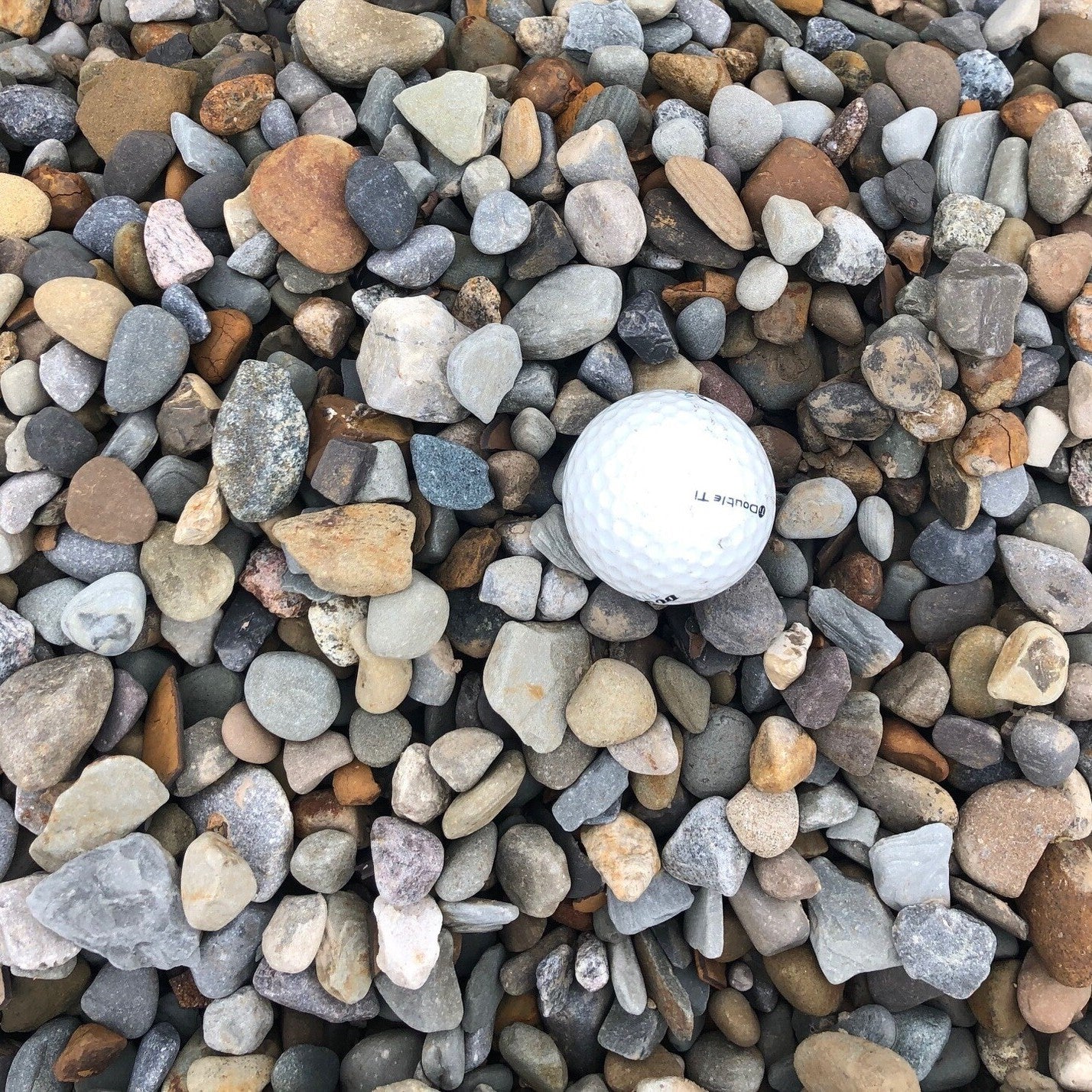

The driver nailed it on putting the gravel I ordered in front of my trailer and between the sidewalk. Very satisfied with how my flowerbeds look now.
About this stone
Number 57 crushed stone, angular limestone graded to about three quarters of an inch. The standard driveway, base and drainage gravel, it locks together under traffic and drains fast.
The driver nailed it on putting the gravel I ordered in front of my trailer and between the sidewalk. Very satisfied with how my flowerbeds look now.
Tell us what you're looking for
Thanks! We received your request.
Something went wrong. Please try again.
How Much Material Do I Need?
How Much Material Do I Need?
For decorative landscape beds in Naples, two to three inches of stone depth provides effective weed suppression and a finished appearance without using more material than necessary. For functional drainage applications or driveways, plan on three to four inches with compaction factored in, since gravel and crushed stone can compress fifteen to twenty percent under load or foot traffic.
Use our free gravel calculator
What is a Yard?
What is a Yard?
FAQs
FAQs
Naples Gravel Delivery
Naples Gravel Delivery
Regular price
$133.00
per
Yard
Regular price
Sale price
$133.00
Unit price
per
Shipping calculated at checkout.
Minimum of 3 Yard
Couldn't load pickup availability
Not currently available
We can't take orders for this right now. Tell us what you need and we'll get back to you.
Hand-picked local yards
4,000+ regional deliveries
Dedicated support
Why order through Mulch Mound
The best local , without the guesswork.
We hand-pick and partner with the best yards in your region, keep only the ones our buyers rate well, and back each load with our guarantee.
Mulch Mound Guarantee
If your isn't the quantity or quality you ordered, we'll make it right.
About this stone
Number 57 crushed stone, angular limestone graded to about three quarters of an inch. The standard driveway, base and drainage gravel, it locks together under traffic and drains fast.
The driver nailed it on putting the gravel I ordered in front of my trailer and between the sidewalk. Very satisfied with how my flowerbeds look now.
How Much Material Do I Need?
How Much Material Do I Need?
For decorative landscape beds in Naples, two to three inches of stone depth provides effective weed suppression and a finished appearance without using more material than necessary. For functional drainage applications or driveways, plan on three to four inches with compaction factored in, since gravel and crushed stone can compress fifteen to twenty percent under load or foot traffic.
Use our free gravel calculator
What is a Yard?
What is a Yard?
FAQs
FAQs
Tell us what you're looking for
Thanks! We received your request.
Something went wrong. Please try again.
How It Works
Getting started is easy — just follow these simple steps
1
Choose your stone
Make sure you adjust the quantity to your home's needs. You can use our calculator to estimate how much you'll need.
2
Select your delivery date
Select a delivery date you'd like for the product to be dropped off at your home
3
Sit back and wait
Sit back, wait, and let us work our magic to make sure the highest quality product is delivered to your driveway.


Need Help Calculating How Much Gravel You Need?
Use our NEW Trace from Satellite tool to get an estimate for your project based on an aerial view of your property
Try Our CalculatorStone is heavier and denser than mulch, so accurate measurements before ordering matter both for coverage and for managing where the truck places the load at your property. Measure your project area in square feet and decide on your depth, then use our calculator to convert to cubic yards. For decorative beds in Naples, two to three inches of depth is typical, while drainage and driveway applications usually call for three to four inches of compacted depth.
Complete Your Outdoor Stone Project
Many Naples homeowners combine a stone delivery with landscape fabric ordered separately to create a weed barrier before placing the stone, extending the low-maintenance benefits for years. Pairing river rock or gravel with a mulch order for adjacent planting beds creates a clean visual contrast that is very common in Naples landscape design.

Service area
Areas we deliver stone and gravel in Naples, Florida
Mulch Mound Pro Tip
In Naples neighborhoods where irrigation systems run multiple times per week, choose a light to medium-toned stone for areas directly under spray heads. Dark stone like black lava rock absorbs heat aggressively and can raise the soil temperature beneath it to levels that stress shallow plant roots during the summer months. Buff limestone, pea gravel, and gray river rock all stay significantly cooler in the Zone 10b sun and are much gentler on the root zones of palms, shrubs, and ground covers nearby.
Mulch Mound Pro Tip
Before placing bulk stone in any low area of your Naples yard, check the drainage direction of that spot during a normal rain event. Naples properties with minimal slope can develop areas where water ponds for hours after heavy storms, and adding stone without addressing the drainage first simply creates a pool of gravel sitting in standing water. Grading toward a swale or installing a simple French drain before stone placement keeps your project looking right and functioning correctly year after year.
Mulch Mound Pro Tip
For Naples homeowners designing a xeriscape or drought-tolerant front yard to reduce irrigation costs, pair a three-inch gravel layer with deep-rooted native and Florida-friendly plants like muhly grass, coontie, and beach sunflower. The gravel groundcover eliminates the need for weekly mowing and drastically reduces water use, both of which are major advantages in a community where water restrictions and lawn care costs are ongoing concerns. This combination also holds up beautifully through the Naples rainy season without the maintenance demands of a traditional turf lawn.
The Unique Landscape of Naples
Stone and gravel have become go-to landscape materials in Naples because they handle the demands of Zone 10b better than almost anything else available. Unlike organic materials, stone does not break down in the subtropical heat and humidity, does not wash away in the heavy summer storms that Naples receives from June through September, and does not provide a growing medium for the aggressive weeds that push through mulch beds all year long. Naples sandy soil is so porous that stone placed over a quality landscape fabric stays stable year after year without sinking or shifting the way it might in clay-heavy soils. Stone is also naturally suited to the water conservation goals many Naples homeowners have, since drought-tolerant xeriscape designs with gravel groundcover are increasingly popular in communities trying to reduce irrigation usage. In coastal Naples neighborhoods, stone is a natural aesthetic fit with the natural shell, limestone, and coral influences that define South Florida architecture. Whether you are lining a driveway, framing a pool deck, filling a dry creek bed, or creating a low-maintenance front yard, bulk stone delivery gives you the material to do it right the first time.