


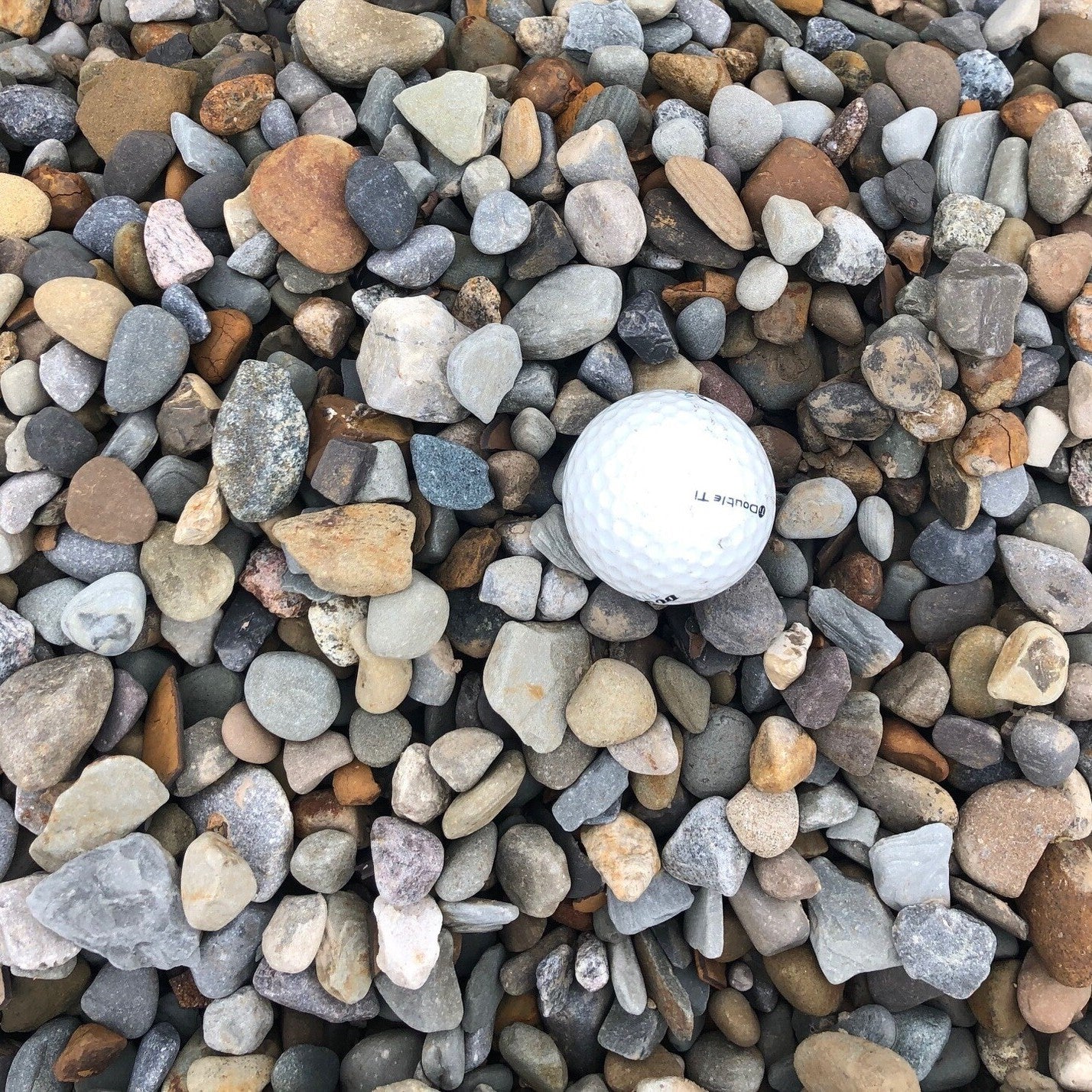

The driver nailed it on putting the gravel I ordered in front of my trailer and between the sidewalk. Very satisfied with how my flowerbeds look now.
About this stone
For a more classically elegant look, choose our 1-inch Lagrange river rock, featuring a sophisticated mix of smooth, understated earth tones that create a timeless groundcover.
The driver nailed it on putting the gravel I ordered in front of my trailer and between the sidewalk. Very satisfied with how my flowerbeds look now.
Tell us what you're looking for
Thanks! We received your request.
Something went wrong. Please try again.
How Much Material Do I Need?
How Much Material Do I Need?
For pathways and decorative ground cover in New Braunfels, 2 to 3 inches of stone is the standard depth, but French drains and drainage channels running through clay loam soil benefit from a minimum of 4 inches to allow adequate water movement through the stone layer. Pea gravel and finer material settles more compactly than larger rock, so add a small overage to your calculation when ordering those sizes.
Use our free gravel calculator
What is a yard?
What is a yard?
FAQs
FAQs
New Braunfels Gravel Delivery
New Braunfels Gravel Delivery
Regular price
$194.00
per
yard
Regular price
Sale price
$194.00
Unit price
per
Shipping calculated at checkout.
Minimum of 3 yard
Couldn't load pickup availability
Not currently available
We can't take orders for this right now. Tell us what you need and we'll get back to you.
Hand-picked local yards
4,000+ regional deliveries
Dedicated support
Why order through Mulch Mound
The best local stone, without the guesswork.
We hand-pick and partner with the best yards in your region, keep only the ones our buyers rate well, and back each load with our guarantee.
Mulch Mound Guarantee
If your stone isn't the quantity or quality you ordered, we'll make it right.
About this stone
For a more classically elegant look, choose our 1-inch Lagrange river rock, featuring a sophisticated mix of smooth, understated earth tones that create a timeless groundcover.
The driver nailed it on putting the gravel I ordered in front of my trailer and between the sidewalk. Very satisfied with how my flowerbeds look now.
How Much Material Do I Need?
How Much Material Do I Need?
For pathways and decorative ground cover in New Braunfels, 2 to 3 inches of stone is the standard depth, but French drains and drainage channels running through clay loam soil benefit from a minimum of 4 inches to allow adequate water movement through the stone layer. Pea gravel and finer material settles more compactly than larger rock, so add a small overage to your calculation when ordering those sizes.
Use our free gravel calculator
What is a yard?
What is a yard?
FAQs
FAQs
Tell us what you're looking for
Thanks! We received your request.
Something went wrong. Please try again.
How It Works
Getting started is easy — just follow these simple steps
1
Choose your stone
Make sure you adjust the quantity to your home's needs. You can use our calculator to estimate how much you'll need.
2
Select your delivery date
Select a delivery date you'd like for the product to be dropped off at your home
3
Sit back and wait
Sit back, wait, and let us work our magic to make sure the highest quality product is delivered to your driveway.

Placing an order online was so easy. Delivery was on time. When the driver realized we had a newly poured driveway they erred on the side of cautio...
Read full review
Placing an order online was so easy. Delivery was on time. When the driver realized we had a newly poured driveway they erred on the side of caution and opted not ti drive in it. The company even sent me a message explaining that call. Would recommend!

Online ordering was really simple and I liked the transparent pricing.
Need Help Calculating How Much Gravel You Need?
Use our NEW Trace from Satellite tool to get an estimate for your project based on an aerial view of your property
Try Our CalculatorMeasure your project area in square feet and plan for 2 to 3 inches of depth for most decorative stone applications in New Braunfels, with 4 or more inches recommended for drainage-focused installations where clay loam limits water movement below the surface. Sloped areas and drainage channels may require additional material along the edges where stone tends to migrate during heavy rains. Sketching your project area with rough dimensions before you order helps confirm the right quantity and avoids the cost of a second delivery.
Stone Types We Deliver in New Braunfels
When you need bulk gravel by the yard in New Braunfels, Mulch Mound delivers straight to your property with no hauling required. We carry a focused selection of stone types suited to the local climate, the clay and limestone soils common in this region, and the outdoor living spaces typical of Central Texas homes.
Pea Gravel
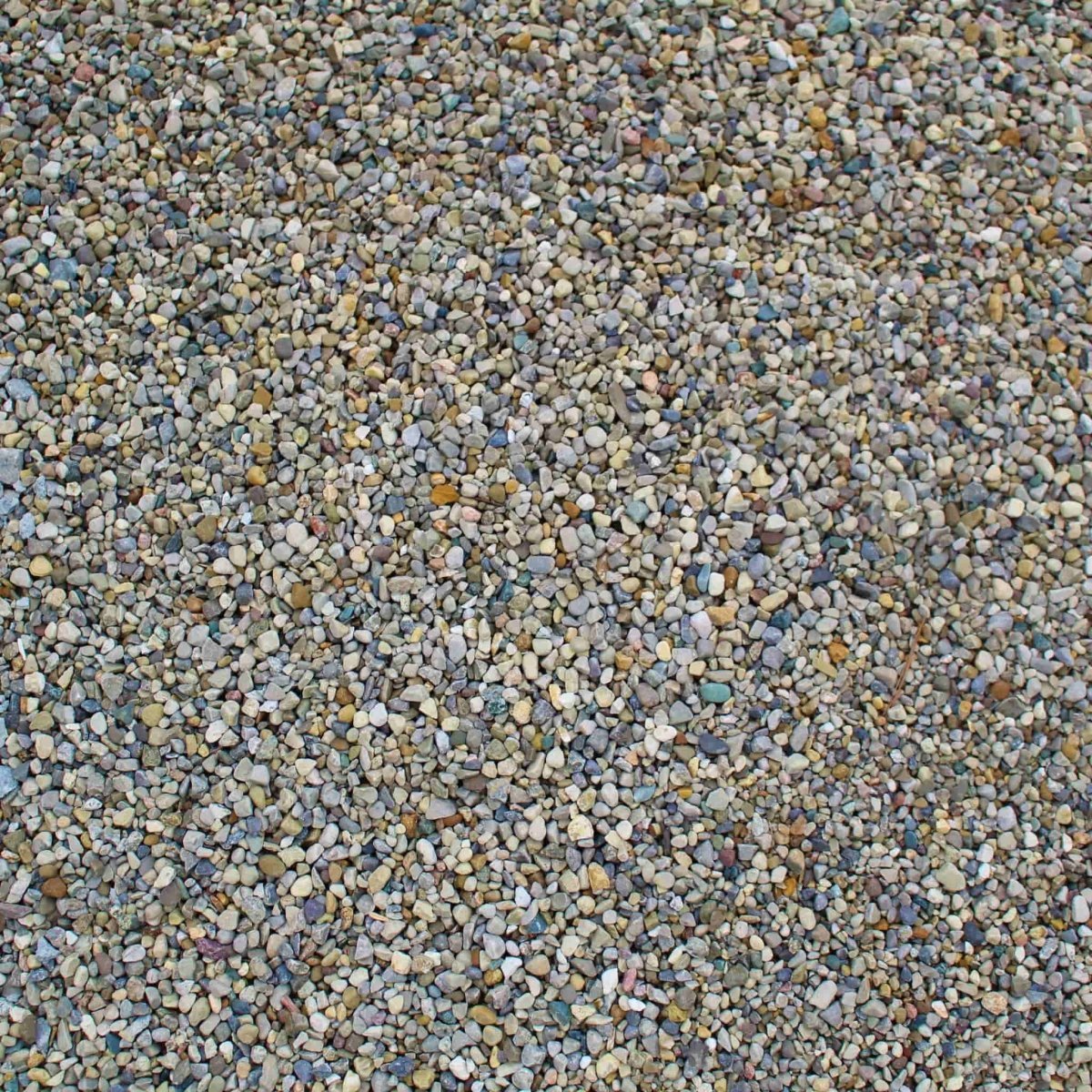
Pea gravel is the most popular choice for Central Texas landscapes where drainage around foundations and garden beds is a priority. Its smooth, rounded profile and warm earth tones suit pathways, patios, and decorative ground cover in the hot, dry yards common across this region.
1-2" River Stone
This one to two inch river stone brings a colorful, polished look to garden beds and pathways. The multicolored mix of smooth stones suits the relaxed outdoor living spaces common in this part of Texas and holds up well through the region's hot, dry summers.
Bull Rock
Bull rock pairs smooth, understated earth tones with a larger size that suits erosion control on slopes and dry creek beds. Its refined look complements the limestone accents and native plantings typical of Central Texas yards.
Mason Sand
Mason sand is a fine, consistent material used for paver joints and base leveling beneath patios and walkways. In a region with shifting clay soils, a properly prepared sand base keeps hardscape surfaces stable through seasonal moisture changes.
Complete Your Outdoor Stone Project
Stone pathways and borders pair well with a fresh mulch layer in adjacent planting beds to create a finished, polished look, and adding quality topsoil to any new plantings near your stone areas gives roots the loose, nutrient-rich growing medium that New Braunfels clay loam alone cannot provide.



Service area
Areas we deliver stone and gravel in New Braunfels, Texas
Mulch Mound Pro Tip
Clay loam soil in New Braunfels does not drain quickly after rain, and foundation borders that hold water against a home can cause long-term moisture damage to structures and attract pests. A 12 to 18 inch band of coarse gravel or river rock along the foundation perimeter creates a fast-draining buffer that redirects surface water before it can saturate the soil next to your home. This simple installation also discourages moisture-loving weeds that tend to take hold in the shaded, damp zone directly against foundation lines.
Mulch Mound Pro Tip
Maintaining planted beds through a New Braunfels summer requires consistent watering, weeding, and mulch refreshing across months of intense heat. Replacing struggling turf or high-maintenance ornamental beds with decorative stone in problem areas gives you a permanent, low-effort solution that looks refined year-round and eliminates the cycle of replanting that some Zone 9a beds demand. Choosing lighter-colored gravel for areas that receive direct afternoon sun minimizes heat reflection onto nearby plants and keeps the surrounding landscape more comfortable.
Mulch Mound Pro Tip
Foot traffic across bare clay loam in New Braunfels compacts the soil quickly and creates ruts that channel rainwater in unintended directions, eroding pathways and depositing sediment in unwanted areas. Installing a stone pathway through high-traffic yard zones solves both compaction and erosion at the same time, providing a stable surface that holds its form through the freeze-thaw cycles around the first frost in late November. Decomposed granite is especially popular for Hill Country-style pathways because it locks together firmly when compacted and blends naturally with the regional landscape character.
The Unique Landscape of New Braunfels
Decorative and functional stone is one of the most practical landscaping investments for New Braunfels homeowners dealing with clay loam soil and unpredictable Hill Country weather patterns. Stone pathways and ground cover do not compact, shift, or wash away the way bare soil does during the intense rain events that move through the area in spring and fall. Because the growing season stretches from mid-March through late November, low-maintenance stone areas reduce the time spent weeding and replanting beds that struggle under the heat and dry stretches of a Zone 9a summer. Stone also manages drainage along foundation borders and sloped areas where clay loam's poor infiltration rate tends to direct runoff toward structures rather than into the soil profile. Whether used decoratively or functionally, stone gives New Braunfels landscapes a durable, year-round presence that requires almost no seasonal maintenance compared to turf or planted beds.