First time going with this company for mulch and it was an efficient process from start to finish. Website was easy—I told them exactly where I wanted the mulch put on my driveway, and it was delivered perfectly when I got home from work the next day. Best deal around when I c...
Tell us what you're looking for
Thanks! We received your request.
Something went wrong. Please try again.
How Much Sand Do I Need?
One cubic yard of this sand covers about 324 square feet at a 1 inch depth, or half that at 2 inches, which is the typical range for paver joint filling and bedding work. For a standard 200 to 300 square foot patio project, most people order 1 cubic yard and have a bit left over for touch ups. Mortar mixing jobs use less per square foot but depend on your mix ratio, so measure your batch needs before ordering. Use our free sand calculator
What is a Yard?
A yard is approximately 27 cubic feet. As a general guideline, one yard of material can cover an area of about 100-160 square feet at a 2-3 inch depth.
First time going with this company for mulch and it was an efficient process from start to finish. Website was easy—I told them exactly where I wanted the mulch put on my driveway, and it was delivered perfectly when I got home from work the next day. Best deal around when I c...
How Much Sand Do I Need?
One cubic yard of this sand covers about 324 square feet at a 1 inch depth, or half that at 2 inches, which is the typical range for paver joint filling and bedding work. For a standard 200 to 300 square foot patio project, most people order 1 cubic yard and have a bit left over for touch ups. Mortar mixing jobs use less per square foot but depend on your mix ratio, so measure your batch needs before ordering. Use our free sand calculator
What is a Yard?
A yard is approximately 27 cubic feet. As a general guideline, one yard of material can cover an area of about 100-160 square feet at a 2-3 inch depth.
First time going with this company for mulch and it was an efficient process from start to finish. Website was easy—I told them exactly where I wan...
Read full review
First time going with this company for mulch and it was an efficient process from start to finish. Website was easy—I told them exactly where I wanted the mulch put on my driveway, and it was delivered perfectly when I got home from work the next day. Best deal around when I compared it to competitors and I will definitely be becoming back.
Wonderful experience! They put the mulch exactly where we wanted. This mulch spread very easily and didn’t have the usual “mulch smell.” We will de...
Read full review
Wonderful experience! They put the mulch exactly where we wanted. This mulch spread very easily and didn’t have the usual “mulch smell.” We will definitely use again!
Most hardscape jobs pull this sand alongside paver base gravel for the compacted sub layer and sometimes crushed stone for drainage under a patio or walkway. If you're mixing mortar for a brick or stone repair on an older New Haven home, you'll also want your cement on hand before the sand arrives so you're not storing it exposed to weather.
This finer, more uniform sand is what makes mortar workable when you're repointing brick on one of New Haven's older homes near downtown or the Yale campus. Don't substitute concrete sand for mortar work, the coarser grains and inconsistent sizing make the mix harder to trowel and weaker once cured. If you're doing tuckpointing on a historic facade, stick with this material specifically.
Mulch Mound Pro Tip
A common mistake on paver jobs here is sweeping joint sand in once and calling it done. New Haven's freeze thaw cycles between October and April will settle and crack that joint fill over the first winter. Plan on a second sweep in of sand the following spring once the ground has fully thawed, it's normal maintenance, not a sign anything was installed wrong.
Mulch Mound Pro Tip
If you're setting pavers, consider whether chip stone bedding makes more sense than sand under the pavers themselves, sand pumps and shifts over time while chip stone locks in place and doesn't erode through joints during heavy rain. Save this sand for the joints on top and mortar work, and use a stone base underneath for a patio that holds its line longer.
Working With Sand in New Haven
New Haven sits on sandy loam over gently rolling terrain near sea level, which already drains well, but that doesn't mean your hardscape base does. This sand isn't a soil amendment, it's a construction material, used for mortar mixing on brick and stone work common in the older parts of the city, for filling paver joints on patios, and for pool base leveling. With frost reaching down through winter and the ground heaving each spring, a properly bedded paver joint matters more here than in milder climates, since freeze thaw cycles will work any loose joint sand loose over a season or two.
Masonry vs Fill Sand
Masonry sand is washed and finely screened, the right choice for mortar work, paver joints, and sandboxes. Fill sand is coarser and less processed, better suited to leveling, bedding pipe, and filling low spots.
Bedding and Leveling
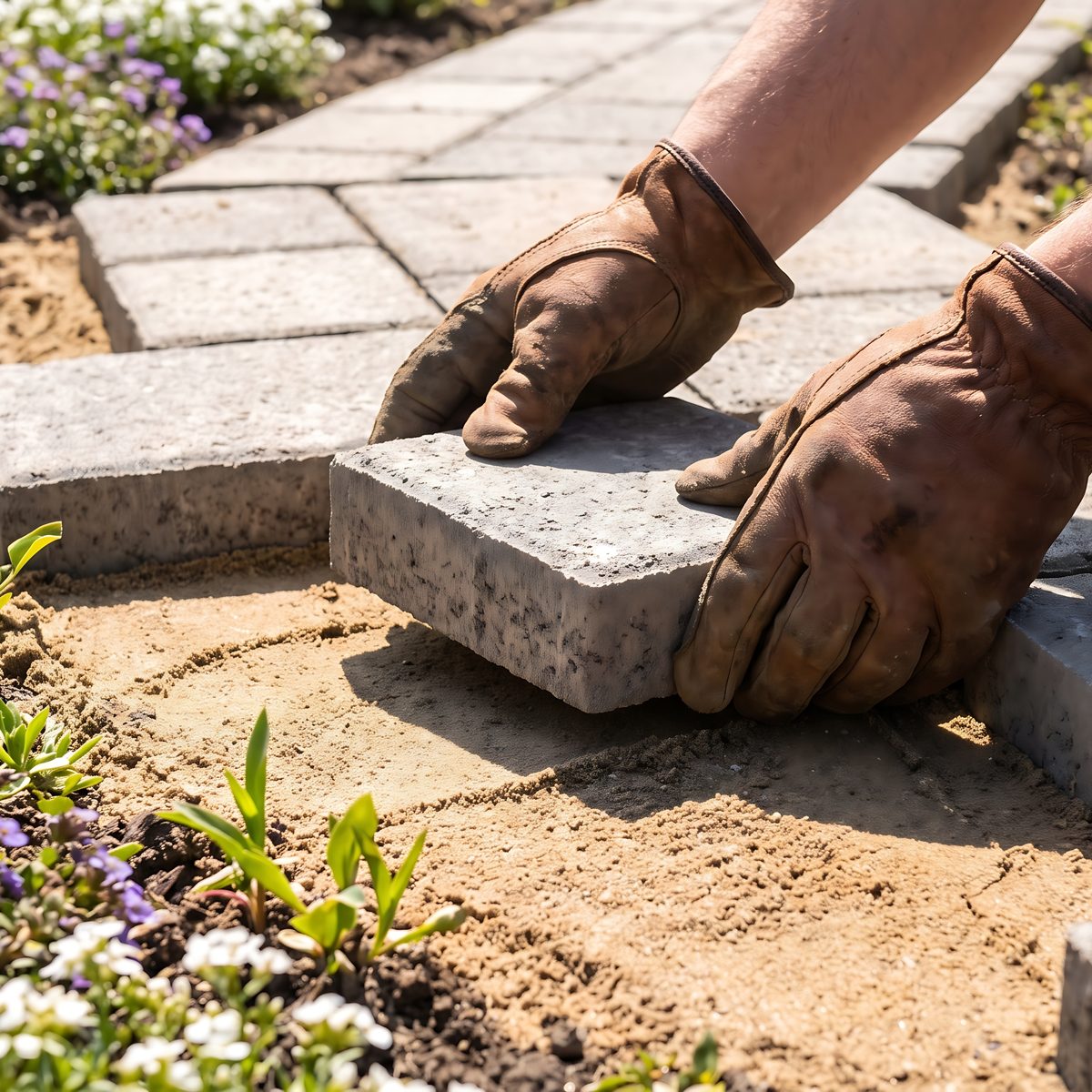
For pavers, screed a 1 inch sand bed over a compacted base rather than using sand to fix deep grade problems. A thin, even bed locks pavers in place. A thick one shifts underfoot.
Working With Moisture
Slightly damp sand spreads, screeds, and compacts far more easily than bone dry sand, which just flows back into your screed lines. Lightly wetting the pile before you work it saves real effort.
Frequently Asked Questions
Click a question to see the answer
Answer
Is this the same as mason sand?
Yes, in some regions this exact product is called mason sand. It's washed and finely screened, more uniform than concrete sand, which is why it works well for mortar mixing, paver joints, and pool base leveling. If a contractor asks for mason sand, this is what they mean.
Answer
How much sand do I need for a 250 square foot patio?
At a 1 inch depth for joint filling, one cubic yard covers about 324 square feet, so a 250 square foot patio needs less than a full yard. Most people round up to 1 cubic yard to cover joints, touch ups, and any base leveling, with material left over for future repairs.
Answer
When is the best time to do paver or mortar work in New Haven?
Spring through fall is the practical window, roughly mid April through late October, once the ground is past last frost and before the first hard freeze returns. Working mortar or setting joint sand right before a freeze risks poor curing and early cracking, so plan projects with a few weeks of stable weather ahead.
Answer
Where will the sand be placed on delivery day?
You choose the spot when you schedule, typically a driveway or curbside area with clear truck access. Make sure the path is wide enough for a loaded delivery truck and that there's nothing blocking the drop zone, since the material is heavy and gets placed in one spot rather than spread around.
Answer
Should I use sand or chip stone under my pavers?
For paver joints and mortar mixing, this sand is the right choice due to its fine, uniform grain. For the bedding layer directly under pavers, many contractors now prefer chip stone since it doesn't pump or erode through joints over time the way sand can. Ask your contractor which base material they specify for your job.