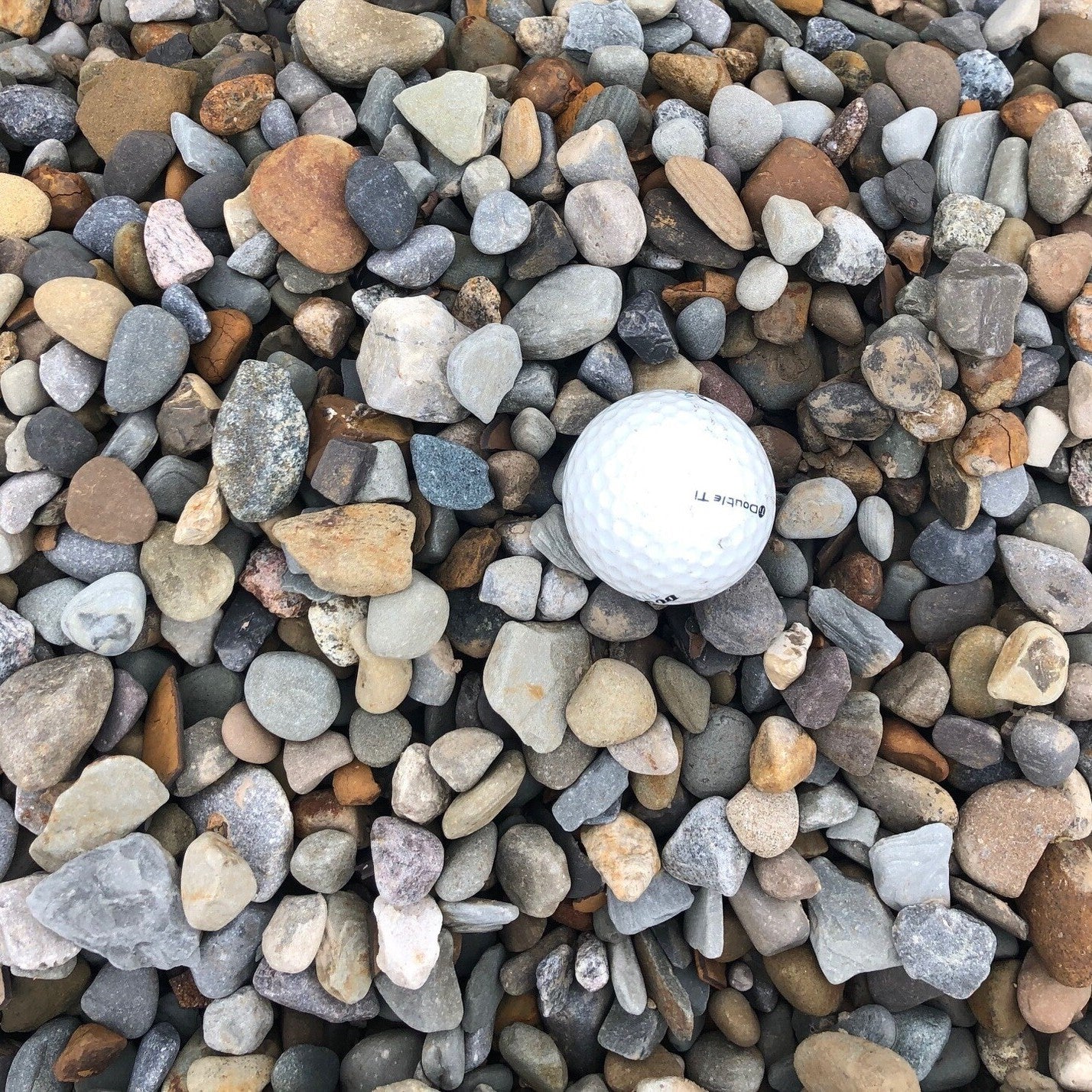
Number 57 crushed stone, angular limestone graded to about three quarters of an inch. The standard driveway, base and drainage gravel, it locks together under traffic and drains fast.
I contacted Mulch Mound for #57 river rocks and it was easy and fast to get a delivery right before the holiday weekend. Stone was delivered as promised and place exactly where I asked. Excellent service! I will be ordering mulch next!
Tell us what you're looking for
Thanks! We received your request.
Something went wrong. Please try again.
How Much Material Do I Need?
For decorative stone ground cover in New London garden beds, two to three inches provides solid weed suppression and a clean visual finish. For drainage applications along foundations or slopes where New London's full 50 inches of annual rainfall creates concentrated runoff, plan for a three to four inch layer of clean crushed stone to handle water volume reliably without washout.
Use our free gravel calculator
What is a yard?
A yard is approximately 27 cubic feet. As a general guideline, one yard of material can cover an area of about 100-160 square feet at a 2-3 inch depth.
We can't take orders for this right now. Tell us what you need and we'll get back to you.
What do you need?
Thanks! We received your request.
Something went wrong. Please try again.
Hand-picked local yards
4,000+ regional deliveries
Dedicated support
Why order through Mulch Mound
The best local stone, without the guesswork.
We hand-pick and partner with the best yards in your region, keep only the ones our buyers rate well, and back each load with our guarantee.
Mulch Mound Guarantee
If your stone isn't the quantity or quality you ordered, we'll make it right.
About this stone
Number 57 crushed stone, angular limestone graded to about three quarters of an inch. The standard driveway, base and drainage gravel, it locks together under traffic and drains fast.
I contacted Mulch Mound for #57 river rocks and it was easy and fast to get a delivery right before the holiday weekend. Stone was delivered as promised and place exactly where I asked. Excellent service! I will be ordering mulch next!
How Much Material Do I Need?
For decorative stone ground cover in New London garden beds, two to three inches provides solid weed suppression and a clean visual finish. For drainage applications along foundations or slopes where New London's full 50 inches of annual rainfall creates concentrated runoff, plan for a three to four inch layer of clean crushed stone to handle water volume reliably without washout.
Use our free gravel calculator
What is a yard?
A yard is approximately 27 cubic feet. As a general guideline, one yard of material can cover an area of about 100-160 square feet at a 2-3 inch depth.
I contacted Mulch Mound for #57 river rocks and it was easy and fast to get a delivery right before the holiday weekend. Stone was delivered as pro...
Read full review
I contacted Mulch Mound for #57 river rocks and it was easy and fast to get a delivery right before the holiday weekend. Stone was delivered as promised and place exactly where I asked. Excellent service! I will be ordering mulch next!
To calculate how much stone you need for a New London project, multiply the length by the width of the area in feet and choose your target depth based on the application. For a decorative two-inch ground cover layer, divide the square footage by 100 to get cubic yards. For drainage beds or pathway base layers that need to handle New London's frequent rain events, a three to four inch depth is more appropriate, so divide the square footage by 65 to get a more accurate cubic yard estimate for that deeper application.
Stone Types We Deliver in New London
Mulch Mound delivers bulk stone by the cubic yard straight to homes and properties across New London, Connecticut. Whether you are searching for bulk gravel by the yard in New London or planning a larger landscaping project, we make it simple to get the material you need without hauling it yourself. Our delivery covers residential yards, coastal properties, and everything in between.
Pea Gravel
Smooth, rounded, and naturally toned, pea gravel is a reliable choice for New London properties where sandy coastal soils benefit from stable ground cover. It works beautifully along walkways, patios, and garden beds, and its excellent drainage performance holds up well through Connecticut's wet springs and freeze-thaw winters.
Complete Your Outdoor Stone Project
Stone borders pair naturally with mulch in mixed landscape beds, where stone defines the edge and contains the planting area while mulch covers the soil surface to protect New London's sandy loam from moisture loss between rain events. If you are building out a larger landscape project, adding quality topsoil or garden blend to adjacent planting areas gives those beds the organic-rich soil structure that stone-edged gardens in zone 7a need to support healthy plants through the full growing season.
New London's sandy loam shifts slightly more than clay-heavy soils during the freeze-thaw cycles that occur between the first frost on October 31 and the last frost on April 11. When setting stone pathway pavers or large border rocks, dig down two to three inches and compact a gravel base beneath them before placing the final stones. This base layer absorbs the minor frost movement that zone 7a winters produce and keeps your stone features level and well-aligned through multiple seasons without requiring annual resetting.
Mulch Mound Pro Tip
In New London's coastal environment, algae and moss can develop on shaded or consistently damp stone surfaces, particularly in areas that receive concentrated water from downspouts or regular rain runoff. Choosing a lighter-colored crushed stone or gravel for shaded spots helps because the brighter surface reflects more light and dries faster after rain events. For existing stone that has developed a green or gray tint, a simple scrub with diluted white vinegar and a stiff brush restores the original color without harming surrounding plantings or soil.
Mulch Mound Pro Tip
With New London receiving 50 inches of rain per year, roof runoff and downspout discharge can concentrate water in specific spots around your yard and carve erosion channels through sandy loam soil over time. A dry creek bed built with medium to large river rock, positioned to follow the natural slope of your property and channel water toward a lower drainage point, is one of the most effective long-term solutions for managing that concentrated flow. The stone slows runoff, absorbs the energy of moving water, and encourages it to percolate into the sandy loam below rather than washing topsoil away with every significant storm.
The Unique Landscape of New London
In New London's zone 7a climate, stone is one of the most durable and low-maintenance landscape materials available because it requires no seasonal replacement, holds up through frost cycles without degrading, and actively improves yard function in multiple ways throughout the year. With 50 inches of annual rainfall, erosion and drainage management are genuine concerns for New London homeowners, and strategically placed stone can redirect water flow, stabilize slopes, and prevent the surface runoff that strips sandy loam bare after heavy storms. Stone pathways are particularly practical in a coastal Connecticut climate because they stay firm and walkable even after significant rain events, unlike lawn areas or bare soil that can become soft and compacted underfoot. At 103 feet of elevation, some New London properties experience wind-driven rain that hits garden beds and foundations directly, and stone borders or gravel beds create a physical barrier that absorbs direct rainfall impact and protects the soil beneath. Decorative stone also provides year-round visual structure in landscapes that can look bare and unfinished during the months between the first frost on October 31 and the last frost on April 11. Whether you are building a pathway, managing a drainage channel, or creating a low-maintenance alternative to mulch in a difficult bed, stone is a climate-resilient product that earns its value in New London landscapes.
Frequently Asked Questions
Click a question to see the answer
Answer
What type of stone works best for a garden pathway in New London?
For garden pathways in New London, a three-quarter-inch crushed stone or pea gravel gives you a firm, well-draining surface that handles the area's frequent rain events without becoming muddy or eroded. Larger decorative stones work well as step accents but can feel uneven underfoot for everyday traffic. A compacted base of crushed stone topped with a finer surface layer creates a pathway that stays stable through New London's zone 7a freeze-thaw cycles, which are mild but still capable of shifting lighter or loosely set materials between late October and mid-April.
Answer
Can stone help with the drainage problems I have in a low area of my yard?
Yes, and in New London stone is one of the most effective tools for managing drainage issues. A French drain or dry creek bed filled with clean crushed stone or river rock can redirect water that would otherwise pool on top of or wash through the sandy loam surface. With 50 inches of annual rainfall, having at least one dedicated drainage feature in a low-lying part of your yard can make a meaningful difference in how the landscape holds up after heavy spring or summer storms.
Answer
How much stone do I need to cover a garden bed as a ground cover?
For a decorative stone ground cover layer in a New London garden bed, two to three inches of depth provides solid coverage that suppresses weeds and creates a clean, finished look. To estimate your needs, multiply the bed length by the width in feet and divide by 100 to get the approximate cubic yards needed for a two-inch layer. Stone beds are a popular low-maintenance option in New London because they do not break down under rainfall the way organic mulch does and do not require seasonal replenishment.
Answer
Will stone edging hold up through New London winters without shifting?
Stone edging is extremely durable through New London's winters, which are relatively mild in zone 7a. The freeze-thaw cycles that occur between late October and mid-April can gradually shift lightweight edging materials like plastic or metal, but natural stone's mass resists frost heave effectively. Border stones that are set a couple of inches into the ground will stay firmly in place through multiple winters without needing to be reset or replaced.
Answer
Is stone a practical alternative to mulch in sunny or high-traffic areas of my yard?
Stone is an excellent alternative in New London's sunnier beds and along high-traffic paths. Unlike organic mulch, stone does not break down under the combination of zone 7a summer heat and 50 inches of annual rainfall, and it does not blow or wash away as easily during the coastal wind events New London experiences. The key tradeoff is that stone does not contribute organic matter to your sandy loam the way decomposing mulch does, so planting beds covered with stone as a ground cover may need periodic soil amendment to maintain fertility over time.
Answer
What kind of stone is best for preventing erosion on a slope in my yard?
For slopes in New London, larger river rock or angular rip-rap style stone works best because the irregular shapes interlock and resist being moved by water flow even during heavy rain. Smaller pea gravel tends to migrate downhill during intense rain events, which are common in a region with 50 inches of annual rainfall. Lining the downhill edge of a slope with larger anchor stones and filling above with medium crushed material creates a tiered erosion barrier that holds through even the heavy late-summer storms that move through coastal Connecticut.
Answer
Is it a good idea to put stone around my house foundation in New London?
Yes, and in New London it is a particularly practical and climate-appropriate choice. A stone border around the foundation directs rainwater away from the base of the house and creates a dry buffer zone that prevents moisture from sitting against foundation walls after the frequent rain events the area receives. Using a clean crushed stone or washed river rock at six to eight inches deep around the full perimeter provides effective drainage and a finished appearance that stays neat and functional year-round without any seasonal maintenance.
Answer
What is stone dust used for?
Screenings, commonly called stone dust, are fine crushed particles used as a setting bed under pavers and flagstone or as a compactable path surface. It packs tight but sheds water rather than draining it. For New London projects needing real drainage through our 50 inches of annual rainfall, Crushed Stone #57 is the better choice since it drains freely instead of compacting.