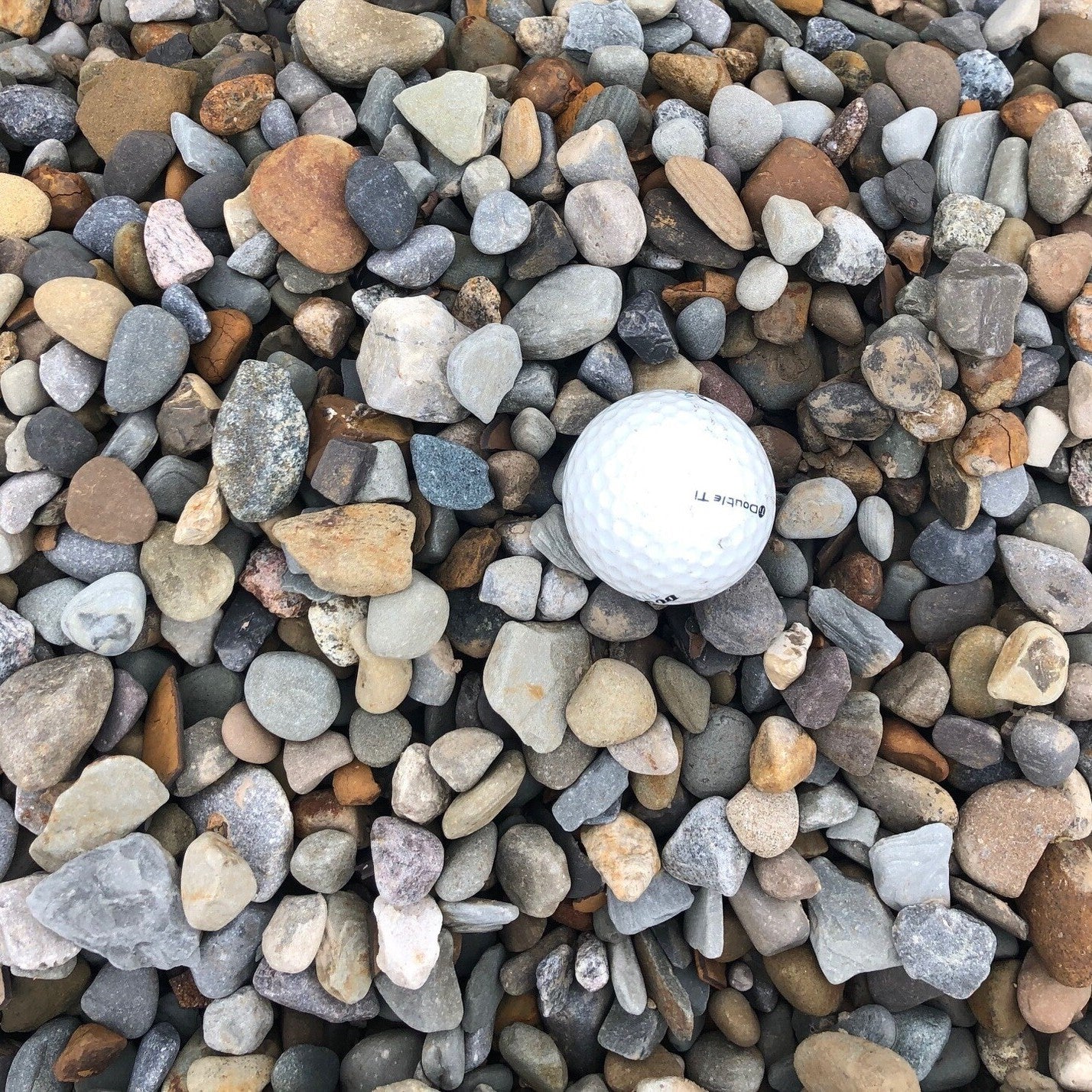
Number 57 crushed stone, angular limestone graded to about three quarters of an inch. The standard driveway, base and drainage gravel, it locks together under traffic and drains fast.
I used Mulch Mound to have 3 cubic yards of garden soil delivered. The process was easy and I love that I didn't have to call anyone. I placed my order online, picked my delivery date, laid out my tarp and the dirt was delivered. My delivery had to be pushed back, but I was ke...
Tell us what you're looking for
Thanks! We received your request.
Something went wrong. Please try again.
How Much Material Do I Need?
For decorative bed borders and garden accents in Newburyport, a 2-to-3-inch depth of stone is typically sufficient to cover bare soil and suppress weed growth through the growing season. Pathway and drainage applications require at least 4 inches of compacted depth to handle Newburyport's freeze-thaw cycles and annual rainfall load without becoming soft or migrating out of place.
Use our free gravel calculator
What is a yard?
A yard is approximately 27 cubic feet. As a general guideline, one yard of material can cover an area of about 100-160 square feet at a 2-3 inch depth.
We can't take orders for this right now. Tell us what you need and we'll get back to you.
What do you need?
Thanks! We received your request.
Something went wrong. Please try again.
Hand-picked local yards
4,000+ regional deliveries
Dedicated support
Why order through Mulch Mound
The best local stone, without the guesswork.
We hand-pick and partner with the best yards in your region, keep only the ones our buyers rate well, and back each load with our guarantee.
Mulch Mound Guarantee
If your stone isn't the quantity or quality you ordered, we'll make it right.
About this stone
Number 57 crushed stone, angular limestone graded to about three quarters of an inch. The standard driveway, base and drainage gravel, it locks together under traffic and drains fast.
I used Mulch Mound to have 3 cubic yards of garden soil delivered. The process was easy and I love that I didn't have to call anyone. I placed my order online, picked my delivery date, laid out my tarp and the dirt was delivered. My delivery had to be pushed back, but I was ke...
How Much Material Do I Need?
For decorative bed borders and garden accents in Newburyport, a 2-to-3-inch depth of stone is typically sufficient to cover bare soil and suppress weed growth through the growing season. Pathway and drainage applications require at least 4 inches of compacted depth to handle Newburyport's freeze-thaw cycles and annual rainfall load without becoming soft or migrating out of place.
Use our free gravel calculator
What is a yard?
A yard is approximately 27 cubic feet. As a general guideline, one yard of material can cover an area of about 100-160 square feet at a 2-3 inch depth.
I used Mulch Mound to have 3 cubic yards of garden soil delivered. The process was easy and I love that I didn't have to call anyone. I placed my o...
Read full review
I used Mulch Mound to have 3 cubic yards of garden soil delivered. The process was easy and I love that I didn't have to call anyone. I placed my order online, picked my delivery date, laid out my tarp and the dirt was delivered. My delivery had to be pushed back, but I was kept informed via text, which was great. So why not 5 stars? The description of garden soil on the website is "A balanced mix of topsoil and organic amendments ready for raised beds, flower gardens, and new planting areas. Good drainage, solid nutrients, easy to work with." What I got was more like fill dirt. It had a lot of gravel, a lot of clay, and random trash mixed in. I didn't test the soil to see if it actually had "amendments" because I already have compost and alpaca manure ready to add, but if I'd known the quality of the dirt was going to be the same as the bagged dirt I bought last year, I probably would have gotten 2 yards of top soil and a yard of leaf compost for better quality, especially since the leaf compost is cheaper. Photo of my mountain of dirt and just some of the trash I found in it.
Measure your pathway, bed border, or drainage area in length and width, then multiply for square footage. Divide by 12 to find cubic footage per inch of depth, then multiply by your desired depth in inches and divide by 27 to convert to cubic yards. For Newburyport drainage and pathway projects, order slightly more stone than your calculation shows since compaction and settling under wet conditions can consume more material than expected.
Stone Types We Deliver in Newburyport
Mulch Mound delivers bulk stone by the cubic yard to properties across the region, including colonial-era homes and newer builds with traditional New England landscaping. Homeowners searching for bulk gravel by the yard in Newburyport will find straightforward ordering and reliable driveway delivery. Our stone is sold by the cubic yard so you get exactly the amount your project needs without waste.
Pea Gravel
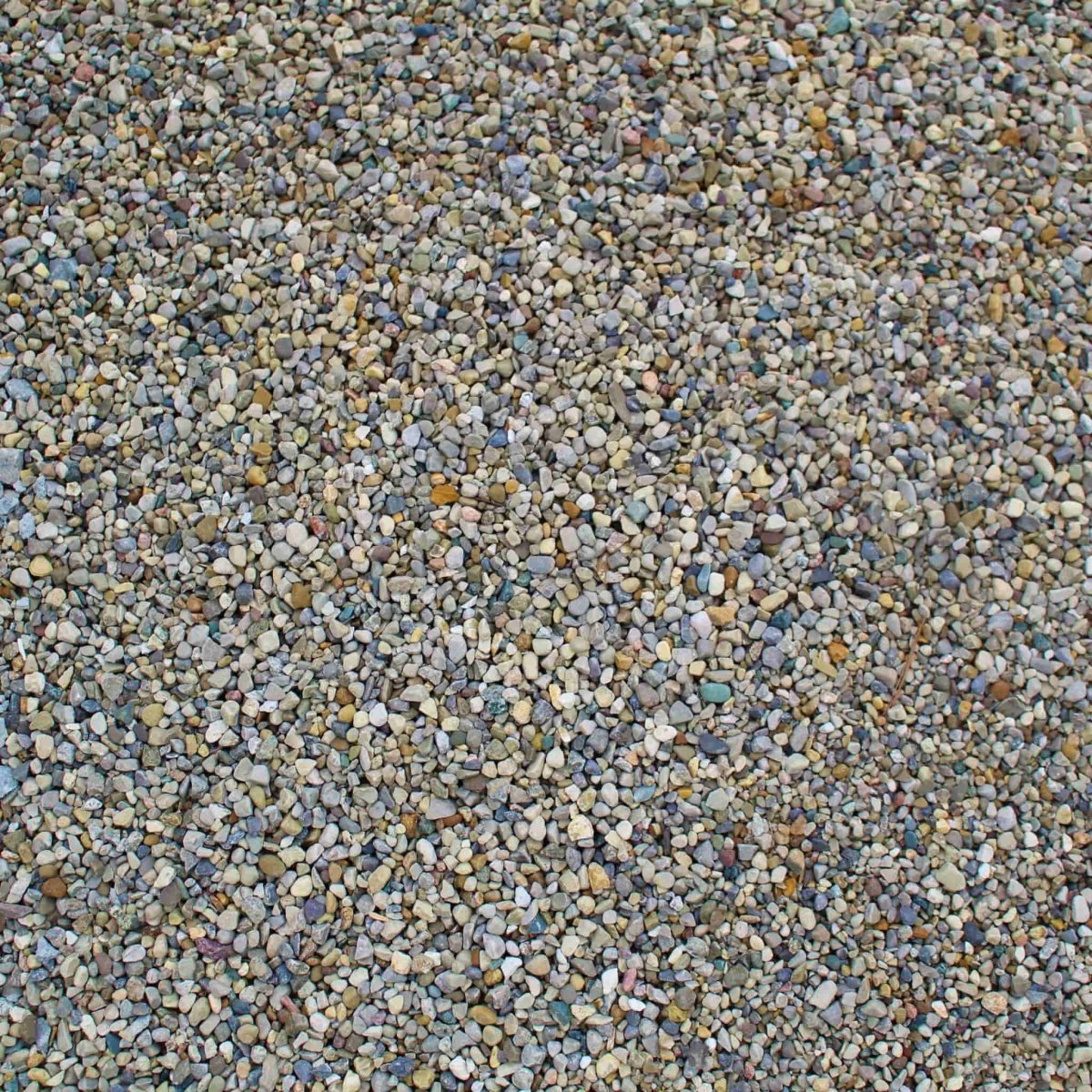
Pea Gravel is a classic choice for New England landscapes, where its smooth, rounded stones and warm earth tones complement the traditional home styles common in this part of Massachusetts. It performs well in pathways, patios, and drainage beds, and holds up reliably through the region's seasonal freeze and thaw cycles.
Complete Your Outdoor Stone Project
Combine bulk stone with quality screened soil for Newburyport grade projects where you need to establish drainage patterns before laying a decorative stone surface. Mulching garden beds adjacent to stone borders also keeps the overall landscape looking cohesive while protecting plant root zones from the heavy rain events that roll through Newburyport from early spring through late fall.
Before laying stone for a pathway or low-maintenance area in Newburyport, install a quality non-woven landscape fabric beneath it. The native silty loam soil has a fine texture that migrates upward into stone layers over time through a process driven by rain impact and freeze-thaw movement. Fabric slows that process dramatically and keeps your stone looking clean and well-defined for many more seasons than an unlined installation would.
Mulch Mound Pro Tip
Size your drainage stone to match the specific job it needs to do in your Newburyport landscape. For French drains and foundation perimeter drainage, clean 1-inch crushed stone allows water to move through quickly and resists clogging from the fine silty particles in the native soil. For decorative surface applications, larger 1.5-to-2-inch stone stays in place better during the heavy downpours that are most common in Newburyport from March through May.
Mulch Mound Pro Tip
In Newburyport's historic neighborhoods, front yard stone borders along walkways and driveways work best when they reflect the scale and character of the existing architecture. Larger cobble-style stone suits the proportions of older Federal and Colonial homes with wide foundation plantings, while finer crushed gravel fits naturally into cottage-style gardens near the waterfront district. Choosing stone with the surrounding architecture in mind creates a finished look that feels intentional and rooted in the neighborhood rather than added as an afterthought.
The Unique Landscape of Newburyport
Stone is one of the most practical landscape materials for Newburyport homeowners because it handles the city's demanding combination of heavy rainfall, freeze-thaw cycles, and silty loam soil without deteriorating season after season. Pathways made from crushed stone or gravel stay passable during the wet spring and fall months when grass paths turn to mud and mulched walkways erode under the 50 inches of annual rainfall this area receives. Decorative stone around foundation borders and drainage swales helps direct water away from structures during heavy rain events, reducing erosion and moisture intrusion along Newburyport's older home foundations. In historic Newburyport neighborhoods the ground heaves and settles through winter frost cycles, and loose stone adapts to that movement without cracking the way poured concrete surfaces do. Stone also creates low-maintenance areas in spots where grass struggles due to shade, root competition, or chronic poor drainage in the native silty loam. From the waterfront streets to the residential neighborhoods near the Merrimack River, decorative stone has become a defining element of Newburyport's distinctive landscape character.
Frequently Asked Questions
Click a question to see the answer
Answer
What type of stone works best for a pathway in a Newburyport yard that turns to mud every spring?
Crushed gravel with angular edges, sometimes called process gravel or crusher run, is the best choice for Newburyport pathways that need to handle heavy foot traffic and wet conditions. The angular pieces lock together and resist shifting underfoot, unlike smooth round pea stone which rolls and spreads with use. A 4-inch compacted base handles the freeze-thaw movement common in Newburyport from November through March without leaving you with a rutted path each spring.
Answer
How much stone do I need for a drainage swale along my Newburyport property line?
For a standard drainage swale in Newburyport, figure on filling the channel roughly 6 to 8 inches deep with clean crushed stone or washed gravel. Measure the length of the swale and the width at the base, multiply to get square footage, and then calculate cubic yards based on your chosen depth. Given that Newburyport receives 50 inches of rain annually, sizing your swale generously is worth the extra material cost upfront.
Answer
Will decorative stone hold its position through Newburyport winters without washing away?
Larger decorative stone starting at 1.5 inches holds its position well through Newburyport winters even in areas that receive direct runoff from gutters or graded surfaces. Smaller pea stone can migrate during heavy spring rain events on sloped ground. Edging beds with a border material or installing landscape fabric beneath the stone helps keep it in place through the freeze-thaw cycles that Newburyport sees between October and March.
Answer
I want a low-maintenance ground cover in my Newburyport backyard where grass refuses to grow. Is stone a good solution?
Stone is an excellent solution for shaded or chronically wet spots in Newburyport where grass struggles to establish itself. Areas under large trees, along fence lines, and in narrow side yards that stay damp from the silty loam's slow drainage are all strong candidates for a stone groundcover treatment. It eliminates mowing, holds up through wet seasons without decomposing, and does not need to be replaced annually the way organic mulch does.
Answer
Can I use bulk crushed stone around my Newburyport foundation to help manage water coming off the roof?
Yes, a 12-to-18-inch border of crushed stone around your foundation is a proven approach for managing water in Newburyport's high-rainfall environment. Stone allows water to drain away from the foundation quickly rather than pooling against the house in the silty loam soil that surrounds most Newburyport homes. Pair it with a positive grade sloping away from the structure for the most effective moisture management results.
Answer
What is the practical difference between pea stone and crushed gravel for a Newburyport garden path?
Pea stone is smooth and round, making it comfortable to walk on but prone to shifting and spreading underfoot, especially on any slope. Crushed gravel has irregular, angular edges that lock together under foot traffic and hold their position better through Newburyport's wet springs and frost-driven ground movement. For a heavily used path, crushed gravel is the more practical and durable choice. Pea stone works well in decorative areas with light or no foot traffic.
Answer
How deep should I install stone for a new pathway in my Newburyport yard to make it last?
For a functional pathway in Newburyport, 4 inches of compacted stone base is the minimum recommended depth. The freeze-thaw cycles here from October through March can heave thin stone layers, leaving a pathway that shifts and becomes uneven by the time spring arrives. A deeper installation stays stable longer and handles the wet conditions that come with 50 inches of annual rainfall without developing soft or muddy low spots.
Answer
What is stone dust used for?
Stone dust, or screenings, is the fine crushed stone left after sifting out everything larger than a quarter inch, and it is often used as a setting bed under pavers or flagstone since it compacts firm. Because it sheds water rather than draining, it is not ideal where Newburyport's heavy rainfall and freeze-thaw cycles demand drainage. For those conditions, our Crushed Stone #57 is the better fit.