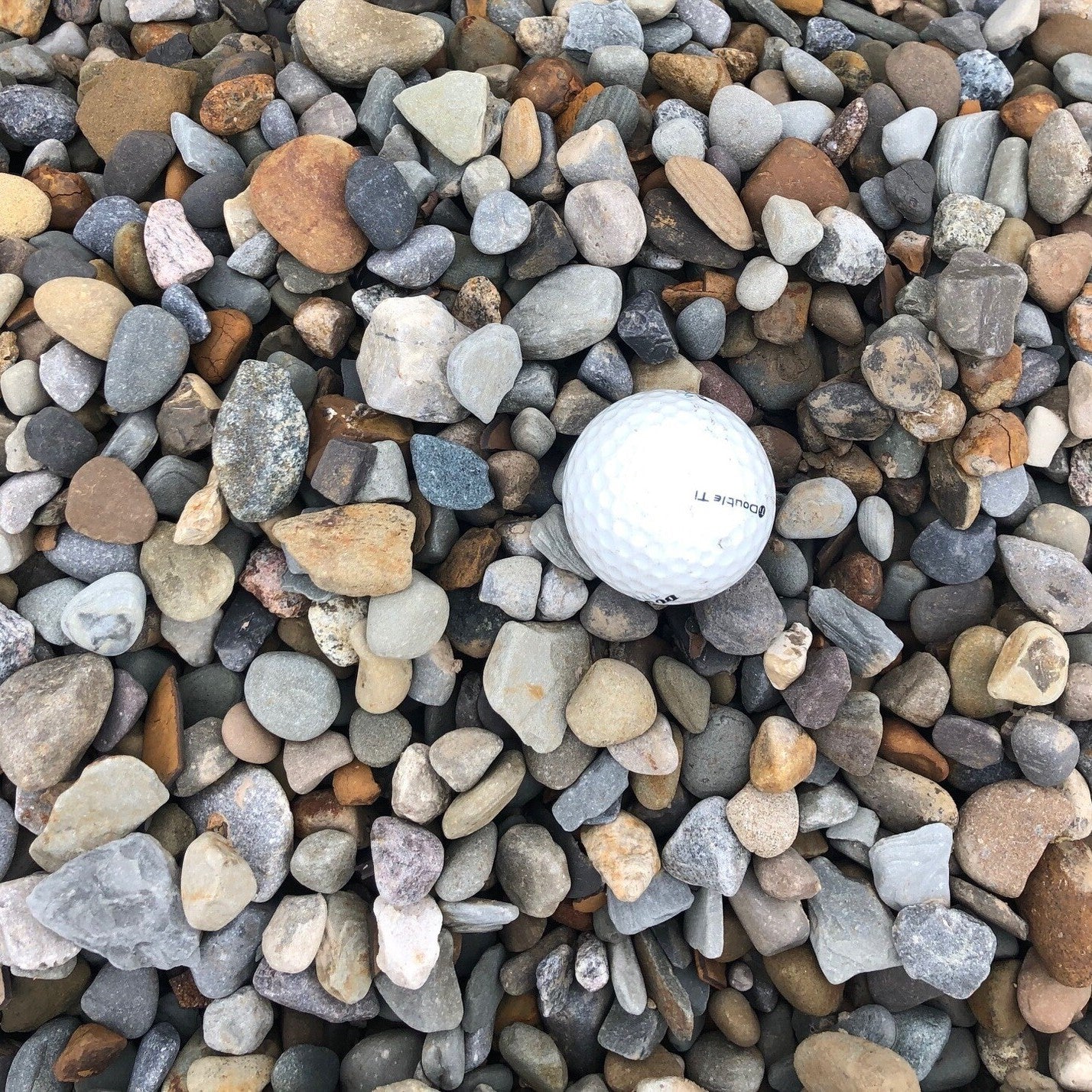
Number 57 crushed stone, angular limestone graded to about three quarters of an inch. The standard driveway, base and drainage gravel, it locks together under traffic and drains fast.
I contacted Mulch Mound for #57 river rocks and it was easy and fast to get a delivery right before the holiday weekend. Stone was delivered as promised and place exactly where I asked. Excellent service! I will be ordering mulch next!
Tell us what you're looking for
Thanks! We received your request.
Something went wrong. Please try again.
How Much Material Do I Need?
For functional applications like drainage aprons and gravel pathways in Niagara Falls, four inches of stone is the recommended minimum to maintain integrity through the region's repeated freeze-thaw cycles and sustained spring precipitation; for decorative bed coverage installed over landscape fabric, two to three inches is sufficient to suppress weeds and create a clean, finished surface.
Use our free gravel calculator
What is a yard?
A yard is approximately 27 cubic feet. As a general guideline, one yard of material can cover an area of about 100-160 square feet at a 2-3 inch depth.
We can't take orders for this right now. Tell us what you need and we'll get back to you.
What do you need?
Thanks! We received your request.
Something went wrong. Please try again.
Hand-picked local yards
4,000+ regional deliveries
Dedicated support
Why order through Mulch Mound
The best local stone, without the guesswork.
We hand-pick and partner with the best yards in your region, keep only the ones our buyers rate well, and back each load with our guarantee.
Mulch Mound Guarantee
If your stone isn't the quantity or quality you ordered, we'll make it right.
About this stone
Number 57 crushed stone, angular limestone graded to about three quarters of an inch. The standard driveway, base and drainage gravel, it locks together under traffic and drains fast.
I contacted Mulch Mound for #57 river rocks and it was easy and fast to get a delivery right before the holiday weekend. Stone was delivered as promised and place exactly where I asked. Excellent service! I will be ordering mulch next!
How Much Material Do I Need?
For functional applications like drainage aprons and gravel pathways in Niagara Falls, four inches of stone is the recommended minimum to maintain integrity through the region's repeated freeze-thaw cycles and sustained spring precipitation; for decorative bed coverage installed over landscape fabric, two to three inches is sufficient to suppress weeds and create a clean, finished surface.
Use our free gravel calculator
What is a yard?
A yard is approximately 27 cubic feet. As a general guideline, one yard of material can cover an area of about 100-160 square feet at a 2-3 inch depth.
I contacted Mulch Mound for #57 river rocks and it was easy and fast to get a delivery right before the holiday weekend. Stone was delivered as pro...
Read full review
I contacted Mulch Mound for #57 river rocks and it was easy and fast to get a delivery right before the holiday weekend. Stone was delivered as promised and place exactly where I asked. Excellent service! I will be ordering mulch next!
To estimate stone for a Niagara Falls project, measure your area in square feet and choose a depth appropriate to the application — two inches for decorative bed coverage, three to four inches for a pedestrian pathway, or four to six inches for a drainage apron or driveway base built to handle the region's spring precipitation and freeze-thaw cycling. One cubic yard of stone covers approximately 160 square feet at two inches deep; add ten percent to your calculated total to ensure you have enough material to fill low spots and account for the natural settling that follows the first round of heavy spring rain.
Stone Types We Deliver in Niagara Falls
Whether you are refreshing a backyard patio or tackling a drainage project, bulk stone delivered by the cubic yard is the practical choice for Niagara Falls homeowners and landscapers alike. Our service makes it easy to order bulk gravel by the yard in Niagara Falls and have it dropped right at your property. We sell by the cubic yard with no bags, no trips to the store, and no hassle.
Pea Gravel
Pea gravel is a longtime favorite in this part of western New York, where its excellent drainage suits the region's heavy seasonal rainfall and clay-heavy soils. The smooth, rounded stones in warm earth tones complement the traditional home styles common throughout the area and work beautifully for pathways, patios, and decorative ground cover.
Complete Your Outdoor Stone Project
Combine your stone order with quality topsoil to correct any grade or drainage issues in the underlying silt loam before laying stone — starting with a properly graded base dramatically improves both drainage performance and long-term stability in a climate as wet as Niagara Falls's. Add mulch to adjacent planting beds to create a cohesive landscape design that handles the region's wet springs and cold winters with minimal annual upkeep.
Niagara Falls homeowners deal with some of the wettest spring seasons in western New York, and the native silt loam slows water infiltration significantly compared to sandier soils — making foundation drainage a real and recurring concern. Stone drainage aprons installed around foundation perimeters and at every downspout discharge point are among the most cost-effective ways to redirect spring runoff before it finds its way toward basement walls or creates chronic wet spots in lawn areas. Use clean washed stone in these drainage applications rather than crushed stone, which can gradually clog with fine silt particles washed in from the surrounding native soil.
Mulch Mound Pro Tip
One of stone's most significant advantages in Niagara Falls is its performance through the repeated freeze-thaw cycling that zone 6b delivers from October through April. Unlike organic groundcovers that compress and organic mulch that breaks down, stone maintains its depth and coverage year after year without intervention. The key to preventing stone migration over time is proper edge containment — steel or aluminum landscape edging installed at pathway borders and bed perimeters keeps material confined even when ground movement beneath it shifts the base layer through the course of a hard winter.
Mulch Mound Pro Tip
Niagara Falls's combination of lake-influenced precipitation and a compressed growing season creates real pressure on homeowners to keep up with landscape maintenance year after year. Stone-dominant design elements — gravel pathways, river rock bed borders, crushed stone gathering areas around patios — dramatically reduce that maintenance burden by eliminating the mowing, seasonal weeding, and annual material refreshing that organic surfaces require. Paired with native zone 6b plantings already adapted to the region's wet springs and cold winters, a well-designed stone landscape delivers season-after-season visual appeal with minimal ongoing investment.
The Unique Landscape of Niagara Falls
Niagara Falls's silt loam soil and 36 inches of annual precipitation create conditions where ornamental and functional stone is one of the smartest long-term landscape investments a homeowner can make. Bare silt loam in this climate compacts and erodes quickly under repeated rainfall, and high-traffic areas without a hardscape solution turn muddy and rutted by mid-spring in most years. Stone pathways, drainage aprons, and decorative borders provide permanent, low-maintenance surfaces that handle the region's wet season without degrading or requiring annual replacement. The area's freeze-thaw cycle — with first frost around October 10 and ground temperatures fluctuating through winter — means organic ground covers need seasonal attention, while properly installed stone simply endures year after year. Decorative stone also provides rich textural contrast against the deep greens and lush growth that thrive in Niagara Falls's zone 6b climate through the long growing season. For drainage applications specifically, stone is unmatched — channeling water away from foundations and low spots is a genuine and recurring need given how reliably saturated this region's springs become.
Frequently Asked Questions
Click a question to see the answer
Answer
What type of stone works best for a backyard pathway in Niagara Falls?
Pea gravel and crushed limestone are both popular choices for Niagara Falls backyard pathways. Pea gravel is comfortable underfoot and drains excellently, while crushed limestone packs down to a firmer surface that handles foot traffic in wet conditions without becoming spongy. Given the region's precipitation and spring mud season, a pathway with a compacted gravel base laid over landscape fabric is far more practical than stepping stones set directly in native silt loam, which heave and tilt unpredictably through zone 6b freeze-thaw cycles.
Answer
How do I prevent stone from sinking into my silt loam soil over time?
Silt loam's fine particle size allows it to migrate upward into loose stone layers over time — a process accelerated by freeze-thaw cycling and the heavy rain events that Niagara Falls receives regularly. The solution is to always install a quality geotextile landscape fabric barrier between native soil and your stone layer before placing material. This separation keeps stone clean, prevents gradual sinking, and significantly extends the life of any installation in a climate where the ground moves repeatedly between October and April.
Answer
Is stone a good solution for the drainage problems that Niagara Falls's heavy spring rains cause in my yard?
Stone is one of the most effective drainage solutions available to homeowners in this region. A four-to-six-inch layer of clean crushed stone or river rock installed along foundation edges and in low-lying swale areas allows precipitation to percolate rapidly rather than pooling on the silt loam surface. For chronic wet spots that persist across multiple rain events, a French drain filled with washed gravel and routed to a daylight outlet is a long-term fix that handles even the heaviest regional spring storms without ongoing maintenance.
Answer
How deep should I lay gravel for a driveway or parking area given Niagara Falls winters?
A compacted base of four to six inches of crushed stone aggregate topped with two to three inches of finished gravel is the standard approach for driveways and parking areas in Niagara Falls. The zone 6b freeze-thaw cycle can put the ground through dozens of freezing and thawing events between October and April, and adequate base depth is what prevents frost heaving from migrating gravel and creating ruts over time. Installing a geotextile fabric below the base course also separates gravel from the native silt loam and preserves surface integrity across multiple winter seasons.
Answer
Does decorative stone hold up through Niagara Falls winters, or does it break down?
Natural stone — river rock, fieldstone, crushed granite, limestone — does not degrade through Niagara Falls winters, making it a genuinely long-term investment in this climate. The region's freeze-thaw cycling and lake-influenced moisture are no match for quality stone, which does not break down organically the way mulch or bark does. Colored or tumbled decorative stones may show minor surface wear over many years of heavy use, but for practical landscape purposes stone is the most durable ground-cover material available for a zone 6b environment.
Answer
Can stone work as a low-maintenance substitute for mulch in planting beds?
Stone used as a mulch substitute in Niagara Falls planting beds offers real advantages — it never needs replacing, it doesn't wash away during heavy spring downpours, and it suppresses weeds effectively when installed over fabric. The trade-off is that stone does not improve silt loam soil the way decomposing organic mulch does over time, and it can radiate heat in summer in ways that stress moisture-sensitive plants. Stone bed coverage works best for drought-tolerant, heat-adapted plantings or in foundation beds where permanence and zero annual maintenance are the priority.
Answer
What stone type is best for erosion control on a slope in my Niagara Falls yard?
For erosion control on slopes in Niagara Falls, larger angular stone — rip rap, quarry stone, or two-to-four-inch crushed stone — is significantly more effective than smooth material. Angular faces interlock when placed, resisting displacement even during the intense downpours that accompany regional spring storms. Smooth river rock looks attractive but rolls freely and won't stay in place on grades above ten to fifteen percent. For steeper banks, combining angular stone with erosion-control fabric and native zone 6b groundcovers creates a system that handles both the mechanical force of rainfall and the natural tendency of saturated silt loam to slump.
Answer
Is there a stone yard near Niagara Falls?
Silt loam soil and roughly 36 inches of yearly rain turn bare ground in Niagara Falls muddy and rutted, so a compacted crushed stone base is the smart fix for paths and drives. You don't need a stone yard or a quarry trip for it. Mulch Mound delivers crushed stone by the cubic yard right to your property.