Great experience - not only was this the most affordable option for dirt delivery in Cleveland heights, but the delivery was fast and friendly. Got exactly what I needed and the truck got as close as possible to where I needed the dirt - even in my cramped driveway. Will be us...
Tell us what you're looking for
Thanks! We received your request.
Something went wrong. Please try again.
How Much Material Do I Need?
Plan on 2 to 3 inches of topsoil for seeding a new lawn, 4 to 6 inches for sod prep, and 10 to 12 inches of garden mix in raised beds. One cubic yard covers about 160 square feet at 2 inches deep.
Use our free soil calculator
What is a Yard?
A yard is approximately 27 cubic feet. As a general guideline, one yard of material can cover an area of about 100-160 square feet at a 2-3 inch depth.
Great experience - not only was this the most affordable option for dirt delivery in Cleveland heights, but the delivery was fast and friendly. Got exactly what I needed and the truck got as close as possible to where I needed the dirt - even in my cramped driveway. Will be us...
How Much Material Do I Need?
Plan on 2 to 3 inches of topsoil for seeding a new lawn, 4 to 6 inches for sod prep, and 10 to 12 inches of garden mix in raised beds. One cubic yard covers about 160 square feet at 2 inches deep.
Use our free soil calculator
What is a Yard?
A yard is approximately 27 cubic feet. As a general guideline, one yard of material can cover an area of about 100-160 square feet at a 2-3 inch depth.
Great experience - not only was this the most affordable option for dirt delivery in Cleveland heights, but the delivery was fast and friendly. Got...
Read full review
Great experience - not only was this the most affordable option for dirt delivery in Cleveland heights, but the delivery was fast and friendly. Got exactly what I needed and the truck got as close as possible to where I needed the dirt - even in my cramped driveway. Will be using again and recommending to my neighbors.
For lawns and grading, measure the area in square feet and decide how deep you actually need to go, since even a 2 inch layer over 1000 square feet is more than 6 cubic yards. For raised beds, multiply length by width by depth in feet and divide by 27. Add roughly 15 percent to any compost heavy order because it settles noticeably in the first season.
Complete Your Outdoor Soil Project
Round out the job with grass seed and straw for new lawn areas, or finish planted beds with a layer of shredded hardwood mulch to hold moisture in Novi's dry midsummer stretch.
Frequently Asked Questions
Click a question to see the answer
Answer
What kind of soil should I use to fix low spots in my Novi lawn?
Use screened topsoil, not a heavy compost mix. Compost settles and shrinks, so low spots reappear. Fill the depression in layers no thicker than an inch over existing turf so the grass can grow through, and repeat every few weeks until level. In Novi's clay, low spots often mean drainage is the real issue, so check that the area is not collecting downspout runoff.
Answer
Can I plant directly into topsoil dumped over my clay?
You can, but do not just layer it on. A shallow lid of loose topsoil over compacted clay creates a bathtub effect where water fills the good soil and sits. Till or fork the new topsoil into the top few inches of clay so roots have a transition zone. This matters especially in Novi's wetter spring months.
Answer
How much soil do I need for a 4 by 8 raised bed?
A 4 by 8 bed filled 12 inches deep needs about 32 cubic feet, which is right at 1.2 cubic yards. Order 1.5 yards to account for settling, which is significant with compost heavy mixes. Most Novi vegetable growers do well with 10 to 12 inches of garden mix over loosened native clay.
Answer
Is your topsoil screened, and what is in it?
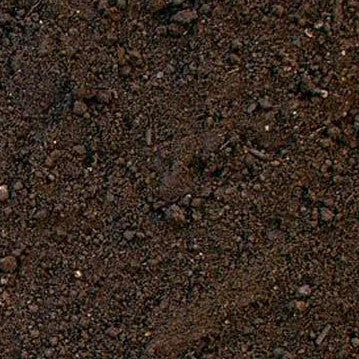
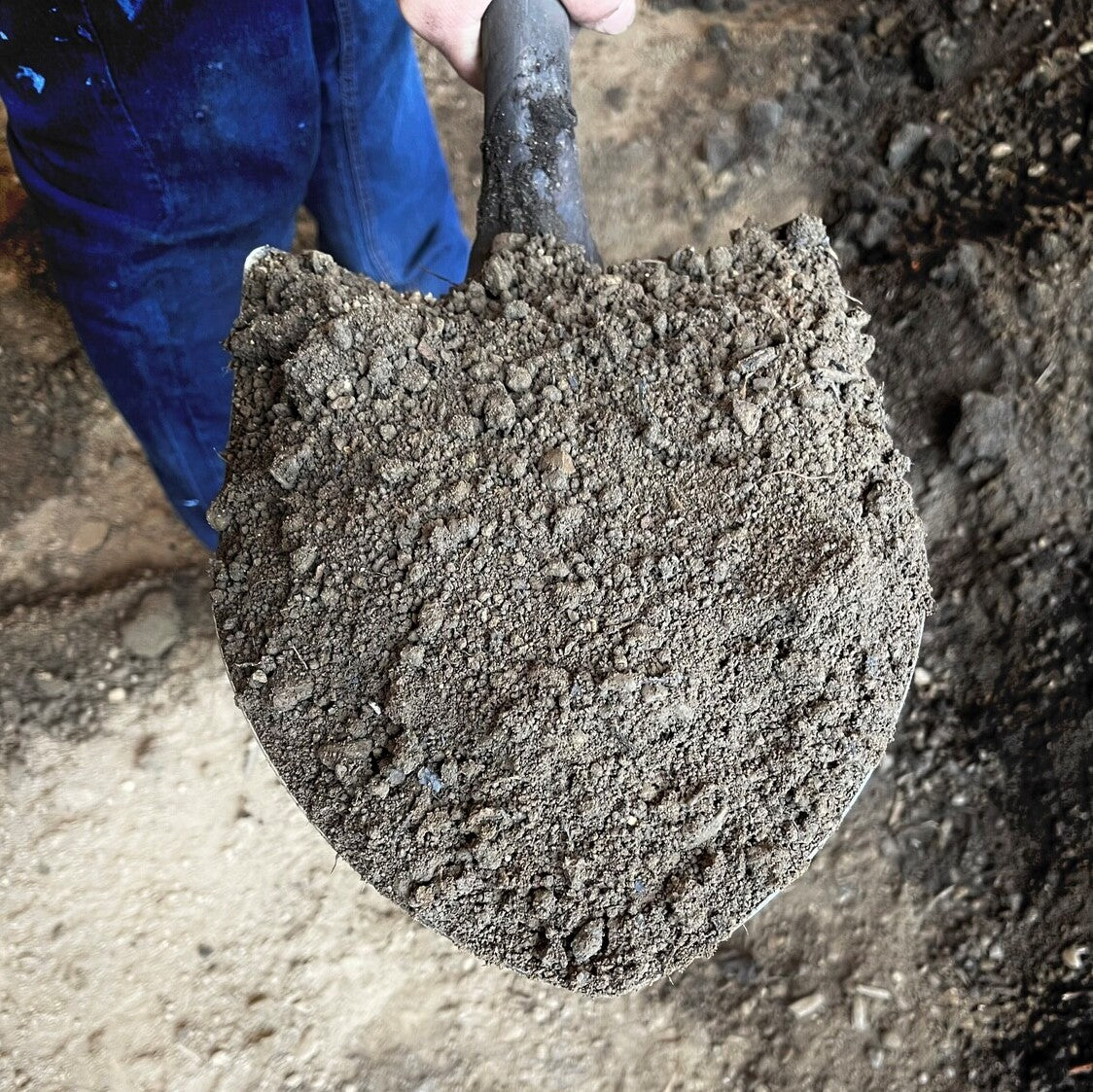
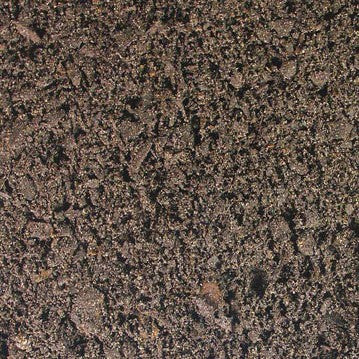
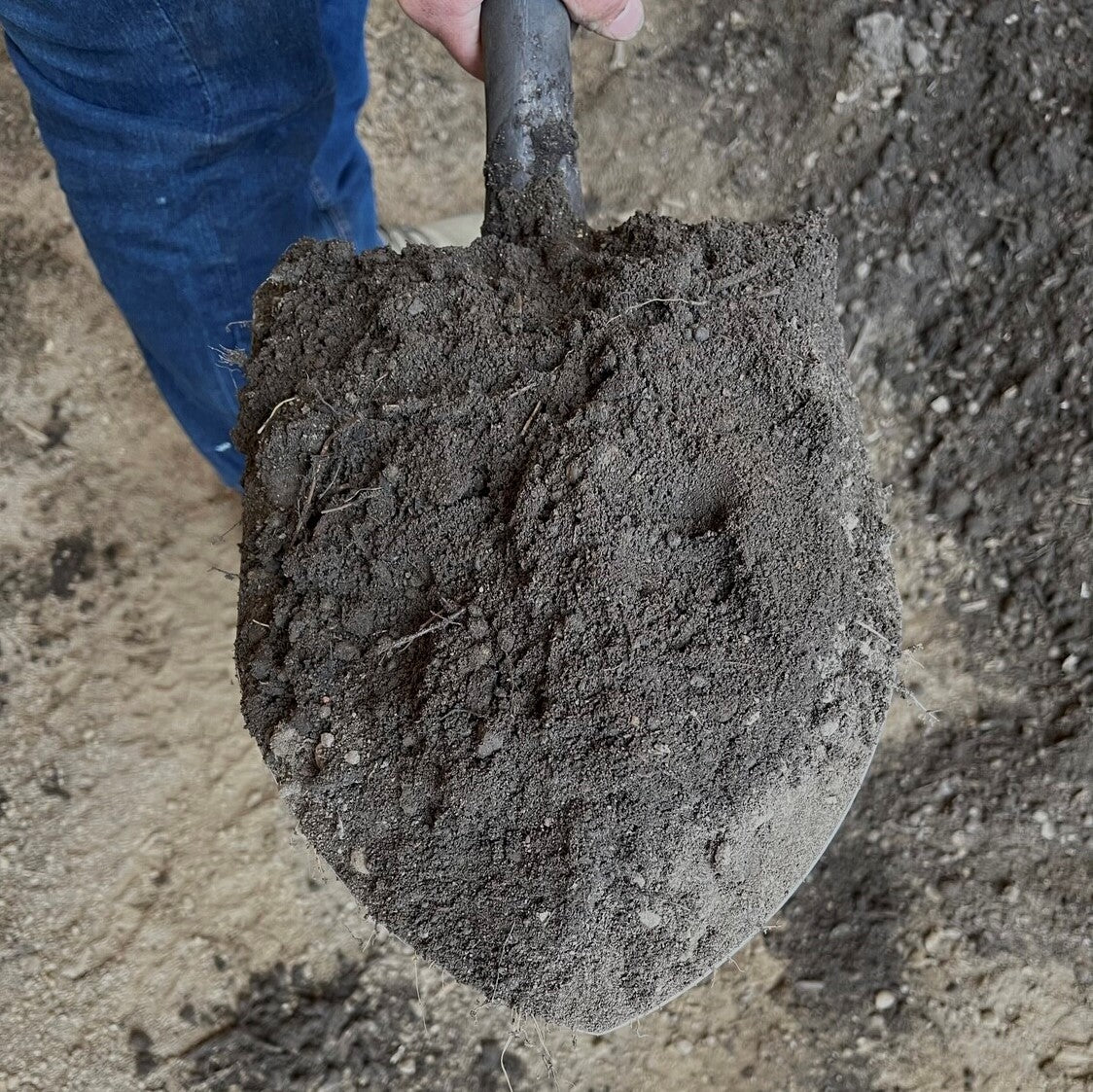
Yes, our topsoil is screened to remove rocks, roots, and clay clods, so it spreads evenly and rakes smooth. It is a native loam base suited to southeast Michigan conditions. For planting projects we recommend the compost blended mix, which adds organic matter that Novi's clay loam is usually short on.
Answer
When can I start soil work in the spring around here?
Wait until the clay has dried enough that a handful crumbles rather than smears. In Novi that is usually mid April in a normal year. Working wet clay loam destroys its structure and leaves you with concrete like clods that take a full season to break apart again.
Answer
Will adding topsoil help my drainage problems?
It helps at the surface, but topsoil alone will not solve standing water caused by grade or compacted subsoil. In Novi we often recommend combining soil with regrading so water runs away from the house, and adding organic matter annually so the clay slowly opens up. For persistent wet areas, a stone drainage trench under the soil layer works better.
Answer
How late in the year can I seed a new lawn with your topsoil?
Late August through mid September is the best window in Novi. Soil is still warm, nights cool down, and seedlings get roots established well before the October 8 first frost. You can seed into early October, but germination slows and you risk winter kill on immature grass.
Mulch Mound Pro Tip
Do not skip the transition layer. The most common mistake on Novi properties is dumping six inches of beautiful screened topsoil straight onto untouched clay. Water moves through the loose material, hits the dense clay, and stops, drowning roots right where they need air. Break up the top three or four inches of clay with a fork or tiller first, then blend a bit of your new soil down into it. Roots will follow that gradient instead of circling.
Mulch Mound Pro Tip
Time your soil delivery to the weather, not the calendar. Novi springs deliver most of the year's rain in April and May, and a yard of wet topsoil weighs considerably more than a dry one, which makes shoveling brutal and leaves ruts wherever the pile sat. Watch the forecast, order for the start of a dry stretch, and keep a tarp handy to cover any soil you cannot move the first day.
Mulch Mound Pro Tip
Feed the clay every year instead of trying to replace it. Novi clay loam actually holds nutrients extremely well, which is an advantage once you fix its structure. Top dress beds with a half inch of compost each fall and let the freeze and thaw cycles work it in over winter. After three or four seasons the difference is dramatic, and you will need far less imported soil for future projects on the same beds.
The Unique Landscape of Novi
Most Novi lots were graded during construction, which means the good topsoil was scraped off and what remains is dense clay subsoil with a thin blanket of fill on top. That is why new lawns struggle, vegetable beds underperform, and shrubs sulk for years after planting. Bringing in quality screened topsoil or a compost blended garden mix is the single most effective way to give roots something workable above that clay. With 33 inches of annual rainfall and a growing season that runs from roughly May 5 to October 8, Novi plants have a narrow window to establish, and they need soil that drains yet still holds moisture through dry stretches in July and August. Adding organic matter also lightens clay loam over time so water moves down instead of standing in low spots along driveways and patios.