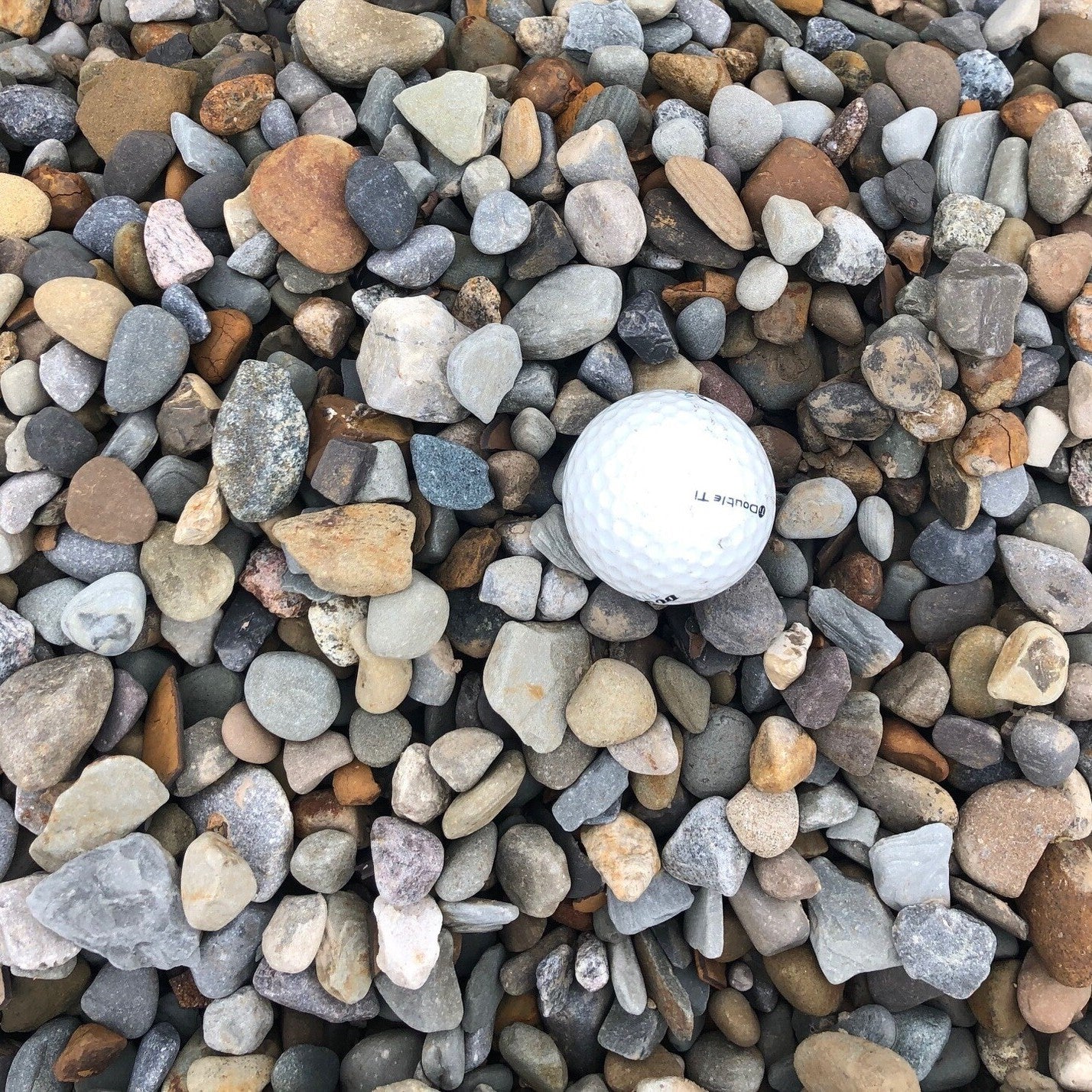
Number 57 crushed stone, angular limestone graded to about three quarters of an inch. The standard driveway, base and drainage gravel, it locks together under traffic and drains fast.
I used Mulch Mound to have 3 cubic yards of garden soil delivered. The process was easy and I love that I didn't have to call anyone. I placed my order online, picked my delivery date, laid out my tarp and the dirt was delivered. My delivery had to be pushed back, but I was ke...
Tell us what you're looking for
Thanks! We received your request.
Something went wrong. Please try again.
How Much Material Do I Need?
A 3 inch depth is the practical standard for decorative gravel and decomposed granite in Oceanside landscapes, providing a stable layer that suppresses weeds and looks full without requiring excessive material. For areas with higher foot traffic or where erosion from occasional heavy rain is a concern, stepping up to a 4 inch depth adds durability without a major increase in material cost.
Use our free gravel calculator
What is a Yard?
A yard is approximately 27 cubic feet. As a general guideline, one yard of material can cover an area of about 100-160 square feet at a 2-3 inch depth.
We can't take orders for this right now. Tell us what you need and we'll get back to you.
What do you need?
Thanks! We received your request.
Something went wrong. Please try again.
Hand-picked local yards
4,000+ regional deliveries
Dedicated support
Why order through Mulch Mound
The best local , without the guesswork.
We hand-pick and partner with the best yards in your region, keep only the ones our buyers rate well, and back each load with our guarantee.
Mulch Mound Guarantee
If your isn't the quantity or quality you ordered, we'll make it right.
About this stone
Number 57 crushed stone, angular limestone graded to about three quarters of an inch. The standard driveway, base and drainage gravel, it locks together under traffic and drains fast.
I used Mulch Mound to have 3 cubic yards of garden soil delivered. The process was easy and I love that I didn't have to call anyone. I placed my order online, picked my delivery date, laid out my tarp and the dirt was delivered. My delivery had to be pushed back, but I was ke...
How Much Material Do I Need?
A 3 inch depth is the practical standard for decorative gravel and decomposed granite in Oceanside landscapes, providing a stable layer that suppresses weeds and looks full without requiring excessive material. For areas with higher foot traffic or where erosion from occasional heavy rain is a concern, stepping up to a 4 inch depth adds durability without a major increase in material cost.
Use our free gravel calculator
What is a Yard?
A yard is approximately 27 cubic feet. As a general guideline, one yard of material can cover an area of about 100-160 square feet at a 2-3 inch depth.
I used Mulch Mound to have 3 cubic yards of garden soil delivered. The process was easy and I love that I didn't have to call anyone. I placed my o...
Read full review
I used Mulch Mound to have 3 cubic yards of garden soil delivered. The process was easy and I love that I didn't have to call anyone. I placed my order online, picked my delivery date, laid out my tarp and the dirt was delivered. My delivery had to be pushed back, but I was kept informed via text, which was great. So why not 5 stars? The description of garden soil on the website is "A balanced mix of topsoil and organic amendments ready for raised beds, flower gardens, and new planting areas. Good drainage, solid nutrients, easy to work with." What I got was more like fill dirt. It had a lot of gravel, a lot of clay, and random trash mixed in. I didn't test the soil to see if it actually had "amendments" because I already have compost and alpaca manure ready to add, but if I'd known the quality of the dirt was going to be the same as the bagged dirt I bought last year, I probably would have gotten 2 yards of top soil and a yard of leaf compost for better quality, especially since the leaf compost is cheaper. Photo of my mountain of dirt and just some of the trash I found in it.
To estimate your stone needs, measure the length and width of your project area in feet and multiply to get square footage. For most Oceanside gravel projects, plan on a 3 inch depth, which means you need about 1 cubic yard for every 100 square feet. If you are working with an irregular shaped area, break it into rectangular sections, calculate each one separately, and add the totals together.
Complete Your Outdoor Stone Project
Combining a stone or gravel order with landscape fabric and edging materials gives you everything needed to complete a clean and weed-resistant installation in one project. Adding a mulch order for planting beds within or adjacent to your stone areas ties the overall landscape design together and keeps the non-paved portions of your yard healthy.
Oceanside homeowners replacing turf with gravel should take the time to grade the area properly before installation rather than spreading gravel over uneven ground. The city's rare but occasionally intense winter rain events can channel across flat gravel areas and pool in low spots, creating muddy patches and displacing material. A gentle slope of about 1 inch per 10 feet away from structures ensures that even heavy rain days drain cleanly without moving your gravel or creating runoff problems at your foundation.
Mulch Mound Pro Tip
For a water-wise Oceanside landscape that uses stone as the primary ground cover, consider mixing stone sizes rather than using a single uniform gravel throughout. Combining a base of decomposed granite packed down firmly with a top dressing of larger decorative gravel or cobble creates a layered look that is visually interesting and also more stable than a single size material. The variety in texture and color adds depth to the landscape and mirrors the natural coastal terrain that Oceanside sits within.
Mulch Mound Pro Tip
Because Oceanside has no frost and experiences mild year-round temperatures, stone and gravel installations do not go through the freeze-thaw expansion and contraction cycles that displace materials in colder climates. This means your stone installations stay put and require very little maintenance once properly placed. The main upkeep task is periodically blowing or raking out organic debris like dried leaves and seed pods from surrounding plants, which if left to accumulate can break down into fine soil and give weeds a place to germinate right on top of your gravel.
The Unique Landscape of Oceanside
Stone and gravel are among the most practical landscape materials available to Oceanside homeowners because they deliver lasting visual appeal without the maintenance demands that Oceanside's dry climate makes difficult. With only 10 inches of rain per year and no frost season, Oceanside landscapes can go long stretches without natural moisture, making water-hungry lawn and turf areas costly to maintain. Replacing turf or bare soil with decorative stone or decomposed granite is one of the most effective water conservation strategies available, and it is increasingly common across Oceanside neighborhoods as drought awareness grows. The coastal sun keeps stone looking clean and bright year-round without the fading concerns that some planted areas experience in intense UV exposure. Stone also complements the drought-tolerant and California native plant palettes that are popular in Oceanside, providing a finished and natural-looking ground cover between plantings. At 65 feet of elevation with a flat to gently rolling terrain in many parts of the city, stone materials are easy to work with and remain stable once properly installed.
Frequently Asked Questions
Click a question to see the answer
Answer
What type of gravel or stone works best for replacing my lawn in Oceanside?
Decomposed granite is the most popular turf replacement material in Oceanside because it compacts into a stable surface, drains well, and has an earthy natural color that blends beautifully with drought-tolerant plants and California natives. Pea gravel and crushed rock are also common choices for turf-free yards, offering different textures and color options depending on your design preference. For high foot traffic areas like paths and side yards, stabilized decomposed granite with a binder is the most durable choice.
Answer
Will stone or gravel get too hot to walk on barefoot during Oceanside summers?
Darker stone colors and tightly packed gravel can get quite warm on sunny afternoons in Oceanside, especially in south or west-facing areas with direct sun exposure throughout the day. Lighter colored materials like white or buff pea gravel reflect more heat and stay somewhat cooler to the touch. For areas where people or pets will walk frequently, choosing a lighter stone color and incorporating shading from plants or structures nearby makes the space more comfortable during warm months.
Answer
Do I need landscape fabric under my gravel in Oceanside or will the dry climate keep weeds down naturally?
Even in Oceanside's dry climate, weeds will germinate in gravel areas during the winter rainy season and can establish roots if not managed. Landscape fabric under your gravel layer provides an important barrier that significantly reduces weed pressure year-round. Without it, annual weeds in particular can germinate quickly after even a light rain and become difficult to pull out once their roots work down through the gravel layer.
Answer
How thick should I spread decomposed granite for a pathway in my Oceanside yard?
For a stable and functional pathway, 3 to 4 inches of decomposed granite is the recommended depth in Oceanside. This depth gives you a layer that packs down well and resists displacement from foot traffic and the occasional rain event. Going thinner than 2 inches often results in a path that feels unstable and shifts easily, while going deeper than 4 inches provides minimal additional benefit for most residential applications.
Answer
Can I use river rock to create a dry streambed in my Oceanside yard for drainage?
Dry streambeds made from river rock are a great solution for Oceanside properties that experience runoff during the winter rainy season. Even though annual rainfall is only 10 inches, Oceanside's occasional heavy rain events can push water across sandy loam quickly, and a decorative dry streambed can channel that flow away from structures while looking beautiful year-round. Round river rock in a mixed size blend looks the most natural and mimics the look of a genuine seasonal stream.
Answer
How many cubic yards of gravel do I need to cover my front yard if I am removing my lawn?
Measure the square footage of the area by multiplying length by width, then plan for a 3 inch depth of gravel. That works out to roughly 1 cubic yard for every 100 square feet of coverage at 3 inches deep. A typical Oceanside front yard of 500 square feet would need approximately 5 cubic yards, though adding a little extra to account for uneven spots or edging is always a good idea.
Answer
What stone material works well around the succulents and drought-tolerant plants in my Oceanside garden?
Crushed granite, pea gravel, and small river rock all work beautifully around succulents and drought-tolerant plants in Oceanside. These materials allow the excellent drainage that succulents require while keeping the soil surface from crusting in dry conditions. Lighter colored gravel also reflects some sunlight upward, which many sun-loving drought-tolerant plants appreciate. The key is to match the stone scale to your plants so that small gravel is used around smaller specimens and larger cobble or rock is reserved for feature plants with more visual presence.
Answer
Is there a stone yard near Oceanside?
Crushed Stone suits Oceanside yards well because it needs no watering through the long dry stretches, which keeps paths and bare patches tidy with little upkeep. It is the same material you would pick up at a stone yard or a quarry, just delivered by the cubic yard to your driveway or backyard instead. Mulch Mound is not a yard, so there is nothing to visit.