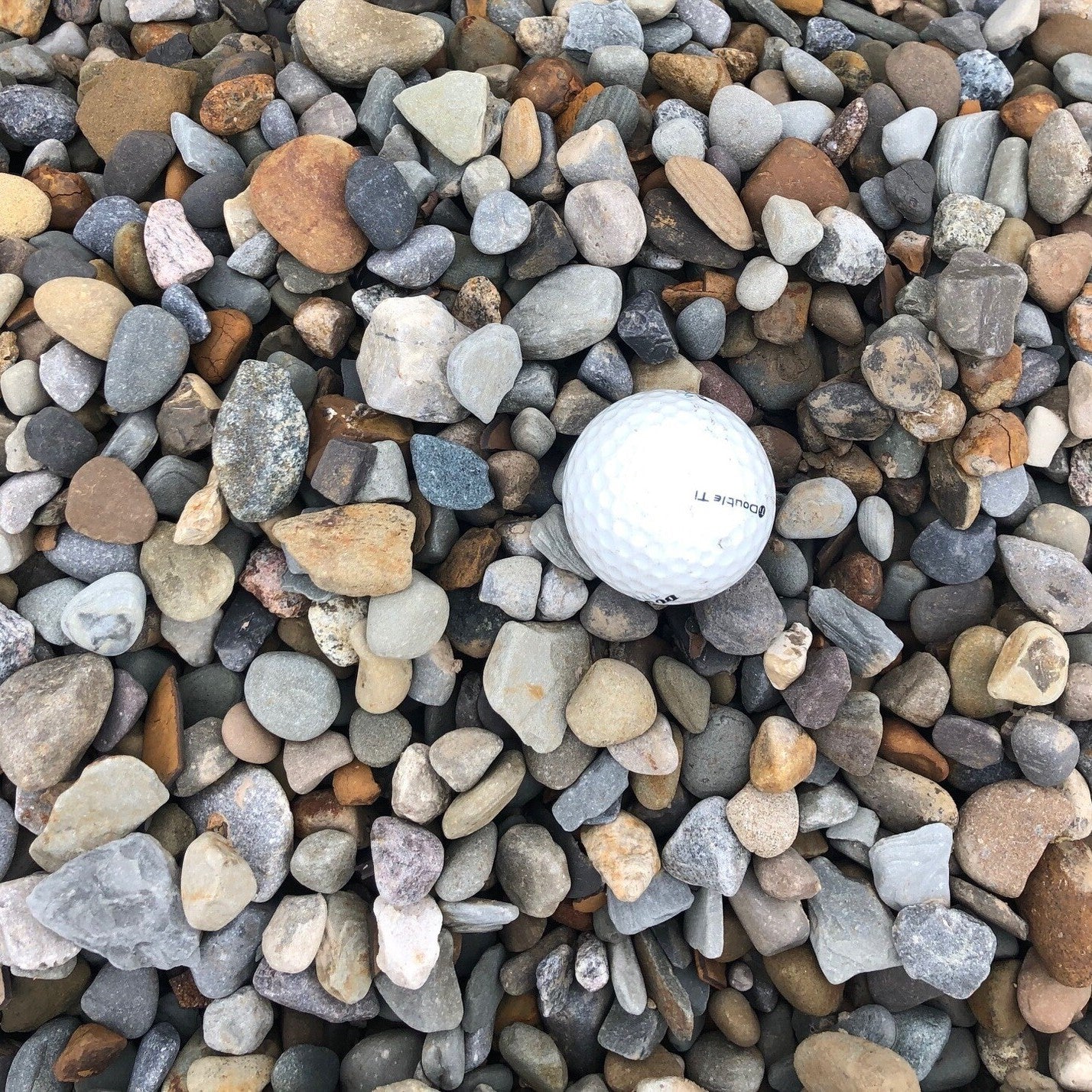
Number 57 crushed stone, angular limestone graded to about three quarters of an inch. The standard driveway, base and drainage gravel, it locks together under traffic and drains fast.
Mulch Mound delivered a yard of pea gravel to us. Delivery was on time, driver was friendly and hit a bullseye on the “tarp target”. We used the pea gravel (which was diameter as specified) to fill several muskrat holes around our pond. I would definitely recommend Mulch Mo...
Tell us what you're looking for
Thanks! We received your request.
Something went wrong. Please try again.
How Much Material Do I Need?
For decorative ground cover and pathway applications in Olathe, two to three inches of stone provides good coverage and stability over clay soil, while drainage channels and erosion control areas benefit from a minimum of four to six inches to handle the volume of water that moves through during heavy spring storms.
Use our free gravel calculator
What is a yard?
A yard is approximately 27 cubic feet. As a general guideline, one yard of material can cover an area of about 100-160 square feet at a 2-3 inch depth.
We can't take orders for this right now. Tell us what you need and we'll get back to you.
What do you need?
Thanks! We received your request.
Something went wrong. Please try again.
Hand-picked local yards
4,000+ regional deliveries
Dedicated support
Why order through Mulch Mound
The best local stone, without the guesswork.
We hand-pick and partner with the best yards in your region, keep only the ones our buyers rate well, and back each load with our guarantee.
Mulch Mound Guarantee
If your stone isn't the quantity or quality you ordered, we'll make it right.
About this stone
Number 57 crushed stone, angular limestone graded to about three quarters of an inch. The standard driveway, base and drainage gravel, it locks together under traffic and drains fast.
Mulch Mound delivered a yard of pea gravel to us. Delivery was on time, driver was friendly and hit a bullseye on the “tarp target”. We used the pea gravel (which was diameter as specified) to fill several muskrat holes around our pond. I would definitely recommend Mulch Mo...
How Much Material Do I Need?
For decorative ground cover and pathway applications in Olathe, two to three inches of stone provides good coverage and stability over clay soil, while drainage channels and erosion control areas benefit from a minimum of four to six inches to handle the volume of water that moves through during heavy spring storms.
Use our free gravel calculator
What is a yard?
A yard is approximately 27 cubic feet. As a general guideline, one yard of material can cover an area of about 100-160 square feet at a 2-3 inch depth.
Mulch Mound delivered a yard of pea gravel to us. Delivery was on time, driver was friendly and hit a bullseye on the “tarp target”. We used the ...
Read full review
Mulch Mound delivered a yard of pea gravel to us. Delivery was on time, driver was friendly and hit a bullseye on the “tarp target”. We used the pea gravel (which was diameter as specified) to fill several muskrat holes around our pond. I would definitely recommend Mulch Mound to a friend!
Measure your project area carefully and note any slopes or uneven surfaces, since Olathe's yards often have grade changes from previous drainage work or natural clay soil settlement over time. A sloped area requires a bit more stone than a flat calculation suggests because the depth at the uphill edge needs to match the depth at the downhill edge for an even, stable surface throughout.
Stone Types We Deliver in Olathe
Mulch Mound delivers bulk stone by the cubic yard straight to your Olathe property, saving you the hassle of hauling materials yourself. Whether you are searching for bulk gravel by the yard in Olathe or planning a larger landscaping project, we make it simple to get the right material on site fast. Our delivery team works with residential and commercial customers across the area to keep projects moving on schedule.
Pea Gravel
Pea gravel is one of the most popular choices for Olathe homeowners thanks to its smooth, rounded edges and warm earth tones that complement the neutral brick and stone exteriors common in this part of Kansas. It works beautifully for garden pathways, patio borders, and drainage areas where the clay-heavy local soil needs improved runoff.
Complete Your Outdoor Stone Project
Pair your stone order with a layer of commercial-grade landscape fabric to prevent Olathe's clay soil from migrating up into your gravel through freeze-thaw cycles over time. Adding a border of edging stone or larger accent boulders helps define the transition between stone areas and mulched beds for a clean, finished look throughout your yard.
Install landscape fabric beneath all stone installations in Olathe rather than skipping it to save time. The clay soil here has a tendency to work up into gravel layers over multiple freeze-thaw cycles, eventually creating a muddy, unstable surface where you expected solid stone. A good woven fabric barrier separates the stone from the clay permanently and keeps your installation draining properly and looking clean for many years.
Mulch Mound Pro Tip
Use larger accent stones, four inches and up, as visible anchors along the edges of stone beds and drainage areas in your Olathe yard. Smaller decorative gravel tends to scatter into turf during Olathe's heavy spring rain events, and larger border stones act as a physical stop that keeps the smaller material contained. This edging approach also reduces how often you need to rake or reposition stone after a storm moves through.
Mulch Mound Pro Tip
Plan your stone drainage channels to connect to a clear outlet point in your Olathe yard, whether that is a street curb, a planted buffer area, or a low corner of the property. Stone slows and absorbs water but cannot eliminate it, and with 39 inches of annual rainfall in Olathe, a dry creek bed or gravel swale that ends in a low spot rather than a true outlet will simply move your ponding problem rather than solving it. Trace the full water path before you start to make sure your stone installation directs runoff all the way to a functional exit.
The Unique Landscape of Olathe
Landscape stone is one of the most practical investments for Olathe homeowners dealing with the drainage challenges that come with heavy clay soil and nearly 40 inches of annual rainfall. Gravel and decorative stone allow water to filter down and disperse rather than pond on the surface, making them ideal for trouble spots along foundations, downspout discharge areas, and low-lying sections of yard that stay wet long after a storm passes. Stone pathways and patio borders also hold up through Olathe's freeze-thaw winters far better than organic materials, which heave and shift when temperatures cycle around the zone 6b frost dates. In areas where grass refuses to grow because of compaction, shade, or persistent moisture, a well-planned stone installation turns a problem zone into a clean, low-maintenance feature that actually improves your property's drainage. Stone does not break down the way mulch does, meaning one good installation stays in place season after season with minimal upkeep required. For Olathe homeowners who want to reduce mowing and watering on high-traffic areas or slopes, stone is a durable, attractive alternative to high-maintenance turf.
Frequently Asked Questions
Click a question to see the answer
Answer
What size gravel works best for drainage projects in Olathe yards?
For most drainage applications in Olathe, a clean washed gravel in the half-inch to one-inch range provides the best balance of water infiltration and stability. Smaller pea gravel drains well but migrates easily during the heavy rain events common in our spring season, while larger river rock stays in place better but leaves gaps that can collect debris over time. For French drain systems and downspout discharge areas where you are managing significant runoff from Olathe's clay-heavy soil, a clean crushed limestone or washed river rock in the three-quarter-inch size is a reliable and economical choice.
Answer
Will landscape stone help with the erosion I get along my fence line after heavy rain?
Stone is one of the most effective solutions for fence-line erosion in Olathe, where clay soil sheds water quickly during thunderstorms and channeling along structures is common. A four to six inch layer of river rock or crushed gravel along the fence line absorbs the impact of falling water and slows runoff before it can cut channels in the soil. Adding landscape fabric beneath the stone keeps weeds down and prevents the gravel from working down into the clay over time, which is a real issue with our heavy, expansive soils.
Answer
Can I use decorative stone around my trees and shrubs instead of wood mulch in Olathe?
You can use decorative stone around trees and shrubs, but it comes with trade-offs worth considering in Olathe's climate. Stone does not contribute organic matter to the soil the way hardwood mulch does, which means it will not help loosen your heavy clay over time. It also absorbs and radiates heat in summer, which can stress shallow-rooted plants when Olathe temperatures climb into the 90s. If you choose stone for aesthetic reasons around permanent landscape plants, pair it with a good pre-plant soil amendment so roots have a healthy zone beneath the stone layer.
Answer
How deep should I lay stone for a walkway in my Olathe yard?
For a stable walkway over Olathe's clay soil, plan on a compacted gravel base of at least three to four inches before adding your decorative surface stone. Clay soil shifts and heaves through winter freeze-thaw cycles, and a shallow stone path without a proper base will rock and develop ruts quickly. Excavate a few inches down, add your compacted base layer of crushed limestone or road base gravel, then top with your finished decorative stone for a path that holds its shape through multiple Olathe winters.
Answer
What is the best stone to use around my home's foundation in Olathe?
A clean, washed river rock or crushed gravel in the half-inch to one-inch range works well for foundation borders in Olathe because it allows heavy spring rainfall to drain away from the structure quickly rather than pooling against the foundation wall. Avoid stones with a lot of fine material mixed in, as that finer fraction fills pore space and reduces drainage capacity significantly. Keep the stone layer sloped away from your foundation at a gentle grade to encourage surface water to move toward the yard rather than sitting against your basement wall.
Answer
Does landscape stone require any maintenance through Olathe's winters?
Stone is about as close to maintenance-free as landscaping gets through an Olathe winter. It does not decompose, fade significantly, or wash away the way mulch does. The main task is an occasional light raking in spring to redistribute any stone that shifted during freeze-thaw cycles or was displaced by heavy spring storms. You may also need to top off areas where stone has settled into the clay below over several seasons, particularly in high-traffic paths or drainage channels that see regular water flow.
Answer
How much stone do I need to cover a drainage swale or dry creek bed in my Olathe yard?
For a decorative dry creek bed designed to handle Olathe's storm runoff, plan on a depth of four to six inches of stone for functional areas and three inches for purely decorative sections. Measure the length and average width of your swale and use our online calculator to convert those dimensions to cubic yards. Keep in mind that larger, rounder river rock gives you the most natural creek bed appearance, while crushed gravel is more economical for purely functional drainage channels that are mostly hidden from view.
Answer
Is there a stone yard near Olathe?
Olathe's heavy clay soil and roughly 40 inches of yearly rain call for a crushed stone base that lets water drain instead of pooling. Mulch Mound delivers it by the cubic yard right to your yard, so you never have to drive to a stone yard or a quarry. Just order online and pick the drop spot.