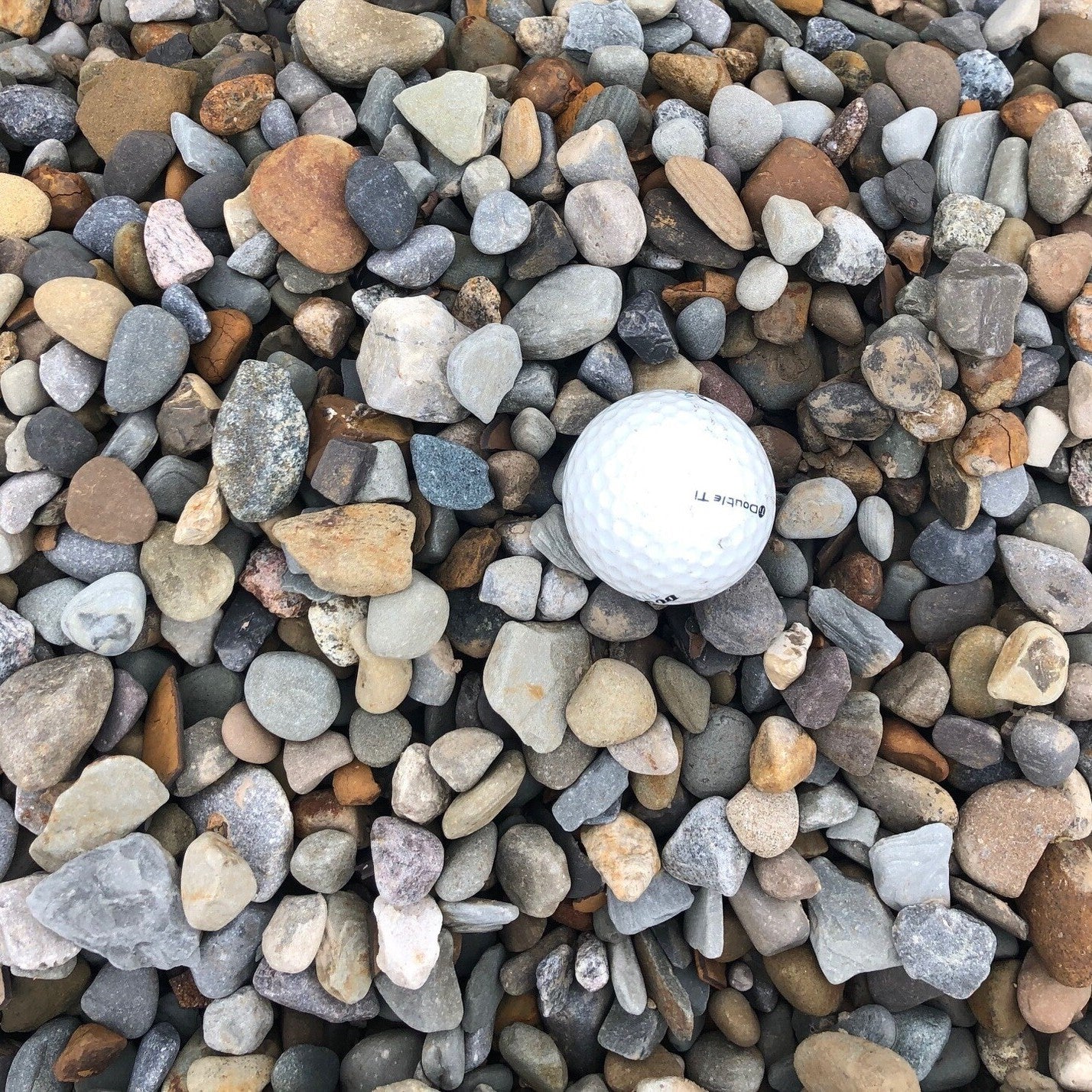
Number 57 crushed stone, angular limestone graded to about three quarters of an inch. The standard driveway, base and drainage gravel, it locks together under traffic and drains fast.
Mulch Mound delivered a yard of pea gravel to us. Delivery was on time, driver was friendly and hit a bullseye on the “tarp target”. We used the pea gravel (which was diameter as specified) to fill several muskrat holes around our pond. I would definitely recommend Mulch Mo...
Tell us what you're looking for
Thanks! We received your request.
Something went wrong. Please try again.
How Much Material Do I Need?
Decorative and pathway stone applications in Onalaska work best at a depth of two to three inches for visual coverage and weed suppression over landscape fabric. Drainage-focused applications like dry creek beds or gravel swales designed to handle Onalaska's heavier rain events should be filled to four or more inches to ensure effective water flow management through the feature.
Use our free gravel calculator
What is a yard?
A yard is approximately 27 cubic feet. As a general guideline, one yard of material can cover an area of about 100-160 square feet at a 2-3 inch depth.
We can't take orders for this right now. Tell us what you need and we'll get back to you.
What do you need?
Thanks! We received your request.
Something went wrong. Please try again.
Hand-picked local yards
4,000+ regional deliveries
Dedicated support
Why order through Mulch Mound
The best local stone, without the guesswork.
We hand-pick and partner with the best yards in your region, keep only the ones our buyers rate well, and back each load with our guarantee.
Mulch Mound Guarantee
If your stone isn't the quantity or quality you ordered, we'll make it right.
About this stone
Number 57 crushed stone, angular limestone graded to about three quarters of an inch. The standard driveway, base and drainage gravel, it locks together under traffic and drains fast.
Mulch Mound delivered a yard of pea gravel to us. Delivery was on time, driver was friendly and hit a bullseye on the “tarp target”. We used the pea gravel (which was diameter as specified) to fill several muskrat holes around our pond. I would definitely recommend Mulch Mo...
How Much Material Do I Need?
Decorative and pathway stone applications in Onalaska work best at a depth of two to three inches for visual coverage and weed suppression over landscape fabric. Drainage-focused applications like dry creek beds or gravel swales designed to handle Onalaska's heavier rain events should be filled to four or more inches to ensure effective water flow management through the feature.
Use our free gravel calculator
What is a yard?
A yard is approximately 27 cubic feet. As a general guideline, one yard of material can cover an area of about 100-160 square feet at a 2-3 inch depth.
Mulch Mound delivered a yard of pea gravel to us. Delivery was on time, driver was friendly and hit a bullseye on the “tarp target”. We used the ...
Read full review
Mulch Mound delivered a yard of pea gravel to us. Delivery was on time, driver was friendly and hit a bullseye on the “tarp target”. We used the pea gravel (which was diameter as specified) to fill several muskrat holes around our pond. I would definitely recommend Mulch Mound to a friend!
Placing an order online was so easy. Delivery was on time. When the driver realized we had a newly poured driveway they erred on the side of cautio...
Read full review
Placing an order online was so easy. Delivery was on time. When the driver realized we had a newly poured driveway they erred on the side of caution and opted not ti drive in it. The company even sent me a message explaining that call. Would recommend!
Measure the length and width of the area in feet, multiply together for square footage, and then determine your target depth in inches. Divide the square footage by 162 for a two-inch depth or by 108 for a three-inch depth to get the cubic yards needed. Stone settles much less than organic materials, so the overage you order can be minimal compared to topsoil or mulch estimates for comparable areas on your Onalaska property.
Stone Types We Deliver in Onalaska
Mulch Mound brings bulk stone delivery straight to Onalaska homeowners and landscapers who need quality material without the hassle of hauling it themselves. Whether you are searching for bulk gravel by the yard in Onalaska or planning a larger landscape project, we make ordering simple and straightforward. Our stone is priced by the cubic yard and dropped right where you need it.
Pea Gravel
Pea gravel is one of the most popular choices for Wisconsin homeowners looking for a low-maintenance, attractive ground cover. Its smooth, rounded edges and warm earth tones complement the natural wooded lots and prairie-style landscaping common in this part of the state. It works especially well for pathways, patios, and drainage areas where water management matters during heavy Midwest rains.
Complete Your Outdoor Stone Project
Pair your stone installation with bulk topsoil to regrade any low or uneven areas before laying stone, ensuring proper drainage across your Onalaska property from the start. Adding mulch to adjacent planting beds creates a clean visual contrast with the stone and keeps the surrounding landscape looking intentional and well-maintained through the full growing season.
Before spreading stone on a pathway or ground cover area in Onalaska, compact the base and consider laying an inch of crushed limestone screenings as a stabilizing sub-base. Onalaska's freeze-thaw cycles can heave loose stone paths over the winter if the base beneath is not prepared and compacted properly, leaving an uneven and potentially hazardous surface by spring. A solid compacted base keeps your pathway level season after season and significantly reduces the need for annual raking and re-leveling.
Mulch Mound Pro Tip
Onalaska's silt loam soil does not absorb surface water as readily as sandy or gravelly soils, which means low-lying areas of your yard can stay saturated for several days after a significant storm. Installing a stone-lined dry creek bed or a gravel-filled trench drain channels that pooling water toward a lower outlet rather than letting it saturate plant roots or seep toward your foundation. This is one of the most practical uses of bulk stone for Onalaska homeowners dealing with persistent drainage issues that regrading alone has not fully resolved.
Mulch Mound Pro Tip
In areas of your Onalaska property where mowing is difficult or where you simply want to eliminate ongoing seasonal maintenance, decorative river rock or crushed granite creates a clean and permanent ground cover that requires almost no attention year to year. Unlike mulch, stone does not decompose in Onalaska's rainfall, does not need annual refreshing, and holds its position through Zone 5a winters without significant shifting. It is a particularly strong choice for foundation borders, steep side slopes, and narrow side yards that are genuinely difficult to maintain with traditional plantings or turf.
The Unique Landscape of Onalaska
Decorative stone and gravel serve a deeply practical purpose in Onalaska landscapes beyond visual appeal, particularly in areas where the local silt loam soil and 34 inches of annual rainfall create recurring drainage and erosion challenges that organic materials cannot reliably solve. Pathways and dry creek beds lined with stone redirect surface runoff away from foundations and planting areas without requiring the seasonal maintenance that mulch or grass demands in high-traffic zones. Stone borders along the base of structures prevent the soil splash-back that occurs during heavy rain events in Onalaska, which is a common source of siding staining and moisture intrusion in the La Crosse County area. In low-maintenance landscape zones, crushed stone or river rock eliminates the need for annual mulch refreshing, which is especially valuable on slopes or in confined areas that are difficult to plant and maintain through a full growing season. Zone 5a winters in Onalaska are hard on organic ground covers, but stone holds its position through freeze-thaw cycles and spring snowmelt without the shifting, washing, or decomposition that affects lighter materials. Whether you are building a gravel walkway, a drainage swale, or a decorative border, bulk stone gives Onalaska homeowners a durable solution for the sites where soil and grass consistently fall short.
Frequently Asked Questions
Click a question to see the answer
Answer
What size stone works best for a gravel walkway in my Onalaska yard?
Three-eighths inch to three-quarter inch crushed stone is the most popular size for residential walkways in the Onalaska area because it compacts well underfoot, drains quickly after rain events, and does not shift as easily as larger smooth stones. Pea gravel is a common alternative that offers a softer look but tends to scatter more under foot traffic and can spread onto adjacent lawn areas over time. For high-use paths, a compacted crushed limestone base topped with smaller decorative gravel gives you a surface that holds up well through Onalaska's freeze-thaw cycles.
Answer
How deep should I lay stone for a low-maintenance ground cover area in my landscape?
Two to three inches of stone provides solid coverage for decorative ground cover areas and suppresses most weed growth when laid over landscape fabric. In Onalaska, where silt loam soil holds enough moisture to encourage persistent weed germination, using a quality fabric barrier under the stone significantly reduces long-term maintenance. Three inches is the preferred depth for areas that get any foot traffic, as it stays in place better through the freeze-thaw heaving that occurs in Zone 5a winters.
Answer
Will stone actually help with the standing water and drainage problems I have in my low-lying Onalaska yard?
Stone is one of the most effective tools for managing drainage problems on silt loam properties like those common in Onalaska. A dry creek bed filled with larger river rock or a gravel-filled French drain trench channels surface water and subsurface seepage toward a natural outlet or a storm drain rather than letting it pool. Because silt loam does not absorb water as quickly as sandy soils, these stone drainage features are especially valuable after Onalaska's heavier spring and summer rain events when the ground becomes temporarily saturated.
Answer
Do I need to put landscape fabric under decorative stone, or can I skip it?
In Onalaska landscapes, landscape fabric under decorative stone is strongly recommended rather than optional. The moist silt loam soil supports persistent weed germination throughout the growing season, and without a fabric barrier, weeds will push up through even a thick layer of stone within one to two seasons. Fabric also keeps the stone from gradually mixing into the silt loam below over years of freeze-thaw movement, which preserves the depth and appearance of your installation much longer.
Answer
How much stone do I need to cover the pathway around my house?
Measure the total length of the pathway in feet and multiply by the width in feet to get square footage. For a two-inch depth, divide that number by 162 to get cubic yards. For three inches, divide by 108. Most foundation border pathways in Onalaska that are 18 to 24 inches wide and run the perimeter of a standard ranch or two-story home require between two and four cubic yards of stone, depending on the home's footprint and how much of the perimeter is being covered.
Answer
Can I use bulk stone to stop erosion on the sloped areas of my property?
Yes, stone is one of the most reliable erosion control solutions for slopes in Onalaska. Silt loam erodes readily on inclines when exposed to the rain events that occur throughout the growing season, and organic mulch on slopes washes downhill over time. A layer of larger river rock or riprap holds its position on grades and protects the soil surface underneath from direct rainfall impact without requiring annual replacement. For steeper grades, a combination of erosion control fabric and stone gives you the most secure long-term coverage.
Answer
How does stone hold up through Onalaska winters compared to mulch or other ground covers?
Stone outlasts every other ground cover through Zone 5a winters in Onalaska. It does not decompose, does not blow away in winter wind, and while some frost heaving can occur in poorly prepared areas, a properly compacted stone installation stays largely in place through freeze-thaw cycles and spring snowmelt. Mulch requires refreshing every one to two years given Onalaska's rainfall and decomposition rates, while a well-installed stone ground cover can remain effective and attractive for a decade or more with only occasional raking and minor top-dressing.