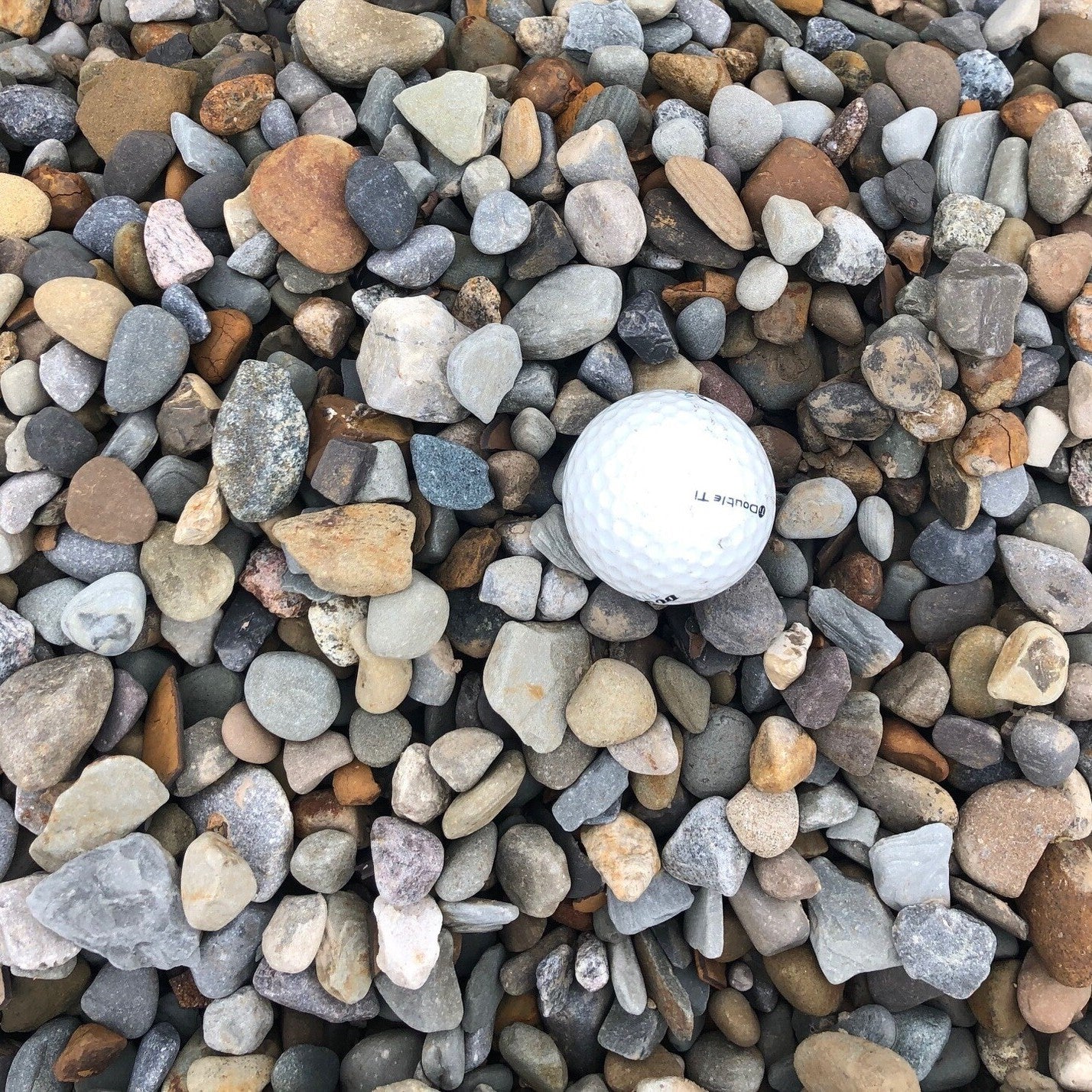
Number 57 crushed stone, angular limestone graded to about three quarters of an inch. The standard driveway, base and drainage gravel, it locks together under traffic and drains fast.
My experience with Mulch Mound was great and super easy. I ordered two yards of screened topsoil and was able to get it delivered within 2 days. They came in my requested time frame (afternoon) and dropped it off where I asked on my driveway. The topsoil was exactly what was a...
Tell us what you're looking for
Thanks! We received your request.
Something went wrong. Please try again.
How Much Material Do I Need?
For decorative ground cover in Pasco planting beds, 2 to 3 inches of stone provides good visual coverage and weed suppression. For pathways and areas with foot traffic, go to 3 to 4 inches of compacted crushed stone for a stable surface that holds its shape through the seasons.
Use our free gravel calculator
What is a Yard?
A yard is approximately 27 cubic feet. As a general guideline, one yard of material can cover an area of about 100-160 square feet at a 2-3 inch depth.
We can't take orders for this right now. Tell us what you need and we'll get back to you.
What do you need?
Thanks! We received your request.
Something went wrong. Please try again.
Hand-picked local yards
4,000+ regional deliveries
Dedicated support
Why order through Mulch Mound
The best local , without the guesswork.
We hand-pick and partner with the best yards in your region, keep only the ones our buyers rate well, and back each load with our guarantee.
Mulch Mound Guarantee
If your isn't the quantity or quality you ordered, we'll make it right.
About this stone
Number 57 crushed stone, angular limestone graded to about three quarters of an inch. The standard driveway, base and drainage gravel, it locks together under traffic and drains fast.
My experience with Mulch Mound was great and super easy. I ordered two yards of screened topsoil and was able to get it delivered within 2 days. They came in my requested time frame (afternoon) and dropped it off where I asked on my driveway. The topsoil was exactly what was a...
How Much Material Do I Need?
For decorative ground cover in Pasco planting beds, 2 to 3 inches of stone provides good visual coverage and weed suppression. For pathways and areas with foot traffic, go to 3 to 4 inches of compacted crushed stone for a stable surface that holds its shape through the seasons.
Use our free gravel calculator
What is a Yard?
A yard is approximately 27 cubic feet. As a general guideline, one yard of material can cover an area of about 100-160 square feet at a 2-3 inch depth.
My experience with Mulch Mound was great and super easy. I ordered two yards of screened topsoil and was able to get it delivered within 2 days. Th...
Read full review
My experience with Mulch Mound was great and super easy. I ordered two yards of screened topsoil and was able to get it delivered within 2 days. They came in my requested time frame (afternoon) and dropped it off where I asked on my driveway. The topsoil was exactly what was advertised, clean with no rocks or other debris. The price was reasonable. I plan to use them again in a couple weeks to order compost for my garden beds.
Really appreciate the care and follow thru that this company had with our order. A hiccup came up but they were quick to respond and address all co...
Read full review
Really appreciate the care and follow thru that this company had with our order. A hiccup came up but they were quick to respond and address all concerns, which made our garden day a success! Thank you for your prompt care.
Stone is typically sold by the ton, so you will need to know your square footage and desired depth before ordering. Measure your project area carefully, multiply length times width for total square footage, and note the depth in inches you want to achieve. Use our calculator to convert those numbers into tons, keeping in mind that heavier rocks like basalt require more weight per cubic yard than lighter limestone products.
Complete Your Outdoor Stone Project
Add a layer of landscape fabric before your stone installation to prevent weeds from pushing through from the sandy loam below. Pairing your stone project with fresh soil in adjacent planting beds creates a clean, finished look that ties your whole yard together.
If you are converting part of your Pasco lawn to stone to save on irrigation costs, plan your project for early spring before your grass has fully greened up. Killing the existing lawn with an appropriate herbicide, waiting the recommended period, and then installing your fabric and stone in one efficient sequence takes less total time than trying to work around active growing turf. Starting in late March gives you a perfectly finished surface well before Pasco's outdoor entertaining season begins.
Mulch Mound Pro Tip
Pasco's hard water leaves mineral deposits on everything it touches, including decorative stone. Light-colored stone near drip emitters or sprinkler heads will develop white calcium buildup over time from the hard Columbia River-sourced water common in this area. Choosing naturally variegated or darker stone tones in areas with heavy irrigation exposure keeps your landscape looking clean without requiring regular scrubbing to remove hard water staining.
Mulch Mound Pro Tip
Because Pasco sits at 390 feet elevation and experiences genuine winter cold, any stone edging or border installation should be set on a firm, compacted base rather than directly on loose sandy loam. Even though Pasco does not get severe freeze-thaw heaving like higher elevation areas, light frosts between October and April can shift poorly anchored edge stones over a single season. A 2-inch compacted gravel base beneath border stones keeps them level and aligned for many years without needing to reset them.
The Unique Landscape of Pasco
Stone is one of the most practical landscaping materials available to Pasco homeowners because it does not break down in the sun, does not require water, and performs as well in July heat as it does in October frost. With only 8 inches of annual rainfall, large areas of organic mulch or lawn can become expensive and labor-intensive to maintain, making decorative stone a smart long-term alternative for ground coverage. Pasco's sandy loam base is also well-suited for stone installation because it drains freely and rarely creates the heaving issues that plague stone work in wetter, freeze-thaw-heavy climates. Whether you are building a dry riverbed feature, lining irrigation trenches, or replacing a high-maintenance lawn section with xeriscaping, bulk stone delivers the volume you need at a fraction of the per-unit cost of bagged products. The wide temperature range in Pasco, from well below freezing in winter to over 100 degrees in summer, means you want a material that holds up to both extremes without degrading. Locally common stone types like basalt and river rock are naturally adapted to the Columbia Basin environment and look at home in Pasco landscapes.
Frequently Asked Questions
Click a question to see the answer
Answer
What size stone works best for a xeriscape yard in Pasco?
For a full xeriscape conversion in Pasco, a combination of sizes works best. Use a 3 to 4 inch depth of 3/8 inch crushed gravel as the base layer for ground cover areas, then top-dress with a layer of 1 to 2 inch river rock or desert pebbles for the finished look. The smaller base layer locks together and resists shifting, while the top layer adds the visual texture that makes a xeriscape look designed rather than just practical.
Answer
Do I need landscape fabric under stone in Pasco?
In most Pasco applications, yes. Even though Pasco's dry climate limits weed germination somewhat, windblown seeds from the surrounding shrub-steppe landscape can establish in the sandy loam beneath your stone if it is not blocked. A commercial-grade woven landscape fabric lets water pass through while stopping most weed growth. Avoid cheap plastic sheeting, which traps heat, deteriorates quickly in our intense UV, and prevents any rainfall from reaching the soil below.
Answer
Will stone make my yard feel hotter in the summer since Pasco already gets so hot?
Light-colored stone like tan river rock or white marble chips reflects more solar radiation and stays cooler than dark basalt. In areas directly adjacent to your home or outdoor living spaces, choosing lighter tones makes a noticeable comfort difference. Dark decorative rock is beautiful but absorbs heat aggressively in Pasco's summer sun and can radiate warmth well into the evening hours, which is worth considering for patio surrounds and south-facing beds.
Answer
How deep should I lay stone for a gravel pathway in my backyard?
For a foot-traffic pathway in Pasco, 3 inches of compacted crushed gravel is the practical minimum and 4 inches is more comfortable underfoot and more resistant to displacement over time. Because Pasco's sandy loam base is already well-draining, you do not need the deep drainage layers sometimes required in clay-heavy soils. A simple fabric barrier and 3 to 4 inches of compacted stone creates a pathway that holds up well through both our dry summers and occasional winter wet spells.
Answer
Can I use river rock to help with drainage issues in my Pasco yard?
River rock is an excellent drainage tool in Pasco landscapes. Dry creek beds made from a mix of 2 to 4 inch river rock channel the occasional heavy rain or irrigation runoff away from foundations and low spots without the maintenance needs of planted drainage swales. Because Pasco's soil already drains fast, even a shallow creek bed of 6 to 8 inches depth effectively moves surface water while adding a natural decorative feature to the yard.
Answer
How many tons of stone do I need to cover a 500 square foot area at 3 inches deep?
A general rule for decorative stone is that one ton covers approximately 80 to 100 square feet at a 3-inch depth, depending on the size and density of the rock. For 500 square feet at 3 inches, plan on ordering 5 to 6 tons. Larger, irregular rocks like river cobble will run toward the lower end of coverage per ton, while finer crushed gravel covers more area per ton. When in doubt, our calculator gives you a more precise estimate based on the specific product you choose.
Answer
Will my stone shift around in Pasco's occasional windstorms?
The Tri-Cities area does see strong winds, especially in spring and fall, and very small stone sizes like pea gravel under half an inch can migrate during those events. Choosing stone that is at least 3/4 inch or larger significantly reduces wind movement. Compacted crushed rock also locks together and resists shifting better than round, smooth river pebbles of the same size. For high-exposure areas of your Pasco yard, crushed basalt or angular gravel is a more stable choice than round decorative rock.
Answer
Is there a stone yard near Pasco?
Pasco's sandy loam drains fast and sees only about 8 inches of rain a year, so a layer of landscape fabric under crushed stone keeps weeds from pushing up through the soil. You don't need to track down a stone yard or drive to a quarry, because we deliver crushed stone by the cubic yard and place it right where you want it.