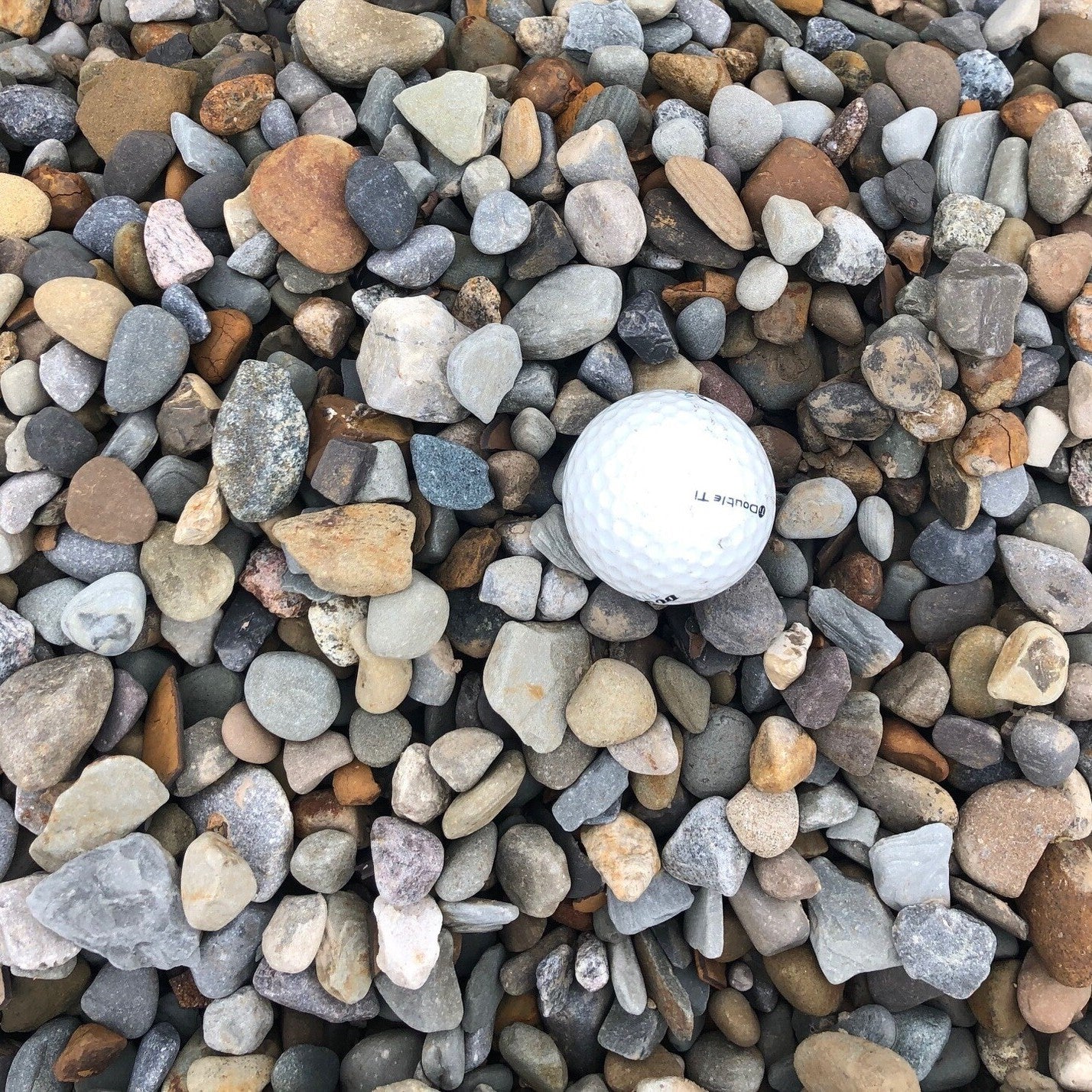
Number 57 crushed stone, angular limestone graded to about three quarters of an inch. The standard driveway, base and drainage gravel, it locks together under traffic and drains fast.
I contacted Mulch Mound for #57 river rocks and it was easy and fast to get a delivery right before the holiday weekend. Stone was delivered as promised and place exactly where I asked. Excellent service! I will be ordering mulch next!
Tell us what you're looking for
Thanks! We received your request.
Something went wrong. Please try again.
How Much Material Do I Need?
For decorative coverage and pathway applications in Pensacola, a 3-inch stone depth provides adequate coverage and resists gradual sinking into the sandy soil beneath. Drainage channels and erosion control areas benefit from a 4 to 6 inch depth to accommodate the water volumes that move through Pensacola landscapes during the active June through September storm season.
Use our free gravel calculator
What is a yard?
A yard is approximately 27 cubic feet. As a general guideline, one yard of material can cover an area of about 100-160 square feet at a 2-3 inch depth.
We can't take orders for this right now. Tell us what you need and we'll get back to you.
What do you need?
Thanks! We received your request.
Something went wrong. Please try again.
Hand-picked local yards
4,000+ regional deliveries
Dedicated support
Why order through Mulch Mound
The best local stone, without the guesswork.
We hand-pick and partner with the best yards in your region, keep only the ones our buyers rate well, and back each load with our guarantee.
Mulch Mound Guarantee
If your stone isn't the quantity or quality you ordered, we'll make it right.
About this stone
Number 57 crushed stone, angular limestone graded to about three quarters of an inch. The standard driveway, base and drainage gravel, it locks together under traffic and drains fast.
I contacted Mulch Mound for #57 river rocks and it was easy and fast to get a delivery right before the holiday weekend. Stone was delivered as promised and place exactly where I asked. Excellent service! I will be ordering mulch next!
How Much Material Do I Need?
For decorative coverage and pathway applications in Pensacola, a 3-inch stone depth provides adequate coverage and resists gradual sinking into the sandy soil beneath. Drainage channels and erosion control areas benefit from a 4 to 6 inch depth to accommodate the water volumes that move through Pensacola landscapes during the active June through September storm season.
Use our free gravel calculator
What is a yard?
A yard is approximately 27 cubic feet. As a general guideline, one yard of material can cover an area of about 100-160 square feet at a 2-3 inch depth.
I contacted Mulch Mound for #57 river rocks and it was easy and fast to get a delivery right before the holiday weekend. Stone was delivered as pro...
Read full review
I contacted Mulch Mound for #57 river rocks and it was easy and fast to get a delivery right before the holiday weekend. Stone was delivered as promised and place exactly where I asked. Excellent service! I will be ordering mulch next!
To determine how much stone you need, calculate your coverage area in square feet and multiply by your target depth in feet, then divide by 27 to convert to cubic yards. Drainage applications and erosion control projects in Pensacola typically require more material than decorative uses because the depth needs to be sufficient to manage the water volumes our storm seasons produce. Add at least 10 percent to your estimate to account for settling into the soft sandy soil base and to fill any low spots that appear after the first rain.
Stone Types We Deliver in Pensacola
Mulch Mound makes it simple to order bulk gravel by the yard in Pensacola, with direct delivery to your driveway or job site. Whether you are refreshing a backyard patio or improving drainage in sandy coastal soil, the right stone makes a lasting difference. We measure and deliver by the cubic yard so you get exactly what your project needs.
Pea Gravel
Smooth and rounded with warm earth tones, pea gravel is a top choice for Pensacola homeowners who want a clean, polished look without a lot of upkeep. It compacts loosely underfoot, drains well through the sandy soil common in this part of Florida, and suits everything from shaded garden paths to open patio surrounds.
Complete Your Outdoor Stone Project
A stone pathway or border pairs naturally with a fresh layer of hardwood mulch in your adjacent planting beds, creating a clean visual separation between hardscape and planted areas while also preventing sandy soil from washing over your stone during Pensacola's heavy rains. If re-grading is needed before your stone installation, a topsoil or fill soil delivery can help establish proper drainage slope so your finished surface directs water away from structures effectively.
Pensacola's sandy soil is particularly prone to allowing gravel and stone to gradually sink and mix with the native ground over time, especially after years of heavy rainfall and foot traffic compound the problem. Before installing any stone pathway or gravel coverage area, compact the sandy base as firmly as possible and use a heavy-duty non-woven geotextile fabric beneath the stone layer, not the thin woven landscape fabric, which tears easily and allows sand migration. This single preparation step dramatically extends the life of the installation and keeps your stone looking clean and well-defined rather than muddy and sunken after a few rainy seasons.
Mulch Mound Pro Tip
Stone foundation borders are an attractive and functional detail on Pensacola homes, but they must be graded properly to do their job. Pensacola receives 64 inches of annual rain and a poorly graded stone border that slopes toward the house can direct water against the slab or crawlspace rather than away from it, contributing to the moisture-related foundation issues seen in many older local homes. Slope your stone border away from the structure at a minimum of 1 inch per foot, and pair it with functioning gutters and extended downspouts to keep water moving well away from the foundation perimeter.
Mulch Mound Pro Tip
When choosing stone colors for decorative areas in your Pensacola landscape, keep in mind that light-colored options like white marble chips and buff limestone show green algae staining and organic discoloration more visibly in our humid, tree-canopy-shaded Gulf Coast environment. Darker stones such as charcoal granite, dark brown river cobble, or black Mexican beach pebble tend to absorb and conceal the tinting that humid air and overhead tree drip create on stone surfaces over time. If your stone area sits beneath oaks or pines, choosing darker tones means less visual maintenance and a consistently sharp appearance through Pensacola's long, warm growing season.
The Unique Landscape of Pensacola
Stone is one of the most durable and problem-solving landscape materials available to Pensacola homeowners, primarily because it addresses challenges that the local environment creates consistently and in abundance. Sandy soil erodes readily during the intense Gulf Coast thunderstorms that arrive from June through September, and stone pathways, borders, and drainage channels hold that soil in place where organic alternatives wash away or decompose. With 64 inches of annual rainfall, controlling water movement and protecting bare soil around foundations and planting beds is a recurring practical need rather than just an aesthetic preference. Unlike organic materials, stone does not break down in Pensacola's heat and humidity, meaning a properly installed stone feature will look and perform the same five years after installation as it did on day one. In Zone 9a's near-continuous growing season, weeds germinate aggressively for most of the year, and stone coverage in pathways, borders, and low-traffic areas dramatically reduces the weekly time commitment required to keep a landscape looking maintained.
Frequently Asked Questions
Click a question to see the answer
Answer
What gravel size works best for a drainage solution in a Pensacola yard?
Clean 57 limestone or washed river gravel in the three-quarter to one-inch range is the most effective option for drainage applications in Pensacola. This size allows water to pass through quickly enough to handle the heavy rain volumes our summer storms produce, which can exceed 2 inches per hour during intense Gulf-driven events. Pea gravel works reasonably well for shallow surface channels, but larger crushed stone is the right choice for French drains or any area where significant water volume needs to move fast.
Answer
Will stone hold in place through Pensacola's heavy rainstorms or will it wash around?
Stone sized at 1 inch or larger is essentially immovable during typical Pensacola rainfall events and holds up well through the most intense summer storms. Smaller materials like pea gravel can shift if water concentrates and gains velocity in a channelized path, but containing the stone with landscape edging or solid borders keeps it in position effectively. Selecting a stone size appropriate for the slope and expected water flow of your specific area is the key decision that determines long-term stability.
Answer
Is stone a good solution for shady areas under my trees where grass refuses to grow in Pensacola?
Stone is one of the best solutions for the deep shade zones that Pensacola's large live oaks, longleaf pines, and magnolias create beneath their canopies. Even shade-adapted grass varieties struggle in low-light conditions with root competition from established trees, and a stone coverage creates a clean, intentional surface where a bare dirt patch would otherwise exist. Laying a heavy non-woven landscape fabric beneath the stone before spreading keeps weed emergence to a minimum in our Zone 9a climate where warm soil temperatures encourage germination for most of the calendar year.
Answer
What is the best stone to use for a walkway in a Pensacola front yard?
Flagstone or natural stepping stones set in a pea gravel base are a popular and attractive choice that suits the relaxed, subtropical feel common in Pensacola front yard designs. The pea gravel base allows rainwater to drain through rather than pool across the path surface, which is a practical necessity given how frequently our yards see heavy downpours. For a more formal walkway, decomposed granite or finely crushed limestone compacts into a firm, stable surface that resists muddiness after our summer storms far better than a sandy soil path ever could.
Answer
How deep should gravel be laid for a pathway built over Pensacola's sandy soil?
Plan for a minimum of 3 inches of gravel depth for any pathway installed over Pensacola's sandy native soil. Sandy ground is soft and porous, and stone can gradually migrate downward through repeated wet-dry cycles from our rainy and dry seasons if the base layer is too shallow. A 4-inch depth provides a more stable, long-lasting surface and reduces sinking into soft spots after heavy rains. Installing a heavy-duty non-woven geotextile fabric directly on the prepared sandy base before laying stone adds years to the installation life by preventing upward sand migration into the stone layer.
Answer
Can stone help stop erosion on a slope in my Pensacola yard?
Stone is one of the most reliable erosion control strategies available for Pensacola landscapes with sloped areas. Sandy soil on a grade has very little natural cohesion and moves easily under the force of heavy, concentrated rainfall. Riprap or large river rock placed on a slope absorbs the kinetic energy of falling rain and slows surface water velocity before it can dislodge and carry away soil particles. Even a 2-inch layer of crushed stone or gravel on a moderate slope can prevent the gullying and washout that Pensacola yards frequently experience during the peak June through September storm season.
Answer
Does stone get uncomfortably hot in the Pensacola summer sun near seating areas or plant beds?
Dark-colored stone in full Pensacola sun will absorb and radiate significant heat during summer months when air temperatures regularly exceed 90 degrees from June through September. For areas adjacent to plant beds or outdoor seating, lighter-colored options like white marble chips, buff limestone, or light gray river pebble reflect solar energy rather than concentrating it. Around planting beds in particular, a lighter stone choice can meaningfully reduce the additional heat stress that dark stone imposes on shallow-rooted plants during the hottest stretch of our coastal summer.
Answer
Is crush and run the same as crusher run?
Crush and run and crusher run are the same product, a mix of crushed stone and stone dust that compacts hard for driveways and paver bases. With Pensacola's sandy soil and heavy summer rain, our Crushed Stone #57 drains freely instead of holding water, making it the better choice for lasting drainage here.