



Very easy to place order online for our exact needs and very flexible for when we needed
About this landscape rock
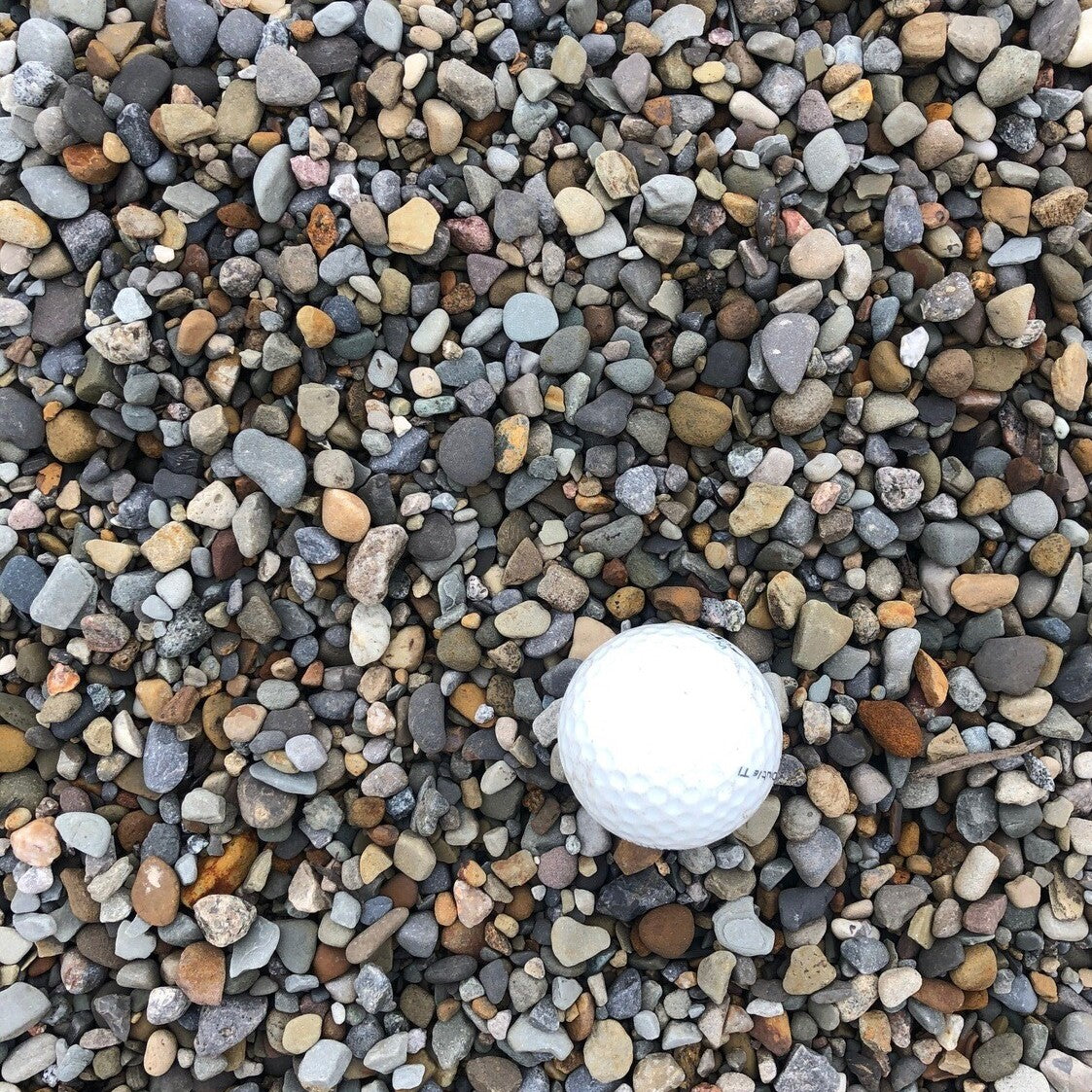
Classic pea gravel with smooth, rounded edges and natural earth tones. A versatile favorite for pathways, patios, drainage, and decorative ground cover.
Very easy to place order online for our exact needs and very flexible for when we needed
Tell us what you're looking for
Thanks! We received your request.
Something went wrong. Please try again.
How Much Landscape Rock Do I Need?
How Much Landscape Rock Do I Need?
At a standard 2 to 3 inch install depth, one cubic yard of landscape rock covers roughly 162 square feet at the shallow end of that range. A typical Philadelphia front bed, say 150 to 200 square feet, usually runs 1 to 1.5 cubic yards depending on how deep you go near the foundation. Measure length by width in feet, divide by 162, and round up since rock settles into gaps rather than sitting flush.
Use our free stone calculator
What is a Yard?
What is a Yard?
What is a yards?
What is a yards?
FAQs
FAQs
Philadelphia Landscape Rock Delivery
Philadelphia Landscape Rock Delivery
Regular price
$140.00
per
yards
Regular price
Sale price
$140.00
Unit price
per
Shipping calculated at checkout.
Minimum of 3 yards
Couldn't load pickup availability
Not currently available
We can't take orders for this right now. Tell us what you need and we'll get back to you.
Hand-picked local yards
4,000+ regional deliveries
Dedicated support
Why order through Mulch Mound
The best local landscape rock, without the guesswork.
We hand-pick and partner with the best yards in your region, keep only the ones our buyers rate well, and back each load with our guarantee.
Mulch Mound Guarantee
If your landscape rock isn't the quantity or quality you ordered, we'll make it right.
About this landscape rock
Classic pea gravel with smooth, rounded edges and natural earth tones. A versatile favorite for pathways, patios, drainage, and decorative ground cover.
Very easy to place order online for our exact needs and very flexible for when we needed
How Much Landscape Rock Do I Need?
How Much Landscape Rock Do I Need?
At a standard 2 to 3 inch install depth, one cubic yard of landscape rock covers roughly 162 square feet at the shallow end of that range. A typical Philadelphia front bed, say 150 to 200 square feet, usually runs 1 to 1.5 cubic yards depending on how deep you go near the foundation. Measure length by width in feet, divide by 162, and round up since rock settles into gaps rather than sitting flush.
Use our free stone calculator
What is a Yard?
What is a Yard?
What is a yards?
What is a yards?
FAQs
FAQs
Tell us what you're looking for
Thanks! We received your request.
Something went wrong. Please try again.
How It Works
Getting started is easy — just follow these simple steps
1
Choose your quantity
Adjust the quantity to match your project. One cubic yard covers about 100 to 160 square feet at a 2 to 3 inch depth.
2
Select your delivery date
Select a delivery date you'd like for the product to be dropped off at your home
3
Sit back and wait
Sit back, wait, and let us work our magic to make sure the highest quality product is delivered to your driveway.

From the time I placed the order to the delivery it was quick and professional. I will highly recommend and will use them from now on.

Great experience with mulch mound. Their online calculator made it easy to estimate how many yards of mulch I needed and delivery was quick. I woul...
Read full review
Great experience with mulch mound. Their online calculator made it easy to estimate how many yards of mulch I needed and delivery was quick. I would definitely recommend them for your future projects.
Complete Your Outdoor Project
Most Philadelphia jobs pair landscape rock with landscape fabric underneath to block weeds long term, since without it the silt loam will work its way up through the stone over a few seasons. Steel or aluminum edging keeps the rock from migrating onto sidewalks and driveways, which matters on narrower rowhome lots. If part of the yard still needs organic beds for planting, a lot of customers order mulch for those areas in the same delivery.


Service area
Areas we deliver landscape rock in Philadelphia, Pennsylvania
- Ambler, Pennsylvania
- Ardmore, Pennsylvania
- Bala Cynwyd, Pennsylvania
- Blue Bell, Pennsylvania
- Broomall, Pennsylvania
- Bryn Mawr, Pennsylvania
- Camden, Jersey
- Cherry Hill Mall, Jersey
- Clifton Heights, Pennsylvania
- Conshohocken, Pennsylvania
- Darby, Pennsylvania
- Drexel Hill, Pennsylvania
- Eagleville, Pennsylvania
- Echelon, Jersey
- Elkins Park, Pennsylvania
- Folcroft, Pennsylvania
- Folsom, Pennsylvania
- Fort Washington, Pennsylvania
- Glenolden, Pennsylvania
- Glenside, Pennsylvania
- Gloucester City, Jersey
- Greentree, Jersey
- Hatboro, Pennsylvania
- King of Prussia, Pennsylvania
- Lansdale, Pennsylvania
- Lansdowne, Pennsylvania
- Maple Glen, Pennsylvania
- Marlton, Jersey
- Merion Station, Pennsylvania
- Montgomeryville, Pennsylvania
- Moorestown-Lenola, Jersey
- Norristown, Pennsylvania
- Norwood, Pennsylvania
- Paoli, Pennsylvania
- Phoenixville, Pennsylvania
- Plymouth Meeting, Pennsylvania
- Prospect Park, Pennsylvania
- Ridley Park, Pennsylvania
- Roslyn, Pennsylvania
- Sharon Hill, Pennsylvania
- Springdale, Jersey
- Swarthmore, Pennsylvania
- Trooper, Pennsylvania
- Wayne, Pennsylvania
- Westmont, Jersey
- Willow Grove, Pennsylvania
- Yeadon, Pennsylvania
Mulch Mound Pro Tip
Because this is a one time install rather than an annual refresh, spend the extra hour laying landscape fabric properly before the rock goes down. In Philadelphia's silt loam, skipping fabric means the fine soil particles migrate upward into the stone within two or three seasons, and by year four you're pulling weeds out of what should have been maintenance free ground.
Mulch Mound Pro Tip
Plan your rock delivery for after the bulk of leaf drop, ideally mid to late November once street trees have mostly cleared. Rock installed before leaf season just becomes a leaf trap you have to blow out weekly, and wet leaves sitting on stone stain lighter colored rock over a single season.
Mulch Mound Pro Tip
If you're covering a large front yard bed, consider mixing rock with mulch zones rather than going all rock. Keep stone tight against the foundation and downspouts where drainage and permanence matter most, and use mulch farther out where you actually want plants to benefit from organic breakdown into that silt loam soil.
Decorative Stone in Philadelphia
Philadelphia's silt loam holds water well, which is exactly why rock over fabric works so well against foundations here, it keeps soil from wicking moisture up into brick and stone. With a first frost around October 25 and freeze thaw cycles through the winter, organic mulches heave and compress year over year, but rock stays put. It does trap fallen leaves from the street trees common in this zone 7b city, so plan on a fall blowout or leaf vacuum pass. Around downspouts on older Philly homes, rock also handles the splash erosion that mulch can't.
What Landscape Rock Is
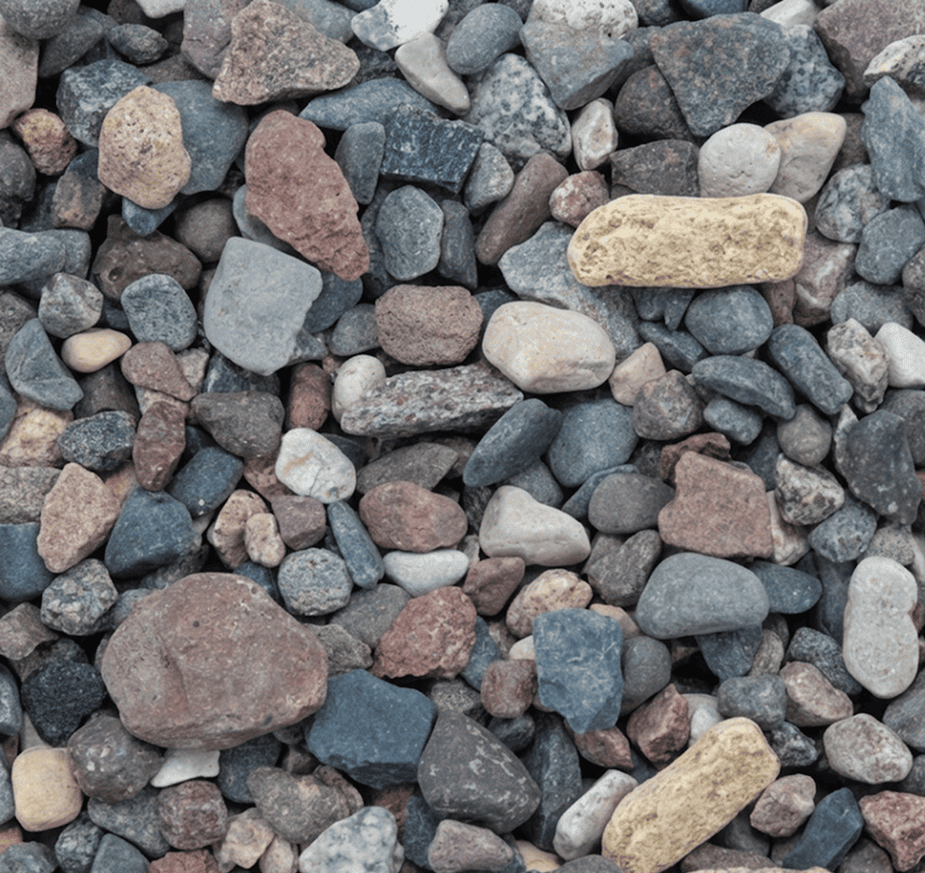
Landscape rock is stone chosen for how it looks as much as what it does. River rock is smooth and rounded, decomposed granite is fine and packs firm underfoot. Both are sold by the cubic yard for beds, borders, paths, and dry creek beds.
River Rock vs Decomposed Granite
River rock stays loose and rolls, so it suits beds, borders, and drainage runs where it can sit in place. Decomposed granite compacts into a firm surface, so it suits paths, patios, and anywhere you will walk or roll a wheelbarrow.
Depth and Coverage
Spread river rock 2 to 3 inches deep over landscape fabric so it stays put and weeds stay down. Lay decomposed granite 3 to 4 inches deep, wet it, and compact it in lifts for a surface that sheds water instead of rutting.