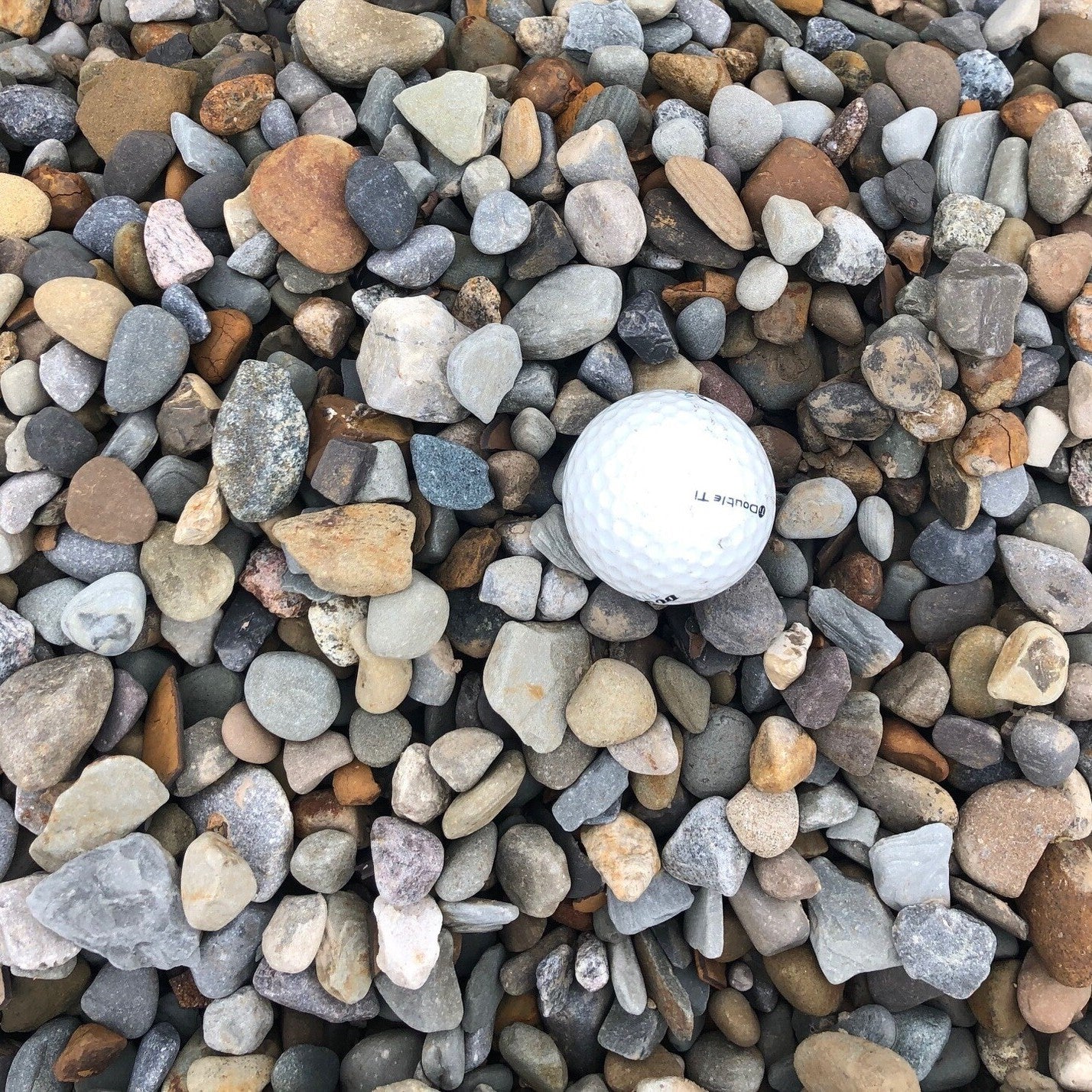
Number 57 crushed stone, angular limestone graded to about three quarters of an inch. The standard driveway, base and drainage gravel, it locks together under traffic and drains fast.
My experience with Mulch Mound was great and super easy. I ordered two yards of screened topsoil and was able to get it delivered within 2 days. They came in my requested time frame (afternoon) and dropped it off where I asked on my driveway. The topsoil was exactly what was a...
Tell us what you're looking for
Thanks! We received your request.
Something went wrong. Please try again.
How Much Material Do I Need?
Most Prescott xeriscape and pathway projects call for a 3 to 4 inch depth of stone, which is enough to suppress weeds, cover landscape fabric completely, and give the area a finished and substantial appearance. Drainage applications like dry creek beds need a deeper fill of 6 to 8 inches to function properly during Prescott's high-volume monsoon rain events.
Use our free gravel calculator
What is a Yard?
A yard is approximately 27 cubic feet. As a general guideline, one yard of material can cover an area of about 100-160 square feet at a 2-3 inch depth.
What is a ton?
A ton is 2,000 pounds of material. As a general guideline, one ton of rock covers roughly 100 square feet at 2 inches deep, depending on rock size and density.
We can't take orders for this right now. Tell us what you need and we'll get back to you.
What do you need?
Thanks! We received your request.
Something went wrong. Please try again.
Hand-picked local yards
4,000+ regional deliveries
Dedicated support
Why order through Mulch Mound
The best local , without the guesswork.
We hand-pick and partner with the best yards in your region, keep only the ones our buyers rate well, and back each load with our guarantee.
Mulch Mound Guarantee
If your isn't the quantity or quality you ordered, we'll make it right.
About this stone
Number 57 crushed stone, angular limestone graded to about three quarters of an inch. The standard driveway, base and drainage gravel, it locks together under traffic and drains fast.
My experience with Mulch Mound was great and super easy. I ordered two yards of screened topsoil and was able to get it delivered within 2 days. They came in my requested time frame (afternoon) and dropped it off where I asked on my driveway. The topsoil was exactly what was a...
How Much Material Do I Need?
Most Prescott xeriscape and pathway projects call for a 3 to 4 inch depth of stone, which is enough to suppress weeds, cover landscape fabric completely, and give the area a finished and substantial appearance. Drainage applications like dry creek beds need a deeper fill of 6 to 8 inches to function properly during Prescott's high-volume monsoon rain events.
Use our free gravel calculator
What is a Yard?
A yard is approximately 27 cubic feet. As a general guideline, one yard of material can cover an area of about 100-160 square feet at a 2-3 inch depth.
What is a ton?
A ton is 2,000 pounds of material. As a general guideline, one ton of rock covers roughly 100 square feet at 2 inches deep, depending on rock size and density.
My experience with Mulch Mound was great and super easy. I ordered two yards of screened topsoil and was able to get it delivered within 2 days. Th...
Read full review
My experience with Mulch Mound was great and super easy. I ordered two yards of screened topsoil and was able to get it delivered within 2 days. They came in my requested time frame (afternoon) and dropped it off where I asked on my driveway. The topsoil was exactly what was advertised, clean with no rocks or other debris. The price was reasonable. I plan to use them again in a couple weeks to order compost for my garden beds.
Really appreciate the care and follow thru that this company had with our order. A hiccup came up but they were quick to respond and address all co...
Read full review
Really appreciate the care and follow thru that this company had with our order. A hiccup came up but they were quick to respond and address all concerns, which made our garden day a success! Thank you for your prompt care.
Measure your stone coverage areas by breaking your yard into simple rectangles and adding the square footage together, then enter that total into the calculator along with your desired depth. Stone settles less than soil but more than people expect, so plan for your finished depth to be about 10 to 15 percent less than what you pour, especially with decomposed granite. For Prescott yards with native rocky loam as a base, a firm raking and compaction of the native soil before stone goes down reduces settling and gives you a more stable final surface.
Complete Your Outdoor Stone Project
A stone groundcover project in Prescott pairs naturally with a defined planting of drought-tolerant native shrubs and ornamental grasses that rise above the stone surface and add seasonal color and movement. Consider adding a layer of quality amended soil in planting pockets within your stone design so those native plants establish quickly in Prescott's rocky loam and require minimal supplemental watering once settled.
Before laying any stone in a Prescott landscape, rake and compact the native rocky loam base thoroughly and address any existing drainage patterns. Prescott's terrain is rarely perfectly flat, and stone placed over an uneven or soft base will shift unevenly within one or two monsoon seasons. Taking an extra hour to grade and compact the base material before fabric and stone go down saves you from redistributing the entire project a year or two later when low spots and high spots become obvious.
Mulch Mound Pro Tip
Prescott's ponderosa pines drop needles continuously and those needles can accumulate in decomposed granite and river rock over the seasons, creating a thin organic layer that eventually supports weed germination on top of your stone. A quick leaf blower pass over stone areas every few weeks during the needle drop season, typically late summer and fall, keeps the surface clean and significantly reduces the weeding you will need to do the following spring. This single habit extends the effective life of your weed barrier by years.
Mulch Mound Pro Tip
When choosing stone colors for a Prescott property, step outside on a sunny afternoon and look at the actual granite and basalt rock that naturally occurs in your neighborhood and in the Granite Dells nearby. Your landscape will feel most cohesive when the stone you import echoes those existing tones rather than contrasting with them. Warm buff, gray, rust, and tan families all exist naturally in the Prescott environment and pulling from those tones makes even a newly installed landscape look like it has been part of the land for decades.
The Unique Landscape of Prescott
Prescott's rocky landscape heritage makes stone a natural fit for residential landscaping, and the practical benefits go far beyond appearance at this elevation. With only 19 inches of annual rainfall and a rocky loam base, inorganic stone groundcover conserves water far more effectively than any planting strategy alone, making it a cornerstone of water-wise design in Zone 7b. Stone does not break down, bleach, or scatter the way organic mulch does under Prescott's intense UV radiation, which means a well-placed stone installation looks consistent season after season with almost no maintenance. During the October through April frost window, stone pathways and borders stay stable and navigable even when frozen ground heaves lighter materials out of place. Prescott's natural environment of granite outcroppings and basalt formations means that local stone products integrate visually with the surrounding landscape in a way that feels intentional rather than imported.
Frequently Asked Questions
Click a question to see the answer
Answer
What type of stone works best for pathways around my Prescott home where the ground freezes and thaws multiple times each winter?
For Prescott pathways that experience repeated freeze-thaw cycles between October and April, decomposed granite compacted over a firm base is one of the best options because it shifts slightly with ground movement without cracking or heaving like solid pavers sometimes do. A 3 to 4 inch compacted DG layer drains well enough that ice does not pool on the surface and the material resettles after winter without requiring significant repair. Coarser crushed stone in a quarter-inch minus size also works well and provides good traction during icy conditions.
Answer
Prescott gets those intense summer monsoons. Will stone mulch or decomposed granite wash away down my sloped yard?
Slope and stone size both matter when it comes to monsoon resistance in Prescott. Finer decomposed granite on steep slopes can channel and migrate during intense downpours. On slopes steeper than about 10 percent, using a larger river rock or cobble, typically 1.5 to 3 inch diameter, gives the material enough mass to stay in place when water volume is high. On flatter areas, compacted DG with a stabilizer additive holds up very well through the monsoon season and rarely requires significant redistribution after storms.
Answer
I want to create a xeriscape front yard in Prescott using stone. How deep should I lay the stone to actually suppress weeds?
For effective weed suppression in a Prescott xeriscape, lay 3 to 4 inches of stone over a quality landscape fabric that is rated for UV exposure. At this elevation, UV degradation of lightweight fabric is faster than in lower-desert cities, so choosing a woven commercial-grade fabric rather than the thinnest residential option will give you years of additional performance. The stone depth matters because thin applications allow weed seeds that blow in from surrounding natural areas to take root in the gaps at the surface.
Answer
Does the color of landscaping stone fade quickly under Prescott's high-elevation sun?
Natural stone does not truly fade the way dyed wood mulch does, but some stone types do lighten or change in appearance over time due to mineral oxidation and the accumulation of dust from Prescott's surrounding natural terrain. Red and tan flagstone colors tend to remain stable for many years. If you want a consistent color across seasons, rinsing stone areas with water a couple of times per year removes the dust film and restores the natural color of the material. Granite-based stones tend to be particularly stable in color at high elevations.
Answer
I have a drainage problem in my backyard where monsoon water collects near the fence line. Can stone help fix that?
Yes, a dry creek bed filled with river rock or cobble is one of the most effective and attractive drainage solutions for Prescott backyards that collect water during monsoon storms. By excavating a shallow swale, lining it with landscape fabric, and filling it with 3 to 5 inch river rock, you create a channel that moves water across the yard and away from structures quickly. The rock filters sediment, prevents erosion of the swale edges, and looks intentional rather than utilitarian when planted with native grasses or flowering perennials along the banks.
Answer
How much stone do I need to cover my front yard in Prescott, and what size load is typical for a xeriscape project?
A typical Prescott front yard xeriscape project covering 800 to 1,200 square feet at a 3 inch depth needs between 7 and 11 cubic yards of stone. Decomposed granite is sold by the cubic yard for bulk delivery and most residential front yard projects fall in the 5 to 12 cubic yard range depending on size and desired depth. Use the calculator on this page with your specific measurements to get an accurate number, and consider adding half a yard for settling, especially if you are covering areas with uneven native rocky loam beneath.
Answer
Are there stone types that look natural next to Prescott's granite outcroppings and ponderosa pine landscape?
Absolutely, and this is one area where Prescott homeowners have a real advantage because the local geology gives you clear design cues. Buff or golden decomposed granite, basalt cobble, and natural flagstone in gray or rust tones all complement the existing Prescott landscape palette. River rock with a warm tan and brown mix reads as natural next to granite boulders. Avoid bright white marble chips or vivid red lava rock if you want your landscaping to feel like it belongs in the Prescott environment rather than contrasting with it.
Answer
Is there a stone yard near Prescott?
With only about 19 inches of rain a year and rocky loam underfoot, Prescott yards do well with a crushed stone base that holds up and saves water. You don't need to find a stone yard or drive to a quarry for it, because we deliver crushed stone by the cubic yard right to your property.