


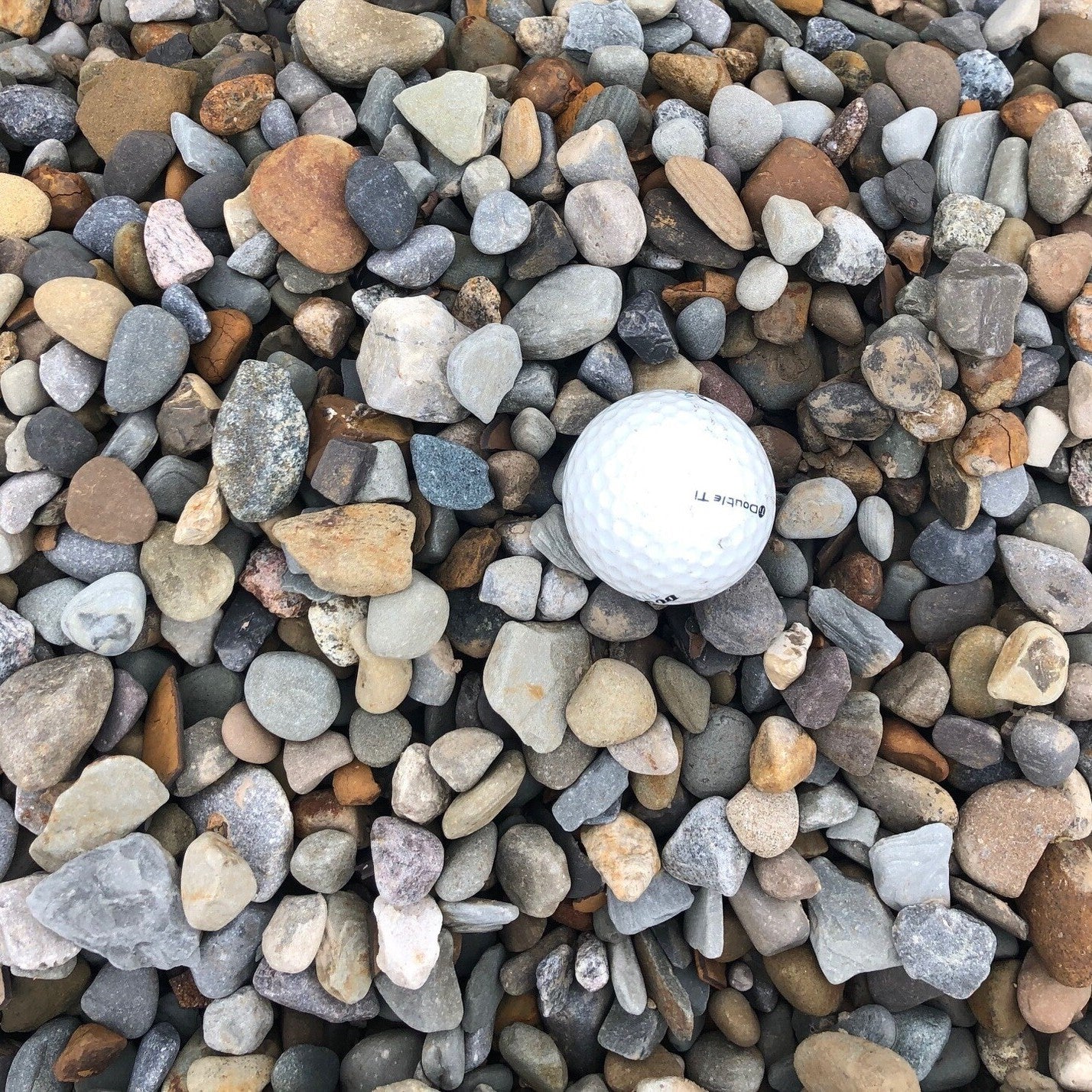

The driver nailed it on putting the gravel I ordered in front of my trailer and between the sidewalk. Very satisfied with how my flowerbeds look now.
About this stone
Number 57 crushed stone, angular limestone graded to about three quarters of an inch. The standard driveway, base and drainage gravel, it locks together under traffic and drains fast.
The driver nailed it on putting the gravel I ordered in front of my trailer and between the sidewalk. Very satisfied with how my flowerbeds look now.
Tell us what you're looking for
Thanks! We received your request.
Something went wrong. Please try again.
How Much Material Do I Need?
How Much Material Do I Need?
For weed suppression and decorative coverage in Richland's landscape beds and lawn replacement areas, plan on a minimum of 3 inches of stone depth over landscape fabric. For driveways and high-traffic pathways, 4 inches of compacted crushed stone creates a stable surface that holds up through the freeze and thaw cycles of Richland winters.
Use our free gravel calculator
What is a Yard?
What is a Yard?
FAQs
FAQs
Richland Gravel Delivery
Richland Gravel Delivery
Regular price
$133.00
per
Yard
Regular price
Sale price
$133.00
Unit price
per
Shipping calculated at checkout.
Minimum of 3 Yard
Couldn't load pickup availability
Not currently available
We can't take orders for this right now. Tell us what you need and we'll get back to you.
Hand-picked local yards
4,000+ regional deliveries
Dedicated support
Why order through Mulch Mound
The best local , without the guesswork.
We hand-pick and partner with the best yards in your region, keep only the ones our buyers rate well, and back each load with our guarantee.
Mulch Mound Guarantee
If your isn't the quantity or quality you ordered, we'll make it right.
About this stone
Number 57 crushed stone, angular limestone graded to about three quarters of an inch. The standard driveway, base and drainage gravel, it locks together under traffic and drains fast.
The driver nailed it on putting the gravel I ordered in front of my trailer and between the sidewalk. Very satisfied with how my flowerbeds look now.
How Much Material Do I Need?
How Much Material Do I Need?
For weed suppression and decorative coverage in Richland's landscape beds and lawn replacement areas, plan on a minimum of 3 inches of stone depth over landscape fabric. For driveways and high-traffic pathways, 4 inches of compacted crushed stone creates a stable surface that holds up through the freeze and thaw cycles of Richland winters.
Use our free gravel calculator
What is a Yard?
What is a Yard?
FAQs
FAQs
Tell us what you're looking for
Thanks! We received your request.
Something went wrong. Please try again.

How It Works
Getting started is easy — just follow these simple steps
1
Choose your stone
Make sure you adjust the quantity to your home's needs. You can use our calculator to estimate how much you'll need.
2
Select your delivery date
Select a delivery date you'd like for the product to be dropped off at your home
3
Sit back and wait
Sit back, wait, and let us work our magic to make sure the highest quality product is delivered to your driveway.

Placing an order online was so easy. Delivery was on time. When the driver realized we had a newly poured driveway they erred on the side of cautio...
Read full review
Placing an order online was so easy. Delivery was on time. When the driver realized we had a newly poured driveway they erred on the side of caution and opted not ti drive in it. The company even sent me a message explaining that call. Would recommend!

Online ordering was really simple and I liked the transparent pricing.
Need Help Calculating How Much Gravel You Need?
Use our NEW Trace from Satellite tool to get an estimate for your project based on an aerial view of your property
Try Our CalculatorStone is sold by the cubic yard but coverage varies by the size and type of material. Larger river rock covers less area per yard than fine crushed gravel because of the air space between the rocks. When measuring your project area, take length and width in feet and multiply them together, then decide on your target depth before running the numbers through our calculator. Erring on the side of ordering slightly more is wise because stone cannot be returned easily and a second delivery costs more than getting it right the first time.
Complete Your Outdoor Stone Project
Combine your stone order with bulk topsoil or garden mix for any planted areas adjacent to your stone installation, keeping a clean defined border between the two materials. Adding stone edging or bender board along the transition helps contain the gravel and keeps it from migrating into lawn or planting bed areas over time.

Service area
Areas we deliver stone and gravel in Richland, Washington
Mulch Mound Pro Tip
Richland experiences freeze and thaw cycles in winter that can gradually shift and sink stone in pathways and patios if the base is not properly prepared. Before placing any stone intended for walking surfaces or driveways, compact the native sandy loam base and consider adding a 2 to 3 inch compacted layer of crushed road base beneath your decorative stone. This added step prevents the uneven settling that shows up by the following spring and saves you from having to constantly re-level your installation.
Mulch Mound Pro Tip
If you are converting lawn area to a stone landscape to reduce your water bill, do not skip the step of killing or removing the existing grass completely before laying your fabric and stone. Richland's warm summers give bermudagrass and other tough grasses the energy to push through landscape fabric if they are still alive underneath. Smother the area with cardboard under your fabric as an added barrier, or treat the grass at least two weeks before your planned installation date to make sure it is fully dead before you cover it.
Mulch Mound Pro Tip
For a natural look that fits the Columbia Basin landscape around Richland, mix two sizes of stone in your decorative beds rather than using a single uniform size throughout. A base layer of medium crushed gravel topped with a scattered layer of larger river rock mimics the natural appearance of Eastern Washington riverbeds and alluvial fans. This layered approach also works better practically because the finer material beneath helps lock the larger stones in place and reduces shifting during Richland's occasional strong windstorms.
The Unique Landscape of Richland
In Richland's dry, low-rainfall landscape, decorative stone and gravel are among the most practical and long-lasting materials a homeowner can invest in. With only 8 inches of annual precipitation and summers that push well past 100 degrees, ground covers that do not require water are genuinely valuable here rather than just decorative. Stone eliminates the weed pressure, evaporation, and maintenance burden of bare soil while holding up beautifully through Richland's wide temperature range, from freezing winter nights to scorching summer afternoons. The Columbia Basin landscape surrounding Richland has a natural visual affinity with stone, and using local-style gravel or river rock in your landscaping connects your property to the broader high desert setting in an authentic way. Sandy loam soils common in Richland tend to stay firm and stable beneath stone installations, which makes for low-maintenance, long-lasting pathways, driveways, and dry river beds. Whether you are replacing a thirsty lawn with a water-wise landscape or simply finishing a pathway or drainage area, bulk stone is one of the smartest investments you can make in a Richland yard.