


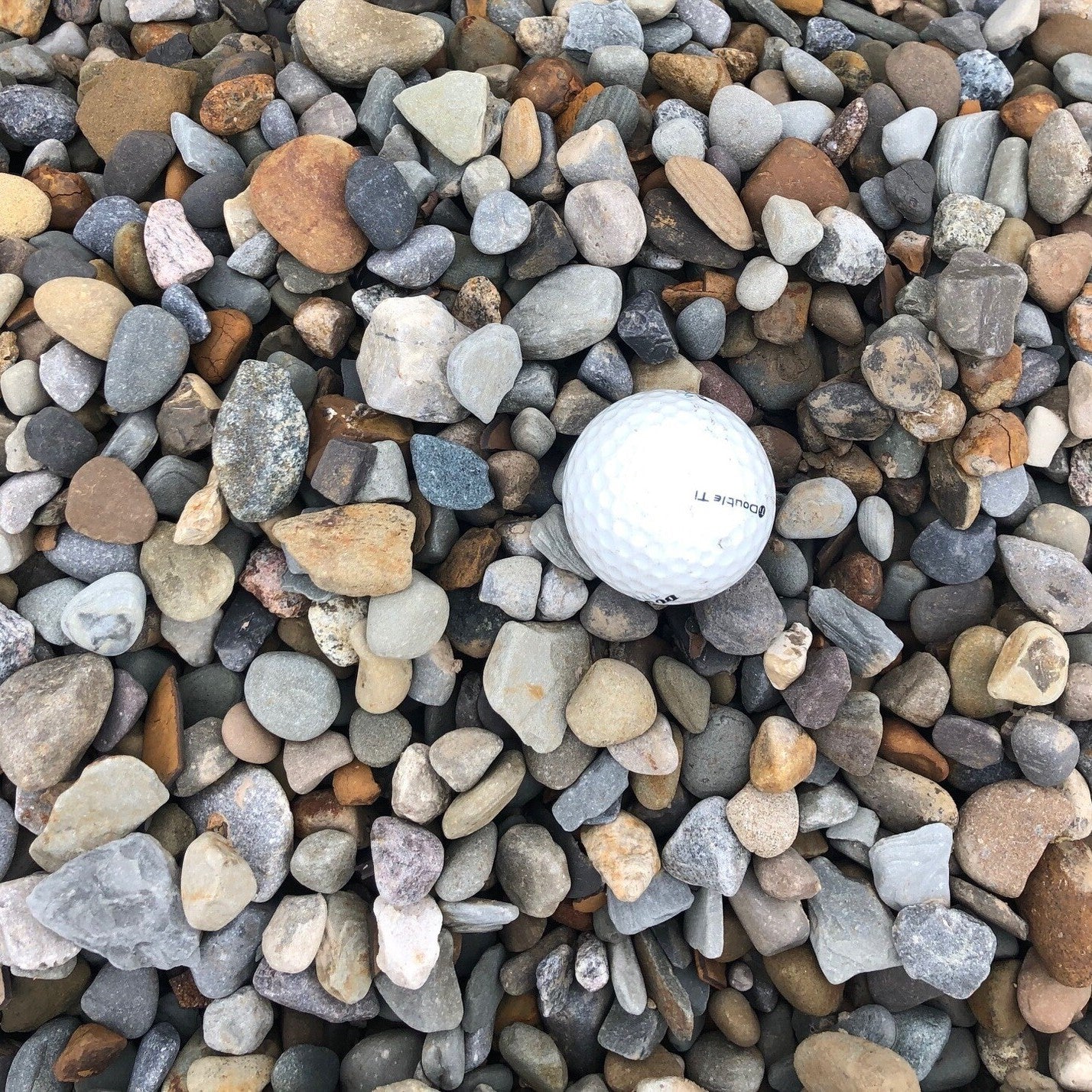

The driver nailed it on putting the gravel I ordered in front of my trailer and between the sidewalk. Very satisfied with how my flowerbeds look now.
About this stone
Number 57 crushed stone, angular limestone graded to about three quarters of an inch. The standard driveway, base and drainage gravel, it locks together under traffic and drains fast.
The driver nailed it on putting the gravel I ordered in front of my trailer and between the sidewalk. Very satisfied with how my flowerbeds look now.
Tell us what you're looking for
Thanks! We received your request.
Something went wrong. Please try again.
How Much Material Do I Need?
How Much Material Do I Need?
Decorative stone beds in Rochester need at least 2 to 3 inches of depth to effectively suppress weeds through the full growing season and to create a finished visual layer that does not thin out after the first heavy rain. Drainage and erosion control applications around Rochester foundations and slopes need 4 to 6 inches to handle the volume of water that moves across clay soil during spring snowmelt and intense summer rain events.
Use our free gravel calculator
What is a yard?
What is a yard?
FAQs
FAQs
Rochester Gravel Delivery
Rochester Gravel Delivery
Regular price
$133.00
per
yard
Regular price
Sale price
$133.00
Unit price
per
Shipping calculated at checkout.
Minimum of 3 yard
Couldn't load pickup availability
Not currently available
We can't take orders for this right now. Tell us what you need and we'll get back to you.
Hand-picked local yards
4,000+ regional deliveries
Dedicated support
Why order through Mulch Mound
The best local stone, without the guesswork.
We hand-pick and partner with the best yards in your region, keep only the ones our buyers rate well, and back each load with our guarantee.
Mulch Mound Guarantee
If your stone isn't the quantity or quality you ordered, we'll make it right.
About this stone
Number 57 crushed stone, angular limestone graded to about three quarters of an inch. The standard driveway, base and drainage gravel, it locks together under traffic and drains fast.
The driver nailed it on putting the gravel I ordered in front of my trailer and between the sidewalk. Very satisfied with how my flowerbeds look now.
How Much Material Do I Need?
How Much Material Do I Need?
Decorative stone beds in Rochester need at least 2 to 3 inches of depth to effectively suppress weeds through the full growing season and to create a finished visual layer that does not thin out after the first heavy rain. Drainage and erosion control applications around Rochester foundations and slopes need 4 to 6 inches to handle the volume of water that moves across clay soil during spring snowmelt and intense summer rain events.
Use our free gravel calculator
What is a yard?
What is a yard?
FAQs
FAQs
Tell us what you're looking for
Thanks! We received your request.
Something went wrong. Please try again.
How It Works
Getting started is easy — just follow these simple steps
1
Choose your stone
Make sure you adjust the quantity to your home's needs. You can use our calculator to estimate how much you'll need.
2
Select your delivery date
Select a delivery date you'd like for the product to be dropped off at your home
3
Sit back and wait
Sit back, wait, and let us work our magic to make sure the highest quality product is delivered to your driveway.

Placing an order online was so easy. Delivery was on time. When the driver realized we had a newly poured driveway they erred on the side of cautio...
Read full review
Placing an order online was so easy. Delivery was on time. When the driver realized we had a newly poured driveway they erred on the side of caution and opted not ti drive in it. The company even sent me a message explaining that call. Would recommend!

Online ordering was really simple and I liked the transparent pricing.
Need Help Calculating How Much Gravel You Need?
Use our NEW Trace from Satellite tool to get an estimate for your project based on an aerial view of your property
Try Our CalculatorMeasure the length and width of your pathway or bed area in feet and multiply them to get the square footage, then determine the target depth in inches and use our calculator to convert that into cubic yards. Stone is significantly denser than mulch or soil, so the weight of your order will be higher per cubic yard, which is worth keeping in mind if your driveway has weight or surface restrictions. Rochester's clay base compresses very little under stone weight, so the depth you set during installation is close to the depth you will have long-term with minimal settling.
Stone Types We Deliver in Rochester
Whether you are filling a backyard patio or shoring up drainage around a Minnesota home, bulk stone delivered by the cubic yard is the most practical way to tackle a large project. Mulch Mound makes it easy to order bulk gravel by the yard in Rochester, with delivery straight to your driveway or job site. Our stone is selected to hold up through the region's freeze-thaw cycles and the heavy clay soils common across this part of the state.
Pea Gravel
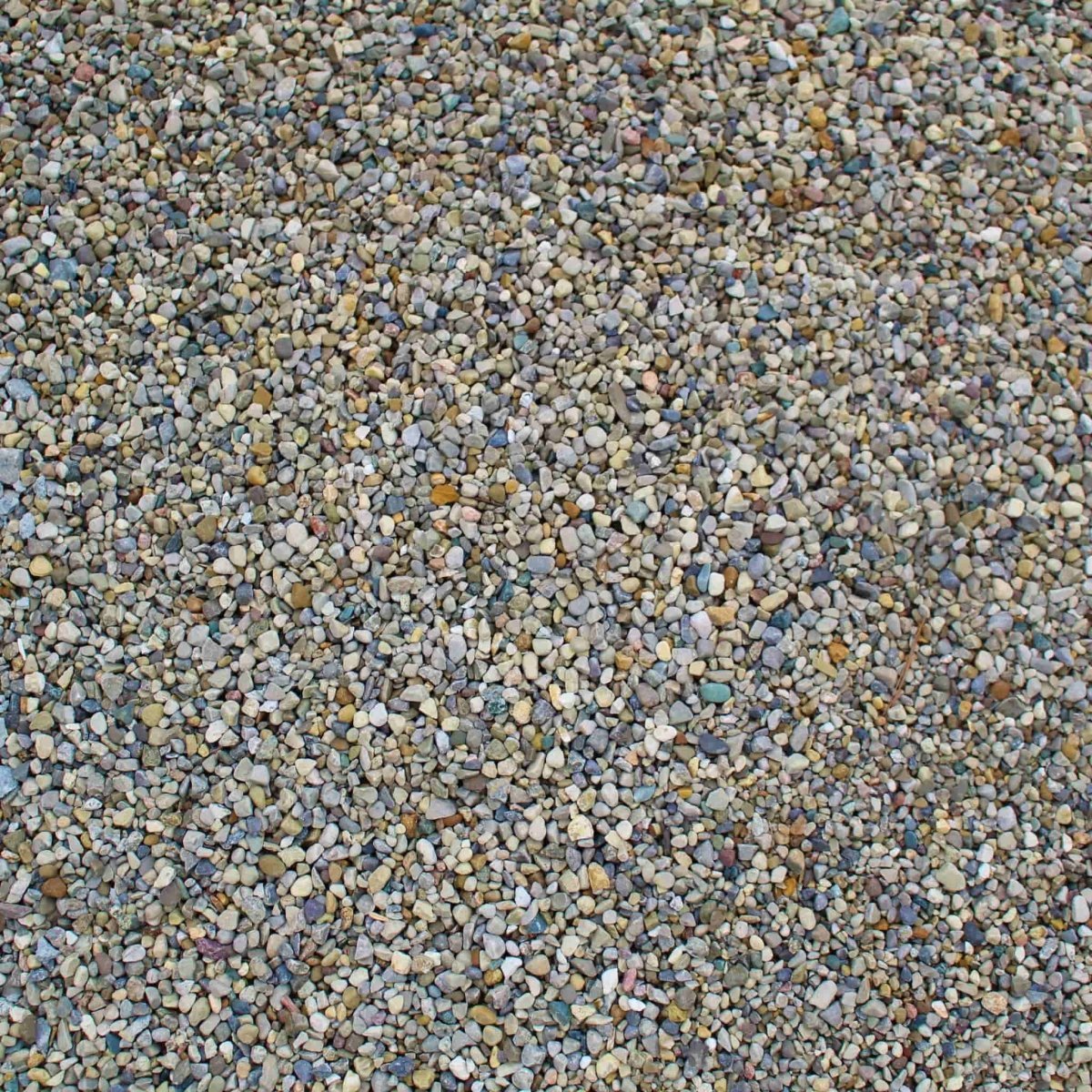
Pea gravel is a popular choice for Rochester homeowners who want a clean, low-maintenance ground cover that handles the region's wet springs and hard winters without shifting or heaving. Its smooth, rounded edges are comfortable underfoot on garden paths, and the warm earth tones complement the traditional homes common throughout this area.
Complete Your Outdoor Stone Project
Combine stone borders with a layer of our shredded hardwood mulch inside planting beds to get the clean-edge definition of stone with the soil-building benefits of organic material, which is especially valuable for improving Rochester's clay over time. Our bulk topsoil and garden mix products pair well with stone drainage projects when you need to re-grade nearby areas and re-establish turf or planting beds after installing a stone channel or perimeter drain.



Service area
Areas we deliver stone and gravel in Rochester, Minnesota
Mulch Mound Pro Tip
Rochester's clay soil does not drain well, and when water pools along a foundation or in a low corner of the yard, it often means the grade is flat or sloping toward the structure rather than away from it. Before placing decorative stone in problem areas, confirm that the grade slopes away from any structure at a rate of about 1 inch per foot. Stone placed over a flat or negative grade will hold water rather than shed it, which defeats the purpose and can worsen the drainage and moisture problem over time.
Mulch Mound Pro Tip
For stone pathways in Rochester, choosing angular crushed stone rather than smooth river rock gives you a surface that compacts slightly and stays in place far better through freeze-thaw cycles. Smooth rounded stones tend to roll and spread underfoot, which is especially hazardous on sloped paths after Rochester's late-season frosts create morning ice. Angular limestone or granite fines bind together over time and create a pathway surface that actually improves and firms up with regular foot traffic.
Mulch Mound Pro Tip
Rochester's 30 inches of annual rainfall combined with the impermeable nature of local clay means that water management is a year-round consideration for homeowners in this area. Placing a 4 to 6-inch gravel border along the full perimeter of your foundation, combined with downspout extensions that discharge directly onto the stone, creates a first line of defense against the basement moisture issues that are common in Rochester neighborhoods built on clay-heavy soils. This stone installation requires almost no maintenance and protects your foundation through Rochester's heavy spring runoff season year after year.
The Unique Landscape of Rochester
Decorative and functional stone is one of the most practical investments a Rochester homeowner can make because it solves multiple problems created by local clay soil and a variable northern climate without requiring annual maintenance or replenishment. Rochester's heavy clay does not absorb water quickly, and without hard surfaces or stone drainage channels, yards and garden borders can turn into mud zones that are difficult to navigate from the spring thaw through early summer. Stone pathways and edging borders hold their position through Rochester's freeze-thaw cycles far better than wood or soft organic materials, reducing the annual maintenance that comes with frost heaving in Zone 4b. Decorative stone in planting beds also suppresses weeds effectively without the seasonal replenishment that mulch requires, which is a practical advantage for homeowners who want a lower-maintenance landscape through the full growing season. Along foundations and downspout discharge areas, gravel and crushed stone protect soil from the erosive force of Rochester's spring snowmelt and intense summer storms while directing water away from structures and low spots.