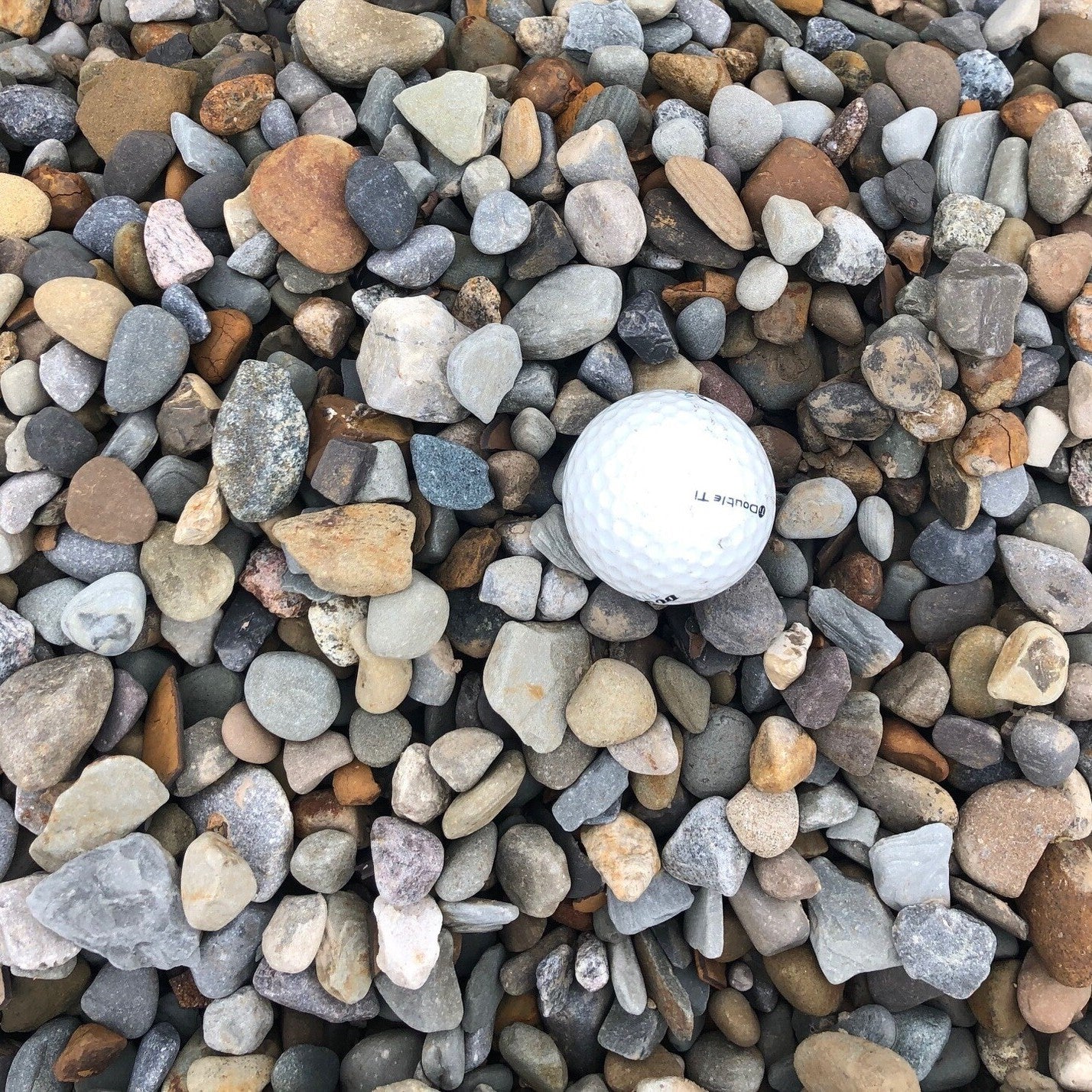
Number 57 crushed stone, angular limestone graded to about three quarters of an inch. The standard driveway, base and drainage gravel, it locks together under traffic and drains fast.
Mulch Mound delivered a yard of pea gravel to us. Delivery was on time, driver was friendly and hit a bullseye on the “tarp target”. We used the pea gravel (which was diameter as specified) to fill several muskrat holes around our pond. I would definitely recommend Mulch Mo...
Tell us what you're looking for
Thanks! We received your request.
Something went wrong. Please try again.
How Much Material Do I Need?
For standard decorative coverage and weed suppression in Roswell landscape beds and yard areas, a depth of 2 to 3 inches of stone or decomposed granite provides the best balance of performance and material efficiency. Drainage channels, dry creek beds, and high-traffic path areas should be installed at 4 to 6 inches for durability and proper function during heavy monsoon rain events.
Use our free gravel calculator
What is a Yard?
A yard is approximately 27 cubic feet. As a general guideline, one yard of material can cover an area of about 100-160 square feet at a 2-3 inch depth.
We can't take orders for this right now. Tell us what you need and we'll get back to you.
What do you need?
Thanks! We received your request.
Something went wrong. Please try again.
Hand-picked local yards
4,000+ regional deliveries
Dedicated support
Why order through Mulch Mound
The best local , without the guesswork.
We hand-pick and partner with the best yards in your region, keep only the ones our buyers rate well, and back each load with our guarantee.
Mulch Mound Guarantee
If your isn't the quantity or quality you ordered, we'll make it right.
About this stone
Number 57 crushed stone, angular limestone graded to about three quarters of an inch. The standard driveway, base and drainage gravel, it locks together under traffic and drains fast.
Mulch Mound delivered a yard of pea gravel to us. Delivery was on time, driver was friendly and hit a bullseye on the “tarp target”. We used the pea gravel (which was diameter as specified) to fill several muskrat holes around our pond. I would definitely recommend Mulch Mo...
How Much Material Do I Need?
For standard decorative coverage and weed suppression in Roswell landscape beds and yard areas, a depth of 2 to 3 inches of stone or decomposed granite provides the best balance of performance and material efficiency. Drainage channels, dry creek beds, and high-traffic path areas should be installed at 4 to 6 inches for durability and proper function during heavy monsoon rain events.
Use our free gravel calculator
What is a Yard?
A yard is approximately 27 cubic feet. As a general guideline, one yard of material can cover an area of about 100-160 square feet at a 2-3 inch depth.
Mulch Mound delivered a yard of pea gravel to us. Delivery was on time, driver was friendly and hit a bullseye on the “tarp target”. We used the ...
Read full review
Mulch Mound delivered a yard of pea gravel to us. Delivery was on time, driver was friendly and hit a bullseye on the “tarp target”. We used the pea gravel (which was diameter as specified) to fill several muskrat holes around our pond. I would definitely recommend Mulch Mound to a friend!
Placing an order online was so easy. Delivery was on time. When the driver realized we had a newly poured driveway they erred on the side of cautio...
Read full review
Placing an order online was so easy. Delivery was on time. When the driver realized we had a newly poured driveway they erred on the side of caution and opted not ti drive in it. The company even sent me a message explaining that call. Would recommend!
Measure each area you plan to cover in feet and multiply length by width to get square footage. One cubic yard of most gravel and decomposed granite products covers roughly 100 square feet at a 2 inch depth and about 65 square feet at 3 inches, so choose your target depth before calculating your total order. Roswell landscapers typically recommend at least 2 to 3 inches for weed suppression and a finished appearance that holds up through spring winds and summer monsoons.
Complete Your Outdoor Stone Project
Add a bulk soil or amended garden mix order if you are refreshing planting beds before covering them with decorative stone, giving plants a better root environment beneath the gravel layer. Pairing stone installation with a quality woven landscape fabric ensures your weed suppression holds up season after season in Roswell's dusty, windy conditions.
Before your stone delivery arrives, invest time in proper edge preparation along any beds or areas you plan to gravel. Roswell's afternoon winds can push lightweight gravel into lawn edges and hardscape joints over time if there is no physical barrier to contain it. Steel or aluminum landscape edging installed flush to the ground provides a clean, durable border that holds gravel in place through decades of Roswell weather. This one preparation step saves you from constantly raking stone back into place and keeps your finished landscape looking sharp with minimal ongoing effort.
Mulch Mound Pro Tip
If you are installing decomposed granite over a large area like a front yard xeriscape in Roswell, moisten the surface of your native soil lightly before spreading landscape fabric and then again after laying the decomposed granite. Light moisture encourages the fine particles in decomposed granite to settle and begin forming the slightly compacted surface that makes it so stable and walkable. Do not overwater or you will create muddy sections beneath the fabric, but a light misting followed by a pass with a hand tamper or roller gives you a much more finished and stable surface from day one.
Mulch Mound Pro Tip
When selecting stone color for your Roswell landscape, consider the color of your home exterior and any existing hardscape materials before ordering bulk quantities. The warm tan, rust, and buff tones of most decomposed granites and sandstone gravel products complement the stucco and adobe-style architecture common throughout the Roswell area very naturally. Cooler gray tones in granite or quartz-based products can look striking against modern or contemporary exteriors but may feel disconnected from the warm desert landscape palette that defines eastern New Mexico. Order a small sample or view the product in person in afternoon light before committing to a large delivery.
The Unique Landscape of Roswell
Stone and gravel are uniquely well-suited to Roswell landscapes because they align naturally with the realities of living in a high-desert environment that receives only 12 inches of rain per year and experiences scorching summer afternoons. Unlike organic mulch, stone does not break down, blow away in spring winds, or require annual replenishment, making it one of the most cost-effective long-term landscaping investments you can make in eastern New Mexico. Decomposed granite and river cobble are particularly popular in Roswell yards because they complement the natural color palette of the Chihuahuan Desert while providing genuine functional benefits like erosion control and moisture buffering in drainage areas. Stone also reflects heat rather than absorbing it the way dark soil does, which helps keep soil temperatures more moderate in shaded or north-facing beds. For xeriscape designs that are increasingly common in Roswell as water costs and conservation awareness grow, bulk stone is often the foundation of the entire landscape plan. Whether used as a path material, a bed covering, or a hardscape accent, stone requires almost no maintenance once it is installed correctly.
Frequently Asked Questions
Click a question to see the answer
Answer
What type of stone works best for a xeriscape front yard here in Roswell?
Decomposed granite is the most popular choice for xeriscape front yards in Roswell and for good reason. It compacts slightly after installation and rain, creating a stable, walkable surface that still allows water to percolate through during monsoon storms rather than sheeting off like concrete. Its warm tan and reddish tones complement the native plants most commonly used in Roswell xeriscapes, including desert willow, Apache plume, and blue grama grass. A 2 to 3 inch layer of decomposed granite also suppresses weeds effectively when installed over quality landscape fabric, reducing the maintenance burden significantly compared to mulched beds.
Answer
Will river rock wash away or shift around during one of those heavy monsoon storms Roswell gets in the summer?
Larger river rock in the 2 to 4 inch range is generally quite stable during monsoon rainfall events in Roswell, even in drainage swales and sloped areas, because its rounded weight anchors it against flowing water at the volumes typical of local storms. Smaller pea gravel in the 3/8 inch range can migrate on slopes or in areas where water concentrates and flows quickly. For drainage channels and arroyos that move significant water during summer storms, we recommend using 4 to 6 inch cobbles or boulders to line the channel bottom, with smaller decorative gravel used only on the flat adjacent areas where it will not be disturbed.
Answer
How deep should I lay decorative gravel in my Roswell planting beds to actually control weeds?
For effective weed suppression in Roswell landscape beds, install quality woven landscape fabric first and then apply a minimum of 2 inches of decorative gravel on top. Three inches is better if you want to minimize the fine windblown dust and organic debris that accumulates over time and eventually provides a seedbed for weeds on top of the fabric. Roswell's spring winds deposit a surprising amount of fine particles across gravel surfaces each year, so plan to rake your gravel areas lightly each spring to disrupt any weed seedlings that sprout in the accumulated debris layer before they establish roots.
Answer
Is decomposed granite a good option for paths between my raised vegetable beds or will it get tracked into the garden?
Decomposed granite works well for paths between raised beds in Roswell gardens. Once it settles and lightly compacts, which happens faster here because of monsoon rain events followed by dry periods that firm the surface, it stays in place reasonably well under foot traffic. The finer particles do track into garden beds occasionally but decomposed granite is a natural material that does not harm soil chemistry and the small amount that migrates is not a concern. If tracking is a priority for you, consider a medium river gravel in the 3/4 inch size for paths, which stays looser underfoot but does not compact into fine particles the way decomposed granite does.
Answer
Can I use bulk stone to manage water runoff issues in my yard during Roswell's monsoon season?
Stone is one of the most effective and durable materials for managing monsoon runoff in Roswell landscapes. A properly designed dry creek bed lined with river cobbles can channel water from downspouts, sloped areas, or natural drainage paths safely across your property and into a rock-lined basin or street drain without eroding soil along the way. River rock in the 2 to 6 inch range is the best choice for dry creek beds because it allows water to flow through and between the stones while resisting the displacement force of moving water. These features also look attractive when dry, which is most of the year in Roswell.
Answer
Does stone get too hot in the Roswell summer sun to use comfortably near seating areas or kids play spaces?
Dark stones and closely packed gravel can accumulate significant surface heat during Roswell's summer afternoons, especially in areas with full western sun exposure. Light-colored materials like white or tan pea gravel and pale decomposed granite reflect more solar radiation and stay noticeably cooler than darker products like black lava rock or dark basalt. For areas near patios, play spaces, or anywhere people will be barefoot, choose lighter-colored stone products and consider the sun orientation of the space. North and east-facing areas stay more comfortable throughout the day even with darker stone choices.
Answer
How much stone do I need to cover my driveway apron and the two side yard areas I want to gravel out?
The simplest approach is to measure each area separately in feet, multiply length by width to get square footage, and then use this rule of thumb: one cubic yard of stone covers approximately 100 square feet at 2 inches deep or about 65 square feet at 3 inches deep. Larger cobbles cover less area per yard than fine gravel because of the void space between stones, so if you are using 3 to 5 inch river rock expect coverage closer to 80 square feet per cubic yard. Add up all your areas, calculate at your target depth, and add 10 percent as a buffer so you are not left short at the edges of your project.
Answer
Is there a stone yard near Roswell?
With only about 12 inches of rain a year and scorching summer afternoons, Roswell landscapes call for a durable base like crushed stone that won't break down or blow away in spring winds. You can have it delivered by the cubic yard to your driveway or yard, so there's no need to visit a stone yard or a quarry yourself.