Good quality, great price, fast delivery. All online - no submitting forms and waiting for days for quotes. Getting mulch should be this easy from everyone. Only Mulch Mound is ACTUALLY this simple.
Tell us what you're looking for
Thanks! We received your request.
Something went wrong. Please try again.
How Much Material Do I Need?
Three inches is the sweet spot for Russellville beds, deep enough to slow weeds and hold moisture through August without smothering roots. Around annuals and shallow perennials, drop back to two inches.
Use our free mulch calculator
What is a yard?
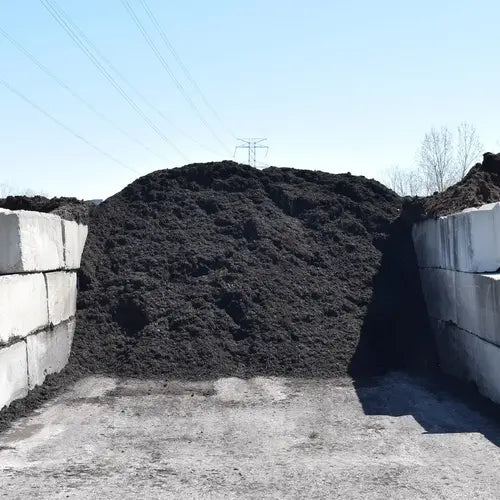
A yard is approximately 27 cubic feet. As a general guideline, one yard of material can cover an area of about 100-160 square feet at a 2-3 inch depth.
Good quality, great price, fast delivery. All online - no submitting forms and waiting for days for quotes. Getting mulch should be this easy from everyone. Only Mulch Mound is ACTUALLY this simple.
How Much Material Do I Need?
Three inches is the sweet spot for Russellville beds, deep enough to slow weeds and hold moisture through August without smothering roots. Around annuals and shallow perennials, drop back to two inches.
Use our free mulch calculator
What is a yard?
A yard is approximately 27 cubic feet. As a general guideline, one yard of material can cover an area of about 100-160 square feet at a 2-3 inch depth.
Good quality, great price, fast delivery. All online - no submitting forms and waiting for days for quotes. Getting mulch should be this easy fr...
Read full review
Good quality, great price, fast delivery. All online - no submitting forms and waiting for days for quotes. Getting mulch should be this easy from everyone. Only Mulch Mound is ACTUALLY this simple.
I highly recommend Mulch Mound. The quality of the mulch is very good. The ordering system on their website makes it very easy. The delivery driver...
Read full review
I highly recommend Mulch Mound. The quality of the mulch is very good. The ordering system on their website makes it very easy. The delivery driver did a great job placing the mulch on the driveway. To finish off, the pricing was very reasonable as well.
They offered a quick turnaround and delivered high quality mulch at a reasonable price. They also dropped it off exactly where I told them to put i...
Read full review
They offered a quick turnaround and delivered high quality mulch at a reasonable price. They also dropped it off exactly where I told them to put it. Good service!
Measure each bed separately rather than guessing at the whole yard, since Russellville lots often mix a narrow foundation strip with a wide island bed. Length times width gives square feet, and the calculator turns that into cubic yards at your chosen depth. Round up about ten percent, because settling is real once the first big rain hits.
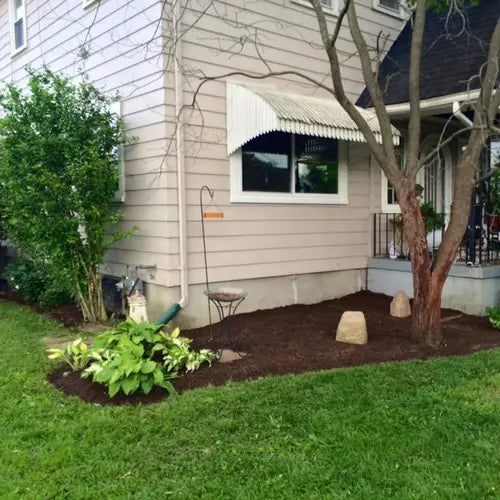
Mulch vs. No Mulch: The Difference
Russellville's 50 inches of annual rain, high valley humidity and a growing season that stretches from April 1 to November 3 make this an aggressive environment for organic matter. Natural hardwood mulch decomposes noticeably within a single season here, feeding soil biology but fading in color by midsummer. Dyed and non organic options hold appearance longer, which is why many local homeowners split the difference by choosing based on whether a bed needs feeding or just needs to look sharp.
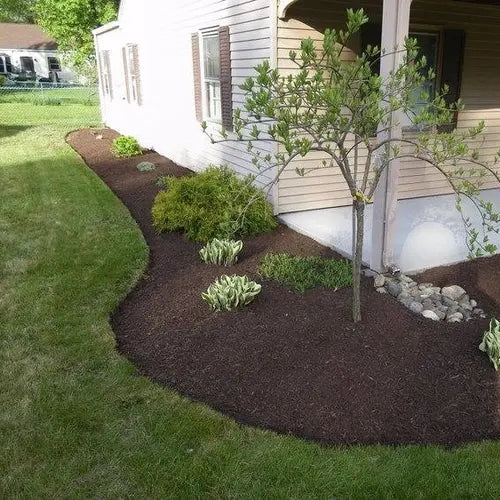
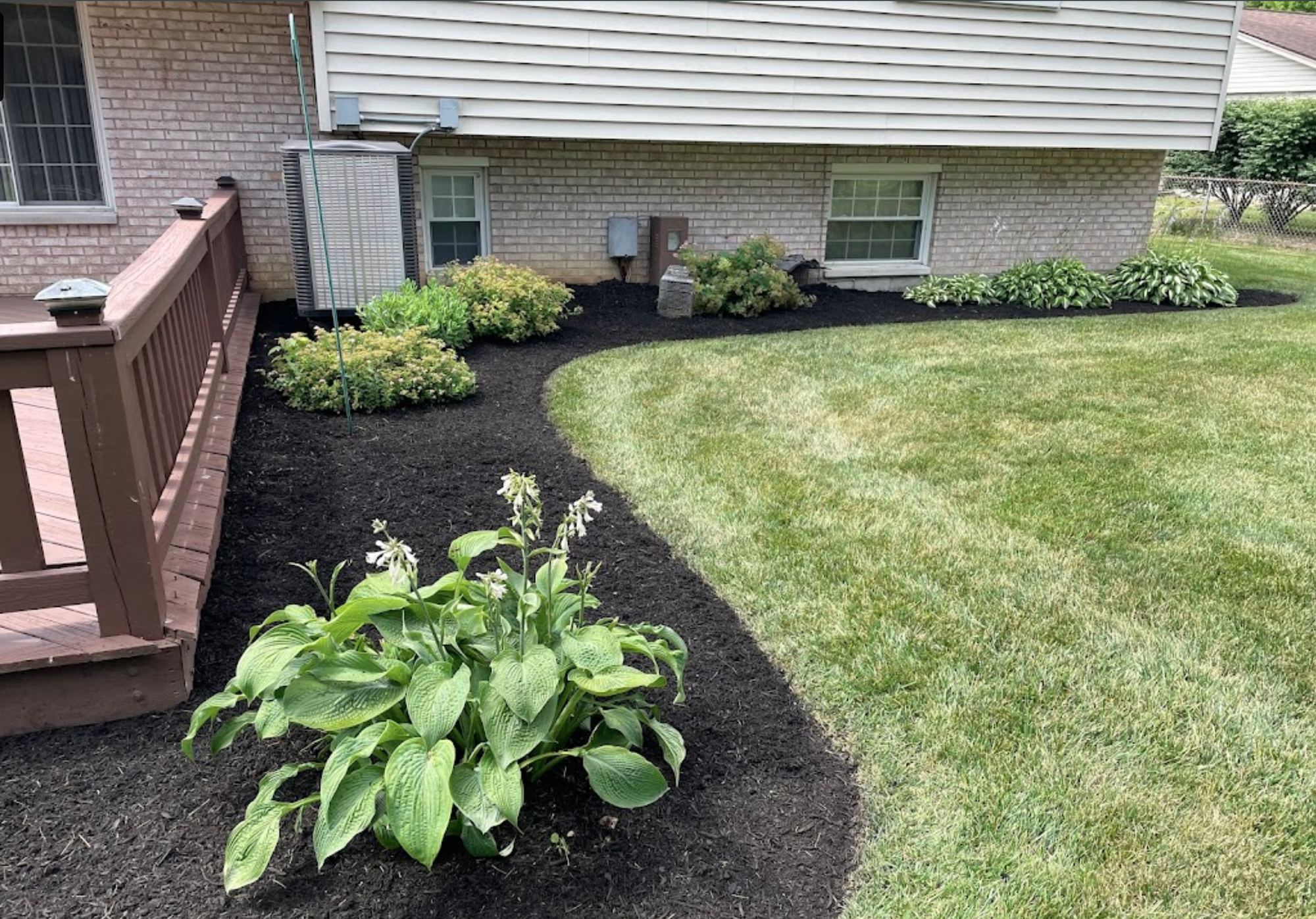
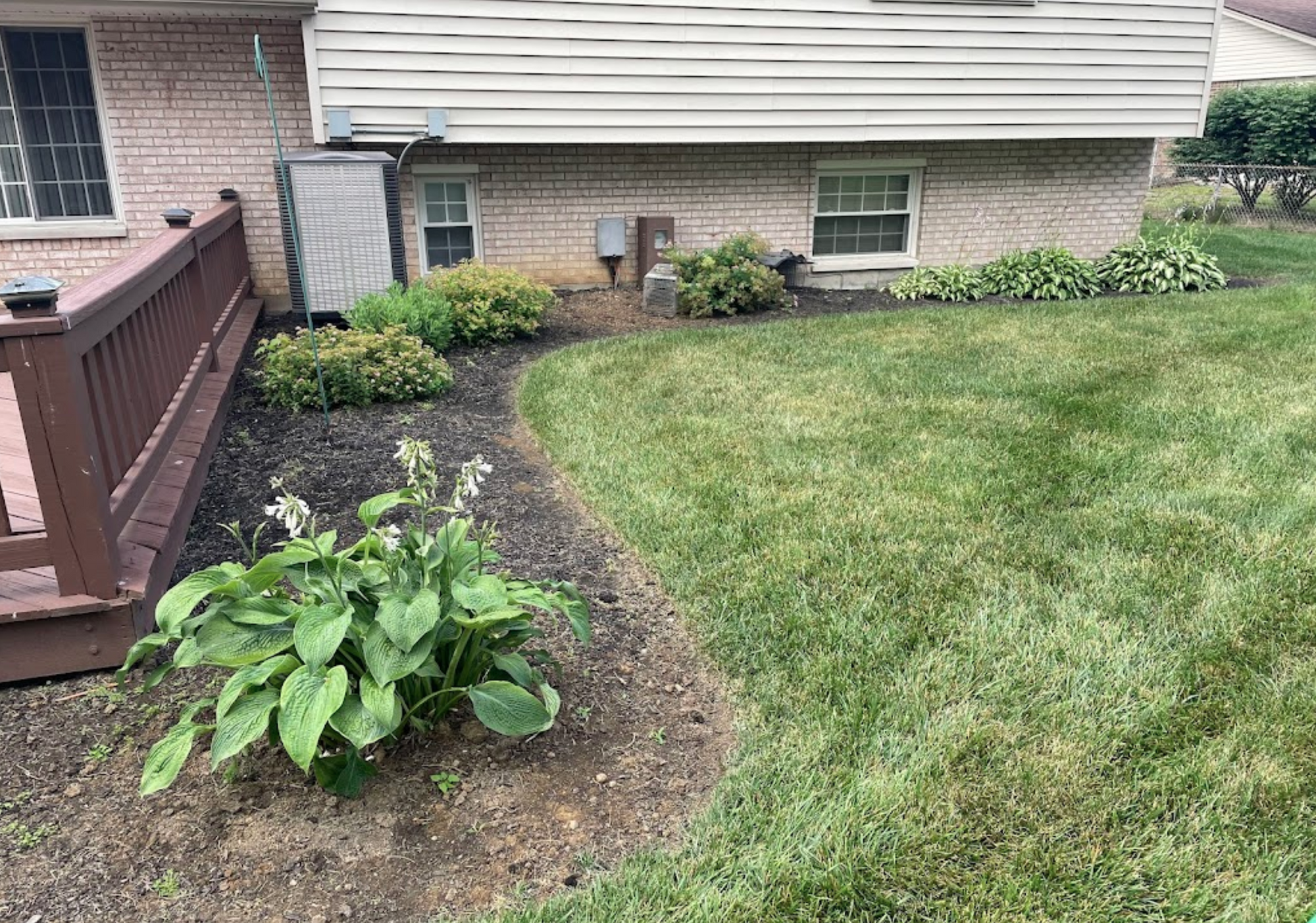
Before
After
Best Mulch Choice for Russellville Lawns
Most yards in the Russellville area sit on type of soil. Silt loam around Russellville holds moisture well but crusts over and seals off after repeated hard rains, leaving water to run across the surface instead of into the root zone. Exposed beds also lose fine particles fast on any slope.
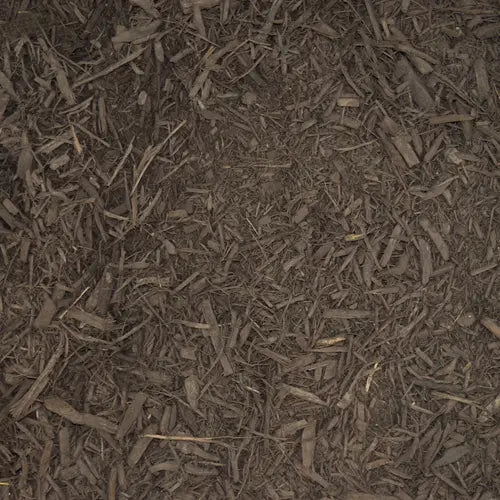
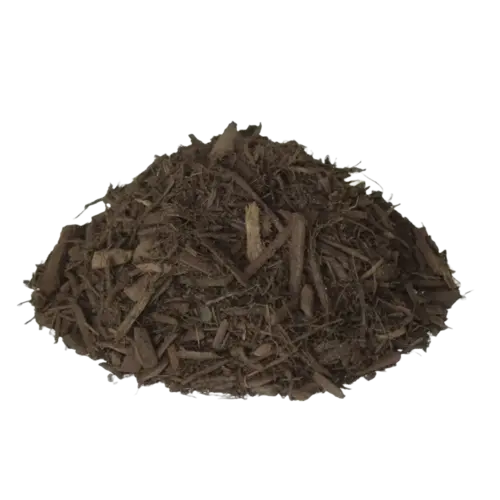
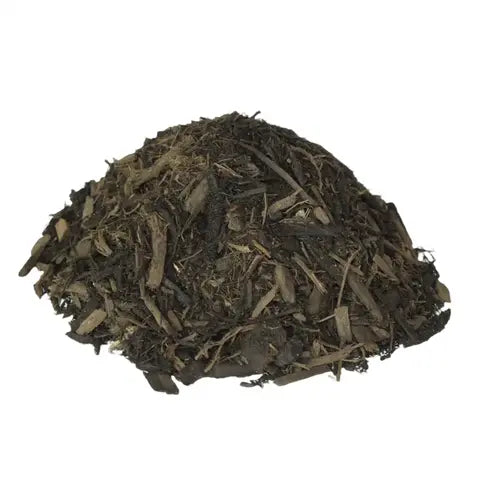
Hardwood Mulch
Double ground hardwood mulch cushions raindrop impact so the silt loam never gets a chance to seal, and as it breaks down it adds the coarse organic matter that keeps those fine particles loosely aggregated. Over two or three seasons of top dressing you get noticeably better infiltration and easier digging.
Complete Your Outdoor Mulch Project
Pair your mulch order with screened topsoil or compost to rebuild tired bed soil before spreading, and add river rock or crushed stone in downspout channels where mulch would only float away.
Water your beds thoroughly before mulching, not after. Russellville silt loam forms a surface crust when it dries, and dry mulch laid over dry crusted soil sheds the next rain instead of letting it soak in. Soak the bed, let it drain for a day, then spread. The mulch locks in that moisture and gives roots a running start before the July heat arrives.
Mulch Mound Pro Tip
Keep mulch off of trunks and stems. The volcano piles you see around town trap valley humidity against bark, invite borers and encourage girdling roots on maples and crapemyrtles. Pull the mulch back into a shallow saucer three to four inches from the trunk flare. You should be able to see where the trunk widens and meets the ground on every tree in your yard.
Mulch Mound Pro Tip
On sloped lots above the Arkansas River bottoms, stage your mulch in smaller piles along the top of the bed instead of one big dump at the bottom. Spreading downhill with a rake is far easier than shoveling uphill, and you can set your three inch depth by eye as you work. Use a leaf rake for the final pass to feather edges without pulling material off the bed.
Frequently Asked Questions
Click a question to see the answer
Answer
When is the best time to mulch beds in Russellville?
Late March into mid April is ideal, right after the April 1 average last frost when soil has warmed but before summer heat sets in. A second light top dress in early October helps insulate roots ahead of the November 3 first frost. Avoid mulching over frozen or waterlogged ground in midwinter.
Answer
How fast does mulch break down here with 50 inches of rain a year?
Faster than in drier parts of the state. Between the rainfall, valley humidity and long warm season, most hardwood mulch in Russellville loses about an inch of depth per year. Plan on a refresh top dress every spring and a full rebuild every two to three years.
Answer
Will mulch wash out of my beds during a heavy River Valley downpour?
Fine shredded hardwood knits together and stays put better than nugget style bark, which floats. On sloped lots near the ridges around town, use double ground hardwood, keep the layer at three inches, and edge the bed with a shallow trench so runoff has somewhere to go besides across your mulch.
Answer
Does mulch help with the clay pan I hit under my silt loam?
Yes, indirectly. Russellville silt loam often sits over a denser subsoil layer that drains slowly. Mulch feeds surface biology, and as earthworms and fungi work the decomposed layer down, they open channels that improve infiltration over time. It will not replace deep tilling or a raised bed, but it steadily improves the top few inches.
Answer
How much mulch do I need for a typical Russellville front bed?
A common foundation bed here runs about 200 square feet. At three inches deep that is roughly two cubic yards. Measure length times width for each bed, add them together, and let the calculator handle the conversion.
Answer
Do termites become a problem with mulch against my house?
Termites are active in Pope County, so keep mulch pulled back six inches from siding, brick weep holes and door frames, and hold the depth to two inches within a foot of the foundation. Mulch itself is not the food source, but constant moisture against the wall is what invites trouble.
Answer
Should I pull last year's mulch out before adding more?
Usually no. Rake the old layer loose to break up any matted crust, then add just enough new material to reach three inches total. Only strip it out if the old mulch has gone sour, grown a thick mat that repels water, or built up past four inches around shrub crowns.
The Unique Landscape of Russellville
Russellville sits in the Arkansas River Valley at about 367 feet of elevation, where roughly 50 inches of rain a year hits beds hard and fast. That volume of water moves quickly across the silt loam soils common around Prairie Creek, Sequoyah and the neighborhoods off Weir Road, washing fine particles downhill and leaving a crusted surface behind. Mulch is the buffer that absorbs raindrop impact, holds beds in place and keeps that silt where you put it. It also matters in July and August, when Zone 7b heat combines with valley humidity and shallow root zones dry out between storms. A steady mulch layer stretches the time between waterings and keeps soil temperatures under control from the last frost around April 1 through the first frost near November 3.